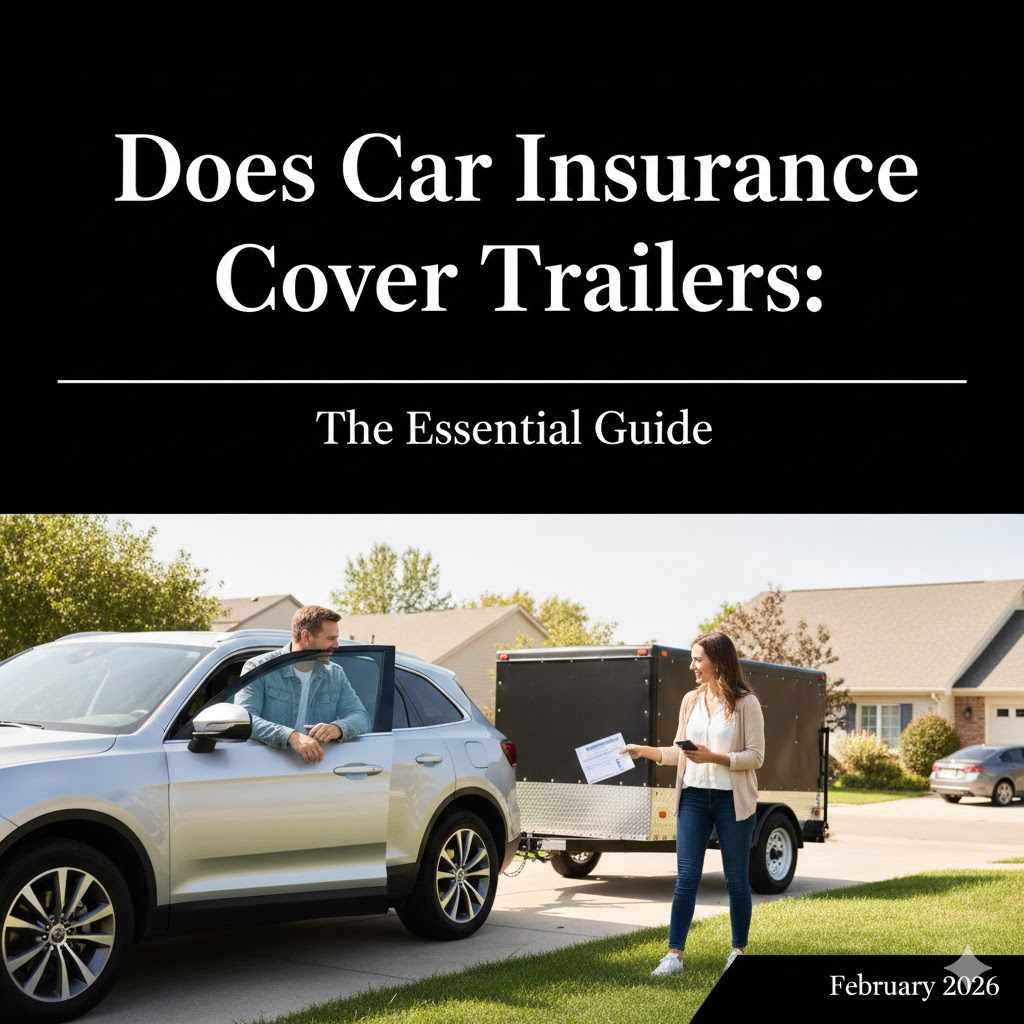
Does Car Insurance Cover Trailers: The Essential Guide
Generally, your car insurance provides liability coverage for a trailer you’re towing, which covers damage you cause to others. However, it usually does not cover physical damage to the trailer itself from accidents, theft, or other events. For that protection, you will likely need a separate trailer insurance policy or a special add-on to your auto policy.
Getting ready for a big move? Or maybe a fun weekend trip with the boat? You’ve hitched up your trailer, loaded your gear, and you’re all set to hit the road. But then a small question pops into your head: “Is this trailer actually insured?”
It’s a fantastic question, and you’re smart for thinking about it. Many people just assume they’re covered and find out the hard way that they aren’t. Don’t worry, figuring this out is not as complicated as it seems. I’ll walk you through everything you need to know about trailer insurance, step by step, so you can tow with total peace of mind.
Hi, I’m Md Meraj. I love helping people feel more confident about their cars and everything that goes with them. Today, we’re tackling the world of trailers. Understanding how your insurance works when you’re towing something is one of the most important things you can do to protect yourself, your property, and your wallet. Let’s break it down into simple, easy-to-understand pieces.
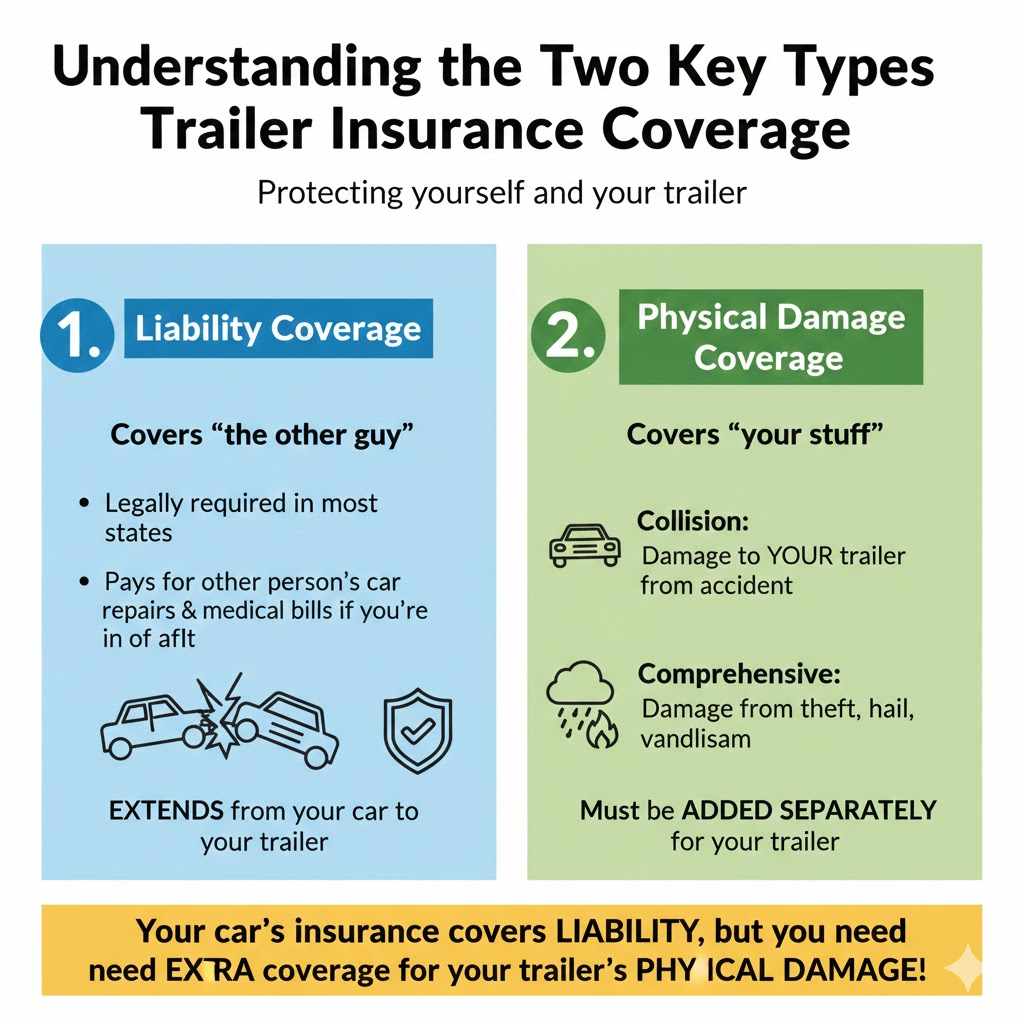
Understanding the Two Key Types of Insurance Coverage
Before we dive into trailers specifically, let’s quickly go over the two main types of insurance coverage. Knowing the difference is the key to understanding everything else.
1. Liability Coverage
Think of liability as the “I’m sorry I hit you” coverage. If you cause an accident while towing a trailer, your liability insurance helps pay for the other person’s car repairs and medical bills. It protects other people from the damage you cause. This is the part of your car insurance that is legally required in most states. When you tow a trailer, this liability coverage from your car or truck typically extends to cover the trailer as well. So, if your trailer swings out and hits another car, your auto liability coverage should step in to help.
2. Physical Damage Coverage (Collision & Comprehensive)
This is the “Oh no, my stuff is broken!” coverage. It protects your own vehicle and, in this case, your trailer. It’s usually split into two parts:
- Collision Coverage: Helps pay to repair or replace your trailer if it’s damaged in an accident, no matter who is at fault. This could be from a crash with another vehicle or if you back into a post.
- Comprehensive Coverage: Helps pay for damage to your trailer from things other than a collision. This includes theft, fire, vandalism, falling objects (like a tree branch), or hail.
Here’s the most important thing to remember: Your standard auto insurance policy almost never includes physical damage coverage for the trailer you are towing. You have to add it separately.
Does My Standard Car Insurance Automatically Cover My Trailer?
This is the million-dollar question, and the answer is both yes and no. It depends entirely on the type of coverage you’re talking about. Your car insurance is designed to protect your car, but it offers a little bit of help for your trailer.
Here’s a simple table to show what your standard car policy likely covers versus what it doesn’t when you’re towing a trailer:
| Coverage Type | Is My Trailer Covered by My Car Policy? | Simple Explanation |
|---|---|---|
| Liability Coverage | Yes, usually. | If your trailer causes damage or injury to someone else, your car’s liability insurance extends to cover those costs. The trailer is seen as an extension of your vehicle. |
| Collision Coverage | No, almost never. | If your trailer is damaged in an accident, your standard car insurance will not pay to repair or replace it. You need a separate policy or add-on for that. |
| Comprehensive Coverage | No, almost never. | If your trailer is stolen, catches fire, or is damaged by a storm, your car insurance won’t cover it. This protection requires a separate policy or add-on. |
Think of it this way: your car insurance protects everyone else from your trailer, but it doesn’t protect the trailer itself. For that, you need more specific coverage.
When You Definitely Need a Separate Trailer Insurance Policy
While liability coverage is a nice start, it leaves a big gap. If your trailer is worth more than a few hundred dollars, you’ll want to protect it. You should strongly consider getting a separate trailer policy or an endorsement if any of these situations apply to you:
- Your Trailer is Valuable: If you have a brand-new utility trailer, a custom-built hauler, or an expensive boat trailer, you’ll want physical damage coverage to protect your investment.
- You Own a Travel Trailer or RV: These are homes on wheels! They require a specialized RV insurance policy that covers not only the trailer itself but also your personal belongings inside and potential liability issues at a campsite.
- You Own a Horse or Livestock Trailer: These are expensive, specialized trailers. A dedicated policy is essential to cover them properly.
- You Use the Trailer for Business: If you use your trailer for work (like a landscaping or construction business), your personal auto policy will not cover it. You will need a commercial auto insurance policy.
- You Want Total Peace of Mind: A separate policy can offer extras like roadside assistance specifically for your trailer, coverage for your belongings on the trailer, and emergency expense coverage if you’re stranded far from home.
A Closer Look at Different Trailer Types and Their Insurance Needs
Not all trailers are created equal, and their insurance needs can vary quite a bit. Let’s look at some common types and what you should know about each.
Utility Trailers
These are the small, open-air trailers you might rent from a hardware store or use for hauling yard waste, furniture, or ATVs. Because they are generally less expensive, some people skip physical damage coverage. However, even a simple utility trailer can cost over a thousand dollars to replace. You can often add an “endorsement” or “rider” to your auto policy for a small annual fee to cover it against damage and theft.
Boat Trailers
Boat trailers are a bit unique. Sometimes, coverage for the trailer can be bundled into your boat insurance policy. This is often the best way to do it, as it keeps everything related to your boat under one plan. If you don’t have a boat policy, you will need to add an endorsement to your auto policy or get a standalone policy to cover the trailer itself against damage.
Travel Trailers, Fifth Wheels, and Campers
These are your homes away from home. Standard auto insurance is absolutely not enough. You need a dedicated travel trailer or RV insurance policy. These policies are a hybrid of auto and home insurance, and they cover things like:
- Personal Property: Covers your clothes, cooking gear, and other belongings inside.
- Vacation Liability: Protects you if someone gets hurt at your campsite.
- Full Replacement Cost: Some policies will pay to replace your trailer with a brand-new one if it’s totaled in the first few years.
- Emergency Expenses: Helps pay for a hotel and food if your trailer is unusable while you’re on a trip.
Never tow a travel trailer without its own dedicated insurance policy. The financial risk is simply too high.
Commercial Trailers
If you use a trailer for any business purpose—hauling tools for your contracting job, delivering goods, or landscaping—it must be covered by a commercial auto policy. A personal auto policy has a “business use exclusion,” meaning it will deny any claim that happens while you’re working. Talk to a commercial insurance agent to get the right coverage for your business needs.
How to Check Your Current Insurance Policy for Trailer Coverage
Feeling a little unsure about what your own policy covers? Don’t guess! Here is a simple, step-by-step guide to finding out for sure.
- Grab Your Policy Documents: Find your most recent auto insurance policy. You are looking for a document often called the “Declarations Page.” This page summarizes all of your coverages, limits, and deductibles. If you can’t find a paper copy, log in to your insurance company’s website or app.
- Look for Keywords: Scan the declarations page for terms like “trailer,” “towed vehicle,” or “non-owned trailer.” The language will tell you if any coverage is explicitly mentioned. Most of the time, you will only see liability mentioned.
- Read the Fine Print on Exclusions: Your policy has a section that lists everything it doesn’t cover. This is where you will likely find language stating that physical damage to a trailer you own is not covered unless specifically added.
- Call Your Insurance Agent or Company: This is the easiest and most reliable way to get a clear answer. Don’t be afraid to call them! Their job is to help you understand your coverage.
What to Ask Your Insurance Agent
When you call, have this list of questions ready:
- “I am towing a personal trailer. Can you confirm that my liability coverage extends to it?”
- “Does my policy include any physical damage—collision or comprehensive—for the trailer itself?”
- “If not, what are my options for adding coverage for my trailer?”
- “Can I add an endorsement to my current policy, or do I need a separate policy?”
- “How much would it cost to add physical damage coverage for a trailer valued at [your trailer’s value]?”
Having a five-minute conversation can save you thousands of dollars and a massive headache later on.
What a Separate Trailer Policy Typically Covers
If you decide you need more than just basic liability, a separate trailer policy or a robust endorsement will give you excellent protection. Here’s a table of common coverages you can get.
| Coverage Option | What It Does | Example Scenario |
|---|---|---|
| Collision | Pays to repair your trailer after an accident. | You misjudge a turn and your trailer hits a guardrail, causing significant damage. |
| Comprehensive | Pays for damage from non-accident events. | Your trailer is stolen from your driveway, or a hailstorm dents the roof. |
| Contents Coverage | Pays to replace personal belongings inside or on the trailer. | You have expensive camping gear or tools on your utility trailer that are damaged in an accident. |
| Roadside Assistance | Provides help for flat tires, axle problems, etc. | You get a flat tire on your trailer in the middle of a trip and need someone to come change it. |
| Replacement Cost | Pays to replace your trailer with a new, similar one if it’s totaled. | Your two-year-old travel trailer is destroyed in a fire, and the insurance company pays for a brand new one. |
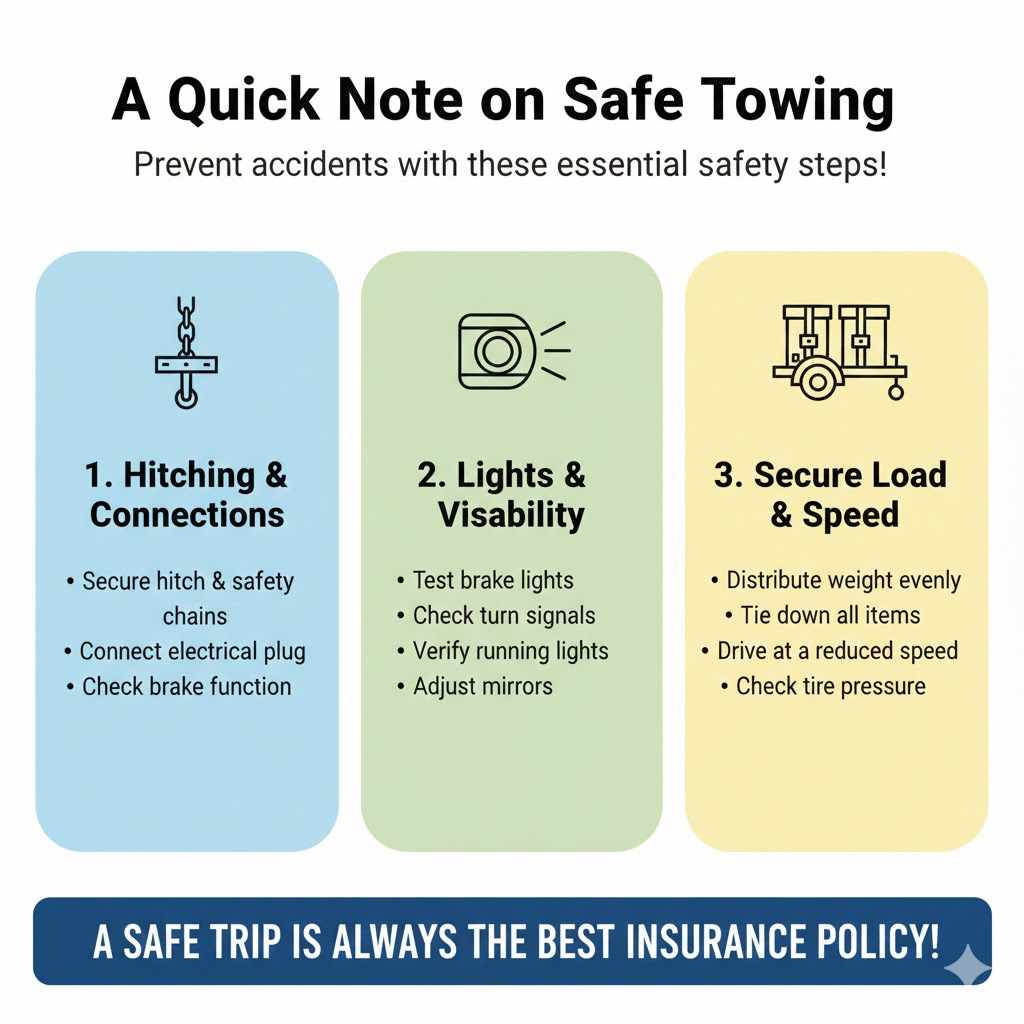
A Quick Note on Safe Towing
Having the right insurance is crucial, but so is towing safely to prevent an accident in the first place. Always follow proper procedures for hitching your trailer, checking your lights, and securing your load. The National Highway Traffic Safety Administration (NHTSA) offers an excellent guide on towing safety that every driver should read. Remember, a safe trip is always the best insurance policy.
Frequently Asked Questions (FAQ)
1. What happens if my uninsured trailer gets stolen?
Unfortunately, if you only have standard auto insurance, nothing is covered. Your auto policy’s comprehensive coverage only applies to your car or truck, not the trailer. To be protected from theft, you need to add comprehensive coverage specifically for the trailer through an endorsement or a separate policy.
2. Does my car insurance cover a rented U-Haul trailer?
Your auto liability coverage will typically extend to the rented trailer. However, you are responsible for any damage to the U-Haul trailer itself. U-Haul and other rental companies offer optional damage waivers or insurance plans for a small fee. It is almost always a good idea to purchase this coverage to avoid a huge bill if the trailer gets damaged.
3. Is the stuff inside my utility trailer covered by car insurance?
No. Your car insurance does not cover personal belongings. The contents of your trailer might be covered by your homeowners or renters insurance, but you should check your policy for limits, especially for items being transported away from your home. If you frequently haul valuable items, a dedicated trailer policy with contents coverage is a safer bet.
4. Do I need to tell my insurance company every time I tow a trailer?
You don’t need to call them for a one-time trip, as your liability coverage should extend automatically. However, you absolutely need to call them when you purchase a trailer to discuss adding physical damage coverage for it. Don’t wait until you have a claim to find out you’re not covered.
5. Will towing a trailer make my car insurance more expensive?
Simply towing a trailer does not usually increase your premium for your car insurance itself. However, if you choose to add physical damage coverage for the trailer, that will be an additional cost. The cost is typically very reasonable and is based on the trailer’s value and type.
6. What’s the difference between an “endorsement” and a “separate policy”?
An endorsement (or rider) is an add-on to your existing auto insurance policy. It’s a simple way to add physical damage coverage for a smaller, less expensive trailer. A separate policy is a completely standalone insurance plan, which is usually required for more valuable and complex trailers like RVs, fifth wheels, or horse trailers. A separate policy offers much more comprehensive and specialized coverage.
Conclusion: Tow with Confidence
So, does car insurance cover trailers? As we’ve seen, it’s a “yes” for liability but a firm “no” for protecting the trailer itself from damage or theft.
The most important takeaway is to never assume you’re covered. Your car’s liability protection is a great safety net for others on the road, but it won’t help you if your own trailer gets damaged. For any trailer you own—whether it’s a small utility hauler or a large camper—the smartest move is to pick up the phone and talk to your insurance agent. Ask clear questions and explore your options for adding physical damage coverage.
For a small extra cost, you can get the right protection and enjoy every trip with the confidence of knowing that you and your property are truly covered. Now you can get back to planning that next adventure!