Fastest Slot Car: Proven Best Speed
The fastest slot car is generally a highly modified, lightweight electric car using a powerful aftermarket motor, low-friction tires, and optimized gearing on a well-maintained, low-resistance track. For beginners, starting with a high-quality, ready-to-run (RTR) car from brands known for speed, like Ninco or Scalextric Digital, is the best proven route to achieving top speeds safely.
Do you love watching tiny cars zoom around a track at unbelievable speeds? Slot car racing is a fantastic hobby, but it can be frustrating when your car seems stuck in the slow lane. You want that thrilling burst of speed, but you might feel lost when looking at motors, gears, and magnets. Don’t worry! Getting your slot car fast is simpler than it sounds. We will break down the secrets to unlocking serious speed without needing a complicated engineering degree.
We’ll cover everything from choosing the right car to making simple tweaks that make a huge difference on the curves. By the end of this guide, you will feel confident knowing exactly what makes a slot car the fastest slot car and how to achieve that speed yourself. Let’s get those little racers flying!
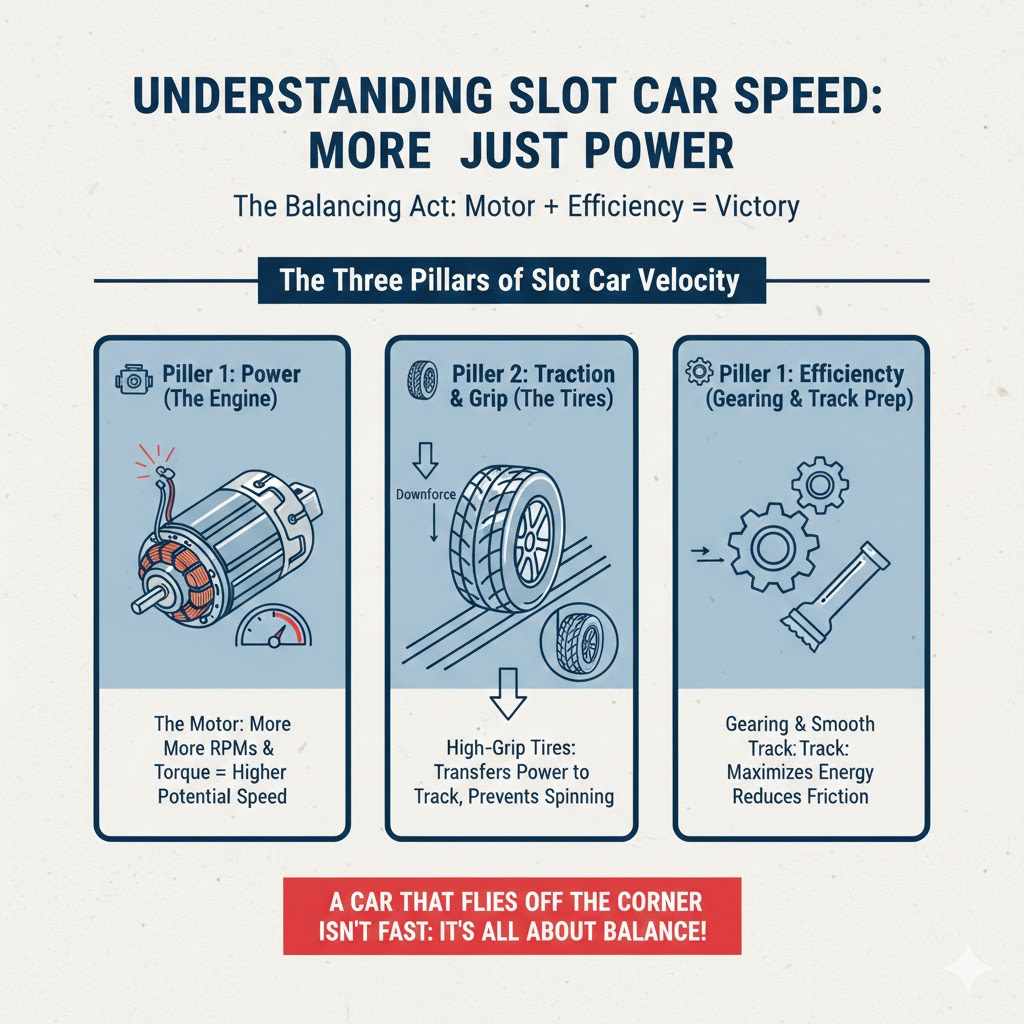
Understanding Slot Car Speed: More Than Just Power
When we talk about the “fastest slot car,” it’s easy to think that only the biggest, loudest motor wins. That’s only half the story! Speed in slot car racing is a balancing act. It involves how much power the motor makes, how efficiently that power gets to the wheels, and how well the car stays glued to the track through the turns. A car that flies off the track on the first corner isn’t fast, even if it has the strongest engine.
The Three Pillars of Slot Car Velocity
To truly build a fast machine, you need to focus on three key areas. Think of these as the foundation of your speed quest:
- Power (The Engine): This is the motor. A better motor means more potential speed.
- Traction & Grip (The Tires): Power is useless if the wheels spin instead of gripping the track. Good tires are crucial.
- Efficiency (Gearing & Track Prep): This is how well the motor’s energy is transferred to the wheels without losing energy to friction or heat.
Step 1: Choosing Your Starting Platform (The Car)
If you are starting from scratch, the initial choice of car sets a major speed limit. Some entry-level cars are built for durability and realism, not outright speed. For the fastest slot car experience right out of the box, look at manufacturers known for performance.
Recommended Brands for Speed Potential
While you can modify any car, these brands often come standard with better components that are easier to upgrade:
- Scalextric: Excellent all-around choice. Their “Advanced” or “GT” lines usually offer better motors than the basic range.
- Ninco: Historically famous for having powerful, reliable motors that handle high-voltage setups well. Great for speed enthusiasts.
- Fly (Especially Slot Car Pro Series): Often come with high-end components, but sometimes require more track knowledge to handle their lighter weight.
Beginner Tip: Look at the motor type. Scalextric typically uses Mabuchi-style motors, which are reliable. If you see terms like “Pro” or “Competition” in the name, you are usually buying a car closer to its maximum speed potential.
Step 2: Motor Magic – Finding the True Power Source
The motor is the heart of your fast slot car. Stock motors are fine for cruising, but speed demons demand upgrades. When evaluating motors, you will see two key specifications: Torque and RPM (Revolutions Per Minute).
RPM vs. Torque: Which is Better for Speed?
- High RPM: Means the motor spins very fast. This is crucial for achieving the highest top speed on long, straight sections of track.
- High Torque: Means the motor can pull hard, often better for accelerating quickly out of tight turns or handling heavier cars.
For the fastest slot car record attempts (usually focusing on sheer top speed down a straightaway), most racers lean toward high-RPM motors, provided their gearing is matched correctly.
The Best Upgrade Motors for Speed
Serious speed seekers often move away from standard motors (like the Scalextric ‘black can’) to specialized aftermarket motors. These are usually smaller, lighter, and designed for high efficiency at higher voltages.
| Motor Type | Typical RPM Range (approx.) | Best For | Note |
|---|---|---|---|
| Stock (e.g., Mabuchi FK-130) | 15,000 – 18,000 | General use, reliability | Good starter motor. |
| Competition/Pro (e.g., Slot.it Orange or Yellow) | 22,000 – 27,000 | High speed, balanced racing | Excellent upgrade for raw speed. |
| High-End Tuned (e.g., NC-10 or similar) | 30,000+ | Maximum straight-line speed | Requires careful track and gearing setup. |
Pro Tip on Voltage: The speed you get depends heavily on the power pack. Most home sets run at 12V or 14.8V. Dedicated speed runs might use higher voltage, but this dramatically increases heat and wear. For safe home use, stick to a variable power supply that allows you to slowly increase voltage as you dial in your setup.
Step 3: Gearing – The Transmission Secret
Gearing connects the motor’s spinning power to the wheels. Getting this ratio wrong means your car will either be slow off the line (too low a gear) or run out of top speed too quickly (too high a gear).
Understanding the Gear Ratio
The gear ratio compares the number of teeth on the pinion gear (the small gear on the motor shaft) to the number of teeth on the spur gear (the larger gear attached to the rear axle).
Ratio Example: A 9-tooth pinion gear and a 28-tooth spur gear give you a ratio of 9:28, which simplifies to about 3.1:1. This means the motor turns 3.1 times for every one turn of the wheel.
How to Choose the Right Ratio for Speed:
- Tight, Twisty Track: You need more torque and acceleration. Use a lower ratio (e.g., 3.0:1 or even 2.8:1). This means a larger spur gear or a smaller pinion gear.
- Long, Straight Track: You prioritize top speed. Use a higher ratio (e.g., 3.5:1 or 3.7:1). This means a smaller spur gear or a larger pinion gear.
For the absolute fastest slot car on a standard home layout, most racers settle around a 3.3:1 to 3.5:1 ratio when using a high-RPM motor. You must experiment here—the perfect ratio depends entirely on your specific track layout.
Step 4: Minimizing Friction – The Key to Efficiency
Every bit of energy lost to friction is speed lost down the straightaway. For a truly fast car, you must attack friction everywhere it hides.
A. Tires: Contact is Everything
Stock rubber tires are soft, sticky, and wear out fast. For speed, you need hard, smooth, and perfectly trued tires.
Tire Upgrades:
- Material: Look for polyurethane or silicone tires. These are harder and offer a lower rolling resistance than soft rubber, meaning less energy is wasted deforming the tire sidewall.
- Truing: This is critical. An untrued tire is slightly egg-shaped, causing the car to vibrate and lose traction at high speed. Use a dedicated tire truer tool (or a specialized grinding block) to make the tire perfectly round while spinning on the axle. This is a non-negotiable step for top speed.
- Cleaning: Always clean your tires with a dedicated tire cleaner or a tiny bit of isopropyl alcohol just before a fast run. Dirt and dust kill grip.
B. Bushings and Bearings
The axles spin inside the car chassis. Stock cars often use simple plastic bushings. Plastic creates friction, especially when the motor is pulling hard.
The Upgrade: Switch to bronze bushings or, ideally, tiny ball bearings. Ball bearings virtually eliminate axle friction. While more expensive, this upgrade provides a noticeable boost in coasting distance and top-end speed because less motor power is wasted fighting friction in the bearings.
C. Lubrication (The Right Kind)
Use high-quality, synthetic slot car oil sparingly on the motor shaft bushings (if you keep them) and the axle bearings. Too much oil attracts dust and creates drag. Just a tiny drop on the moving surfaces is all you need.
Step 5: Track Maintenance – The Unsung Hero of Speed
You can have the best motor in the world, but if your track is dirty or warped, you will never reach maximum velocity. Remember, the car needs smooth power delivery through the guide blade and consistent contact with the rails.
Cleaning the Rails
Rail conductivity is vital. Dirt, oxidation, and oil create resistance, causing the car to slow down, especially as the voltage increases. This is a constant battle for top-speed racers.
How to Clean Rails Effectively:
- Use a specialized track cleaning block, a piece of fine Scotch-Brite pad, or even an old credit card wrapped in a lint-free cloth lightly dampened with window cleaner (ammonia-free is often preferred for plastic tracks).
- Run a dedicated cleaning car (a car with rough tires and strong magnets) over the track at full power for several laps before your speed run.
Ensuring Track Smoothness
Even professional modular tracks can slightly warp over time or when the temperature changes. Any bump or gap causes the guide pin to jump, which momentarily cuts power and slows the car down.
For serious speed, ensure all track sections are perfectly level where they connect. If you use a routed wooden track, ensure the surface is sanded smooth. The USRA (United States Race Administration) often publishes standards for track surface consistency that you can reference for high-speed competition guidelines.
Step 6: Magnet Placement and Downforce Control
Most modern slot cars, especially those from Scalextric and others, use small magnets embedded in the chassis to help the car stay on the track through turns. These magnets are essential for stability but can hurt top speed.
The Magnet Dilemma
Magnets increase downforce. More downforce means better grip in curves, allowing you to take corners faster. However, extra downforce also increases the drag between the guide blade and the track slot, slowing your top speed on the straights.
For the Absolute Fastest Slot Car Run (Straight Line Focus):
- Remove or Reduce Magnets: If you are testing top speed on a very long straightaway with no curves, you should remove the magnets entirely or replace them with much weaker ones.
- Adjust Height: If you must keep them for stability, ensure the magnets are set as high as possible in the chassis recesses so they only engage the track when the car is leaning, not constantly pulling down.
Note on Magnetic Racing: If your goal is the fastest lap time on a twisty course, you want strong magnets placed optimally to allow high-speed cornering. If your goal is the highest straight-line speed, magnets are your enemy due to added drag.
Step 7: Body Weight and Aerodynamics
Weight is the enemy of acceleration and top speed, but it can also be an ally for stability if managed correctly. For pure speed runs, we want light and smooth.
Lightening the Load
To achieve the fastest slot car, you need to minimize excess weight. This involves:
- Body Shell: If your body shell is heavy plastic, consider replacing it with a lighter polycarbonate (clear plastic) shell if allowed by your racing class.
- Interior Removal: Take out any unnecessary interior trays, driver figures, or heavy window inserts.
- Axle/Wheel Weight: Lighter wheels and hollow axles reduce rotational mass, meaning the motor spends less energy spinning up the weight and more energy moving the car forward.
Aerodynamics
While slot cars are small, sharp edges create drag. Ensure the body sits flat on the chassis. Any gaps between the body and the chassis can catch air and slow you down. Sanding or filing down rough edges on the bodywork can yield minor, but measurable, speed gains.
Building Confidence: Testing and Tuning Incrementally
The journey to the fastest slot car isn’t about replacing every part at once. It’s about making small, smart changes and testing the result.
The Tuning Loop
Follow this cycle after every major change (motor swap, gearing change, tire truing):
- Change One Thing: E.g., only change the pinion gear from 10T to 11T.
- Test Carefully: Run the car several times at gradually increasing voltage. Listen for strain or burning smells.
- Observe: Did the top speed increase? Did cornering stability decrease?
- Adjust Power: If the car pulls wheelspin easily, you might need to reduce the track voltage slightly or use softer tires until the gearing is perfect.
Remember, the relationship between the motor, the gear ratio, and the track topology is complex. A super-fast motor with the wrong gearing will perform worse than a moderate motor with perfect gearing. The goal is synergy.
Advanced Techniques for Record-Breaking Speed
Once you master the basics, these steps separate the fast cars from the genuinely record-breaking ones.
Motor Braking and Controller Adjustment
High-end electronic controllers allow you to adjust “Braking” force. Braking is important because it helps the car slow down smoothly for corners. However, for pure straight-line speed runs, you want minimal or zero magnetic braking, as this wastes momentum.
Additionally, professional controllers often allow for sensitivity adjustments. A smoother throttle curve prevents the sudden jolt of power that can cause the guide pin to pop out of the slot when you first hit the trigger.
Chassis Flexibility and Setup
The chassis (the frame under the body) can dramatically affect performance. Many high-speed setups use a “sprung” or “floating” chassis setup.
- Floating Chassis: This means the chassis isn’t bolted rigidly to the motor housing. It allows the chassis to flex slightly to match the subtle undulations of the track, keeping the tires in better contact and reducing binding.
- Motor Pods: Some high-performance chassis use interchangeable motor pods (like a “pod” holding the motor and axles) that allow you to adjust the front-to-back placement of the motor for better weight balance.
This level of setup requires precision tools and a deep understanding of how the weight shifts during acceleration. For a beginner looking for the fastest slot car, focus on the steps above before diving into chassis modification.
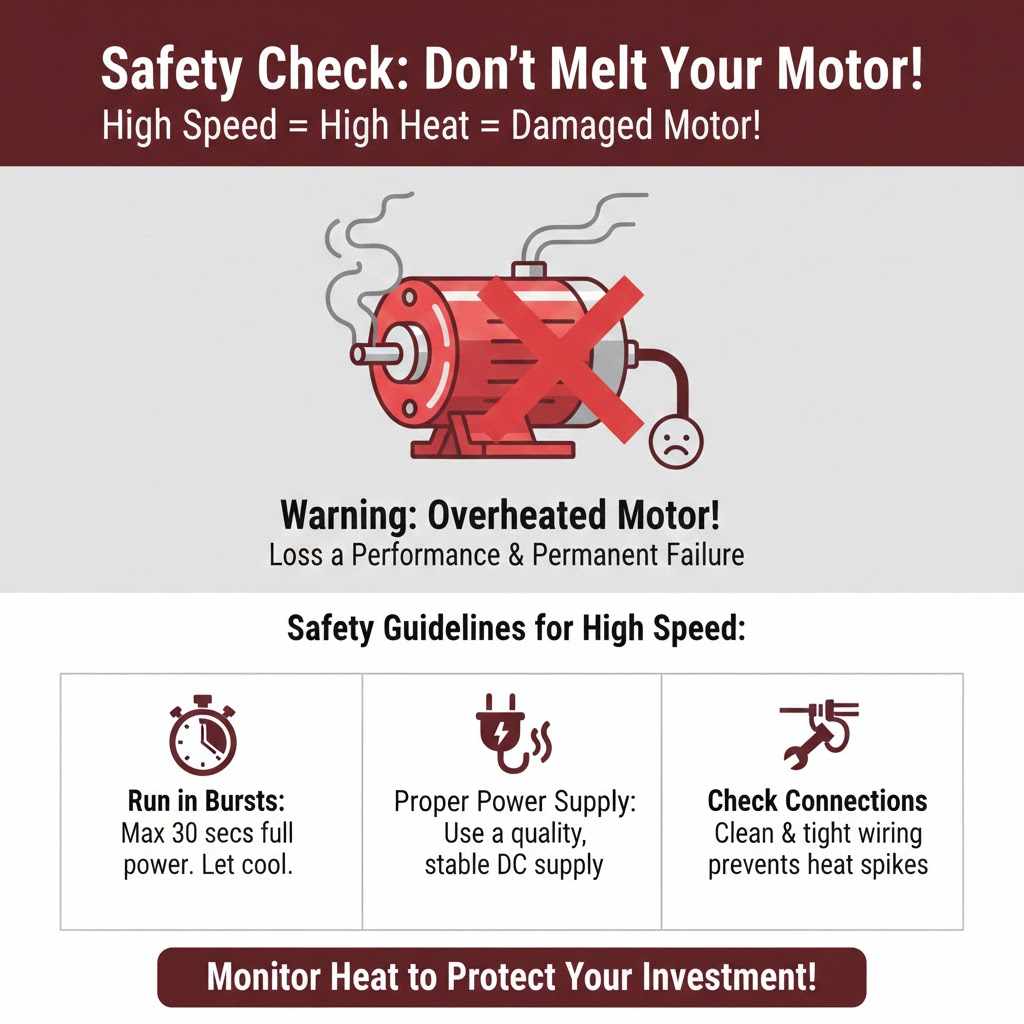
Safety Check: Don’t Melt Your Motor!
Pushing a slot car to its limits generates massive heat. An overheated motor will lose performance quickly and permanently fail. Always monitor heat.
Safety Guidelines for High Speed:
- Run in Bursts: Never run a highly modified car at full power for more than 30 seconds at a time during initial testing. Let it cool down between runs.
- Use a Proper Power Supply: Cheap wall warts that come with beginner sets can deliver unstable power. Invest in a high-quality, adjustable DC power supply. You can often find information on safe voltage limits for hobby electronics through resources like university physics departments studying basic electromagnetism, which validates the need for clean power delivery.
- Check Connections: Ensure all wiring, especially where the track rails connect to the power supply, is clean and tight. Bad connections create resistance and heat spikes.
Frequently Asked Questions (FAQ) for Beginner Speed Tuning
Q1: What is the single most important thing for a faster slot car?
A: It is the tires. Perfectly trued, clean, and appropriate-compound tires ensure that every bit of power the motor makes actually pushes the car forward, rather than causing wheelspin or vibration.
Q2: Can I make my stock Scalextric car really fast?
A: Yes! If you cannot afford a new motor, focus entirely on cleaning the track rails, ensuring the guide blade is clean and free of obstruction, and making sure the existing motor brushes are fresh and making good contact. That will provide a significant boost.
Q3: What voltage is safe to run my slot car at?
A: Most beginner sets are designed for 12V to 14.8V. If you upgrade your motor to a high-performance model, you might safely use up to 18V, but you must monitor the heat very closely. Always check the manufacturer’s recommended voltage for any new motor.
Q4: Do I need to change the gears if I change the motor?
A: Almost always, yes. A high-RPM motor needs a “taller” gear ratio (higher number, like 3.5:1) to use its speed potential. A high-torque motor might benefit from a “shorter” ratio (lower number, like 2.9:1) to accelerate harder.
Q5: Why does my fast car keep flying off the track in corners?
A: This usually means you have too much power (speed) for the available grip (traction) or the downforce. Try reducing the track voltage or installing stronger magnets (if you are on a twisty track) until you can consistently clear the corner.
Q6: How often should I clean my track rails for top speed runs?
A: For serious speed attempts, clean the rails immediately before every session. Even a few minutes of use can deposit enough grime to slow the car noticeably due to increased electrical resistance.
Conclusion: Your Blueprint for Speed
Achieving the title of the fastest slot car is an exciting blend of mechanical tuning and track knowledge. It is not about buying the most expensive single component; it is about creating a perfectly balanced system.
Start by establishing a clean slate: spotless track and perfectly trued tires. Then, address the motor—investing in a higher RPM motor is usually the best single speed upgrade. Finally, fine-tune the gearing to match that new motor to your specific track layout. Remember to make changes one at a time so you know exactly which tweak gave you the performance edge.
With patience and these systematic steps, you will gain the confidence to tune your machine, conquer the track, and enjoy the thrilling feeling of watching your custom-built slot car absolutely fly past the competition. Happy racing!