Floor Pump for Car Tires: Manual Foot Pumps vs Electric Inflators
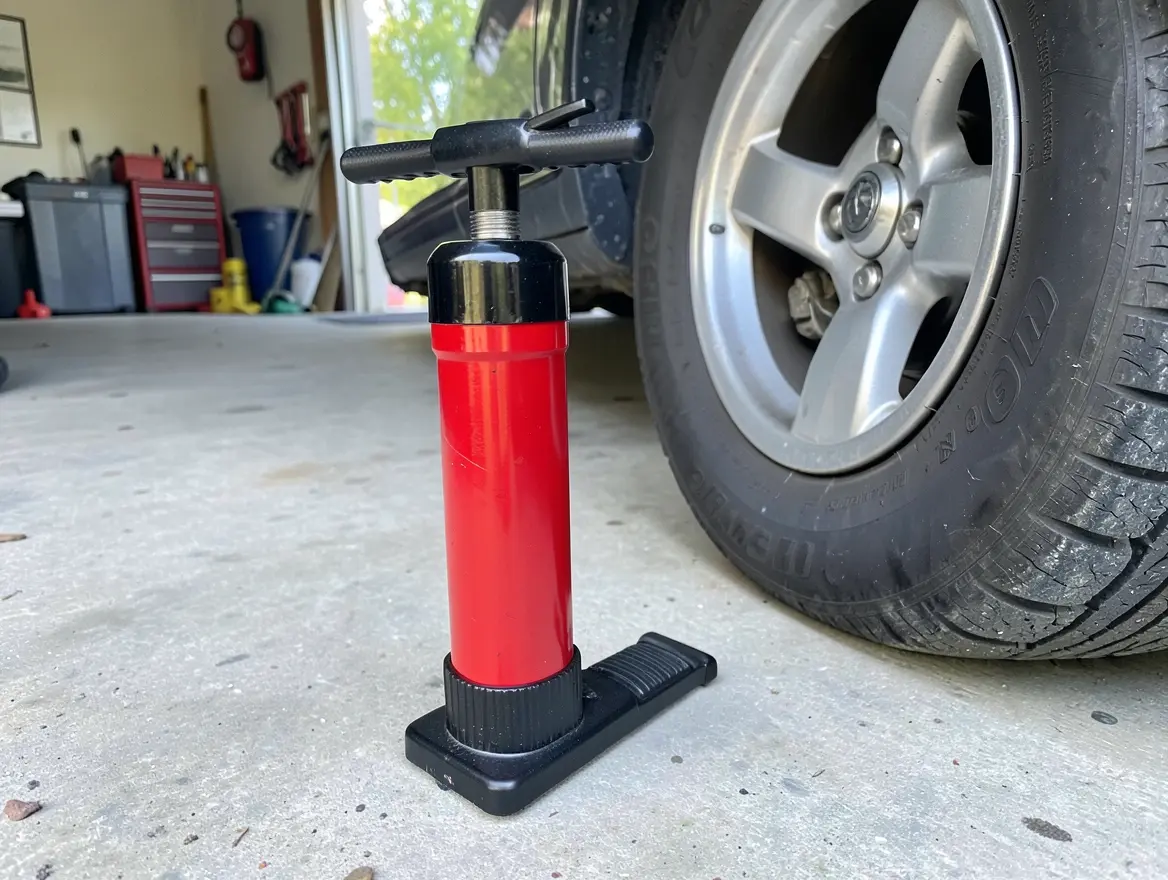
A floor pump for car tires is a manual, foot-operated pump with a wide cylinder built to move a lot of air per stroke — not a repurposed bicycle pump. Car tires hold far more air volume than bike tires, so a true floor pump for a car needs a bigger barrel and a stable foot base, even though the target pressure (usually 30–35 PSI) is actually lower than most bike tires.
Below we cover what actually separates a car-rated floor pump from a bike pump, when a manual pump makes sense versus an electric inflator, and a tested-style pick worth keeping in the trunk.
What Is a Floor Pump for Car Tires?
A floor pump for car tires is a manual air pump that sits on the ground and is operated by foot pressure on a stabilizing pedal or base, with a hand-held handle used to draw air in and push it out through a hose and valve chuck. Most models include a built-in pressure gauge so you can watch the PSI climb as you pump.
The key difference from a bicycle floor pump is barrel size. Bike tires typically run 40–120 PSI but hold very little air, so a narrow bike-pump cylinder can hit that pressure in a couple dozen strokes. Car tires need far less pressure — usually 30–35 PSI — but hold a much larger volume of air, so a standard bike pump moving that little air per stroke would take somewhere around 150–200 strokes to fill one tire from flat. A car-rated floor pump uses a wider piston (often a dual-cylinder design) specifically so each stroke moves more air, cutting that effort down considerably.
One quick safety note before you start: always check the recommended tire pressure on the sticker inside your driver’s door jamb or in your owner’s manual, not the number molded into the tire sidewall. The sidewall number is the tire’s maximum cold pressure rating, not the pressure your vehicle’s manufacturer actually recommends.
HEAVY-DUTY MANUAL PICK
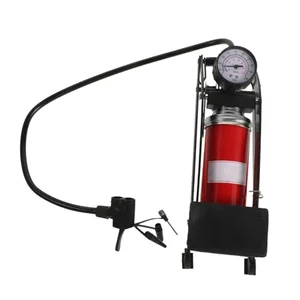 |
VINTORKY High Pressure Foot Pump for Car Tires – $35.29 A dual-cylinder-style manual foot pump built specifically for the higher air volume of car tires, with an anti-slip pedal base and a built-in barometer gauge.
|
Manual Floor Pump vs Electric Tire Inflator: Which Should You Choose?
Both tools get air into a tire, but they trade off differently on speed, cost, and reliability when your car battery or a power outlet is not available.
| Feature | Manual Floor Pump | Electric Tire Inflator |
|---|---|---|
| Power source | None — foot pressure only | 12V outlet, rechargeable battery, or wall power |
| Time to fill one flat tire | Several minutes of steady pumping | Typically 3–5 minutes, hands-free |
| Physical effort | Moderate to high | Minimal — just hold the hose |
| Works with a dead car battery | Yes | Only if it has its own rechargeable battery |
| Typical cost | $25–$40 | $25–$70 |
| Best for | Slow leaks, top-offs, no-power backup | Regular maintenance, faster full fills |
If you mainly need to top off a tire that has lost a few PSI over a cold week, a manual floor pump gets the job done without ever needing a charge or an outlet. If you would rather not pump by hand at all, or you regularly need to fill a tire from flat, an electric inflator is the more convenient everyday choice.
How to Use a Floor Pump to Inflate a Car Tire
- Check your door jamb sticker or owner’s manual for the recommended cold tire pressure.
- Remove the valve stem cap and set it somewhere you will not lose it.
- Press the pump’s valve chuck firmly onto the tire valve until the hiss of escaping air stops.
- Place one or both feet on the pump’s base to hold it steady, then work the handle up and down with steady, even strokes.
- Stop every 15–20 strokes to check the gauge reading against your target PSI.
- Once you reach the recommended pressure, remove the chuck quickly and screw the valve cap back on.
When an Electric Tire Inflator Makes More Sense
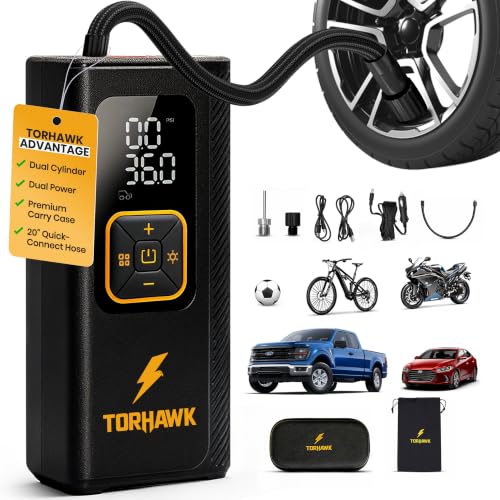
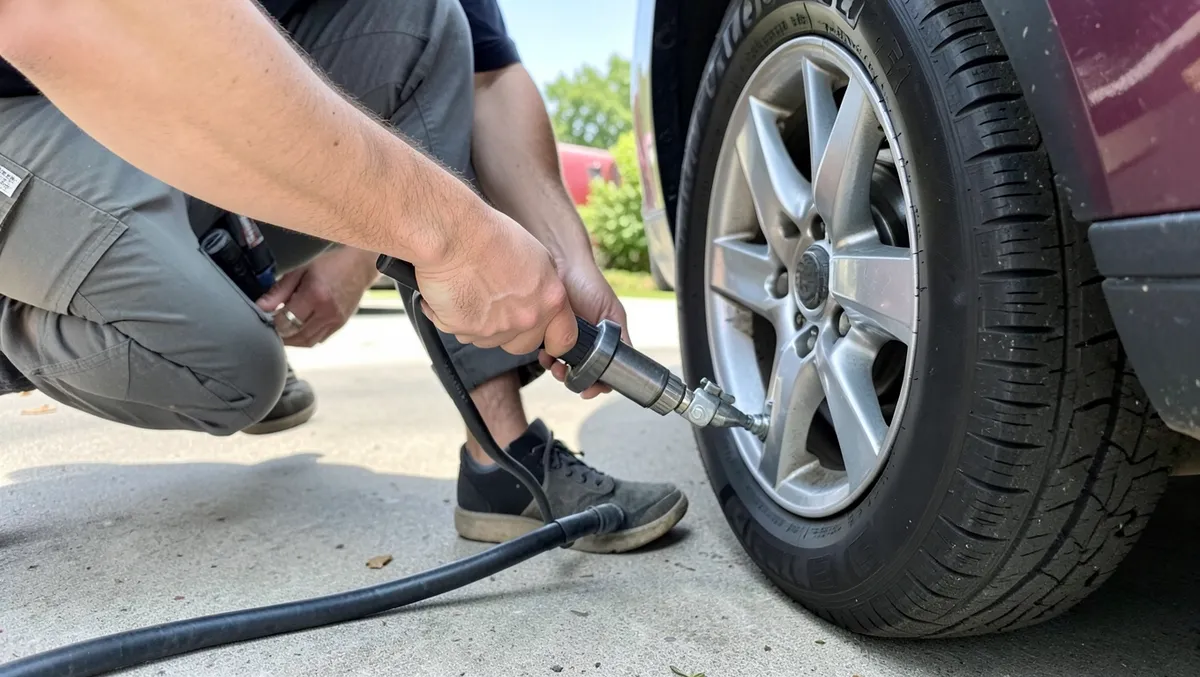
A manual floor pump is a solid no-power backup, but if you would rather skip the physical effort entirely — especially for filling a tire from completely flat — a 12V portable electric inflator will do it in a few minutes with almost no effort on your part. We compare several of those side by side in our guide to the best portable car tire inflators, which is worth a look if hands-free speed matters more to you than a zero-battery backup.
Frequently Asked Questions
Can I Use a Bike Floor Pump on My Car Tires?
Technically yes, but it is not practical. Car tires hold far more air volume than bike tires, so a narrow bike-pump cylinder that only moves a small amount of air per stroke could take hundreds of strokes to fill one car tire from flat. A car-rated floor pump uses a wider barrel specifically to move more air per stroke.
How Long Does It Take to Inflate a Car Tire With a Manual Floor Pump?
Topping off a tire that is only a few PSI low takes a minute or two. Filling a fully flat tire from zero takes considerably longer and real physical effort, which is why most people reserve a manual floor pump for top-offs and slow leaks rather than a full flat repair.
What PSI Should My Car Tires Be?
Check the sticker inside your driver’s door jamb or your owner’s manual, not the tire sidewall. The sidewall number is the tire’s maximum cold pressure rating, not your vehicle manufacturer’s recommended pressure. Most passenger cars call for 30–35 PSI, though some SUVs and trucks recommend more.
Is a Manual Floor Pump or Electric Inflator Better for Emergencies?
A manual floor pump works even if your car battery is dead and there is no outlet nearby, which makes it a dependable backup. An electric inflator is faster and easier, but only if it has power — either a working 12V outlet or a charged internal battery.
Do SUV and Truck Tires Need a Different Pump?
Not a different type of pump, but larger tires hold more air, so filling them with a manual floor pump takes more strokes and more effort than a compact car tire. The pump itself works the same way regardless of vehicle size.
Do I Need a Pressure Gauge if My Floor Pump Already Has One?
A built-in gauge is usually accurate enough for everyday use, but a separate digital tire pressure gauge is worth keeping in the glovebox as a quick double-check, especially before a long trip.
Conclusion
A true floor pump for car tires is built with a wider barrel than a bicycle pump so it can move the larger volume of air a car tire needs, even though the target pressure is actually lower than most bike tires. It is a reliable, no-battery backup for slow leaks and top-offs. If you would rather skip the physical effort and fill a flat tire in a few minutes hands-free, a portable electric inflator is the better everyday tool — and keeping both in the trunk covers you either way.
Products related to this article
Sponsored / affiliate links. As an Amazon Associate I earn from qualifying purchases. I may earn additional commission from eligible campaigns.