Ford 460 Carburetor Upgrade: Matching the Right Carb to Your Big Block
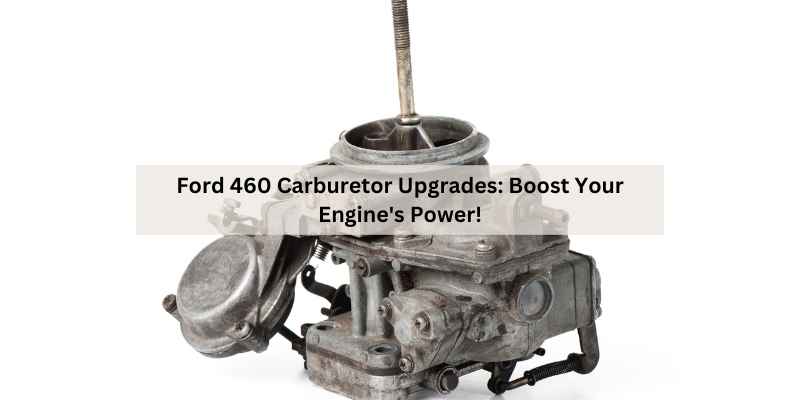
You’ve got a 460 Ford that runs, but it doesn’t run right. Maybe it stumbles when you crack the throttle, or it idles rough, or the gas gauge drops faster than the tach climbs. The stock Motorcraft 4350 or the earlier 4-barrel units on these engines were tuned for a different era—one focused on emissions and fuel economy, not power. Swapping in a new carburetor is often the single best upgrade you can make, but picking one isn’t as simple as grabbing the biggest part number you can find.
This guide covers the whole system, not just the carburetor. You’ll learn how to calculate the right CFM for your specific combo, understand the difference between vacuum and mechanical secondaries, and see why your intake manifold and camshaft specs matter just as much as the carburetor itself. We’ll also walk through the practical stuff most guides skip: throttle linkage, the C6 kickdown rod, fuel delivery, and tuning. By the end, you’ll know exactly what to buy and how to make it work.

RoyalAir
15369D Carburetor Rebuild Kit Repair Kit Replacement…
- This Carburetor Rebuild Fits For Motorcraft/Autolite 2100 2150 2 Barrel Carburetor
- These 15593D Rebuild kit packages contain the necessary high-quality components you'll need to restore your carburetor to like-new…
- The Package includ instruction For Easy to read instructions insure a quick and easy installation with step by step rebuilding ins…
If you’re rebuilding a stock 2100 or 2150 and want to keep things original, a quality rebuild kit is the right move. The RoyalAir 15369D carburetor rebuild kit includes the gaskets, check balls, and adjustment specs needed to bring a tired factory unit back to life, which is a solid option if a full aftermarket swap isn’t in the budget.
Why Upgrade Your Ford 460 Carburetor? (The ‘Smogger’ Problem)
The 460 cubic inch engine, especially the ones built between 1972 and 1976, came from the factory strangled. Low compression pistons, restrictive exhaust manifolds, and a carburetor with tiny venturis were all designed to meet emissions standards that were changing every year. The result was an engine that made its peak torque at a lazy 2,200 RPM and ran out of breath by 4,000. The stock carburetor, often a Motorcraft 4350 with its notorious internal leakage issues, is usually the weakest link.
Replacing it with a modern aftermarket carburetor wakes the engine up. You get sharper throttle response, better cold starts, and often a noticeable gain in fuel economy simply because the new carburetor meters fuel more precisely than a 40-year-old unit with worn throttle shafts. The stock carburetor also lacks adjustable air bleeds or easily changeable jets, making it difficult to tune for a performance camshaft or a free-flowing exhaust system.
Here’s the honest part: a carburetor swap alone won’t transform a stock 460 into a race engine. But it will make the engine run the way it should have from the factory. It’s the foundation for every other performance upgrade you plan to make. If you’re adding headers, a bigger cam, or an aftermarket intake manifold later, the carburetor you choose now needs to support those future plans.
Choosing the Right CFM: Math, RPM, and Displacement
CFM stands for cubic feet per minute, and it’s a measure of how much air the carburetor can flow at a given pressure drop. Too much CFM and the engine will feel lazy and unresponsive at low RPM because the air speed through the venturis is too slow to properly atomize fuel. Too little CFM and the engine will run out of breath at high RPM, leaving power on the table.
The formula for calculating required CFM is straightforward: (Engine displacement in cubic inches × Maximum RPM) ÷ 3,456 = Theoretical CFM. For a 460, let’s run some numbers. If you plan to shift at 5,500 RPM, the math looks like this: (460 × 5,500) ÷ 3,456 = 732 CFM. That’s the theoretical ideal. But this formula assumes a perfectly efficient engine, which almost no street engine is. You need to multiply the result by a volumetric efficiency (VE) factor. A stock 460 with factory heads and a mild cam has a VE of about 0.80 to 0.85. A well-built street engine with ported heads and a performance cam might hit 0.85 to 0.90.
So, the real-world recommendation for a street 460 is a carburetor in the 750 to 800 CFM range. A stock engine with a dual-plane intake and stock cam does fine with a 750 CFM carburetor. A hotter street/strip build with a single-plane intake and a cam with over 230 degrees of duration at 0.050-inch lift can use an 850 CFM unit without losing low-end response. For a mostly stock engine that never sees over 4,500 RPM, a 650 to 700 CFM carburetor actually works better than a giant 850. The smaller primaries give you crisp throttle response, and the secondaries only open when you really need them.
Don’t get caught up in the ‘bigger is better’ mindset. A 750 CFM carburetor on a stock 460 is the sweet spot for 90 percent of builds. If you’re building a high-RPM screamer that lives above 5,500 RPM, step up to 850 CFM. For a tow truck or a daily driver that never sees wide-open throttle, a 650 CFM unit is a smart choice.
Carburetor Types: Vacuum vs. Mechanical Secondaries
This is where a lot of people make mistakes. The secondaries on a carburetor can be opened either by engine vacuum or by a direct mechanical linkage from the throttle. Each has its place, and the right choice depends entirely on your combination.
Vacuum secondaries are the better choice for most street cars. The secondary throttle plates are held shut by a vacuum diaphragm. When you floor the gas pedal, the primary throttle plates open, engine vacuum drops, and the diaphragm slowly opens the secondaries based on the engine’s actual demand. This prevents a bog when you crack the throttle at low RPM because the secondaries don’t open until the engine can handle the extra air. Vacuum secondaries are also more forgiving of camshaft mismatches and poor tuning, making them the default recommendation for a car that sees stop-and-go traffic.
Mechanical secondaries open instantly, tied directly to the throttle linkage. When you floor it, both sets of barrels open at the same time. This gives a sharp, immediate response at high RPM, which is why race cars use them. But on the street, especially with a heavy car like a Lincoln or an F-250, mechanical secondaries can cause a severe bog if the engine isn’t pulling enough air to use the sudden rush of fuel and air. They require a camshaft with enough overlap to keep the mixture moving at low RPM, and they punish poor tuning.
Here’s a practical rule: If your 460 has a stock cam or a mild performance cam with less than 220 degrees of duration at 0.050-inch lift, use vacuum secondaries. If you have a serious cam with over 240 degrees of duration and a loose torque converter, mechanical secondaries can work, but you need to be prepared to tune the accelerator pump circuit aggressively to avoid flat spots.
Matching Carb to Camshaft and Intake Manifold
The camshaft and intake manifold are the two components that most directly affect carburetor selection. The camshaft’s duration and lobe separation angle determine the engine’s vacuum signal at idle and low RPM. A stock cam with a wide lobe separation angle (112 degrees or more) produces strong vacuum, around 15 to 18 inches of mercury at idle. A performance cam with a tight lobe separation angle (108 degrees or less) and long duration produces much less vacuum, often below 10 inches, which makes the engine idle rough and causes a carburetor’s power valve to open prematurely if it’s not tuned correctly.
For a camshaft with a 112-degree lobe separation angle, a vacuum secondary carburetor with a standard power valve (rated at 6.5 inches of mercury) works perfectly. For a cam with a 108-degree lobe separation, you’ll need a carburetor with a lower-rated power valve (like 3.5 or 4.5 inches of mercury) to prevent fuel from being dumped in at idle. Most aftermarket carburetors, like Holley Street Avengers, ship with a power valve that’s too high for aggressive cams, so you’ll need to swap it out during tuning.
The intake manifold is just as critical. A dual-plane intake (like an Edelbrock Performer RPM) splits the engine’s RPM range into two separate planes. It keeps the air/fuel mixture moving at high velocity at low RPM, which gives excellent throttle response and torque below 4,500 RPM. A dual-plane intake works best with a vacuum secondary carburetor in the 750 CFM range. The longer, narrower runners of a dual-plane don’t flow enough air at high RPM to justify an 850 CFM carburetor.
A single-plane intake (like a Weiand Stealth or Holley Strip Dominator) has shorter, larger runners that sacrifice low-end velocity for high-RPM flow. These intakes are designed for engines that spend most of their time above 4,500 RPM. They work best with a mechanical secondary carburetor in the 850 CFM range. If you put a single-plane intake on a stock 460 with a mild cam, the engine will feel gutless below 3,000 RPM, and no amount of carburetor tuning will fix it.
Top Carburetor Picks for the 460
There are three main carburetor families that dominate the Ford 460 market: Holley, Edelbrock, and Quick Fuel Technology. Each has its strengths and quirks, and the right one for you depends on your budget and your tolerance for tuning.
Holley 0-80457SA (Street Avenger) – The Classic Choice
The Holley Street Avenger 770 CFM (part number 0-80457SA) is the most popular carburetor for a street 460. It’s a vacuum secondary carburetor with an electric choke, which makes it a direct bolt-on for a daily driver. The Street Avenger series comes pre-jetted from the factory for a mild small block or big block, so it runs reasonably well out of the box. The vacuum secondaries are adjustable, and Holley includes a kit to tune the secondary opening rate.
What I like about this carburetor is its simplicity. The four-corner idle mixture screws let you fine-tune the idle on an engine with a lumpy cam. The accelerator pump is adjustable, and the jets are easy to change. The downside is that the Street Avenger uses a specific power valve and accelerator pump cam that aren’t as easy to swap as on the standard Holley 4150 series. It’s a great carburetor for someone who wants to bolt it on and drive, but if you plan to do serious tuning, a standard Holley 750 double pumper might be a better option.
Edelbrock 1906 AVS2 – The Modern Street Performer
The Edelbrock AVS2 series, specifically the 1906 model (800 CFM), is the best choice for a 460 that spends most of its time below 5,000 RPM. The AVS2 uses a dual-stage secondary design that opens the secondaries progressively based on air velocity, not just vacuum. This gives you a smooth transition from cruise to wide-open throttle without the sudden rush of a mechanical secondary carburetor.
The AVS2 also features an improved fuel curve compared to the older Edelbrock 1406 models. It has larger primary jets and a revised metering rod system that provides better fuel atomization at low speeds. This translates to better throttle response and, in many cases, better fuel economy than a comparable Holley. The downside is that Edelbrocks are more sensitive to fuel pressure. They need a steady 5.5 to 6 PSI, and anything higher can cause the needle and seat to flood.
If you’re running a dual-plane intake and a stock cam, the 1906 is the most drivable carburetor you can buy. If you have a hotter cam, the Edelbrock’s tuning range is more limited than a Holley’s, and you might find yourself wishing for more adjustability.
Quick Fuel Technology Brawler – The Budget Performance Option
The Quick Fuel Technology Brawler series is the budget pick that doesn’t feel like a compromise. The Brawler 750 CFM vacuum secondary carburetor (part number BR-750-VS) is essentially a no-frills Holley 4150 clone. It uses the same tuning parts as a Holley, so you can swap jets, power valves, and accelerator pump cams using any Holley part. That’s a huge advantage if you want to learn to tune your own carburetor.
The Brawler comes with an electric choke and vacuum secondaries, making it street-friendly. The build quality is decent for the price, though the throttle shafts can feel a bit sloppier than a Holley’s. It also doesn’t include a baseplate gasket or a fuel line fitting, so budget for those separately. For a 460 with a mild cam and a dual-plane intake, the Brawler is an excellent value. It’s the carburetor I recommend to friends who want to spend their money on headers instead of a brand name.
Installation Guide: Linkage, Kickdown, and Fuel System Upgrades
Bolting on a new carburetor is the easy part. The hard part is making everything around it work correctly. Here’s a practical checklist for installing a new carburetor on a 460 with a C6 transmission.
Throttle Linkage: The stock Ford throttle cable or rod usually works with aftermarket carburetors, but you’ll likely need an adapter bracket to get the geometry right. The Holley and Quick Fuel carburetors have a standard throttle arm, while Edelbrocks have a different pattern. Check the throttle arm height and travel carefully. You want the throttle to reach wide-open position when the pedal is on the floor, without the linkage binding or hitting the intake manifold. A universal throttle bracket kit from companies like Lokar or Holley solves most fitment issues.
C6 Kickdown Rod: This is the most commonly botched part of a carburetor swap. The C6 transmission uses a mechanical kickdown rod that connects to the throttle linkage. If it’s not adjusted correctly, the transmission will shift too early or too late, and you’ll burn up the clutches. The rod needs to pull the transmission’s kickdown lever fully when the throttle is wide open. Most aftermarket carburetors need a specific kickdown cable bracket (like the Lokar C6 kickdown cable kit) to get the geometry right. The stock rod often won’t line up with the new carburetor’s throttle arm, so plan on buying an adjustable bracket or cable.
Fuel System: A new high-flow carburetor needs a steady supply of fuel. The stock mechanical fuel pump on a 460 is often marginal, especially if it’s 40 years old. A new stock-replacement pump that delivers 6 to 7 PSI is usually sufficient for a 750 CFM carburetor. If you’re running an 850 CFM carburetor or a high-RPM engine, upgrade to a high-volume mechanical pump (like a Carter or Holley) that flows 110 GPH or more. You also need at least a 3/8-inch fuel line from the pump to the carburetor. The stock 5/16-inch line is too small and will cause fuel starvation at wide-open throttle.
A fuel pressure regulator is a smart addition, especially with Edelbrock carburetors. Holleys can handle up to 9 PSI, but Edelbrocks flood above 6 PSI. A simple Holley or Edelbrock regulator set to 5.5 PSI protects your investment. Mount it near the carburetor, not near the tank, and use a gauge to verify the pressure.
Finally, check the throttle return spring. A new carburetor with a stiffer secondary spring might not close fully with a weak return spring, which can cause a high idle or a dangerous runaway condition. Use a dual return spring setup for safety.
Tuning Your New Carburetor: Idle, Jets, and Accelerator Pump
No carburetor runs perfectly out of the box, even the good ones. Plan on spending an afternoon tuning it. Here’s the order of operations.
1. Set the idle mixture screws. Start with the engine warm and the idle speed screw set so the engine idles at 800 RPM. Turn the idle mixture screws (usually two on the primary side) in until they seat gently, then back them out 1.5 turns each as a baseline. Start the engine and adjust each screw one at a time. Turn one screw in until the RPM drops, then back it out until the RPM peaks. Repeat on the other screw. Do this a few times until you can’t get any more idle speed from the mixture screws.
2. Check the idle speed. After the mixture is set, adjust the idle speed screw to get your target idle RPM. For a stock cam, that’s around 700 to 750 RPM in gear. For a performance cam, you might need 900 to 1,000 RPM to keep it from stalling.
3. Check the power valve. With the engine idling, use a vacuum gauge to read manifold vacuum. If it reads 8 inches of mercury, your power valve rating should be about 4.5 inches (half of the idle vacuum). If the power valve is rated too high, it will open at idle and cause a rich, sooty condition. Most new carburetors ship with a 6.5-inch power valve, which is wrong for any cam with less than 12 inches of idle vacuum.
4. Test the accelerator pump. With the engine off, look down the primary barrels and open the throttle. You should see a solid stream of fuel shooting from the accelerator pump nozzles. If it’s weak or delayed, increase the pump cam setting or use a larger pump nozzle. If it’s flooding, decrease the setting.
5. Road test and check the spark plugs. Drive the car hard for a few miles, then pull a spark plug and check its color. A tan or light brown color is correct. Black and sooty means the main jets are too rich. White or gray means too lean. Change the jets in small increments (two sizes at a time) and re-test. This is the fun part, but it takes patience.
If you’re running an LS engine carburetor setup in a swapped vehicle, the tuning principles are the same, but you’ll need to pay extra attention to the fuel pressure regulator since LS engines often have higher fuel pressure from an in-tank pump.
Frequently Asked Questions
Will a 460 carburetor upgrade improve fuel economy?
It can, but not dramatically. A modern carburetor with an electric choke and precise metering will often improve fuel economy by 1 to 3 miles per gallon compared to a worn-out stock unit, mainly because it eliminates the rich idle and off-idle stumbles. The bigger gains come from tuning. A properly tuned carburetor on an engine with a good ignition system and a free-flowing exhaust will always be more efficient than a rich-running stock setup. Don’t expect a miracle, though. A 460 in a heavy car is still going to drink gas.
Can I use a 600 CFM carburetor on a 460?
Yes, and it might be the right choice for a stock engine that never revs past 4,000 RPM. A 600 CFM carburetor will give you excellent throttle response and fuel economy because the air speed through the venturis is high, which atomizes fuel well. The downside is that you’ll run out of airflow at high RPM, and the engine will feel like it’s hitting a wall at 4,500 RPM. For a tow rig or a daily driver, that’s an acceptable trade-off. For a performance build, stick with 750 CFM.
Do I need an electric choke or a manual choke?
An electric choke is the best choice for a street car. It works automatically, uses the alternator’s power to warm up, and doesn’t require you to fiddle with a cable. A manual choke is fine for a race car or a garage queen that’s stored for months, but it’s a pain in cold weather. Most aftermarket carburetors come with an electric choke or have a kit available. If you’re building a street/strip car, the electric choke is worth the extra cost.
What about EGR and emissions equipment?
This is a legal issue. Removing the EGR system and the associated emissions equipment is not legal in many states and will fail a visual inspection. If you live in a state with emissions testing, you need to keep the original carburetor and EGR system intact, or use a carburetor that is specifically CARB-approved, which almost none of the performance units are. If you don’t have emissions testing, you can use an EGR delete plate to clean up the intake manifold. Just be aware that removing EGR can cause the engine to run hotter and potentially detonate if you don’t adjust the ignition timing accordingly.
Should I rebuild my stock carburetor or buy a new one?
If your stock Motorcraft 2100 or 2150 is in decent shape and you’re keeping the engine stock, a rebuild is the most cost-effective option. A good rebuild kit, like the one mentioned earlier, will restore the gaskets and check balls, and you can often solve common running issues. But if the throttle shafts are worn (which causes vacuum leaks that can’t be fixed with gaskets), or if you’re planning any performance upgrades, a new aftermarket carburetor is a better investment. Worn throttle shafts are the number one reason to replace a stock carburetor.
Final Verdict: Best Carburetor for Your Build
There’s no single ‘best’ carburetor for every 460, but there is a best one for your combination. The key is to match the carburetor to your camshaft, intake manifold, and intended use, not just to the engine’s displacement.
- For a stock 460 with a dual-plane intake and a mild cam, get a 750 CFM vacuum secondary carburetor. The Holley Street Avenger or Quick Fuel Brawler are both excellent choices.
- For a modified 460 with a hotter cam (230+ degrees duration) and a dual-plane intake, stick with a 750 CFM vacuum secondary but plan on swapping the power valve to a lower rating.
- For a street/strip 460 with a single-plane intake that lives above 4,000 RPM, an 850 CFM mechanical secondary carburetor (like a Holley double pumper) is the right tool.
- Never skip the fuel system upgrades. A new fuel pump, 3/8-inch lines, and a pressure regulator are mandatory for reliability.
- Don’t forget the C6 kickdown adjustment. A wrong adjustment will destroy your transmission.
- Budget for tuning time. A carburetor is a mechanical device that needs adjustment. Expect to spend at least a few hours dialing it in.
- Keep your firing order and ignition timing in check before you blame the carburetor. A 460 Ford firing order mistake or a weak spark plug wire will cause symptoms that look just like a carburetor problem.
Take the time to do it right, and your 460 will reward you with a strong, reliable power curve that makes every drive more enjoyable.
Products related to this article
Sponsored / affiliate links. As an Amazon Associate I earn from qualifying purchases. I may earn additional commission from eligible campaigns.