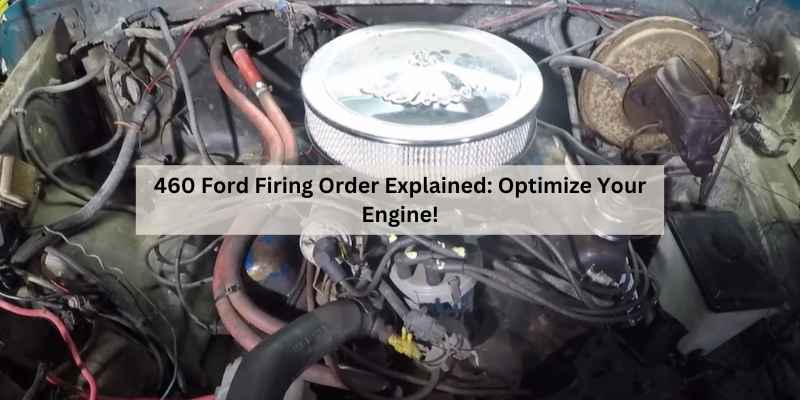
Ford 460 Firing Order: Cylinder Numbers, Distributor Rotation, and Wire Routing That Actually Works
You just finished a rebuild, or maybe you swapped a junkyard 460 into a project truck. You hooked up the plug wires following a diagram you found on a forum, and now it backfires through the carburetor and shakes like a washing machine on spin cycle. Sound familiar? The Ford 460 firing order gets messed up more often than almost any other V8, and it’s rarely because the order itself is hard to remember. It’s the cylinder numbering and distributor rotation that trip people up.
This guide walks you through the entire ignition side of the 385-series big block. You’ll learn the exact firing order, how the cylinders are numbered on this specific block, which direction the distributor rotor spins, and a static timing verification method using nothing more than a test light. By the time you finish, you’ll be able to wire a 460 from scratch and confirm your work without guessing.

Fuel Injector Connection
Ford Racing Procal 4 Calibration Delivery Tool
If you’re tuning a stock or mildly modified 460, a calibration tool like the Ford Racing Procal 4 can help you adjust the engine management parameters if you’ve swapped in a modern fuel-injected setup. It’s not required for a carbureted build, but it’s worth knowing about for later.
What Is the Ford 460 Firing Order?
The Ford 460 uses a firing order of 1-5-4-2-6-3-7-8. That sequence is identical to the Ford 429, the other member of the 385-series engine family. It’s also the same order used by many Ford small blocks, which is convenient if you’ve worked on a 302 or 351W before.
The 460 is a 7.5L V8, and it’s a big, heavy, torquey engine that Ford produced from 1968 through 1997 in various forms. The firing order is designed to balance the loads on the crankshaft and minimize engine vibration. If you get the order wrong, the engine will still crank, but it will run rough, pop through the intake, and possibly damage the catalytic converter if you have one.
Here’s the sequence written out so there’s no confusion: cylinder 1 fires, then 5, then 4, then 2, then 6, then 3, then 7, then 8. That’s it. The hard part is knowing which cylinder is which and where the distributor rotor points when you start.
Ford 460 Cylinder Numbering (385-Series Block)
The 385-series block numbers cylinders differently than a Chevy or a Chrysler. This is where most people go wrong.
Stand at the front of the truck, looking at the engine. The cylinder on the driver’s side (left bank) closest to the radiator is cylinder #1. The cylinders on the driver’s side run 1, 2, 3, 4 from front to back. The passenger’s side (right bank) runs 5, 6, 7, 8 from front to back.
- Driver’s side, front to rear: 1-2-3-4
- Passenger’s side, front to rear: 5-6-7-8
Notice that cylinder #5 is the frontmost cylinder on the passenger side. That trips up a lot of people. They assume the passenger side starts with #1 or #2, but it doesn’t. On this block, the left bank holds the odd numbers except for 5, and the right bank holds the evens except for 6 and 8. Just memorize the layout: driver side is 1 through 4, passenger side is 5 through 8.
Ford 460 Firing Order Diagram and Table
Here’s the firing order laid out in a table. This is the exact sequence you need to follow when routing wires from the distributor cap to the spark plugs.
| Firing Sequence | Cylinder Number | Bank |
|---|---|---|
| 1 | 1 | Driver’s side, front |
| 2 | 5 | Passenger’s side, front |
| 3 | 4 | Driver’s side, rear |
| 4 | 2 | Driver’s side, second from front |
| 5 | 6 | Passenger’s side, second from front |
| 6 | 3 | Driver’s side, third from front |
| 7 | 7 | Passenger’s side, third from front |
| 8 | 8 | Passenger’s side, rear |
When you look at the distributor cap, the terminals are arranged in a circle. The rotor spins clockwise, so the next terminal in the firing order should be the next one clockwise from the current one. If you set the #1 wire at the #1 terminal, the #5 wire goes on the very next terminal clockwise, then #4, then #2, and so on.
Distributor Rotation and Rotor Position
The Ford 460 distributor rotor spins clockwise. That’s a critical detail. If you route wires counterclockwise, the engine will fire in reverse order and won’t run at all.
To find the #1 terminal on the cap, you need to know where the rotor is pointing when the engine is at top dead center (TDC) on the compression stroke for cylinder #1. Here’s the process:
- Remove the #1 spark plug. Put your thumb over the hole.
- Have someone bump the starter or turn the crankshaft with a breaker bar until you feel air pushing past your thumb. That’s the compression stroke.
- Continue turning slowly until the timing mark on the harmonic balancer aligns with the 0-degree mark on the timing pointer.
- Now look at the distributor. The rotor should be pointing at a specific terminal on the cap.
That terminal is your #1. Mark it with a piece of tape or a paint pen. Then remove the cap and note the rotor position. When you install the cap, make sure the #1 terminal lines up with that rotor position. If you install the cap 180 degrees off, the rotor will point between terminals and you’ll get crossfire.
Step-by-Step Spark Plug Wire Installation
This is the part where you actually get your hands dirty. Follow these steps in order, and you’ll have a correctly wired 460.
- Set the engine to TDC on #1 compression using the method described above. Confirm the rotor points to a cap terminal.
- Mark the distributor housing and the cap so you know exactly where #1 is. A paint pen works well.
- Install the cap and locate the #1 terminal. The rotor position and the terminal must match.
- Attach the #1 plug wire to the #1 terminal and run it to the #1 cylinder (driver’s side, front).
- Move clockwise to the next terminal on the cap. That’s #5. Attach a wire and run it to cylinder #5 (passenger’s side, front).
- Continue clockwise for the remaining cylinders in the order 4, 2, 6, 3, 7, 8.
- Route the wires so they don’t cross each other near the distributor. Use separators if you have them. Crossing wires 5 and 6 is a common mistake because they fire consecutively in the order.
- Double-check each wire at both ends before you start the engine. Pull the boot off and verify the metal terminal is fully seated.
Pro tip: number your wires with tape before you pull the old ones off. It saves a headache. And don’t trust the previous owner’s wiring just because the engine ran. It might have run poorly for years.
How to Verify the Firing Order (Static Timing Test)
You think you wired it right, but you want to be sure before you fire it up. Here’s a static test that doesn’t require a running engine or a timing light.
- Turn the ignition to the run position but don’t crank the engine.
- Connect a test light to the negative side of the ignition coil. Ground the clip.
- Rotate the engine by hand until the #1 cylinder is at TDC on the compression stroke.
- Loosen the distributor hold-down bolt just enough to rotate the housing.
- Turn the distributor until the test light flickers or goes out. That’s the point where the points open or the electronic module triggers.
- Tighten the hold-down bolt. The rotor should be pointing at the #1 terminal.
This confirms the distributor is phased correctly with the engine. If the light doesn’t flicker, the distributor may be 180 degrees off. Pull it, rotate the shaft half a turn, and reinstall.
This test verifies the static timing, but it doesn’t check your plug wire routing. For that, you need to physically trace each wire from the cap terminal to the plug. There’s no shortcut.
Symptoms of an Incorrect Firing Order
An incorrect firing order on a 460 produces obvious symptoms. If you experience any of these, stop the engine and check your wiring:
- Backfire through the carburetor — This happens when the intake valve is open when the plug fires. It’s a loud pop and can cause a flame to shoot out of the intake.
- Backfire through the exhaust — This is a bang from the tailpipe, often caused by unburned fuel igniting in the exhaust manifold.
- Severe engine vibration — The crankshaft receives uneven pulses, and the whole engine shakes.
- Hard starting or no start — The engine may crank fine but never catch.
- Misfire at idle — The engine runs, but it’s rough and sounds like it has a lumpy cam even when it’s stock.
If you have a misfire that only happens under load, it could be a crossed wire, but it could also be a weak spark plug, a bad cap, or a vacuum advance issue. Check the simple stuff first.
Ford 460 vs. Ford 429: Key Differences
The 429 and 460 are both 385-series engines, and they share the same firing order. The confusion comes from the distributor drive gear and the stroke.
The 429 has a shorter stroke (3.59 inches) and a larger bore (4.36 inches) compared to the 460, which has a 4.36-inch bore and a 3.85-inch stroke. The 460 makes more torque at lower RPM because of the longer stroke. The distributor drive gear is the same for both engines, so you can swap distributors between them without issue.
What changes is the camshaft. A 429 cam has different lobe separation and duration than a 460 cam. If you use a 429 distributor with a 460 cam, the ignition timing curve might be slightly off, but the firing order will be correct. The rotor spins clockwise on both.
If you’re building a 460 and someone offers you a 429 distributor, it will work. Just make sure the gear matches the camshaft material. A steel gear on a cast iron cam will wear out fast.
Spark Plug and Ignition Specs for the 460
Getting the firing order right is half the battle. The other half is having the right spark plugs and gap. Here are the factory specs for a stock 460:
- Spark plug gap: 0.044 inches (for electronic ignition)
- Spark plug type: Motorcraft ASF-42C or equivalent
- Torque spec: 15-20 ft-lbs for the spark plugs
- Ignition timing: 6-8 degrees BTDC at idle (check your vacuum line to the distributor)
- Idle RPM: 650-750 in drive
If you have a modified engine with a bigger cam, you’ll need to adjust the timing and possibly the plug gap. A common street performance gap is 0.035-0.040 inches. Always check the plug manufacturer’s recommendation for your specific setup.
One thing I’ve learned: the vacuum advance on these distributors is often seized or disconnected. If your 460 runs hot or pings under load, check the vacuum advance diaphragm before you start messing with the mechanical timing. A bad vacuum advance will cause the same symptoms as a retarded timing curve.
Frequently Asked Questions
Can I use the 429 firing order on a 460?
Yes. The 429 and 460 share the exact same firing order: 1-5-4-2-6-3-7-8. The distributor rotation is also clockwise for both. The only difference between the engines is the stroke and the camshaft profile. You can use a 429 distributor on a 460, but you should verify the drive gear material matches your camshaft.
Which vehicles came with the 460?
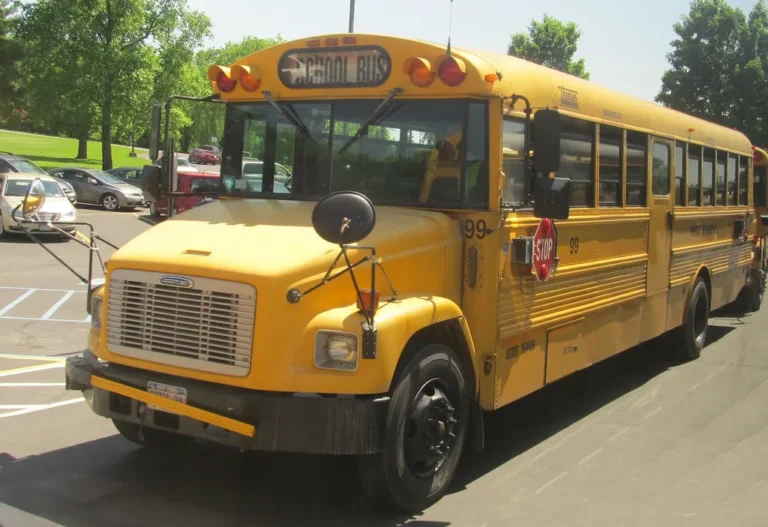
The 460 was used in a wide range of Ford, Lincoln, and Mercury vehicles from 1968 to 1997. This includes the Ford F-250 and F-350 trucks, the Ford Thunderbird, the Lincoln Continental, the Mercury Marquis, and even some motorhomes and school buses. In the 1980s and 1990s, it was a popular choice for heavy-duty trucks and fleet vehicles. The 460 was also used in marine applications by some boat builders.
Final Checklist for a Smooth-Running 460
You’ve read the whole guide. Here’s what matters when you’re standing in the garage with the hood open:
- Firing order is 1-5-4-2-6-3-7-8, always clockwise around the distributor cap.
- Driver’s side cylinders are 1-2-3-4 front to back; passenger side is 5-6-7-8.
- Set the engine to TDC on #1 compression before you touch the distributor.
- Mark the #1 terminal on the cap and the rotor position before you remove anything.
- Route wires so they don’t cross near the cap, especially wires 5 and 6.
- Use a test light to verify static timing before you crank the engine.
- Check your spark plug gap and torque to spec before you start.
If you follow these steps, your 460 will fire up and idle like it’s supposed to. If it doesn’t, go back to the TDC check. Nine times out of ten, the problem is a distributor installed 180 degrees off or a pair of crossed wires. Don’t chase a fuel problem when the ignition is out of phase.
For more detailed work on other engines, check out our guides on the 5.4 Triton firing order or the Chevy 5.3 firing order. If you’re tuning the carburetor on your 460, our 460 carburetor guide covers common issues and adjustments.
Products related to this article
Sponsored / affiliate links. As an Amazon Associate I earn from qualifying purchases. I may earn additional commission from eligible campaigns.