Ford F150 Coolant Leak Between Engine and Transmission
If coolant shows up at the bellhousing, first rule out the EGR cooler and transmission cooler lines. A true rear-engine coolant leak is less common than overflow or drips that travel rearward. Misdiagnosis can lead to expensive parts swaps while the real leak keeps dropping coolant and can overheat the engine. This guide maps the leak path, shows which stains point to each source, and explains the checks before you buy parts.
What you’ll need
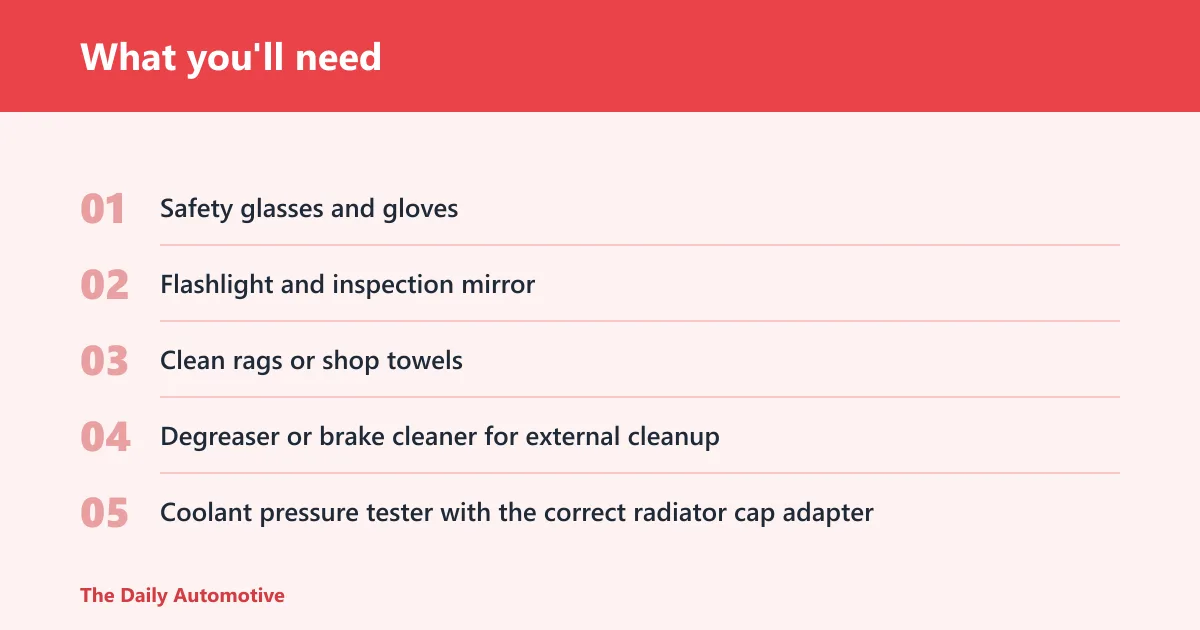


- Safety glasses and gloves
- Flashlight and inspection mirror
- Clean rags or shop towels
- Degreaser or brake cleaner for external cleanup
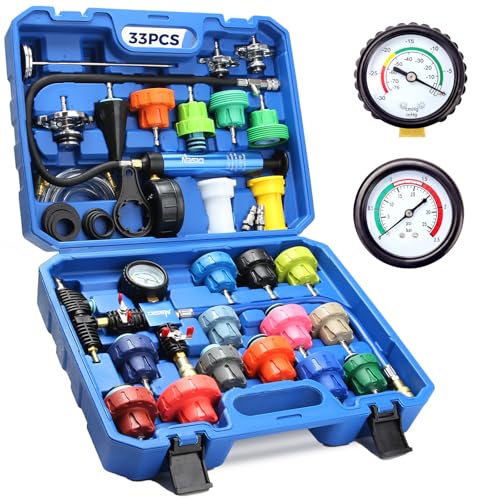
- Coolant pressure tester with the correct radiator cap adapter
- UV dye and UV lamp, if the leak is hard to see
- Catch pan and absorbent material
- Basic hand tools for hose clamps and undertray removal
- Scan tool or code reader for coolant temperature sensor data and overheat codes
The F-150 cooling system routes hot coolant through the radiator to shed heat before it returns to the engine, while the water pump keeps coolant moving and the thermostat opens and closes with engine temperature. The coolant reservoir, hoses, pipes, radiator cap, fan and fan clutch, heater core, and coolant temperature sensor all matter here because a leak in any one of them can wet the transmission case and look like a bellhousing failure.
📊 Ford describes the F-150 as capable of handling ‘raw power’ and productivity. Source: FORD.
Ford F-150 coolant leak between engine and transmission: what it usually means
A bellhousing-area coolant trail often means the source is above, forward, or beside the transmission rather than inside it. On many F-150 layouts, coolant can run down the rear of the engine, along hoses or pipes, then drip at the transmission seam. The top suspects are the EGR cooler, a hose or pipe connection, and a transmission cooler-line O-ring.
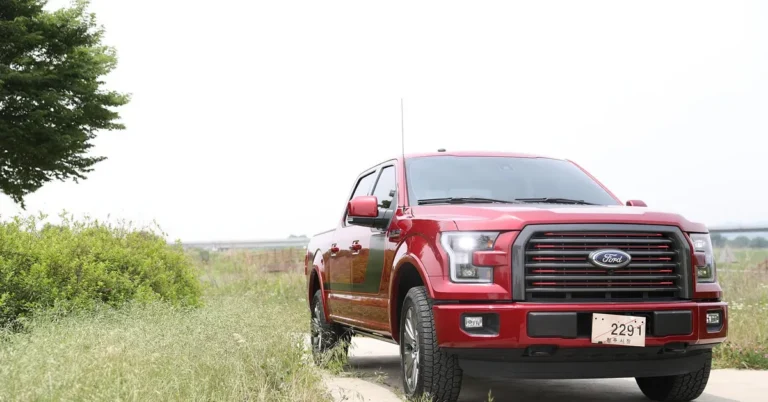
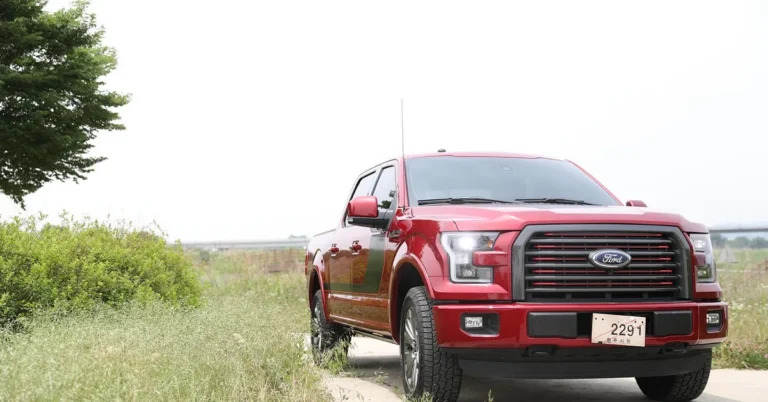
Ford describes the F-150 as part of its trucks and vans lineup, with capability for “raw power” and productivity. Ford also lists F-150 among hybrid available models, and the owner site describes it as a full-size truck for new-vehicle quality. Those details do not diagnose a leak, but they do matter because engine layouts, cooling routing, and service access vary by configuration.
When you should stop driving and plan for a tow
If the temperature gauge climbs, the coolant temp warning appears, the cabin heater goes cold, or coolant drops fast enough to require repeated top-offs, stop driving. A cooling-system loss can overheat the engine quickly, and a leak near the bellhousing can hide the real source until the tank is nearly empty.
Say your F-150 leaves a fresh orange puddle after a 10-minute idle, and the upper hose feels hot while the reservoir drops from full to empty in one drive. That is tow territory. Do not keep running it to “see where it goes.”
How to tell where the leak is coming from
Start with the simplest checks. A leak that shows up between the engine and transmission is often the end point of a longer drip path, not the origin. Clean surfaces make the source easier to isolate, and a cold inspection tells you more than guessing from one wet spot.
1. Check coolant level, overflow tank, and visible residue
- With the engine off and completely cool, park the truck on a flat surface.
- Open the hood and inspect the coolant reservoir, then note where the coolant sits relative to the molded marks.
- Look for crusty residue, pink or orange staining, or dampness at the cap, seams, and hoses.
- Wipe away visible residue with a clean rag before the pressure test so any new wetness is easy to spot.
2. Trace wetness on the rear of the engine, block, and transmission case
- Use a flashlight to follow any trail from the firewall, rear head area, and intake valley downward.
- Check the bellhousing seam, lower transmission case, and pan rail.
- Look for dried coolant tracks that point downward from above the bellhousing.
3. Look for smell, steam, and heat-related symptoms
- Check for sweet coolant odor after shutdown.
- After the engine is running and warmed, look for steam near the back of the engine bay.
- Note whether cabin heat has become weak, which can indicate low coolant circulation or heater-core air intrusion.
How do you pressure test the cooling system?
Pressurizing the system cold is the fastest way to expose an external leak that only opens under load. A good test should show drips at the true source, not just a wet bellhousing. If pressure drops with no visible drip, the EGR cooler, heater core, or another internal path becomes more likely.
4. Pressurize the system cold and inspect for drips
- Install the pressure tester at the radiator cap or pressure cap neck.
- Bring the system up to the cap rating listed on the cap, but do not go above it.
- Hold pressure and inspect the rear of the engine, hoses, and transmission top.
5. Check the radiator cap / pressure cap and hose connections
- Inspect the cap seal for cracks, distortion, or coolant residue.
- Check the upper and lower radiator hoses, heater hoses, and hard pipes.
- Look at clamps and plastic couplers where seepage can start under pressure.
6. Watch for leak paths that only open under pressure
- Leave the tester on for several minutes while watching the back of the engine.
- Use a mirror on hidden joints near the firewall and intake area.
- If no external drip appears, remove the tester and plan EGR cooler checks next.
Ford says the cooling system uses a radiator to cool heated coolant before it circulates again, and the water pump moves coolant through the system. The thermostat controls coolant flow based on engine temperature. If the pressure test finds nothing external but coolant keeps disappearing, the issue is more than a simple hose seep.
Is the EGR cooler the likely source?
An EGR cooler failure can send coolant loss to the rear of the engine and create symptoms that look like a bellhousing leak. An EGR cooler failure can sometimes lead to coolant loss, overheating risk, white exhaust, or rough running without an obvious external drip.
7. Separate EGR cooler symptoms from an external hose or pipe leak
- Check for white exhaust on cold start or after idling.
- Inspect the rear of the engine for wetness around EGR plumbing rather than only at the transmission seam.
- Look for pressure loss with little or no visible external drip.
8. Look for coolant loss, white exhaust, overheating, or unexplained level drop
- Monitor the reservoir over a few cold starts.
- Use the scan tool to watch coolant temperature sensor data for abnormal climbs.
- Check whether the heater output fades as the coolant level falls.
9. Identify engine families where EGR cooler failure is a known concern
Ford F-150s with diesel powertrains and some turbocharged engine layouts are more often discussed for EGR cooler or internal coolant-loss concerns than simple external hose leaks. The risk is not the same across every model year or engine family, so the repair path should follow the test result, not a parts-catalog guess.
Picture a truck that idles fine, then throws a sweet smell and a small steam puff after shutdown, with no puddle until the next morning. That pattern fits a hidden coolant path more than a split hose on the front of the engine.
Could the transmission cooler line O-ring be leaking?
Yes. A transmission oil cooler line O-ring can sometimes seep coolant near the connection points by the transmission and leave a drip at the bellhousing area. The leak may not be from the transmission itself. It can start at a cooler-line fitting and travel along the case before dripping to the floor.
10. Inspect cooler-line connection points near the transmission
- Follow the cooler lines from the radiator or cooler assembly to the transmission connections.
- Check each O-ring seat for wetness, staining, or looseness.
- Inspect both line ends, since one leak point can wet the nearby case and hide the real source.
11. Check for pink or orange traces, wet fittings, and drip points at the bellhousing area
- Look for dried coolant on the line fittings and nearby brackets.
- Confirm whether the wettest point is above the bellhousing seam, not on the seam itself.
- Clean and recheck after a short pressure hold.
12. Rule out transmission fluid contamination concerns
- Inspect the transmission fluid on the dipstick or service point if equipped.
- Look for milky, foamy, or pink-tinged fluid that may signal coolant intrusion in a cooler circuit.
- If contamination is present, stop driving and arrange service immediately.
Leak-source decision table: symptoms, tests, and next move
Use this table before ordering parts. It separates likely bellhousing-area causes by visible clues, test results, and whether the truck should stay parked. The first inspection step is the fastest branch point.
| Visible symptoms | Test result | Likely culprit | First inspection step | Stop-driving now? |
|---|---|---|---|---|
| Wet rear engine, white exhaust, coolant drops with little puddle | Pressure falls, no external drip at hoses | EGR cooler | Inspect EGR cooler area and monitor coolant temp data | Yes |
| Pink/orange trace at line fitting, drip starts after hot soak | Pressure drip at cooler-line joint | Transmission cooler-line O-ring | Clean and recheck each cooler-line connection | Usually yes if leak is steady |
| Coolant smell, damp firewall, weak cabin heat | Pressure drop with no bellhousing puddle | Heater core or heater hose | Inspect heater hoses and cabin carpet area | Yes if overheating starts |
| Wet cap, crust at reservoir neck, random overflow marks | Cap vents early under pressure | Radiator cap / pressure cap | Test or replace the cap with the correct rating | No, unless coolant loss is rapid |
| Front-of-engine wetness, lower splash on skid plate | Drip appears during pressure test | Hose, pipe, radiator, water pump, or thermostat housing | Trace the highest wet point before replacing parts | Only if temperature rises |
Common mistakes
Do not start with the radiator, water pump, or thermostat just because coolant is low. Those parts can fail, but the bellhousing location usually demands a source check first. Replacing them in the wrong order wastes labor and can leave the real leak untouched.
- Skipping cleanup before the pressure test, which hides the fresh leak path.
- Confusing overflow residue with an actual rear-engine leak.
- Ignoring transmission cooler-line O-rings because the puddle sits near the bellhousing.
- Assuming every coolant smell means a heater core failure.
- Driving after the temperature warning comes on or the reservoir keeps dropping.
A common first-timer mistake is replacing a radiator cap, seeing one short drive without a puddle, and calling the repair done. If pressure still bleeds down and the reservoir drops again, the leak is still there.
What does a coolant leak between the engine and transmission usually cost to fix?
Costs vary sharply by source and engine layout. A cap or hose fix can be modest, while EGR cooler labor can climb because access is tighter and more parts may have to move. Cooler-line O-ring repairs are usually less expensive than cooler replacement, but contamination or hidden damage raises the total.
As a practical parts-and-labor guide, expect a small external seal job to run much lower than a cooler or EGR repair. The exact bill depends on whether the truck needs intake removal, exhaust-side access, or transmission line service, and those labor steps change by engine family.
If that didn’t work, try this next
- Verify the leak source with a second pressure test after cleanup.
- Check for hidden leak paths from the heater core, hoses, pipes, and cap neck.
- If the leak is still unconfirmed, stop replacing parts and book a leak-isolation diagnosis.
- If coolant keeps dropping, arrange towing instead of driving the truck home.
Frequently asked questions
What causes a Ford F-150 coolant leak between the engine and transmission?
The most common causes are a rear-engine drip path, an EGR cooler leak, or a transmission cooler-line O-ring seep that runs down the case. The bellhousing area is often the drip point, not the source, so the highest wet spot and pressure-test result matter most.
Is it safe to drive my F-150 if coolant is leaking near the transmission?
Only if the level stays stable and the engine never approaches hot. If the gauge climbs, the reservoir drops quickly, or the leak source is unknown, it is safest to park it and tow it. Low coolant can overheat the engine and damage parts quickly.
How do I tell if the leak is from the EGR cooler or a cooler line O-ring?
An EGR cooler leak more often brings coolant loss, white exhaust, and pressure drop with little external dripping. A cooler-line O-ring usually leaves wet fittings or pink/orange traces at the line connection. Clean the area, pressure test cold, and inspect the highest wet point first.
Can a coolant leak contaminate the transmission fluid on an F-150?
Yes, if coolant enters a cooler circuit or mixes through a failed cooler path. Look for milky, foamy, or discolored transmission fluid. If that appears, stop driving and have the cooler circuit checked before more operation spreads the contamination.
What does a coolant leak between the engine and transmission usually cost to fix?
A simple hose or O-ring repair is usually far cheaper than an EGR cooler job, because labor access is easier. Costs rise fast when the intake, exhaust-side parts, or cooler assembly must come off. The leak source has to be confirmed before a useful estimate exists.
How do I pressure test a coolant leak in the bellhousing area?
Start with a cold engine, fit the correct pressure tester to the cap neck, and raise pressure to the cap rating. Hold it and inspect the rear of the engine, cooler lines, heater hoses, and transmission case. If pressure falls without an external drip, move to EGR cooler checks.
Which F-150 engines are most likely to have internal coolant leak issues?
Diesel powertrains and some turbocharged engine families are the ones most often tied to EGR-cooler or internal coolant-loss concerns. That said, the exact risk depends on engine family and model year, so the leak test should guide the repair path instead of a blanket parts list.
What symptoms point to an EGR cooler failure instead of a hose leak?
White exhaust, unexplained coolant loss, overheating, and no clear external drip point are the biggest clues. A hose leak usually leaves wet plastic, rubber, or clamp areas. If the system loses pressure but the rear of the engine stays only damp, the EGR cooler moves higher on the list.
Prevention: Keep the coolant at the correct level, use the specified antifreeze mix, and replace a weak radiator cap promptly. Ford says the F-150 can be checked and serviced through dealer pickup and return or Ford Mobile Service for some maintenance, which can help catch minor seepage before it turns into a tow.
Products related to this article
Sponsored / affiliate links. As an Amazon Associate I earn from qualifying purchases. I may earn additional commission from eligible campaigns.