Best Gasket Maker for Carburetor: 7 Picks That Survive Ethanol Fuel
You’ve just rebuilt your carburetor, torqued the bolts to spec, and fired up the engine. Three minutes later, fuel weeps from the base gasket. It’s a classic frustration — the paper gasket looked fine, but it wasn’t flat enough to seal the machined surfaces. Or maybe you used a tube of silicone you had in the garage, and now the idle is erratic because it dissolved in the fuel.
Choosing the best gasket maker for carburetor sealing isn’t about grabbing the most expensive tube. It’s about matching the chemical resistance to your fuel, the hardness to your surface flatness, and the cure time to your patience. This guide covers the top products, the science of why standard silicone fails on modern fuel, and the exact torque sequence that keeps seals intact.

HTJZWG
HTJZWG Non-Asbestos Gasket Making Material, 3PCS Paper…
- For resealing in gasoline and diesel small engines, lawn mowers, generators, various small household and garden machinery, and Aut…
- Non-Asbestos Gasket Material features oil resistance, high temperature endurance, insulation, wear resistance, and corrosion resis…
- Uniformly dense with high mechanical strength that maintains a tight fit even in environments with minor vibrations and providing…
You’ll walk away knowing which sealant to use for a cast iron manifold versus a plastic float bowl, how to prep surfaces without gouging aluminum, and why ethanol-blended gas changes everything. No fluff, just the practical details that keep your engine leak-free.
For quick repairs where you need a durable, pre-formed gasket without waiting for a sealant to cure, a HTJZWG gasket paper sheet offers a practical backup. You trace the carburetor flange, cut it out with scissors, and install it. It handles oil, heat, and minor vibration well, and the three thickness options let you match the original gasket’s compression.
Best Gasket Maker for Carburetor: Top 7 Picks for 2026
These are the products that consistently survive contact with gasoline, including the ethanol-laced stuff. I’ve ranked them by real-world durability, not marketing claims.
Permatex Ultra Black Maximum Oil Resistance RTV
This is the default choice for a reason. It’s a sensor-safe RTV silicone that handles temperatures from -65°F to 500°F and resists automatic transmission fluid, gear oil, and gasoline. The key spec is its oil resistance — most standard RTVs swell and soften when soaked in fuel. Ultra Black doesn’t.
It cures in about 24 hours at 70°F and 50% humidity. You can run the engine after an hour, but you risk squeezing the seal out if you torque the bolts while the silicone is still soft. Wait the full cure time for best results.
Permatex MotoSeal 1 Ultimate Gasket Maker
MotoSeal is a heavy-duty, non-hardening sealant designed for motorcycle cases and small engines. It’s a different beast than RTV — it stays flexible and doesn’t shrink. It handles gasoline, oil, and coolant, and it’s specifically formulated for vibration-heavy applications. If you’re sealing a chainsaw carburetor or a dirt bike float bowl, this is a top pick.
One downside: it’s messy. It’s thick and stringy, and cleanup requires solvent. But the seal it creates is nearly bulletproof.
Permatex Anaerobic Gasket Maker
Anaerobic sealants cure only in the absence of air, which makes them perfect for rigid flange joints like a carburetor base to an intake manifold. They fill microscopic imperfections but don’t gap-fill like RTV. If your surfaces are clean and flat, an anaerobic sealant creates a thin, hard, fuel-proof seal that won’t squeeze out.
The catch: you need a tight joint. If the flange is warped more than 0.005 inches, anaerobic sealant won’t seal it. Use RTV for that job instead.
Right Stuff Automatic Transmission RTV
Don’t let the name fool you. Right Stuff is a fast-curing RTV that claims to be drive-away in one hour. It’s sensor-safe and resists gasoline, oil, and coolant. It’s a good choice when you need the carburetor back in service quickly.
It’s not as fuel-resistant as Ultra Black over the long haul, but for a daily driver that sees regular use, it holds up fine.
Yamabond 4 (Yamaha Bond No. 4)
This is the old-school choice for motorcycle and small engine guys. It’s a non-hardening, semi-drying liquid gasket that stays pliable. It’s incredibly fuel-resistant — Yamabond was designed for two-stroke engines where raw fuel constantly washes over the cases.
It’s thin, so you apply it sparingly. A little goes a long way. It’s not ideal for large gaps, but for a clean, flat carburetor flange, it’s excellent.
ThreeBond 1211
Similar to Yamabond, ThreeBond 1211 is a non-hardening sealant used by Japanese motorcycle manufacturers. It seals instantly, doesn’t shrink, and resists all fuels. It’s a bit harder to find in local auto parts stores, but it’s a favorite among restorers who want an authentic seal.
HTJZWG Non-Asbestos Gasket Paper
Sometimes you need a physical gasket, not a liquid. This HTJZWG gasket material comes in three thicknesses (0.8mm, 1.0mm, 1.2mm) and is non-asbestos. It’s oil-resistant, handles high temperatures, and maintains a tight fit under vibration. You trace the part, cut it out, and install it dry or with a thin coat of gasket dressing.
It’s a solid choice for custom applications where a pre-cut gasket isn’t available. The trade-off is time — you have to cut it carefully to avoid leaks.
Why Carburetor Gasket Choice Matters More Than You Think
A carburetor leak isn’t just an oily mess. It’s a fire hazard and a tuning nightmare. An air leak at the base gasket leans out the mixture, causing a rough idle, backfiring, or a burned piston. A fuel leak at the float bowl or accelerator pump can drip onto a hot exhaust manifold.
The wrong sealant makes both problems worse. Standard RTV silicone (the blue or clear stuff) breaks down in gasoline. The fuel softens it, and within weeks, chunks of silicone can clog the idle jets. I’ve seen it happen on a 1980s Ford with a Holley carburetor — the idle circuit was completely plugged with white, jelly-like residue.
Ethanol-blended fuel accelerates this failure. Ethanol is a solvent. It attacks many rubbers and silicones that were safe with pure gasoline. If you’re running E10 or E15, you need a sealant rated for alcohol resistance. Check the label for ‘ethanol-resistant’ or ‘fuel-resistant’ before you buy.
RTV Silicone vs. Anaerobic vs. Non-Hardening: Which Type Wins?
There’s no single winner. Each type solves a specific problem. Here’s the breakdown.
RTV Silicone (Room Temperature Vulcanizing)
RTV is a paste that cures by reacting with moisture in the air. It’s flexible, gap-filling, and easy to apply. It works on slightly warped surfaces because it can fill gaps up to 0.25 inches (though you shouldn’t rely on that).
Pros: Fills gaps, easy to apply, sensor-safe versions exist. Cons: Long cure time (12-24 hours), can be attacked by fuel if not the right type, can squeeze out if over-tightened.
Anaerobic Sealant
Anaerobic means ‘without air.’ This sealant stays liquid until it’s trapped between two tight metal surfaces. Then it hardens into a tough, solvent-resistant plastic. It’s ideal for machined flanges with minimal gap.
Pros: Hard, fuel-proof, fast cure (1-2 hours), no squeeze-out. Cons: Won’t fill gaps, needs clean and flat surfaces.
Non-Hardening Sealant (Yamabond, ThreeBond, MotoSeal)
These stay soft and pliable after application. They act like a gasket dressing, filling tiny imperfections without becoming rigid. They’re excellent for vibration-heavy engines because they absorb movement.
Pros: Fuel-proof, vibration-resistant, easy to disassemble later. Cons: Messy, can squeeze out if over-tightened, not for large gaps.
| Sealant Type | Best For | Fuel Resistance | Cure Time | Max Gap Fill | Sensor Safe |
|---|---|---|---|---|---|
| RTV Silicone (Ultra Black) | Warped flanges, general sealing | Good (ethanol-resistant) | 24 hours | 0.25 in | Yes |
| Anaerobic (Permatex) | Flat, machined surfaces | Excellent | 1-2 hours | 0.005 in | Yes |
| Non-Hardening (Yamabond) | Vibration, small engines | Excellent | Instant (contact) | 0.01 in | Yes |
| Gasket Paper (HTJZWG) | Pre-cut replacement, custom shapes | Good | N/A (instant) | N/A | Yes |
Critical Features: Fuel Resistance, Temperature Range, and Cure Time
Three specs matter more than brand name. Here’s what to look for on the label.
Fuel Resistance
This is non-negotiable. The sealant must say ‘resistant to gasoline’ or ‘fuel-resistant’ explicitly. If it just says ‘oil-resistant,’ it might not hold up to fuel. Look for ‘ethanol-resistant’ if you run E10 or E15. Standard RTV silicone is not fuel-resistant. Use a product specifically rated for it.
Temperature Range
Carburetors operate between -20°F and 250°F on the intake manifold. The float bowl rarely gets hot, but the base flange can. Most good RTVs handle -60°F to 500°F, which is plenty. Anaerobic sealants are typically rated to 300°F. Non-hardening sealants like Yamabond are fine to 250°F. Don’t overthink this spec — any product designed for engine work will handle it.
Cure Time
This is where people mess up. RTV needs 24 hours to fully cure. If you torque the bolts after 30 minutes, you’ll squeeze out the sealant and create a leak. Anaerobic sealants cure in 1-2 hours. Non-hardening sealants don’t cure — they just stay soft, so you can assemble immediately.
Plan your repair around the cure time. Apply the sealant, let it set, then torque the bolts the next day. It’s annoying, but it’s the difference between a leak-free seal and a redo.
How to Prep a Carburetor Surface for a Perfect Seal
The sealant is only half the job. The other half is surface prep. A clean, flat surface is the foundation. Here’s the process that works.
Remove Old Gasket Material
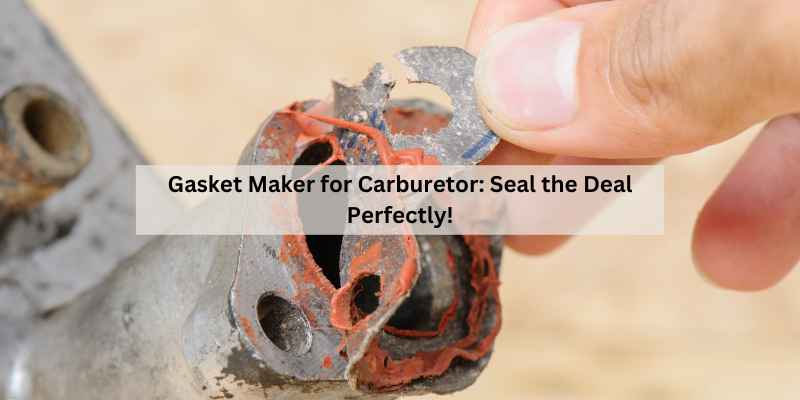
Never use a metal scraper on aluminum carburetor bodies. You’ll gouge the surface, and those scratches become leak paths. Use a plastic razor blade or a wooden paint stirrer. For stubborn gasket residue, spray on a commercial gasket remover (like Permatex Gasket Remover) and let it soak for 15 minutes. The gasket will soften and lift off without scraping.
For paper gaskets that are baked on, try a heat gun on low setting. Warm the aluminum to about 150°F, and the gasket will peel off. Don’t overheat — you can warp the flange.
Clean with Solvent
After removing the old gasket, spray the surface with brake parts cleaner or carburetor cleaner. This removes oil, grease, and old sealant residue. Let it dry completely. Don’t wipe it with a rag — the rag can leave lint or oil behind.
If the surface has deep scratches or corrosion, you need to address that before sealing. Light sanding with 400-grit sandpaper on a flat block can smooth minor imperfections. For serious warpage, you need a machinist’s straightedge to check flatness. If the gap is more than 0.005 inches, use RTV, not anaerobic.
Check Flatness
Place a straightedge across the flange. Try to slide a 0.002-inch feeler gauge under it. If it slides, the surface is warped. You can lap the surface on a piece of glass with wet/dry sandpaper, or you can use a thicker sealant. RTV can handle up to 0.025 inches of gap. Anaerobic cannot.
Step-by-Step Application Guide (With Torque Specs)
Here’s the exact process for a leak-free carburetor base seal.
- Prep the surface. Clean, dry, and free of old gasket material. Use brake cleaner and let it flash off.
- Apply the sealant. For RTV, run a continuous bead about 1/8 inch thick around the flange, inside the bolt holes. For anaerobic, apply a thin, even coat to both surfaces. For non-hardening, brush a thin layer on one surface only.
- Assemble immediately (anaerobic and non-hardening) or wait (RTV). For RTV, wait 10-15 minutes to let it skin over. This prevents squeeze-out.
- Install bolts and torque in sequence. This is critical. Tighten the bolts in a crisscross pattern, not in a circle. Start with all bolts snug at 50% of final torque. Then go around again at 75%. Then final torque.
- Torque spec. Most small carburetor mounting bolts are 8-12 ft-lbs. Large four-barrel carbs on intake manifolds are 12-15 ft-lbs. Check your service manual. Over-tightening distorts the carburetor body and causes warpage.
- Wait for cure. If you used RTV, wait 24 hours before running the engine. If you used anaerobic, wait 2 hours. Non-hardening sealants are ready immediately.
One trick: after final torque, wipe away any excess sealant that squeezed out. This prevents bits from breaking off and clogging the jets later.
Ethanol Fuel Warning: Why Standard Silicone Fails
This is the most important section in this article. Standard RTV silicone — the blue, red, or clear stuff from the hardware store — is not designed for fuel contact. Gasoline, especially with ethanol, breaks down the silicone polymer. The sealant swells, softens, and eventually dissolves into a jelly-like mess.
That jelly doesn’t just leak. It travels through the fuel system and clogs the tiny passages in the carburetor. I’ve cleaned more than one set of jets that were plugged with white silicone residue. The fix is expensive and time-consuming.
Ethanol is the culprit. E10 (10% ethanol) and E15 (15% ethanol) are strong solvents. They attack many rubber compounds and most standard silicones. You need a sealant that specifically states ‘ethanol-resistant’ or ‘fuel-resistant.’
Permatex Ultra Black is one option. It’s rated for gasoline and ethanol blends. MotoSeal is another. Yamabond 4 is excellent. Avoid any sealant that doesn’t explicitly mention fuel resistance on the label.
If you’re using a physical gasket, like the HTJZWG paper, it’s naturally resistant to fuel because it’s a cellulose/fiber material. But you still want to coat it with a fuel-resistant dressing to fill micro-porosity.
Common Mistakes That Cause Carburetor Leaks
Even with the right sealant, you can create a leak with these errors. Here’s what to avoid.
- Over-tightening bolts. This warps the carburetor body. The flange bends, and the seal breaks. Use a torque wrench. It’s not optional.
- Using too much sealant. A thick bead of RTV will squeeze out and block the idle air bleeds. Use a thin, even layer.
- Not letting RTV cure. If you torque the bolts before the RTV skins over, you’ll squeeze out the sealant and leave a paper-thin film that won’t seal. Wait the full 24 hours.
- Forgetting surface prep. Oil on the surface prevents adhesion. Clean with brake cleaner, not just a rag.
- Using the wrong sealant type. Anaerobic sealant on a warped flange is a guaranteed leak. RTV on a perfectly flat surface is overkill and can squeeze out. Match the sealant to the condition.
- Sealing plastic carburetor bodies with aggressive solvents. Some carb cleaners and sealants can attack nylon or plastic float bowls. Use a sealant that’s compatible with plastic. Check the label.
How Long Should a Carburetor Gasket Seal Last?
This depends on the sealant and the fuel. Here’s a realistic timeline based on my experience and common reports.
- RTV Silicone (fuel-resistant): 2-3 years with regular use. It will eventually harden and crack from heat cycling. If you run ethanol fuel, expect the lower end of that range.
- Anaerobic Sealant: 5+ years. It’s a hard plastic that doesn’t degrade in fuel. It fails only if the flange warps due to heat or over-torquing.
- Non-Hardening (Yamabond): 3-5 years. It stays soft, so it doesn’t crack. It can slowly weep if the joint is under constant vibration.
- Paper Gasket (HTJZWG): 1-2 years. Paper gaskets absorb fuel and oil, which causes them to swell and eventually degrade. They’re cheap and easy to replace.
The key variable is heat. A carburetor on a daily driver sees constant heat cycles. That thermal expansion and contraction eventually breaks the bond. If your engine runs hot, expect shorter seal life.
Frequently Asked Questions About Carburetor Sealants
Can I use regular RTV silicone on a carburetor?
No. Regular RTV (blue, red, or clear) is not fuel-resistant. Gasoline will dissolve it, and the residue will clog your jets. Use a product specifically rated for fuel, like Permatex Ultra Black or MotoSeal.
What’s the difference between gasket maker and gasket dressing?
Gasket maker is a substitute for a gasket. You use it alone to form the seal. Gasket dressing is an adhesive/sealant applied to a pre-cut gasket to hold it in place and improve the seal. You can use both together, but most modern sealants are designed to work alone.
Do I need a gasket if I use RTV?
No. RTV is a form-in-place gasket. It replaces the paper gasket entirely. Using both a paper gasket and RTV is often counterproductive — the extra thickness can cause misalignment and the RTV can squeeze out and clog passages.
Is sensor-safe RTV necessary for my carburetor?
If your vehicle has oxygen sensors downstream of the intake manifold, yes. Standard RTV releases acetic acid (vinegar smell) as it cures. This vapor can contaminate the O2 sensor and cause it to fail. Sensor-safe RTV (often labeled ‘Oxygen Sensor Safe’) doesn’t release these fumes.
How do I remove old RTV from aluminum without scratching it?
Use a plastic razor blade or a wooden scraper. Spray on a gasket remover and let it soak. For stubborn spots, use a soft wire brush (brass) or a Scotch-Brite pad. Never use a steel scraper or a wire wheel — they’ll gouge the soft aluminum.
Final Verdict: The Best Gasket Maker for Your Specific Carburetor
Here’s a simple decision tree for your next repair.
For a daily driver with a cast iron or aluminum manifold: Use Permatex Ultra Black RTV. It’s fuel-resistant, sensor-safe, and handles minor warpage. Wait 24 hours before starting the engine.
For a small engine (chainsaw, mower, dirt bike): Use Yamabond 4 or MotoSeal. They’re vibration-proof and won’t dissolve in fuel. They also make disassembly easier later.
For a perfectly flat, machined flange: Use an anaerobic sealant like Permatex. It creates a thin, hard seal that won’t squeeze out.
For a custom application or a missing gasket: Cut one from the HTJZWG gasket paper. It’s a reliable fallback when you need a physical gasket quickly.
Whichever you choose, remember the two rules: prep the surface, and torque the bolts in sequence. Skip those, and no sealant will save you.
One last note: if your carburetor is on a vehicle with a known fuel system issue, address that first. A leaking gasket is often a symptom of a bigger problem, like excessive crankcase pressure or a bad fuel pump. Fix the root cause, and the gasket will last much longer.
What to Do Next
- Check your fuel type. If you run E10 or E15, buy an ethanol-resistant sealant.
- Order a torque wrench if you don’t own one. Guessing bolt tightness is the #1 cause of leaks.
- Clean the carburetor flange with brake cleaner before applying any sealant.
- Wait the full cure time. Patience saves you a second repair.
- Keep a roll of HTJZWG gasket paper on the shelf for emergency repairs.
- If you smell fuel inside the cabin, stop driving and inspect the carburetor base immediately.
Products related to this article
Sponsored / affiliate links. As an Amazon Associate I earn from qualifying purchases. I may earn additional commission from eligible campaigns.