How Much Does an Oxygen Sensor Cost?
An oxygen sensor is commonly reported at about $20 to $200 for the part and about $150 to $600 installed, with some late-model or hard-to-reach sensors running higher. A bad sensor can cut fuel economy, turn on the check-engine light, and fail an emissions test. This guide breaks down part prices, labor, sensor types, and access factors so you can estimate your replacement cost and judge a quote.
What an oxygen sensor does
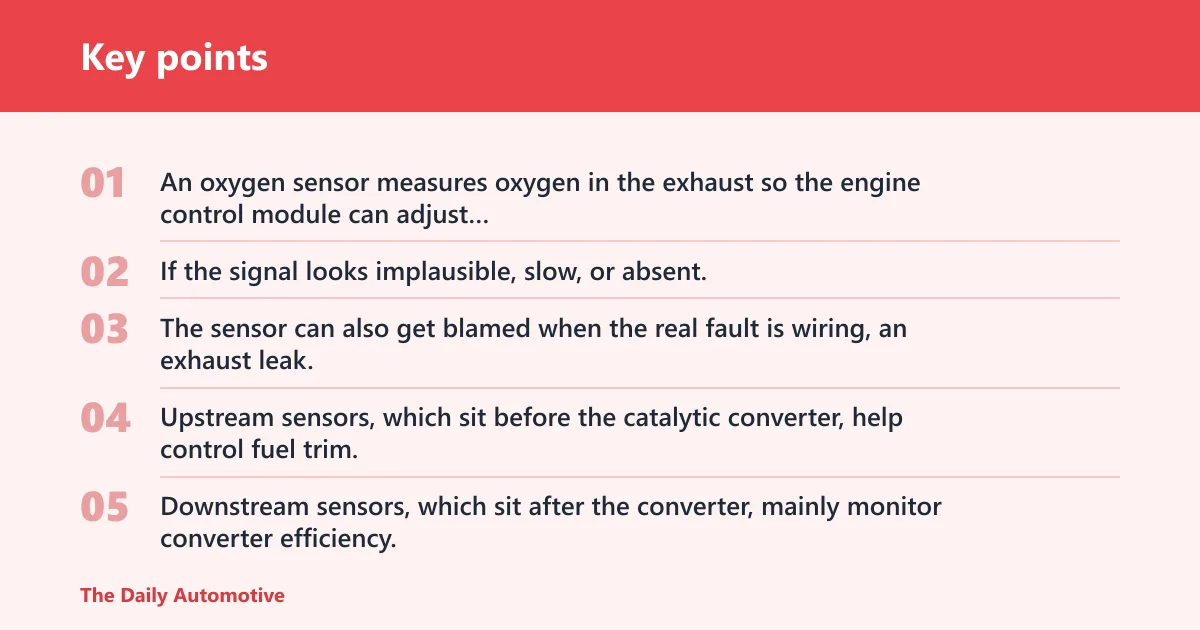


An oxygen sensor measures oxygen in the exhaust so the engine control module can adjust fuel delivery in closed-loop operation. If the signal looks implausible, slow, or absent, the module may set a fault code and light the check-engine lamp. The sensor can also get blamed when the real fault is wiring, an exhaust leak, or a mixture issue.
Upstream sensors, which sit before the catalytic converter, help control fuel trim. Downstream sensors, which sit after the converter, mainly monitor converter efficiency. That difference matters because the symptom may be the same, but the repair cost often is not.
Why scan-tool diagnosis matters
A scan tool can show live sensor switching, heater circuit status, fuel trims, and code history. That matters because an oxygen sensor code does not always mean the sensor failed. A lean fuel leak, rich-running engine, damaged connector, or exhaust leak can set the same light.
Picture a 2016 sedan with a P0420 code and a rough idle. Replacing the downstream sensor may not fix it if the catalytic converter is weak or an exhaust leak is skewing the reading. Diagnose it first, and you can avoid paying for a part that was never bad.
How much does an oxygen sensor cost?
The part alone usually falls in the roughly $20 to $200 range, though fitment can drive the price. Direct-fit aftermarket sensors often land in the middle of that range, OEM sensors often cost more, and universal sensors may cost less up front but need connector work. Wideband sensors usually cost more than narrowband sensors.
Vehicle make, model, engine, and sensor count change the bill. A four-cylinder with one upstream and one downstream sensor is simpler than a V6 or V8 with four sensors, and engine layout can change access enough to affect both labor time and the final quote.
Part price by sensor type
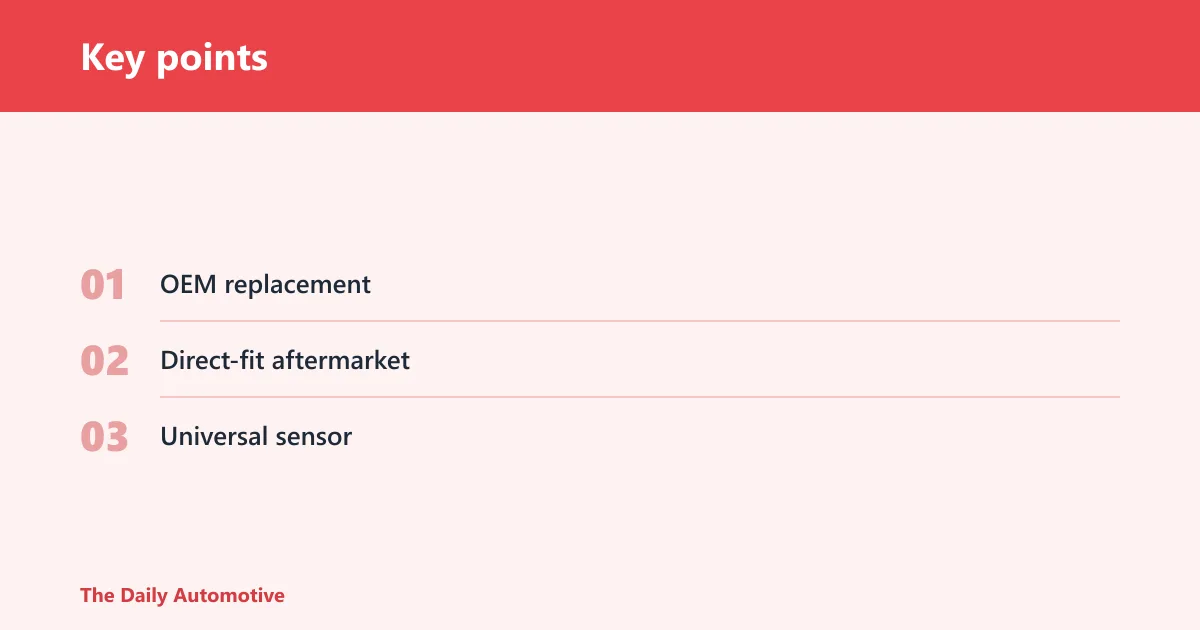
- OEM replacement: often the highest price, especially for late-model vehicles and wideband sensors.
- Direct-fit aftermarket: usually includes the right connector and harness length for the application.
- Universal sensor: the lowest sticker price in many cases, but it may need splicing and more labor.
Wideband sensors, common on newer engines, need tighter signal control than older narrowband designs. That extra complexity is one reason they can cost more. Connector shape, wire count, and lead length also matter. A sensor that fits the threads but not the plug is not a real direct replacement.
How much does replacement labor cost?
Labor often adds about $80 to $400, depending on shop rate and access. Independent shops commonly charge less per hour than dealers, while dealer labor can cost more because of higher posted rates and model-specific procedures. The same sensor can be a quick job on one car and a corroded fight on another.
Access difficulty changes the clock. An easy sensor may take 0.5 to 1.0 hour. A sensor tucked behind heat shields, frame rails, or turbo hardware can take 1.5 to 3.0 hours. Rust, seized threads, damaged wiring, and broken clips can push the bill higher.
Why rust and seizure raise the bill
Exhaust sensors live in heat, moisture, and road salt. That combination can lock the threads to the pipe or converter. If the sensor body rounds off, the wiring twists, or the bung threads are damaged, labor time rises and the repair may need extra parts.
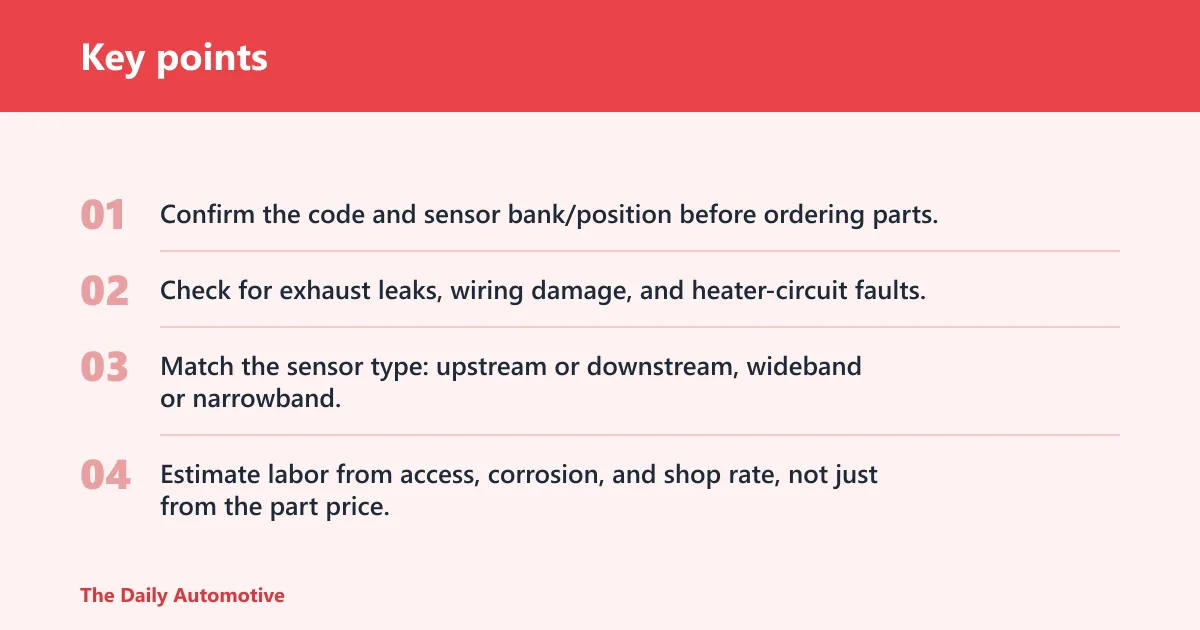
- Confirm the code and sensor bank/position before ordering parts.
- Check for exhaust leaks, wiring damage, and heater-circuit faults.
- Match the sensor type: upstream or downstream, wideband or narrowband, OEM or direct-fit aftermarket.
- Estimate labor from access, corrosion, and shop rate, not just from the part price.
Oxygen sensor cost table
| Sensor type | Part price range | Labor time range | Common access difficulty | Estimated installed total for easy access | Estimated installed total for moderate access | Estimated installed total for seized-bolt scenario |
|---|---|---|---|---|---|---|
| Narrowband aftermarket, direct-fit | $20-$70 | 0.5-1.0 hr | Low | $120-$220 | $180-$320 | $260-$450 |
| Narrowband OEM | $60-$140 | 0.5-1.2 hr | Low to moderate | $180-$320 | $240-$420 | $330-$560 |
| Wideband aftermarket, direct-fit | $70-$160 | 0.8-1.5 hr | Moderate | $220-$380 | $290-$500 | $390-$680 |
| Wideband OEM | $120-$200 | 0.8-1.8 hr | Moderate to high | $280-$450 | $350-$600 | $450-$800+ |
| Universal sensor | $20-$90 | 1.0-2.0 hr | Moderate | $160-$340 | $240-$460 | $340-$700 |
These totals assume a typical independent shop rate and a normal replacement, not a failed cable or damaged catalytic converter thread. Dealer pricing can sit above these numbers, especially for late-model wideband units or vehicles with limited underbody access.
Upstream vs downstream sensor cost
Upstream sensors often cost more to replace because they sit closer to the engine and may be buried behind shields, intake parts, turbo piping, or heat management hardware. Downstream sensors usually cost a bit less in parts, but access can still be poor on low-clearance vehicles or rust-prone exhaust systems.
Downstream sensors read converter efficiency, so a bad catalyst can confuse diagnosis. A failing catalytic converter may set a downstream sensor code even when the sensor itself is fine. That is why a scanner, not guesswork, should guide the repair.
Bank and sensor position matter
Bank 1 and Bank 2 point to different sides of a V engine. Sensor 1 usually means upstream, and Sensor 2 usually means downstream. Those labels are essential because the wrong bank or position can lead to the wrong part and the wrong labor estimate.
Say your 3.6-liter V6 has two upstream and two downstream sensors. The front-bank upstream sensor may be reachable from above, while the rear-bank unit could require underneath access. Same code family. Very different labor.
Can you replace it yourself?
Yes, sometimes. A DIY replacement is realistic when the sensor is accessible, the connector is easy to reach, and the threads are not badly corroded. An O2 sensor socket, usually a slotted 22 mm or 7/8-inch tool, plus a ratchet and extension, can make removal much easier.
DIY gets risky when the sensor is seized, the wire is brittle, the exhaust is hot-rusted, or the connector is buried. In those cases, a poor move can strip threads, damage the wiring, or break the sensor flush with the pipe.
What to check before buying a replacement
- Connector shape and pin count.
- Lead length and clip locations.
- Upstream or downstream fitment.
- Wideband or narrowband design.
- Vehicle make, model, engine, and bank number.
A common first-timer mistake is buying a sensor that matches the threads but not the connector. Another is assuming a universal sensor will save money after splice labor and extra installation time are added. For many owners, a direct-fit aftermarket part is the cleaner middle ground.
How much does an oxygen sensor cost to replace?
Most replacement jobs are commonly reported in the roughly $150 to $600 installed range, though the actual total depends on the part type, shop rate, and access. Easy-access narrowband sensors can stay near the low end. Wideband sensors, dealer labor, or seized hardware can push the bill higher.
That is why a single national average can mislead you. Two similar cars can land hundreds of dollars apart if one sensor is upstream and rusted while the other is downstream and easy to reach.
How much does an oxygen sensor cost to fix?
Fixing the problem can mean more than replacing the sensor. If the code comes from a wiring fault, exhaust leak, fuel trim issue, or converter problem, the total cost can exceed the sensor price by a wide margin. A scan tool helps separate the bad sensor from the bad system.
Frequently asked questions
How much does an o2 sensor cost?
An O2 sensor usually costs $20 to $200 for the part, depending on whether it is aftermarket, direct-fit, or OEM. Installed cost often lands between $150 and $600, but that can rise with wideband sensors, difficult access, and corroded exhaust hardware.
How much does a new oxygen sensor cost?
A new oxygen sensor often costs $20 to $200 at the part level. New OEM units sit toward the high end, while direct-fit aftermarket units are often less expensive. The final bill depends on whether the sensor is upstream, downstream, wideband, or narrowband.
How much does a downstream o2 sensor cost?
A downstream O2 sensor often costs $30 to $180 for the part, with installed totals commonly running $150 to $500. The exact price depends on the vehicle, the converter layout, and whether the sensor is easy to reach from underneath or trapped by rust.
What does an oxygen sensor cost?
An oxygen sensor costs whatever the fitment and access demand, not just the sticker price on the box. Small-vehicle narrowband sensors may stay inexpensive, while wideband or dealer parts can cost much more. Labor and corrosion often decide the final invoice.
How much does an oxygen sensor cost for a car?
For a car, the total often falls in the $150 to $600 range, but the make, engine, and sensor count matter most. Compact four-cylinder models often cost less than V6 or turbocharged vehicles with more sensors and tighter access.
Products related to this article
Sponsored / affiliate links. As an Amazon Associate I earn from qualifying purchases. I may earn additional commission from eligible campaigns.