What Is Paint Protection Film for a Car? Cost & Care
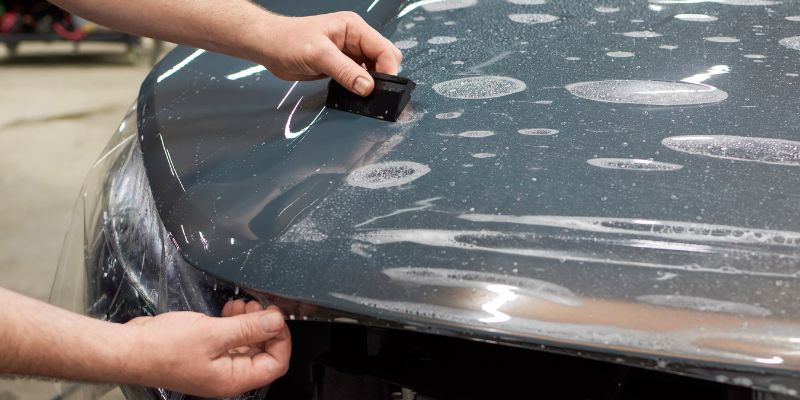
Paint protection film (PPF) is a clear, self-healing polyurethane layer applied over a car’s factory paint to absorb rock chips, scratches, and UV damage before they reach the clear coat. It runs roughly twice as thick as the paint underneath and typically lasts 5 to 10 years with proper care. Full coverage runs $1,000 to $7,000 depending on the vehicle and film brand, though protecting just the hood, bumper, and mirrors costs far less. Here’s what PPF is made of, how it compares to ceramic coating, and how to pick a shop that won’t leave bubbles or yellowing behind.
What Is Paint Protection Film for a Car?
BEST FOR PPF-SAFE MAINTENANCE
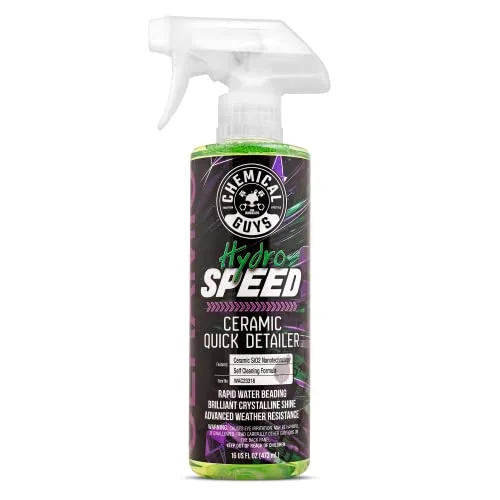 |
Chemical Guys HydroSpeed Ceramic Quick Detailer – $21.24 A pH-neutral spray detailer that is safe to use directly on PPF and ceramic-coated paint between full washes.
|
PPF is made of thermoplastic polyurethane (TPU), a flexible, transparent material about 150 to 200 microns thick, roughly double the thickness of a factory clear coat. Installers stretch and heat-form it to hug every curve of a hood, bumper, mirror, or rocker panel, so once it’s applied and trimmed you can barely tell it’s there. It’s most common on new cars, luxury vehicles, and anything driven on gravel or salted winter roads, where rock chips and road grime hit hardest.
Why Does PPF Matter?
A car’s paint takes a beating from rocks kicked up on the highway, bug splatter, bird droppings, and constant UV exposure that fades color over time. PPF absorbs that abuse instead of the paint underneath, so a chip that would normally dent the clear coat just marks the film, which can often be replaced in a small section rather than repainting the whole panel. Keeping the factory paint free of chips and fading also matters at resale: a car with an unmarked hood and fenders consistently appraises higher than one with visible stone-chip scarring.
For lighter-duty options than a full PPF install, see our roundup of the best car paint protectors.
How Does PPF Work?
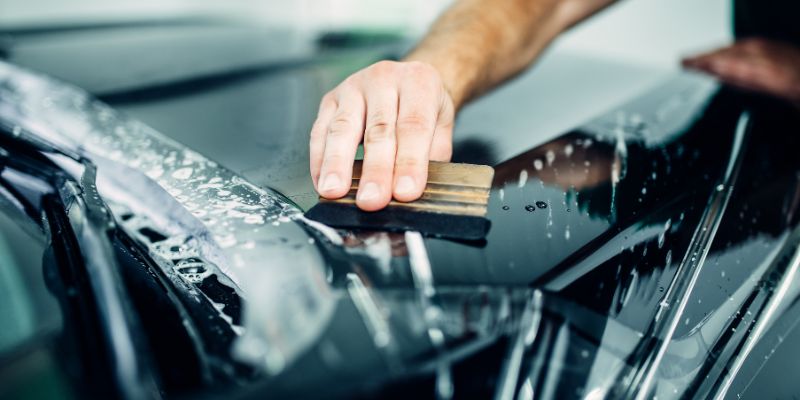
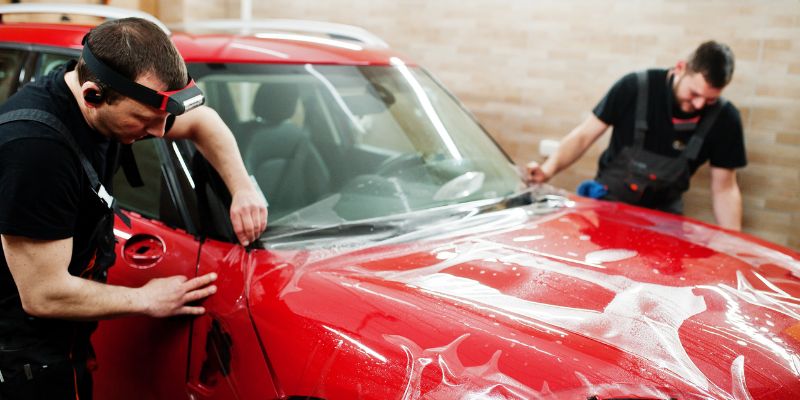
A professional installer cleans the panel, then either hand-cuts the film to the car’s contours or uses a pre-cut pattern designed for that exact model. A slip solution keeps the adhesive from bonding too fast while the film is squeegeed into place, and heat guns help it conform around curves, door handles, and mirror housings without lifting at the edges. Higher-grade films add a self-healing topcoat: light scratches and swirl marks soften and disappear on their own once the film warms up in sunlight or under a heat gun, because the elastomeric topcoat flows back into shape. The film also blocks a large share of UV radiation, which is what actually fades and oxidizes paint over years of sun exposure.
Types of PPF
PPF comes in a few finishes, each suited to a different look and budget:
- Glossy PPF: Makes your car shiny and matches the original paint.
- Matte PPF: Gives a cool, non-shiny look for a unique style.
- Ceramic-Infused PPF: Extra slippery to repel dirt and water.
Table 1: Types of Paint Protection Film
| Type | Look | Best For | Cost (Approx.) |
|---|---|---|---|
| Glossy PPF | Shiny | Matching original paint | $1,000-$3,000 |
| Matte PPF | Non-shiny | Custom, unique look | $1,200-$3,500 |
| Ceramic-Infused | Shiny/Matte | Easy cleaning, extra protection | $1,500-$4,000 |
Compare PPF finishes to find the best match for your car and budget.
Benefits of PPF
PPF has several perks that make it worth considering:
- Protects Paint: Stops scratches, chips, and stains from bugs or tree sap.
- Keeps Value High: A car with good paint sells for more money.
- Looks Great: Glossy or matte finishes make your car stand out.
- Self-Healing: Minor scratches fix themselves with heat.
Insurers generally treat PPF as a cosmetic upgrade rather than a safety feature, so it will not lower your premium, but it does reduce how often you need to file a paint-chip claim in the first place.
Drawbacks of PPF
PPF isn’t perfect. Here are some downsides:
- Costly: It can cost $1,000-$7,000, depending on coverage.
- Installation Time: It takes a day or more to apply.
- Not Bulletproof: PPF won’t stop dents or big scratches.
Partial coverage limited to the hood, front bumper, mirrors, and rocker panels covers the areas that take the most impact damage while cutting the total cost by half or more compared to wrapping the entire car.
Alternatives to PPF
If PPF seems too expensive, consider these options:
- Ceramic Coating: A liquid nano-coating that bonds to the clear coat, adding gloss and making dirt easier to rinse off. It’s cheaper than PPF but offers little defense against rock chips or scratches; see what ceramic coating actually does for a full breakdown.
- Vinyl Wraps: Changes your car’s color but is thinner and less impact-resistant than PPF. Check how much a full wrap costs before comparing it to PPF pricing.
- Waxing: Affordable but needs frequent reapplication.
Here’s a table comparing PPF to these alternatives:
Table 2: PPF vs. Other Paint Protection Options
| Option | Protection Level | Cost (Approx.) | Durability |
|---|---|---|---|
| PPF | High | $1,000-$7,000 | 5-10 years |
| Ceramic Coating | Medium | $500-$2,000 | 1-5 years |
| Vinyl Wrap | Low | $2,000-$5,000 | 3-7 years |
| Waxing | Low | $50-$200 | 1-3 months |
Compare PPF with other ways to protect your car’s paint.
PPF vs. Ceramic Coating: Which One Do You Need?
These two get compared constantly because they solve different problems. Ceramic coating is a sacrificial, ultra-thin layer that makes paint easier to clean and adds gloss, but a rock at highway speed goes straight through it to the clear coat underneath. PPF is a physical barrier thick enough to absorb that impact instead. If your main concern is rock chips on the front end from regular highway driving, PPF on the high-impact panels is the better investment. If you mainly want easier washing and a deeper shine on a car that stays garaged and rarely sees the highway, ceramic coating alone may be enough. Many installers now apply a ceramic topcoat over PPF, combining the impact protection of the film with the hydrophobic, easy-clean surface of the coating; check whether ceramic coating is worth it for your car before deciding which route to take.
How to Choose PPF for Your Car
Choosing PPF can feel tricky. Here are a few tips:
- Pick High-Impact Areas: Focus on the hood, bumper, and mirrors to save money.
- Find a Good Installer: Look for shops with strong reviews and photos of past work. Many top installers are certified by film makers like XPEL or 3M, which is a good sign of proper training.
- Check Warranties: Good PPF brands like 3M or XPEL offer 5-10 year warranties.
Reputable shops will show before-and-after photos or let you see current installs in progress before you commit, so ask to see examples first.
Common Mistakes to Avoid
Avoid these errors with PPF:
- Choosing Cheap Film: Low-quality PPF can yellow or peel.
- DIY Installation: It’s hard to apply without bubbles or cuts.
- Skipping Maintenance: Wash PPF gently to keep it clear.
PPF Care and Maintenance Tips
Keep PPF looking new with these habits:
- Wash Gently: Use a soft sponge and mild soap to clean PPF.
- Park in Shade: Sunlight helps self-healing but can wear out cheap films.
- Get Quotes: Compare prices from 2-3 shops to save money.
Quotes for the same coverage can vary by several hundred dollars between shops in the same city, so it’s worth calling at least two or three before booking. A pH-neutral wash soap or a ceramic quick-detailer spray made for coated surfaces is gentler on PPF than an all-purpose cleaner and helps maintain the self-healing topcoat’s slickness.
Table 3: Cost-Saving Tips for PPF
| Tip | Why It Helps | Savings Potential |
|---|---|---|
| Partial Coverage | Protects key areas only | $500-$2,000 |
| Compare Installers | Find better prices | $200-$1,000 |
| Choose Reputable Brands | Avoids early replacement costs | $500-$1,500 |
Save money on PPF with these simple tips.
Conclusion
Paint protection film is a genuine investment in keeping a car’s factory paint free of rock chips, scratches, and UV fading for 5 to 10 years, and self-healing topcoats mean minor marks disappear on their own. It costs more than waxing or ceramic coating, but for a new car or one that spends a lot of time on the highway, protecting the hood, bumper, and mirrors usually captures most of the benefit without wrapping the entire vehicle. Get quotes from two or three certified installers, ask to see recent work, and confirm the warranty length before booking.
Frequently Asked Questions
What Is Paint Protection Film for a Car?
Paint protection film is a clear, self-healing polyurethane layer bonded to a car’s paint to absorb scratches, rock chips, and UV damage. It can be applied to just the hood and bumper or to the entire body, and it typically stays clear and intact for 5 to 10 years.
How Long Does PPF Last?
Quality PPF lasts 5 to 10 years depending on the film brand and how the car is stored and washed. Cars kept in a garage and out of direct sun tend to get the most life out of the film. Replace it sooner if it starts to yellow, bubble, or peel at the edges.
Is PPF Worth the Cost?
PPF costs $1,000 to $7,000 depending on coverage, but it prevents the cost of repainting chipped panels and helps preserve resale value. Partial coverage on the hood, bumper, and mirrors captures most of the benefit for a fraction of full-body pricing.
Can I Apply PPF Myself?
DIY kits exist, but hand-applying PPF without bubbles, lifted edges, or trapped dirt is difficult, especially around curves and door handles. Professional installers use slip solutions, squeegees, and heat guns to get a clean result, so most people get better value from a certified shop than a DIY attempt.
Does PPF Damage Car Paint?
Quality PPF from brands like XPEL or 3M uses adhesives designed to release cleanly. If it’s removed correctly by a trained installer, it will not strip or damage the clear coat underneath. Problems usually come from cheap film or DIY removal with the wrong tools.
Can PPF Be Repaired?
Light scratches on self-healing PPF fix themselves with heat from sunlight or a heat gun. Deeper cuts or lifted edges usually need a fresh section of film rather than a patch. If you’d rather take the film off completely instead of repairing it, see our guide on how to remove paint protection film from a car.
How Do I Maintain PPF?
Wash PPF with a pH-neutral soap and a soft mitt, and avoid automatic car washes with stiff brushes. A ceramic quick-detailer spray made for coated surfaces helps maintain the slickness of a self-healing topcoat between washes. Parking in the shade also helps, since direct sun accelerates wear on lower-quality films.
Is PPF Better Than Ceramic Coating?
PPF and ceramic coating solve different problems, so neither is strictly better. PPF is a physical barrier that absorbs rock chips and scratches; ceramic coating is a thin, sacrificial layer that adds gloss and makes washing easier but will not stop a rock chip. Many owners apply both: PPF on the high-impact panels with a ceramic topcoat over it for easier cleaning and extra shine.
Products related to this article
Sponsored / affiliate links. As an Amazon Associate I earn from qualifying purchases. I may earn additional commission from eligible campaigns.