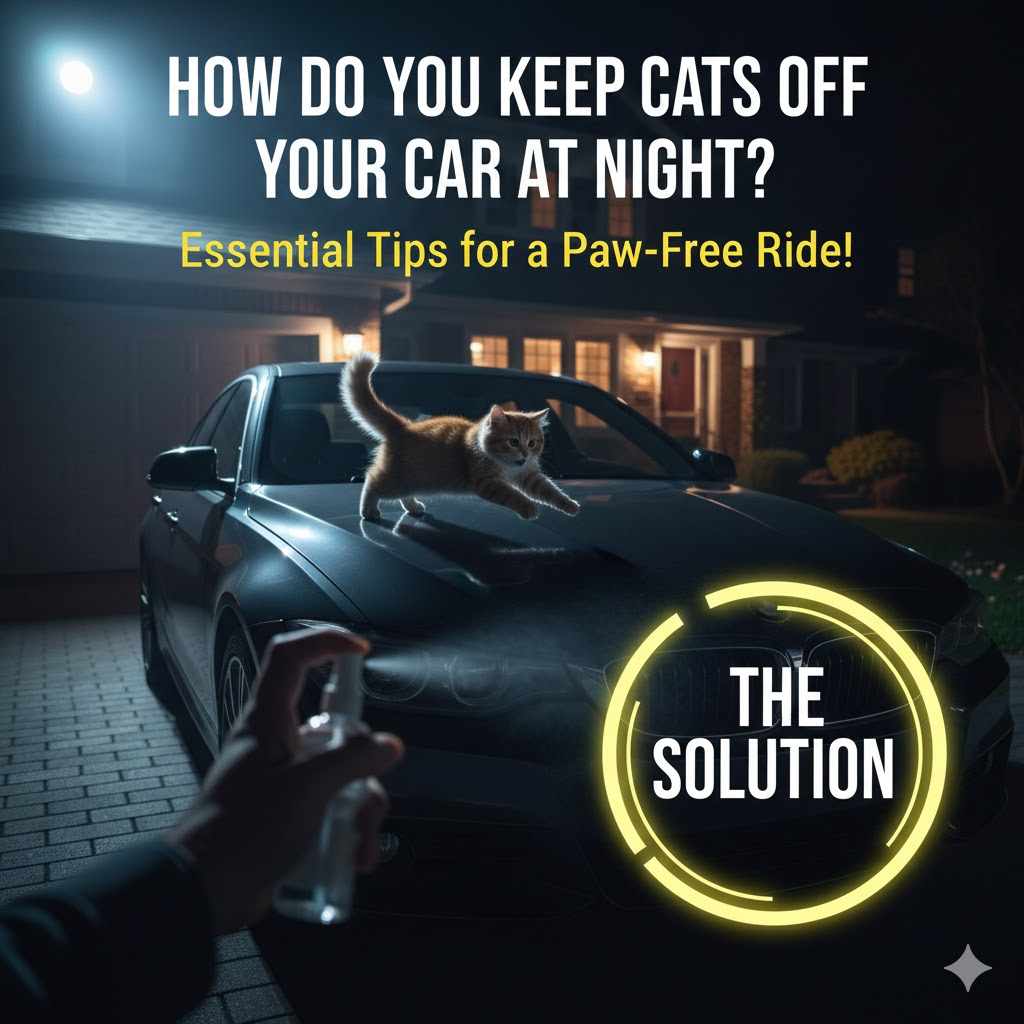
How Do You Keep Cats Off Your Car At Night: Essential Tips
To keep cats off your car at night, use a combination of humane deterrents. The most effective methods include using a fitted car cover, spraying commercial or DIY cat repellent sprays with citrus or vinegar scents around the vehicle, and placing motion-activated sprinklers or ultrasonic devices nearby. Modifying the environment by removing food sources also helps.
Waking up to find tiny, muddy paw prints all over your clean car can be frustrating. Sometimes, you might even find small scratches on the hood or roof. It’s a common problem for car owners. Cats, whether they are your own pets, a neighbor’s, or strays, are often drawn to vehicles. They aren’t trying to cause trouble; they’re just looking for a warm, safe spot to rest.
The good news is that you don’t have to choose between your car’s paint job and being kind to animals. There are many simple, safe, and effective ways to encourage cats to find a different place to nap. In this guide, I’ll walk you through the best methods to keep cats off your car for good. We’ll cover everything from easy DIY solutions to smart devices, so you can find the perfect fix for your situation.
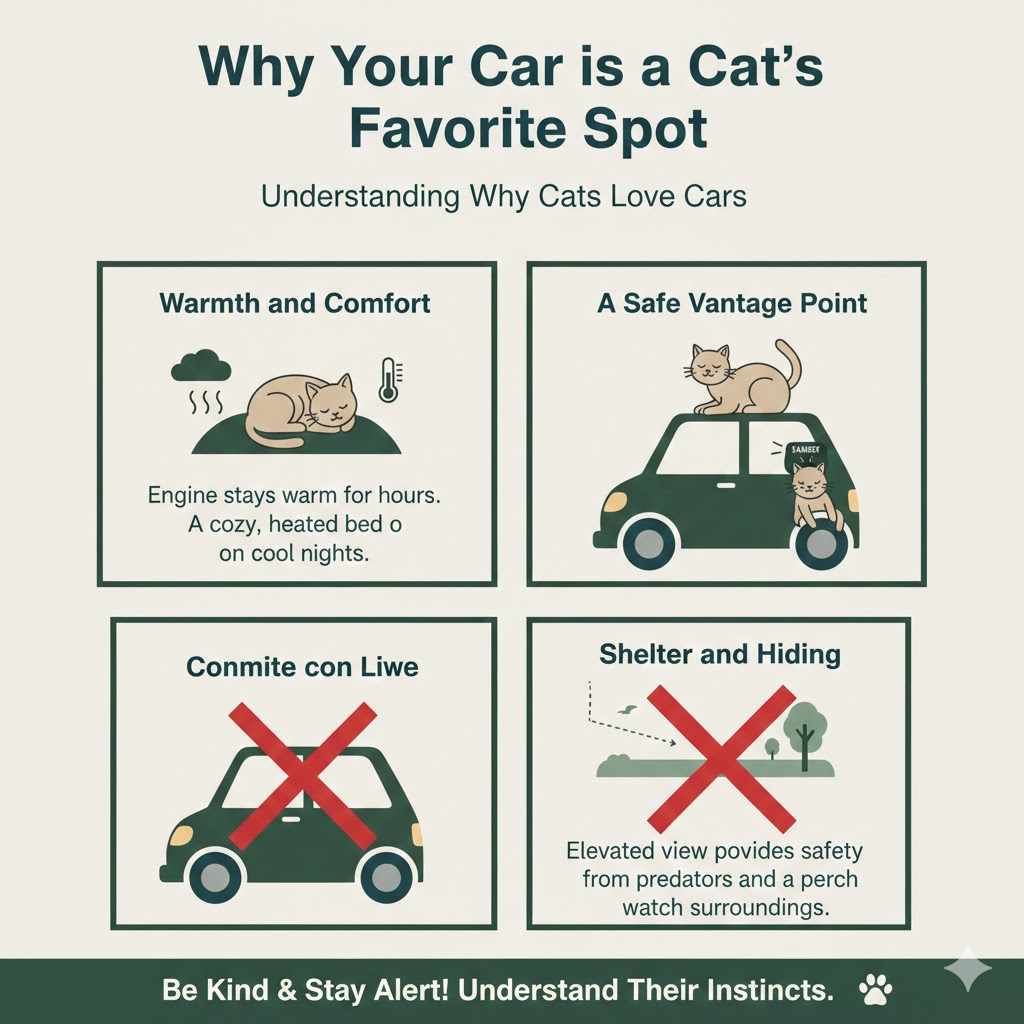
Why Your Car is a Cat’s Favorite Spot
Before we dive into the solutions, it helps to understand why cats are so attracted to cars in the first place. When you know what they’re looking for, it’s easier to make your vehicle less appealing to them. Cats are creatures of comfort and safety, and your car often checks all the right boxes.
Warmth and Comfort
If you’ve recently driven your car, the engine remains warm for hours afterward. This warmth is incredibly inviting to a cat, especially on a cool night. The smooth, flat surface of the hood is like a heated bed for them. They can curl up and enjoy the residual heat, feeling cozy and secure.
A Safe Vantage Point
Cats have a natural instinct to seek out high places. Being elevated gives them a better view of their surroundings, allowing them to watch for potential prey or predators. The roof or hood of your car provides the perfect perch. From there, they feel safe and in control of their environment.
Shelter and Hiding
Cars also offer shelter. The space underneath a car is a great hiding spot from rain, wind, or even larger animals. In the winter, cats may crawl into the engine bay for extreme warmth and protection, which can be very dangerous. This is why it’s always a good idea to tap your hood before starting your car on cold mornings.
The Potential Damage: More Than Just Paw Prints
While a few paw prints might seem harmless, cats can unfortunately cause real damage to your vehicle’s exterior. Understanding the risks can motivate you to find a gentle but firm solution.
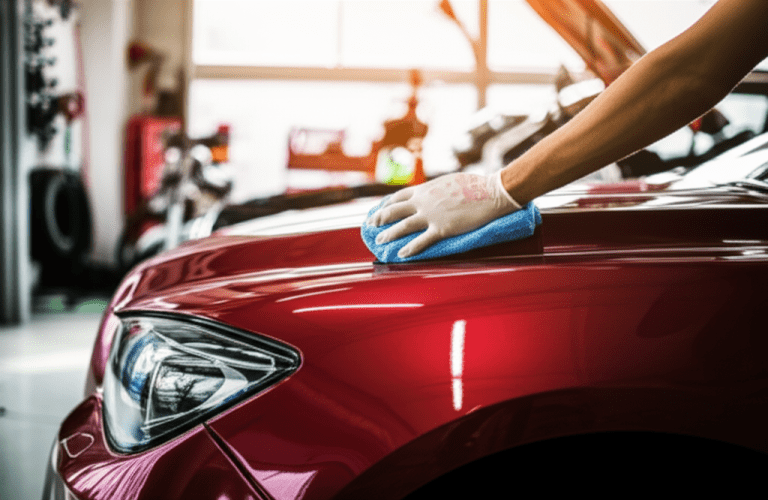
- Scratches: A cat’s claws are sharp. As they jump onto or off of your car, they might extend their claws for grip, leaving fine scratches in the paint’s clear coat. If a cat gets startled while on your car, it might scramble, causing deeper and more noticeable scratches.
- Paw Prints: Muddy or dirty paw prints are the most common issue. While easy to clean, they can be abrasive. If you wipe them off when dry without using water, the dirt and grit can act like sandpaper, creating micro-scratches on the paint surface.
- Urine Spray: Unneutered male cats may spray urine to mark their territory. Cat urine is acidic and can severely damage your car’s paint if not cleaned off quickly. It can eat through the clear coat and cause permanent stains or corrosion.
Gentle & Harmless Ways to Keep Cats Away
The best approach is always a humane one. You want to deter cats, not harm them. These methods focus on making your car an unpleasant—but safe—place for them to hang out.
1. Use a High-Quality Car Cover
A car cover is perhaps the most effective and straightforward solution. It creates a physical barrier between the cat and your car’s paint. A cat might still jump on the covered car, but its claws won’t be able to do any damage. Plus, it keeps your car clean from prints, dust, and bird droppings.
How to Choose a Good Car Cover:
- Soft Inner Lining: Look for a cover with a soft, non-abrasive inner layer (like fleece or cotton) to protect your paint.
- Snug Fit: A custom or semi-custom fit cover is best. A loose, flapping cover can be just as bad for your paint in the wind.
- Breathable Material: Choose a breathable fabric to prevent moisture from getting trapped underneath, which can harm the paint.
2. Try Cat Repellent Sprays
Cats have a very strong sense of smell, which you can use to your advantage. Many scents that are pleasant or neutral to humans are offensive to cats. You can use commercial sprays or make your own.
Commercial Repellents
You can find many cat repellent sprays at pet stores or online. Most use natural ingredients and scents that cats hate, such as citrus or pepper extracts. Always choose a product that is specifically labeled as safe for use on car paint. Spray it around the base of your car, on the tires, and on the ground where you park. Avoid spraying directly onto the paint unless the product instructions say it is safe to do so.
DIY Natural Repellents
Making your own repellent is easy and cost-effective. You can mix simple household ingredients to create a spray that cats will avoid. Remember to test the spray on a small, inconspicuous area of your car first to ensure it doesn’t affect the paint.
Here’s a simple recipe to get you started:
- Get a clean spray bottle.
- Fill it with two parts water and one part white vinegar. Cats dislike the strong smell of vinegar.
- Add a few drops of citrus essential oil. Lemon, orange, or grapefruit oils work well. Alternatively, you can use fresh citrus juice.
- Shake well before each use.
- Lightly spray the solution on the ground around your car and on the tires. Reapply every few days or after it rains.
3. Use Strong Scents Cats Dislike
Instead of a spray, you can also place items with strong scents around your car. This creates an “aromatic barrier” that cats will not want to cross.
- Citrus Peels: Scatter fresh lemon, orange, or grapefruit peels on the ground around your vehicle.
- Coffee Grounds: Used coffee grounds have a strong smell that most cats find unpleasant. Sprinkle them in the area.
- Lavender or Rosemary: Planting these herbs around your driveway or placing sachets of the dried herbs near your parking spot can help.
- A Note on Mothballs: While many people suggest mothballs, it’s best to avoid them. They contain toxic chemicals (naphthalene or paradichlorobenzene) that are harmful to cats, other wildlife, children, and the environment. According to the U.S. Environmental Protection Agency, using them outdoors is illegal and dangerous.
Physical and Tech-Based Deterrents
If scent-based methods aren’t enough, you can step up your game with some simple tech or physical barriers. These solutions are highly effective for even the most persistent feline visitors.
1. Motion-Activated Sprinklers
This is a surprisingly effective and harmless method. A motion-activated sprinkler uses an infrared sensor to detect movement. When a cat approaches your car, the sprinkler shoots a short, surprising burst of water in its direction. It doesn’t hurt the cat—it just startles it. After a few encounters, the cat will learn to associate your car with an unpleasant surprise and will stay away.
Place the sprinkler so it covers the main approaches to your car. Just remember to turn it off before you walk out to your car in the morning!
2. Ultrasonic Cat Repellers
These devices emit a high-frequency sound that is silent to humans but very annoying to cats and other animals. Like the sprinkler, most are motion-activated. When a cat gets within range, the device turns on, and the unpleasant sound encourages it to leave the area immediately.
For best results, place the device so it faces your car. The sound waves are directional, so they are most effective when pointed at the area you want to protect. There is some debate on their effectiveness, as some cats seem to get used to the sound over time, but many car owners have great success with them.
Comparison of Popular Cat Deterrent Methods
To help you decide, here is a table comparing the different methods we’ve discussed:
| Method | How It Works | Estimated Cost | Pros | Cons |
|---|---|---|---|---|
| Car Cover | Physical barrier over the car. | $50 – $200 | Highly effective; protects from scratches, weather, and dirt. | Requires daily effort to put on and take off. |
| Commercial Repellent Spray | Uses scents cats dislike to create a barrier. | $10 – $25 per bottle | Easy to apply; affordable. | Needs frequent reapplication, especially after rain. |
| DIY Natural Spray | Uses vinegar and citrus to deter cats. | Under $5 | Very cheap; uses common household items. | Needs frequent reapplication; may not be as strong as commercial sprays. |
| Motion-Activated Sprinkler | Startles cats with a harmless burst of water. | $40 – $80 | Very effective; humane; trains cats to stay away. | Requires a hose connection; might spray you by accident. |
| Ultrasonic Repeller | Emits a high-frequency sound that annoys cats. | $30 – $60 | Silent to humans; low maintenance; energy efficient. | Effectiveness can vary; some cats may ignore it. |
Changing the Environment to Make it Less Appealing
Sometimes, the best way to solve the problem is to look beyond the car itself. Why are cats hanging around your property in the first place? If you can make your driveway or parking area less inviting, they will likely move on.
1. The Ultimate Solution: Park in a Garage
This might seem obvious, but it’s worth stating. If you have a garage, using it is the single most effective way to keep cats—and just about everything else—off your car. It completely removes the car from the equation. If your garage is full of clutter, consider spending a weekend cleaning it out. The peace of mind is well worth the effort.
2. Remove Food and Water Sources
Are you or a neighbor feeding pets outside? Are your trash cans securely sealed? Cats are drawn to places with reliable food sources.
- Store pet food indoors and don’t leave leftovers out overnight.
- Ensure your trash can lids are tightly secured.
- Clean up around any outdoor grills or eating areas.
By removing the “free buffet,” you make your property much less interesting to stray and feral cats.
3. Eliminate Potential Shelters
Cats look for safe, covered places to rest. Take a look around your property for potential cat hideouts near where you park.
- Trim back overgrown bushes or shrubs.
- Seal off any openings under your deck or porch.
- Tidy up piles of wood, old tarps, or other items that could provide cover.
By making the area more open, you remove the cozy hiding spots that cats seek out.
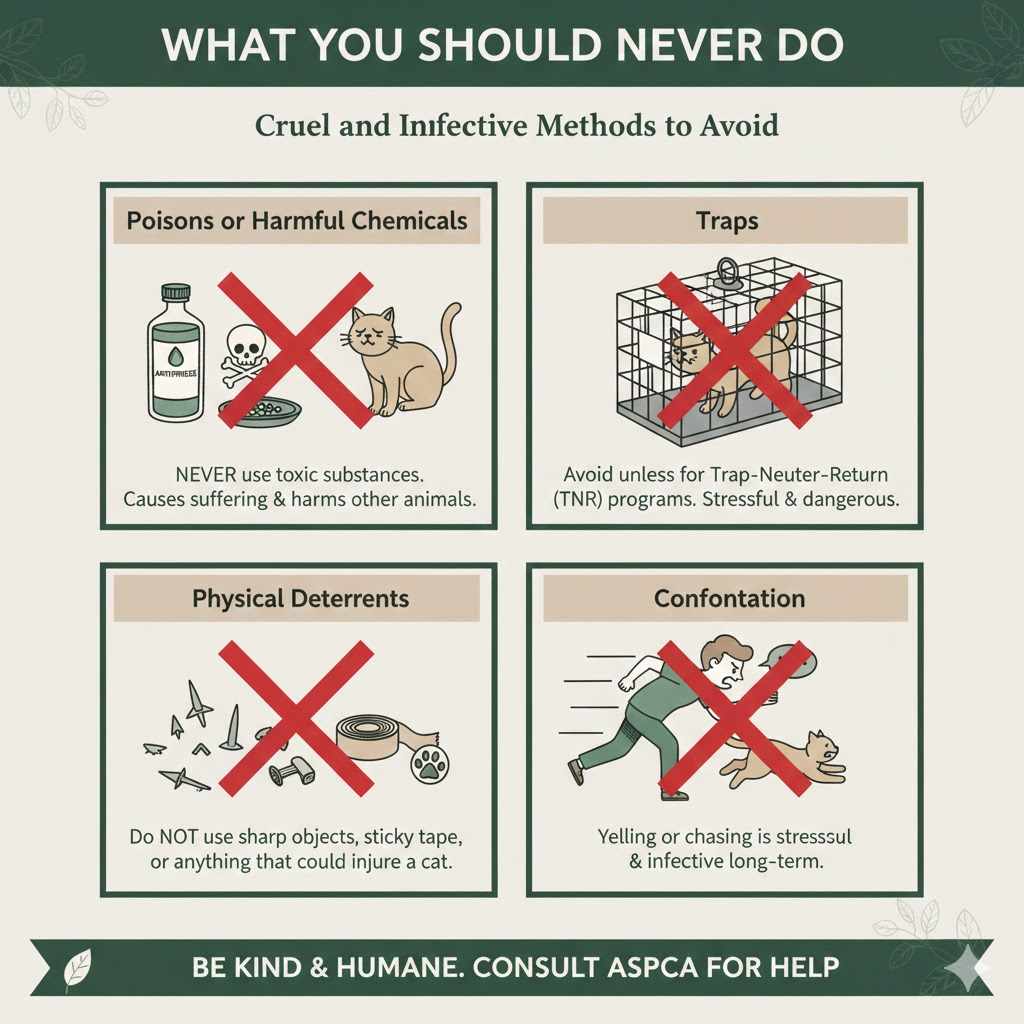
What You Should Never Do
It’s important to approach this problem with kindness. Cats are just following their instincts. Using methods that could harm them is cruel, and often illegal. For more information on humane solutions for community cats, resources from organizations like ASPCA are incredibly helpful.
Here are things you must avoid:
- Poisons or Harmful Chemicals: Never use antifreeze, rat poison, or other toxic substances. These cause immense suffering and can accidentally harm other wildlife or pets.
- Traps: Unless you are working with a local Trap-Neuter-Return (TNR) program, trapping cats can be stressful and dangerous for the animal.
- Physical Deterrents: Do not use sharp objects, sticky tape, or anything that could physically injure a cat.
- Confrontation: Yelling at or chasing a cat may scare it away temporarily, but it’s a stressful and ineffective long-term solution.
Frequently Asked Questions (FAQ)
1. Will cat repellent sprays damage my car’s paint?
Most commercial cat repellents are formulated to be safe for automotive paint, but you should always check the label. When in doubt, test the product on a small, hidden area first, like a door jamb or under the bumper. DIY sprays using vinegar and water are generally safe but should also be tested.
2. How often do I need to reapply repellents?
This depends on the product and the weather. Most sprays, both commercial and DIY, should be reapplied every few days to maintain their effectiveness. You will need to reapply them more often if it rains, as water will wash the scent away.
3. Do ultrasonic cat repellers really work?
Many people find them to be very effective. The high-frequency sound is designed to be irritating to cats, encouraging them to leave the area. However, effectiveness can vary. Some cats may get used to the noise over time, or the device may not work as well if its line of sight to the car is blocked by objects.
4. Why do I need to be careful with mothballs?
Mothballs contain toxic pesticides that are dangerous when used outdoors. The chemicals can seep into the ground and contaminate soil and water. They are also highly toxic to children, pets, and wildlife if ingested. Using them for this purpose is illegal and harmful to the environment.
5. Is it safe to put things like plastic mats on my car hood?
It’s generally not a good idea to place items directly on your car’s paint. A plastic mat, especially one with a rough texture, could slide around and scratch the clear coat. A soft car cover is a much safer physical barrier.
6. What if a cat is living in my car’s engine bay?
This is a very dangerous situation for the cat. Before starting your car, especially on cold days, bang loudly on the hood a few times. This will usually startle any animal hiding inside and give it a chance to escape. If you know a cat is in there and won’t leave, you can try luring it out with food or call your local animal control for assistance.
7. Will one method be enough to solve the problem?
Sometimes, but often the best approach is to combine a few methods. For example, you could use a repellent spray while also making sure there are no food sources nearby. This creates multiple reasons for the cat to decide your car is no longer the best spot in the neighborhood.
A Final Word on Keeping Your Car Cat-Free
Dealing with cats on your car can be a nuisance, but it’s a problem with many simple and humane solutions. The key is to be consistent and patient. Start with the easiest and most affordable methods, like a DIY repellent spray or scattering citrus peels. If the problem persists, you can move on to more robust solutions like a car cover or a motion-activated device.
Remember to think like a cat: they want warmth, safety, and comfort. By making your car a less attractive spot—either by covering it, making it smell bad to them, or creating a mild, harmless surprise—you can effectively guide them to a new favorite nap location. With a little effort, you can protect your car’s finish while still being a good neighbor to your local feline friends.