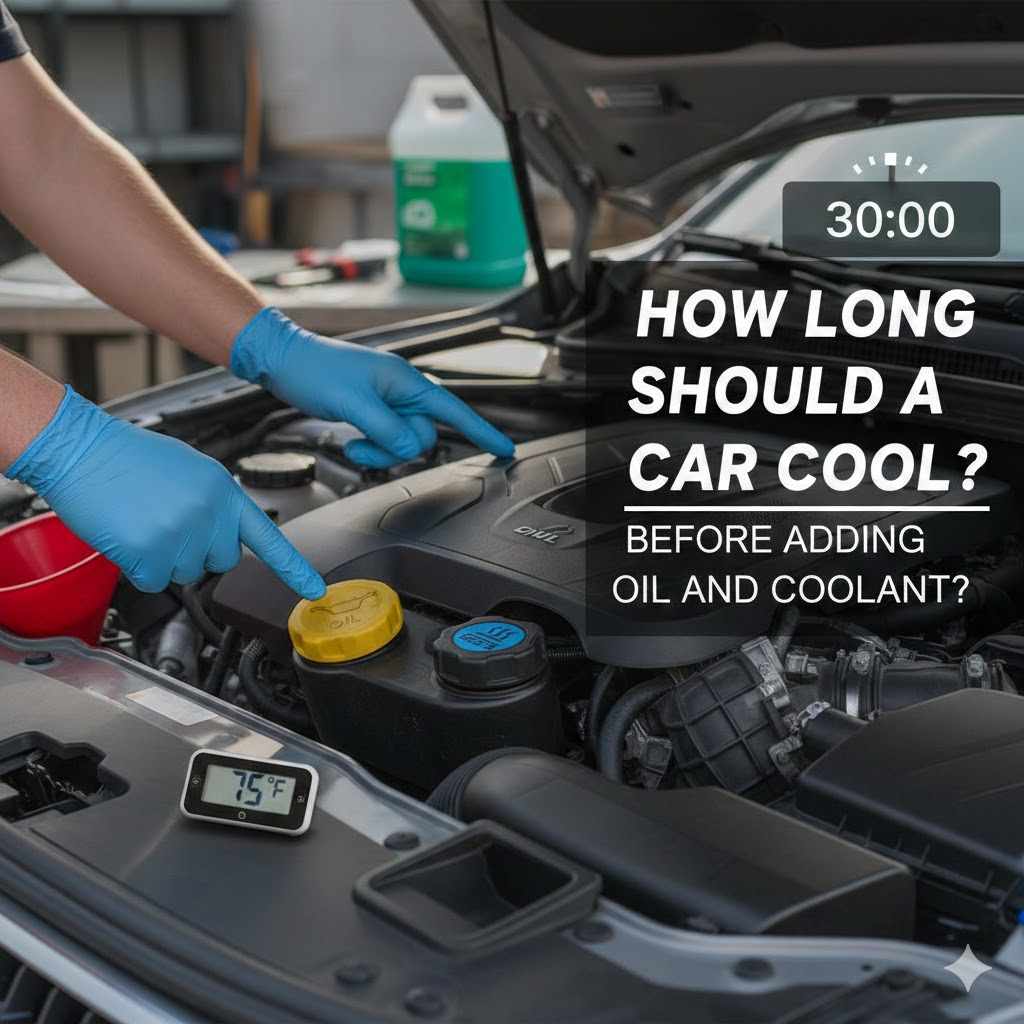
How Long Should a Car Cool Before Adding Oil and Coolant?
Many car owners wonder, How Long Should a Car Cool Before Adding Oil and Coolant? It can seem a bit tricky when you’re new to checking your car’s fluids. You don’t want to add them when the engine is too hot, but you also don’t want to wait forever. This guide makes it super simple.
We will walk you through exactly what you need to know step by step, so you can do this with confidence.
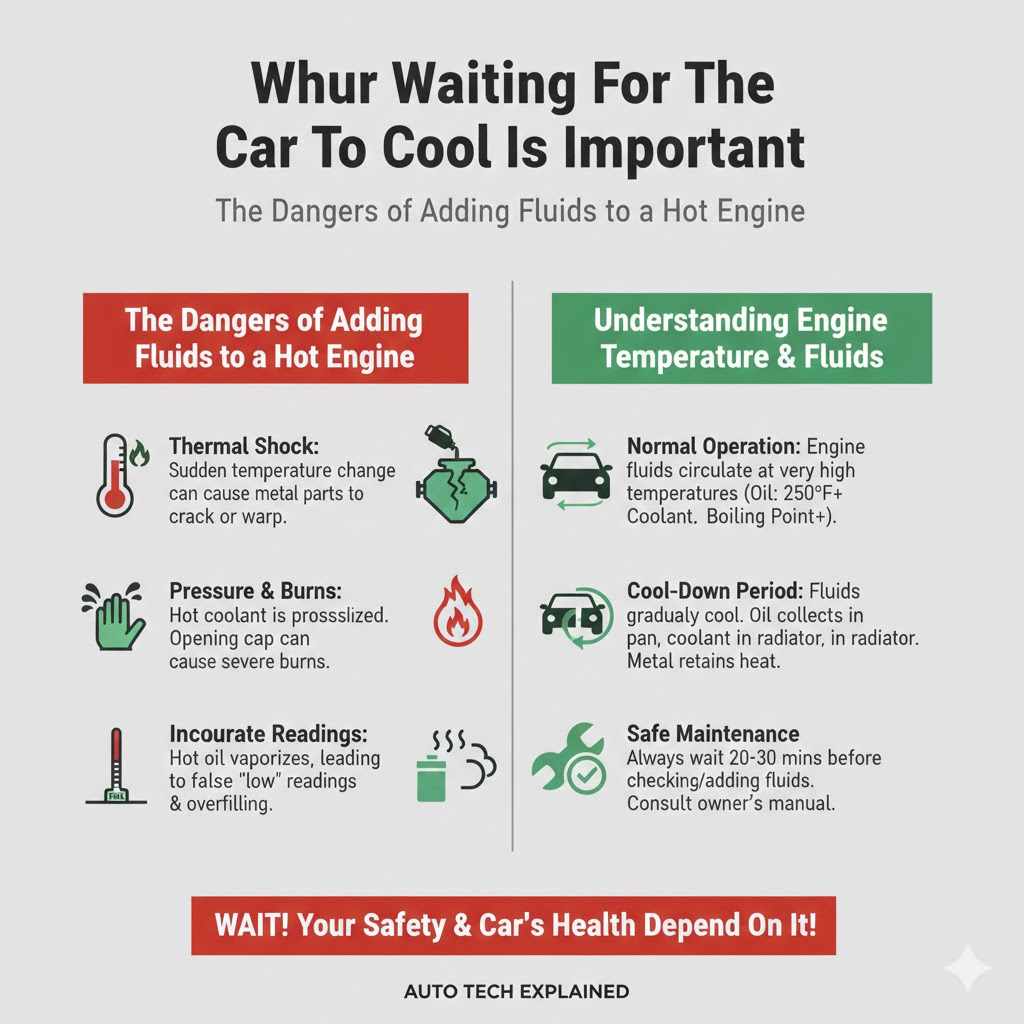
Why Waiting For Your Car To Cool Is Important
Your car’s engine gets very hot when it runs. Adding oil or coolant to a hot engine can be dangerous and cause damage. The high temperatures can make fluids behave differently.
This section explains why it’s a good idea to let your car’s engine cool down before you check or add these vital fluids.
The Dangers of Adding Fluids to a Hot Engine
When your engine is running, the oil and coolant are circulating at very high temperatures. The oil can reach over 250 degrees Fahrenheit, and the coolant can be even hotter, often exceeding the boiling point of water under pressure. Adding a cool liquid like oil or coolant to these extremely hot components can cause thermal shock.
Thermal shock is a sudden, rapid change in temperature. For metal parts, this can lead to cracking or warping. For example, if you pour cold coolant into a very hot engine block, the metal might contract too quickly, creating tiny cracks that can leak coolant later.
Similarly, hot engine parts can cause oil to vaporize instantly, leading to inaccurate readings and potential burns.
Also, some fluids, like coolant, are pressurized when hot. Opening a radiator cap on a hot engine can cause the hot liquid to spray out forcefully, leading to severe burns. It’s like opening a shaken soda bottle, but with boiling water.
Waiting for the engine to cool down eliminates these risks, ensuring your safety and protecting your car’s components from damage.
Understanding Engine Temperature and Fluids
Your car’s engine is a complex system designed to operate within a specific temperature range. The oil lubricates moving parts and also helps to dissipate heat. Coolant circulates through the engine to absorb excess heat and prevent it from overheating.
When the engine is off, these fluids gradually cool down. The rate at which they cool depends on several factors, including the ambient temperature, how long the engine was running, and the car’s design. Oil is primarily in the oil pan at the bottom of the engine, while coolant is spread throughout the engine block and radiator system.
Even after the engine is turned off, residual heat remains. The metal components of the engine hold onto this heat for a significant period. This stored heat is why you should always wait before interacting with the engine bay, especially when dealing with fluids that are not designed to be exposed to extreme temperature fluctuations.
Common Mistakes New Drivers Make
New drivers or those less familiar with car maintenance often overlook the importance of engine cooling time. They might see a low fluid level and immediately add more without considering the temperature. This haste can lead to costly mistakes.
One common mistake is checking the oil level right after turning off the engine. Much of the oil is still in the upper parts of the engine, waiting to drain back into the oil pan. Checking too soon will give a false reading, suggesting the oil level is lower than it actually is.
This can lead to overfilling, which is also bad for the engine.
Another mistake involves the coolant reservoir. People might think “low coolant, add coolant.” But if the engine is hot, the coolant is under pressure and very hot. Opening the cap can be dangerous.
They might also add coolant to an engine that is only slightly warm, but still hot enough to cause issues.
These errors stem from a lack of clear information about the waiting times required for safe fluid checks. Our goal is to provide that clarity so you can perform these tasks correctly and safely.
How Long Should a Car Cool Before Adding Oil
Checking your car’s oil level is a fundamental maintenance task. Knowing how long to wait after turning off the engine ensures you get an accurate reading and avoid damaging your engine. This section details the recommended cooling time for checking and adding engine oil.
The “Wait Time” for Oil Checks
For an accurate oil level reading, it’s best to wait at least 10 to 15 minutes after turning off your engine. This allows most of the engine oil to drain back from the upper parts of the engine and settle into the oil pan at the bottom.
When the engine is running, oil is pumped throughout the engine to lubricate moving parts. This oil collects in the oil pan. Once the engine is shut off, gravity pulls the oil back down.
A few minutes isn’t always enough for all the oil to return to the pan. The dipstick measures the oil level in the pan.
If you check the oil too soon, the dipstick might show a level that is lower than it actually is. This could tempt you to add more oil than necessary, leading to overfilling. Overfilling your engine with oil can cause it to foam, reduce its lubricating effectiveness, and even damage seals and gaskets over time.
So, a short wait ensures that the oil level reading you get from the dipstick is the true level of oil in the oil pan. This is crucial for maintaining proper engine lubrication and health.
How to Check Your Engine Oil Correctly
Checking your engine oil is a simple process that can prevent major problems. First, ensure your car is parked on a level surface. This is very important for an accurate reading.
If the car is on a slope, the oil will pool to one side of the pan, giving a misleading measurement.
Once the car is parked level, turn off the engine and wait for at least 10 to 15 minutes. Locate the engine oil dipstick. It usually has a brightly colored handle, often yellow or orange, with an oil can symbol.
Pull out the dipstick, wipe it clean with a lint-free cloth or paper towel, and then re will be markings on the dipstick, usually two small dots or lines labeled “Min” and “Max” or “Add” and “Full”.
The oil level should be between these two marks.
If the oil level is at or below the “Add” or “Min” mark, you need to add oil. If it’s between the marks, the level is fine. If it’s above the “Max” or “Full” mark, the oil is overfilled, and you may need to remove some.
When to Add Oil and How Much
You should add oil if the dipstick shows the level is at the “Add” or “Min” mark, or even slightly below it. It’s generally better to add oil in small increments rather than all at once. This helps prevent overfilling.
When you add oil, do so slowly. Remove the oil filler cap (it usually has an oil can symbol too). Using a funnel, add about half a quart (or about half a liter) of the correct type of oil for your car.
Replace the filler cap.
Wait another 5 to 10 minutes for the oil to settle in the pan. Then, recheck the dipstick. If the level is still low, add another small amount and recheck.
Repeat this process until the oil level is between the “Add” and “Full” marks. Never fill it above the “Full” mark.
Using the correct type of oil specified in your car’s owner’s manual is very important. Different engines require different viscosities and formulations of oil.
How Long Should a Car Cool Before Adding Coolant
Coolant, or antifreeze, is vital for regulating your engine’s temperature. Adding it incorrectly can be dangerous due to heat and pressure. This section provides the guidelines for safely checking and refilling your car’s coolant.
The Critical Cooling Time for Coolant
When it comes to coolant, waiting is even more critical than for oil. You should ideally wait until the engine is completely cool to the touch, which can take anywhere from 30 minutes to several hours, depending on how hot the engine got and the outside temperature. However, a minimum wait of at least 30 minutes to an hour after the engine has been turned off is generally recommended for a basic check.
The coolant system is pressurized when hot. This pressure prevents the coolant from boiling, even at temperatures well above 212 degrees Fahrenheit (100 degrees Celsius). If you open the radiator cap or the coolant reservoir cap when the system is still hot and pressurized, the superheated coolant can erupt violently from the opening.
This eruption can cause severe burns to your skin, eyes, and face. The steam alone can cause serious injury. Therefore, it’s crucial to let the entire system cool down completely, allowing the pressure to dissipate and the coolant temperature to drop to a safe level.
Never assume the system is cool just because you turned the engine off a few minutes ago. Feel the radiator and the hoses connected to it (carefully, from a distance if unsure). If they are still warm or hot, the coolant is still too hot to check or add.
Safely Checking Coolant Levels
Checking your coolant level is usually done by looking at a translucent plastic reservoir, often called an expansion tank or overflow tank. This tank is connected to the radiator and the engine cooling system.
Locate this reservoir. It will have “Min” and “Max” or “Low” and “Full” lines marked on its side. Park your car on a level surface.
Ensure the engine has cooled for at least 30 minutes to an hour. If you are unsure about the temperature, err on the side of caution and wait longer.
Observe the coolant level in the reservoir. When the engine is cold, the coolant level should be between the “Min” and “Max” marks. If the level is at or below the “Min” line, you need to add coolant.
If your car has an older design without a visible reservoir, you might need to open the radiator cap. This should ONLY be done when the engine is completely cold. Use a thick cloth or glove to protect your hand, and turn the cap slowly counter-clockwise.
You may hear a hiss of escaping pressure if there’s any residual heat or pressure left.
The coolant inside should be a colored liquid, usually green, orange, or pink, depending on the type used. If you see only air or very little liquid, it indicates a low coolant level.
Adding Coolant and the Correct Type
If the coolant level is low, you will need to add more. Use a 50/50 mixture of antifreeze and distilled water, unless you are using a pre-mixed solution. Never use plain tap water, as it can contain minerals that can damage the cooling system over time.
When adding coolant to the reservoir, pour slowly until the level reaches the “Max” or “Full” line. Do not overfill. Replace the reservoir cap securely.
If you had to open the radiator cap, add the coolant mixture directly into the radiator until it reaches the neck. Then, fill the reservoir to the “Max” line. Replace the radiator cap tightly.
It is very important to use the correct type of coolant recommended by your car’s manufacturer. Different types of coolant have different chemical compositions and are not always interchangeable. Mixing incompatible coolants can cause gelling, blockages, and corrosion within the cooling system.
Always check your owner’s manual for the specific type and color of coolant your car requires.
Factors Affecting Cooling Time
Several things can change how long your car needs to cool down before you can safely check or add fluids. Understanding these factors helps you make better decisions about waiting times.
Ambient Temperature and Weather Conditions
The temperature outside your car plays a big role. On a hot summer day, your engine will stay hotter for much longer after you turn it off compared to a cold winter day. The metal components have absorbed heat from the environment and the engine’s operation, and it takes more time for this heat to dissipate.
In very cold weather, the engine might cool down faster. However, even in cold weather, the engine’s internal operating temperature is still extremely high. So, while it might feel cooler to the touch sooner, the critical components are still hot enough to pose a risk.
Wind can also affect cooling times. A strong breeze can help dissipate heat from the engine bay more quickly. Conversely, if your car is parked in a garage or an enclosed space with no airflow, it will likely retain heat for a longer period.
Always consider the conditions when you’re planning to check or add fluids. If it’s a sweltering day, extend your waiting time. If it’s a chilly evening, you might still need to wait a reasonable amount of time.
Engine Size and Type
Larger engines and engines designed for high performance often generate more heat. They have more metal mass to heat up and more powerful combustion processes that create excess thermal energy. This means they might take longer to cool down compared to smaller, more fuel-efficient engines.
The type of engine also matters. Diesel engines, for example, tend to run hotter than gasoline engines due to their combustion process. Some engine designs might also have more complex cooling systems or be located in tighter engine bays, restricting airflow and slowing down the cooling process.
Turbocharged engines also generate significantly more heat than naturally aspirated engines. The turbocharger itself gets extremely hot during operation, and this heat can transfer to the engine oil and coolant, requiring longer cooling periods.
While you don’t need to be an engine expert, it’s useful to know that some cars might need a little extra patience. Your car’s owner’s manual is the best source for specific recommendations related to your vehicle’s engine.
Duration of Engine Operation
How long your car was running before you turned it off is a key factor. If you just took your car for a short drive around the block, the engine might not have reached its full operating temperature and could cool down relatively quickly. However, if you’ve been driving for an hour or more on the highway, the engine will be very hot and will require a much longer cooling period.
Consider the type of driving you’ve been doing. Stop-and-go traffic in hot weather can cause an engine to overheat more than steady highway driving, as airflow through the radiator is reduced. This sustained high temperature means a longer wait is needed.
If you’ve just completed a demanding task with your car, like towing a heavy load or climbing a steep hill, the engine would have been working harder and generating more heat. In such cases, waiting for it to cool completely is especially important.
Always gauge your waiting time based on your recent driving experience. A quick errand requires less waiting than a long road trip. When in doubt, always wait longer rather than not long enough.
Practical Scenarios and Tips
Let’s look at some real-life situations to help you understand when and how long to wait. These scenarios cover common driving conditions and provide actionable advice.
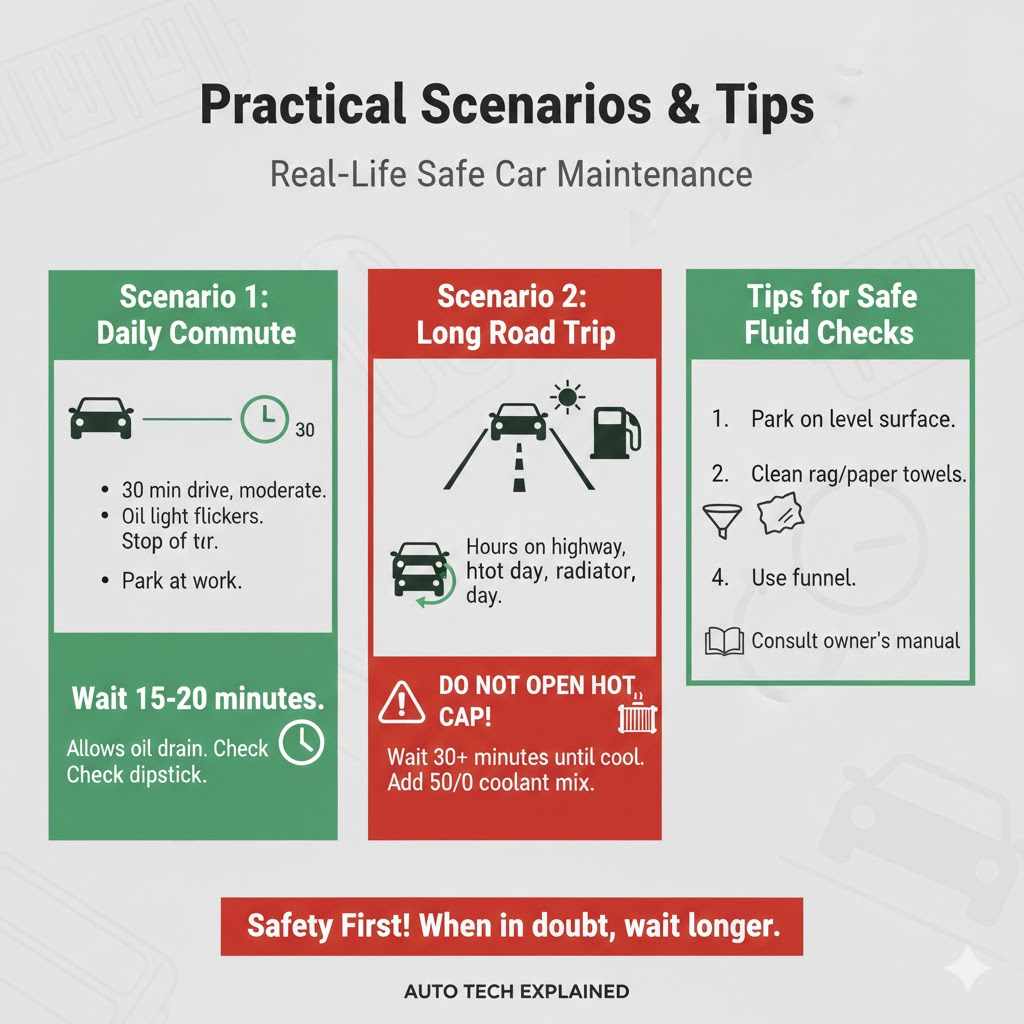
Scenario 1: Daily Commute
You’ve just finished your morning commute to work, which involves about 30 minutes of driving in moderate traffic. You notice your oil light flickers briefly, and you want to check your oil level. You park the car at work.
How long should you wait before checking your oil?
Given that your engine reached normal operating temperature and was running for about 30 minutes, it’s best to wait at least 15 to 20 minutes. This allows the oil to drain back into the oil pan. During this time, you can gather your tools and a clean rag.
After waiting, check the dipstick as described earlier. If the level is low, add a small amount of the correct oil and recheck after a few minutes.
Scenario 2: Long Road Trip
You’ve been driving on the highway for several hours on a hot summer day. You stop for gas. You notice the coolant level in the reservoir looks a bit low.
What should you do?
On a long, hot drive, your engine and cooling system are very hot and pressurized. You should absolutely NOT open the radiator cap or reservoir cap immediately. Wait at least 30 minutes, and ideally longer, until the engine components are cool to the touch.
Even then, be cautious when opening the reservoir cap. If the level is low after it cools, add a 50/50 mix of coolant and distilled water to the reservoir until it reaches the “Max” line. Never add cold water to a hot engine block.
Tips for Safe Fluid Checks
- Always park on a level surface for accurate fluid level readings.
- Keep a clean rag or paper towels handy for wiping dipsticks and filling funnels.
- Use a funnel when adding oil or coolant to avoid spills.
- Refer to your car’s owner’s manual for the specific type of oil and coolant required.
- If you’re ever unsure about the engine’s temperature, wait longer. Safety is paramount.
These simple tips, combined with understanding the waiting times, will help you maintain your car properly and safely.
Frequently Asked Questions
Question: Can I check my car’s oil right after turning off the engine?
Answer: No, it’s best to wait at least 10 to 15 minutes after turning off the engine. This allows the oil to drain back into the oil pan for an accurate reading.
Question: How long does it take for a car’s engine to cool down enough to add coolant safely?
Answer: For coolant, it’s best to wait until the engine is completely cool, which can take 30 minutes to several hours. A minimum of 30 minutes to an hour is recommended, but longer is safer, especially after extended driving or on hot days.
Question: What happens if I add oil to a hot engine?
Answer: Adding oil to a hot engine can lead to inaccurate readings if done too soon, or if the oil is added to a very hot engine, it can cause rapid vaporization, potential foaming, and may not lubricate as effectively.
Question: Is it safe to open the radiator cap when the engine is warm but not fully hot?
Answer: No, it is never safe to open the radiator cap when the engine is even slightly warm. The coolant system is pressurized, and hot coolant can spray out, causing severe burns.
Question: What kind of coolant should I use?
Answer: You should always use the specific type of coolant recommended in your car’s owner’s manual. Mixing incompatible coolants can damage your cooling system.
Conclusion
Knowing How Long Should a Car Cool Before Adding Oil and Coolant? is key to car maintenance. Always wait for your engine to cool down to avoid injury and damage. For oil, allow 10-15 minutes for accurate levels.
For coolant, wait until the engine is fully cool, at least 30 minutes to an hour or more. These simple waits keep your car running smoothly and safely.