Does Cold Weather Drain a Car Battery? What Actually Happens
Cold weather doesn’t drain a car battery on its own — but it can cut a fully charged battery’s cranking power by up to 60% at 0°F, according to AAA, right when your engine needs nearly twice the current to start. A battery that’s already weak, old, or below a 75% charge often won’t survive that gap. This guide covers why cold saps power, the real difference between “drain” and reduced capacity, and how to keep your battery starting reliably all winter.
Insert your Affiliate Disclosure reusable block here
How Cold Weather Actually Affects Car Battery Power
A car battery makes power through a chemical reaction between lead plates and sulfuric acid electrolyte. Cold temperatures slow that reaction down — the colder it gets, the thicker and slower the electrolyte becomes, and the less current the battery can deliver in a short burst. At the same time, cold engine oil thickens and adds mechanical resistance, so the starter motor needs more current, not less, to turn the engine over. A battery that starts your car fine in July can struggle with the exact same job in January simply because both sides of the equation — power available and power required — move in the wrong direction at once.
📊 A fully charged car battery loses roughly 35% of its cranking power at 32°F, and up to 60% at 0°F — while the engine needs nearly twice as much current to start. — Source: AAA
That combination is why cold snaps produce a predictable spike in dead-battery calls: it’s rarely one dramatic failure, it’s a battery that was already running at 70-80% of its rated capacity from age or a light parasitic drain, pushed under 40% by the cold, and no longer able to supply the extra crank current a cold engine demands.
Does Cold Drain a Battery Overnight, or Just Weaken It?
Cold air by itself does not pull charge out of a healthy battery overnight the way a parasitic drain does. A battery sitting in freezing temperatures loses available cranking power, not stored charge — the energy is still in the battery, it’s just harder for the battery to release it quickly. That’s an important distinction: a fully charged, healthy battery can sit through weeks of freezing nights and still start the car, because its capacity loss is temporary and reverses once temperatures rise or the engine warms the battery back up.
What actually kills a battery over a cold weekend is almost always something else running alongside the cold: a dome light left on, a phone charger or dash cam still plugged in, a faulty alternator not fully recharging the battery on short trips, or a battery that was already below 12.4 volts before the cold front arrived. There’s no fixed “number of days” freezing weather takes to kill a battery on its own — a battery in good health with no parasitic drain can handle an entire cold season, while a battery with even a small existing drain can go flat in a single freezing night. If your battery is testing under 12.4 volts, see our guide on what a healthy car battery voltage reading should be before assuming cold weather alone is the cause.
“At zero degrees, a battery loses about 60 percent of its strength, yet the engine needs about twice as much power to start.”
How to Prevent Car Battery Drain in Cold Weather
You can’t stop cold weather from reducing your battery’s available power, but you can stop it from becoming a no-start. These steps cut the risk in order of impact:
- Test the battery’s state of charge: A healthy resting voltage is 12.4–12.7 volts. Anything below 12.2 volts means the battery is already compromised before cold weather even factors in.
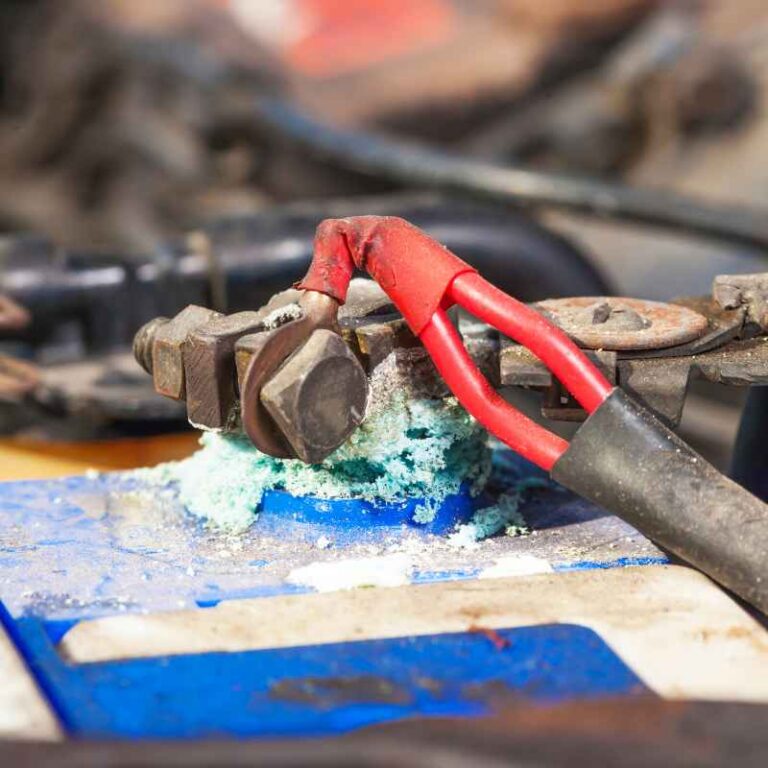
- Clean and tighten the terminals: Corrosion adds resistance right at the connection point, which matters even more when the battery has less power to spare. Wire-brush any white or blue buildup off the posts and clamps.
- Cut parasitic drain before it starts: Unplug phone chargers, dash cams, and phone mounts when the car is parked overnight, and double-check interior and trunk lights are fully off.
- Shelter the battery from wind chill: Parking in a garage, carport, or even against a windbreak keeps the battery several degrees warmer than an exposed driveway, which measurably helps cranking power.
- Use a trickle charger or battery blanket for long parking stretches: If the car will sit for more than a few days in freezing temperatures, a smart trickle charger keeps the battery topped off without overcharging it.
- Replace a battery older than 3–5 years before winter, not during it: Cold weather doesn’t cause battery aging, but it does expose it — a battery that’s already lost capacity to age has the least margin left when temperatures drop.
If your battery is already showing corrosion or won’t hold a charge, see our guide on why car batteries keep corroding for the underlying causes, and our guide on how to store a car battery correctly if the vehicle won’t be driven for an extended stretch this winter.
Best Winter Battery Charger Pick
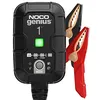
NOCO GENIUS1 Smart Battery Charger & Maintainer
A smart trickle charger that safely maintains battery charge through freezing nights without overcharging or needing to be unplugged.
- Best for: Cars parked outside or driven infrequently in cold weather
- Why we picked it: Automatic float mode prevents the overcharging risk this article warns about with cheaper chargers
- Main drawback: Needs a nearby outlet, so it’s not a fix for street parking
Compare more cold-weather battery gear
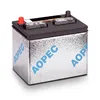 Option 1 Universal Car Battery Insulation Blanket (40″x7″)
|
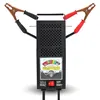 Option 2 Schumacher Electric Battery Load Tester (6V/12V)
|
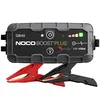 Option 3 NOCO Boost GB40 Portable Jump Starter
|
As an Amazon Associate we earn from qualifying purchases.
Signs Your Car Battery Is Struggling in the Cold
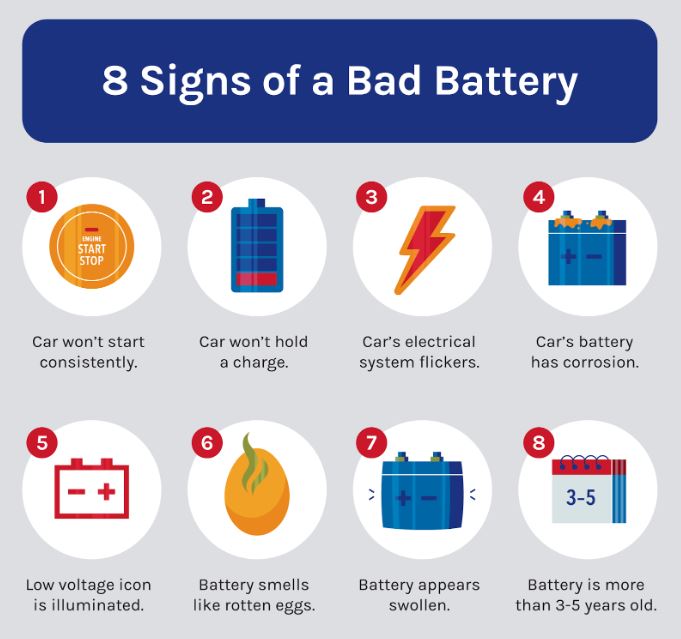
A slow, labored crank — the engine turning over noticeably slower than usual before it catches — is the earliest and most reliable warning sign, and it means the battery is losing the fight against cold weather right then. Dim headlights or interior lights, a radio or infotainment screen that resets or flickers, and power windows moving slower than normal are secondary signs that the electrical system is under strain. A clicking sound with no crank at all usually means the battery voltage has dropped too low to engage the starter solenoid, which is a stronger warning sign than a slow crank and often means the car needs a jump start that same morning.
If any of these symptoms show up on a cold morning but the car ran fine the evening before, check how to check your car battery’s health with a multimeter or a free parts-store load test rather than assuming a jump start alone solved the problem — a battery that needed a jump once in the cold is likely to need one again unless the underlying capacity loss is addressed. If the problem turns out to be something else entirely, our car troubleshooting hub covers other common no-start causes.
Do Electric and Hybrid Car Batteries Drain in Cold Weather Too?
Yes, but the mechanism is different depending on which battery you mean. Every gas, hybrid, and electric vehicle has a standard 12-volt lead-acid battery that runs the lights, locks, and starting electronics — that battery is affected by cold exactly the same way described above, hybrid or not, and can leave a hybrid stranded from a dead 12-volt battery even though its main hybrid battery is fully charged.
The large traction battery in a hybrid or full EV behaves differently: cold doesn’t drain it overnight either, but it does reduce how much of its stored energy is usable, because the battery management system limits power output at low temperatures to protect the cells. That shows up as reduced driving range rather than a no-start — EVs commonly lose a meaningful chunk of range in freezing weather, and that loss grows sharply if the cabin heater runs off the same battery. Preconditioning the battery while still plugged in, and using seat heaters instead of the cabin heater when possible, are the two most effective ways EV owners limit this.
Source: Consumer Reports, on how cold temperatures affect EV driving range.
Choosing the Right Battery for Cold Climates
If you’re replacing a battery before winter, the number that matters most in the cold is Cold Cranking Amps (CCA) — the amount of current the battery can deliver for 30 seconds at 0°F while staying above 7.2 volts. A higher CCA rating gives the battery more margin before cold-weather capacity loss brings it below what your engine needs to start. Most passenger vehicles use batteries rated between 400 and 800 CCA; check your owner’s manual for the manufacturer’s minimum, and in genuinely cold climates, choose a battery rated at least 100–150 CCA above that minimum rather than the cheapest option that technically fits.
AGM (Absorbent Glass Mat) batteries generally outperform standard flooded lead-acid batteries in cold weather because their sealed design resists the internal resistance increase that hurts flooded batteries most, though they typically cost more. Interstate, Bosch, Optima, ACDelco, and DieHard all make batteries with strong published CCA ratings for cold climates — compare the actual CCA number and warranty length for your specific vehicle rather than the brand name alone, since CCA can vary significantly between models from the same manufacturer.
Frequently Asked Questions
How do I keep my car battery from dying in cold weather?
Test the battery’s resting voltage before winter starts, keep the terminals clean and tight, park in a garage or sheltered area when possible, and unplug accessories like phone chargers and dash cams overnight. If the car sits for more than a few days in freezing temperatures, use a smart trickle charger to keep the battery topped off without overcharging it.
How fast will a car battery drain in cold weather?
Cold weather doesn’t drain a healthy battery’s stored charge quickly — it reduces the power the battery can deliver, by roughly 35% at 32°F and up to 60% at 0°F according to AAA. A battery already weakened by age or a parasitic drain can go flat in a single freezing night, while a fully healthy battery can handle weeks of cold with no issue.
How often should I start my car to keep the battery charged in cold weather?
If the car won’t be driven, start it and let it run for 10–15 minutes about once a week, with all electrical accessories off, so the alternator can put some charge back in. Idling alone recharges a battery slowly, so this is a stopgap, not a substitute for driving the car or using a trickle charger for longer storage.
What drains a car battery when the car is off?
Interior or trunk lights left on, a radio or aftermarket electronics like dash cams or alarms wired to draw power at all times, a faulty alternator that isn’t fully recharging the battery while driving, and a battery nearing the end of its 3–5 year lifespan are the most common causes. Cold weather doesn’t create this drain, but it makes an existing drain far more likely to leave you stranded.
Does cold weather drain a hybrid or electric car’s battery too?
Yes. Every hybrid and EV still has a 12-volt battery that starts the electronics and is affected by cold exactly like a gas car’s battery. The separate hybrid or EV traction battery isn’t drained by cold overnight either, but its usable range typically drops in freezing weather, especially when the cabin heater is running off the same battery.
How many days does it take for freezing weather to drain a car battery?
There’s no fixed number — cold alone doesn’t have a countdown clock on a healthy battery. A battery in good condition with no parasitic drain can sit through an entire freezing week or longer and still start. A battery that’s already marginal, or one with even a small ongoing drain, can go flat in a single cold night because it has almost no reserve capacity left once the cold cuts its available power.
Cold weather doesn’t kill a healthy car battery outright, but it removes the safety margin a weak one depends on. Test your battery’s voltage before the first real cold snap, keep the terminals clean, and address any parasitic drain now — that combination does more to prevent a dead battery than anything you can do after the temperature has already dropped.
Products related to this article
Sponsored / affiliate links. As an Amazon Associate I earn from qualifying purchases. I may earn additional commission from eligible campaigns.