How Long Should Engine Cool Before Topping Up
Many car owners wonder, How Long Should an Engine Cool Before Topping Up? It can seem a little tricky, especially if you’re new to car care. You don’t want to add fluids when it’s too hot, but you also don’t want to wait too long. This guide will make it super simple.
We’ll break down exactly what you need to do, step by step, so you can feel confident taking care of your car.
Understanding Engine Cooling Times
Knowing how long your car’s engine needs to cool down before you add more fluids is really important for its health. When an engine runs, it gets very hot. This heat is a normal part of how engines work, but it means that certain parts are extremely hot to the touch and the fluids inside are under pressure.
Adding more of something, like coolant or oil, to a super hot and pressurized system can cause problems. It’s like trying to add cold water to a boiling pot; things can splash out or even cause damage. This section will explain why cooling is necessary and what can happen if you don’t wait.
The Dangers of Topping Up a Hot Engine
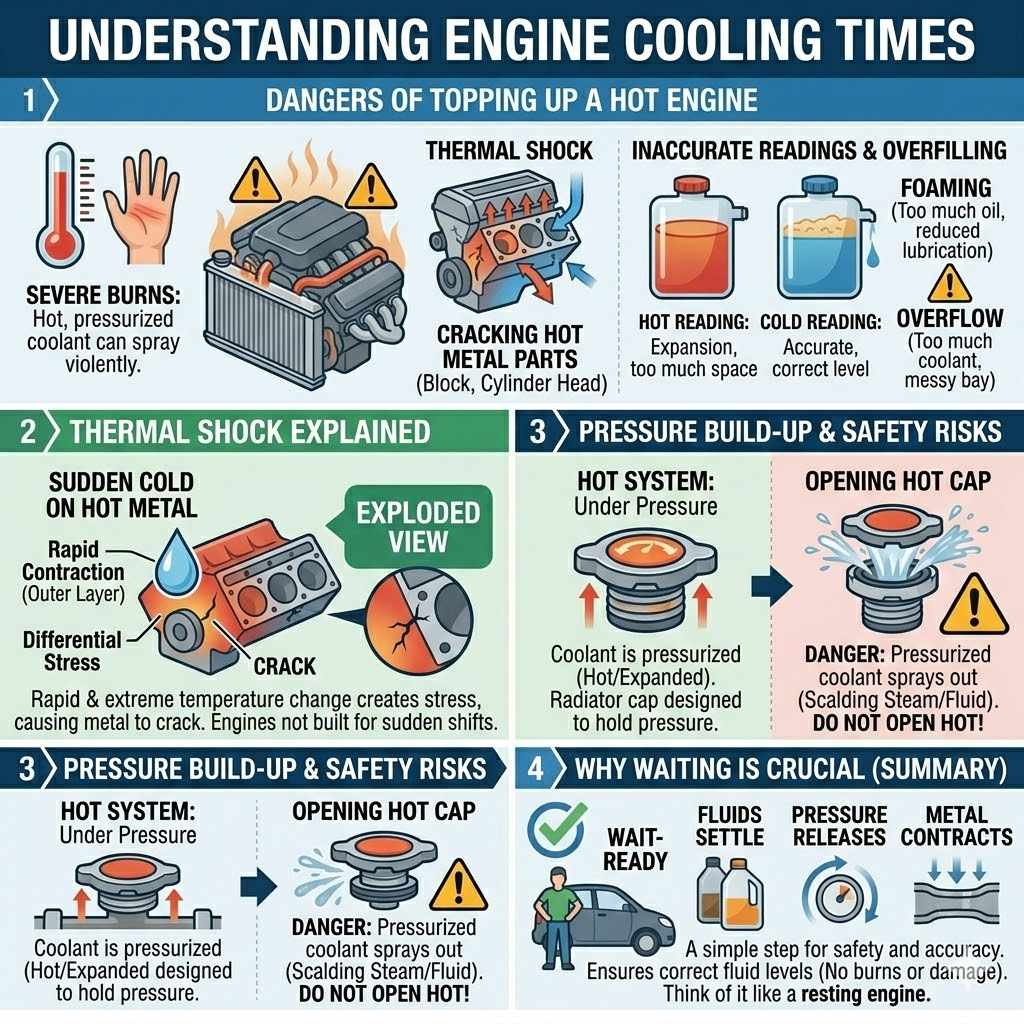
When your engine is running, it creates a lot of heat. This heat causes the metal parts to expand, and the fluids inside, like coolant and oil, get hot and build up pressure. If you try to open a cap or add fluid to a hot engine, you risk getting burned by hot steam or fluid.
Also, adding cold fluid to a hot engine can cause thermal shock. This is when a sudden change in temperature can crack hot metal parts, like the engine block or cylinder head. It’s like a hot glass cracking when you pour cold water into it.
This kind of damage can be very expensive to fix.
Topping up a hot engine can also lead to inaccurate fluid levels. When fluids are hot, they take up more space. If you add more fluid based on a hot reading, you might overfill the reservoir.
When the engine cools down, the fluid level will be too high. Overfilling can also cause issues. For example, too much oil can cause the engine to foam, reducing lubrication and potentially damaging parts.
Too much coolant can lead to overflow and a messy engine bay. Waiting for the engine to cool ensures you get an accurate reading and fill the fluid to the correct level.
Thermal Shock Explained
Thermal shock happens when there’s a rapid and extreme change in temperature. In an engine, this usually occurs when a very hot component is suddenly exposed to a cold substance, like adding cold coolant to a very hot engine block. The outer layers of the metal cool and contract much faster than the inner layers.
This difference in contraction creates stress within the metal. If the stress is high enough, it can cause the metal to crack. This is a serious problem that can lead to leaks and major engine damage.
Engines are built to withstand high temperatures, but not sudden, drastic temperature shifts.
Pressure Build-Up and Safety Risks
The cooling system in your car works under pressure to help the engine reach its optimal operating temperature faster and keep it from overheating. When the engine is hot, the coolant is pressurized. The radiator cap is designed to release this pressure safely if it gets too high, but it’s not meant to be opened when the system is under significant pressure.
If you try to open the radiator cap or the coolant reservoir cap on a hot engine, the hot, pressurized coolant can spray out violently. This can cause severe burns. Always wait for the engine to cool down completely to avoid this dangerous situation.
Why Waiting for Your Engine to Cool is Crucial
Your car’s engine gets very hot during operation. This heat is normal, but it means that the fluids inside, like coolant and oil, are also very hot and can be under pressure. Adding more of these fluids when the engine is still hot can be dangerous and cause damage.
Waiting for the engine to cool down is a simple step that protects your car and keeps you safe. It ensures you can accurately check fluid levels and fill them correctly without risking burns or causing harm to your engine’s components.
Think of it like this: when you’re cooking and something is boiling on the stove, you don’t immediately try to add more ingredients or stir it without turning off the heat first. The engine is the same. It needs time to rest and cool down.
This cooling period allows the fluids to settle, the pressure to release, and the metal parts to contract back to their normal size. This makes checking and adding fluids a safe and effective process, helping your car run smoothly for longer.
How Long Does an Engine Need to Cool Down
The question of How Long Should an Engine Cool Before Topping Up? doesn’t have one exact number that fits every situation. Several factors play a role in how quickly an engine cools. However, there’s a general guideline that most car experts agree on.
Waiting for your engine to cool sufficiently is key to ensuring safety and proper fluid levels. We’ll look at the time frames and what to consider to get it just right.
General Cooling Time Guidelines
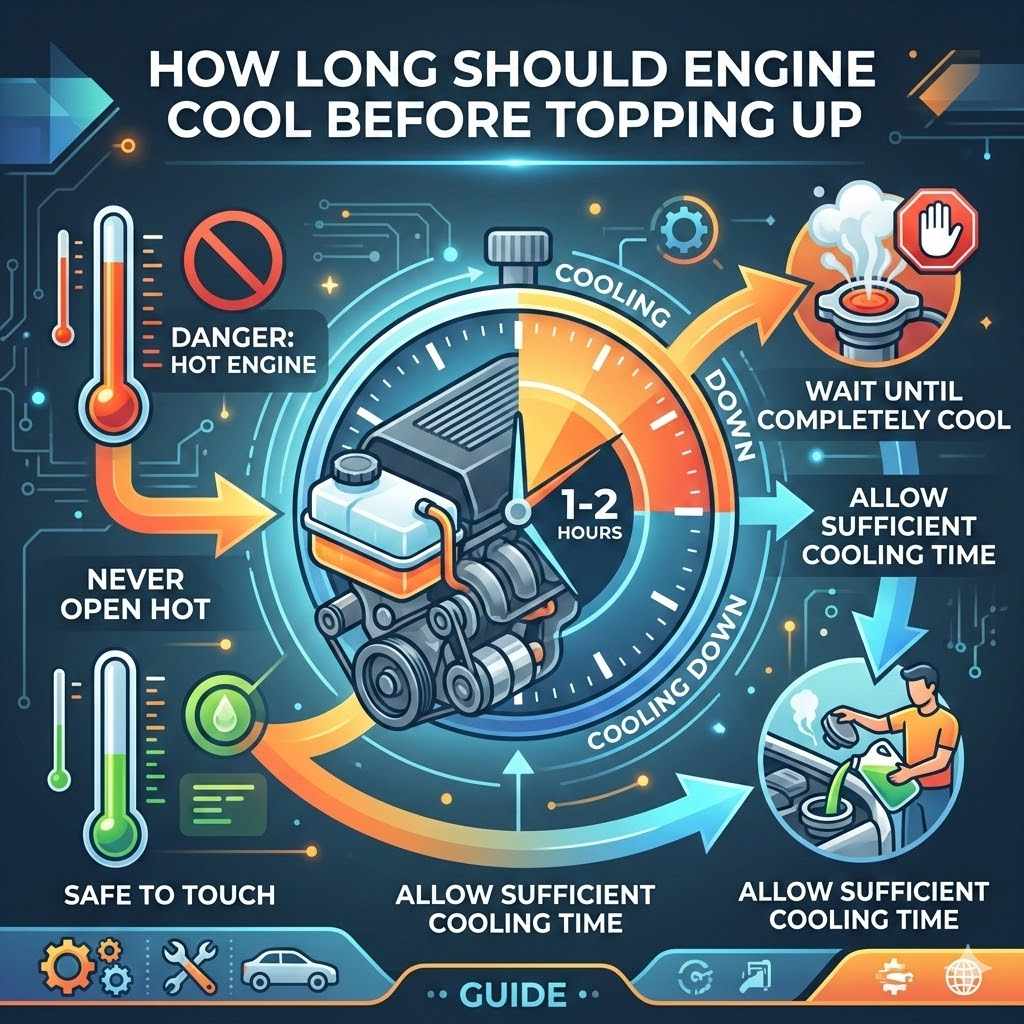
For most cars, it’s generally recommended to wait at least 30 minutes to an hour after turning off the engine before attempting to check or top up fluids like coolant or oil. This waiting period allows the engine to cool down significantly. However, this is just a guideline.
If you’ve been driving for a long time, especially in hot weather or under heavy load (like climbing a hill), the engine might be hotter and take longer to cool down. Conversely, if you’ve only driven for a short distance, it might cool faster.
The best practice is to let the engine cool until the temperature gauge on your dashboard is back to its lowest point or the “cold” mark. If you don’t have a temperature gauge or it’s not working, use the time frame as a guide. A good rule of thumb is to wait until the hood of your car is cool enough to touch comfortably for several seconds.
This is a more reliable indicator than just time alone, as it accounts for different driving conditions and ambient temperatures.
Factors Affecting Cooling Speed
Several things can make your engine cool down faster or slower. The most obvious is the ambient temperature. On a hot summer day, your engine will stay hot much longer than on a cold winter morning.
The size of your engine also matters; larger engines tend to hold more heat and take longer to cool. How long you were driving and how hard you drove the car is also a big factor. A long drive on the highway at high speeds will heat the engine up more than a short drive around town.
The type of coolant or oil you use can also play a small role. Some fluids might have different heat retention properties. The cooling system itself, including the radiator, fan, and thermostat, is designed to manage heat.
If these parts are working perfectly, they help dissipate heat efficiently. However, if there’s a problem, like a clogged radiator or a faulty fan, the engine will take much longer to cool down. Always ensure your car’s cooling system is in good working order.
Ambient Temperature Impact
The air temperature outside your car has a direct impact on how quickly the engine cools. On a frigid winter day, the engine might cool down to a safe temperature for topping up in as little as 15-20 minutes. However, on a scorching summer day, especially after a long drive, that same engine might still be too hot to touch safely even after an hour.
The surrounding air helps to dissipate the engine’s heat. When the air is already hot, there’s less of a temperature difference, meaning heat transfers away from the engine much more slowly.
Driving Conditions and Engine Load
How you drive your car significantly affects how hot the engine gets and, therefore, how long it takes to cool. Driving on a steep mountain road, towing a trailer, or constantly stopping and starting in heavy traffic (stop-and-go traffic) puts a much higher load on the engine. This means the engine works harder and generates more heat.
In contrast, a leisurely drive on a flat highway at a steady speed is less demanding. After strenuous driving, you should always allow extra time for the engine to cool down properly, perhaps even longer than the standard 30-60 minutes.
Engine Size and Design
Larger engines, with more cylinders and displacement, generally have more metal mass and hold more heat than smaller engines. This means they will naturally take longer to cool down. Additionally, the design of the cooling system can influence cooling speed.
Engines with larger radiators or more efficient cooling fans might cool down quicker. Some modern engines are also designed to retain heat for longer to meet emission standards or improve fuel efficiency, which can also affect cooling times. Understanding your specific car model can give you a better idea of its cooling characteristics.
When is it Safe to Top Up Fluids?
The safest time to top up any car fluid is when the engine has cooled down considerably. A good indicator is when the engine temperature gauge on your dashboard reads “cold” or has returned to the lowest mark. Another simple, practical test is to carefully touch the hood of your car.
If it’s cool enough to place your hand on it comfortably for several seconds, it’s likely safe to proceed with checking and topping up. For coolant specifically, it’s best to wait until the system is completely cool and no pressure can be felt when gently trying to open the reservoir cap.
If you’re ever in doubt, it’s always better to err on the side of caution and wait a little longer. An extra 15 or 30 minutes won’t hurt anything, but trying to top up a still-hot engine could lead to burns or damage. Remember that checking and topping up fluids is a routine maintenance task.
Taking your time to do it correctly will save you potential headaches and costly repairs down the line. A cool engine is a safe engine to work on.
Specific Fluids and Their Cooling Needs
While the general advice about waiting for your engine to cool applies to most fluids, there are slight differences depending on the type of fluid you are adding. Coolant and engine oil are the most common ones people check and top up. Each system has its own specific checks and cooling requirements.
Understanding these differences can help you perform these tasks more effectively and safely.
Checking and Topping Up Coolant
Coolant, also known as antifreeze, is vital for regulating your engine’s temperature. It prevents the engine from overheating in hot weather and from freezing in cold weather. When checking coolant, you’ll typically look at the level in the translucent coolant reservoir.
This reservoir is usually marked with “MIN” and “MAX” lines. It’s crucial to check this when the engine is cold. If the level is low, you’ll need to add the correct type of coolant specified in your car’s owner’s manual.
Never open the radiator cap when the engine is hot, as the system is under pressure.
If you need to add coolant, wait until the engine is completely cold. Once cooled, locate the coolant reservoir. If the level is below the “MIN” line, carefully open the reservoir cap and add a 50/50 mixture of antifreeze and distilled water, or pre-mixed coolant, as recommended by your car manufacturer.
Do not fill it past the “MAX” line. If you’re unsure about the type of coolant, consult your owner’s manual or a mechanic. Using the wrong type can cause damage to your cooling system.
After topping up, close the cap tightly and start the engine. Monitor the temperature gauge to ensure it stays within the normal range.
Coolant System Components
The cooling system involves several key parts working together. The radiator is a heat exchanger that cools the hot coolant flowing through it by exposing it to airflow. The water pump circulates the coolant throughout the engine and back to the radiator.
The thermostat is a valve that controls the flow of coolant; it stays closed when the engine is cold to help it warm up faster and opens when the engine reaches its operating temperature to allow coolant to flow to the radiator. The cooling fan, often electric or engine-driven, pulls air through the radiator, especially when the car is stationary or moving slowly. The coolant reservoir, or expansion tank, stores excess coolant and allows it to expand as it heats up, then contracts back into the system as it cools.
Importance of Coolant Type
Using the correct type of coolant is essential for your engine’s longevity. Coolants are formulated with different chemical additives to protect against corrosion, prevent freezing, and raise the boiling point of the fluid. There are several types, often identified by color (like green, orange, pink, or blue), but color alone isn’t always a reliable indicator of type.
Using the wrong coolant can lead to corrosion of metal parts within the cooling system, such as the radiator, water pump, and engine block. It can also lead to reduced cooling efficiency or even clog the system. Always refer to your vehicle’s owner’s manual for the specific type of coolant it requires.
Checking and Topping Up Engine Oil
Engine oil is the lifeblood of your engine, lubricating moving parts to reduce friction and wear. Checking your oil is typically done with the engine off and on a level surface. For the most accurate reading, it’s often recommended to check the oil after the engine has been off for at least 10-15 minutes.
This allows the oil that has coated the engine parts to drain back down into the oil pan. Some manufacturers even suggest checking oil when the engine is cold before its first start of the day.
To check the oil, locate the dipstick (usually a brightly colored loop). Pull it out, wipe it clean with a rag or paper towel, reinsert it fully, and pull it out again. The oil level should be between the “MIN” and “MAX” marks on the dipstick.
If it’s low, you’ll need to add the recommended type of engine oil. Unscrew the oil filler cap (often labeled with an oil can symbol) and add oil a little at a time, rechecking the dipstick after each addition until it’s at the proper level. Avoid overfilling.
If you’ve just driven the car, wait at least 10-15 minutes for the oil to drain back down before checking.
Engine Oil Functions
Engine oil performs several critical functions to keep your engine running smoothly. Its primary role is lubrication; it forms a thin film between moving metal parts, such as pistons, crankshaft, and camshafts, preventing direct metal-to-metal contact and reducing friction and wear. Oil also helps to cool the engine by carrying heat away from hot spots, particularly in the combustion chamber and from the bearings.
It acts as a cleaning agent by suspending dirt, soot, and metal particles, which are then trapped by the oil filter. Furthermore, oil helps to seal the gap between the piston rings and cylinder walls, maintaining compression and preventing blow-by. It also protects against rust and corrosion by forming a protective barrier on metal surfaces.
Oil Viscosity and Types
Viscosity refers to an oil’s resistance to flow. It’s represented by numbers like 5W-30, where “5W” indicates how the oil performs in cold temperatures (W stands for Winter), and “30” indicates its viscosity at operating temperature. Lower “W” numbers mean the oil flows better when cold, making it easier to start the engine in freezing temperatures.
Higher numbers at operating temperature mean the oil is thicker and provides better protection at high engine temperatures. Engine oils are also categorized by their base type: conventional mineral oil, synthetic blend oil, and full synthetic oil. Full synthetic oils offer superior protection, performance, and longevity, especially under extreme conditions, and are often recommended for modern, high-performance engines.
Other Fluids to Consider
Besides coolant and engine oil, cars have other essential fluids. Transmission fluid is crucial for automatic transmissions, lubricating gears and enabling smooth shifting. Power steering fluid assists in turning the steering wheel.
Brake fluid is vital for the braking system’s operation. Windshield washer fluid keeps your windshield clean. While some of these might not require the same extensive cooling period as the engine itself, it’s still good practice to be aware of their levels and to check them when the engine is not excessively hot to avoid any minor burns from nearby hot components.
For example, when checking brake fluid or power steering fluid, the reservoirs are usually located in accessible areas of the engine bay. While these fluids don’t get as hot as engine oil or coolant, the surrounding engine components can still be very hot. Therefore, a short waiting period of 10-15 minutes after shutting off the engine is still a wise precaution.
Always consult your owner’s manual for specific instructions on checking and topping up each type of fluid. Using the correct fluid type for each system is just as important as using the right coolant or oil.
Practical Steps for Safe Fluid Top-Ups
Performing routine fluid checks and top-ups can seem daunting, but by following a few simple steps, you can do it safely and effectively. The key is preparation and patience. Make sure you have the right supplies on hand and that you allow adequate time for your engine to cool.
This section will guide you through the process so you can confidently manage your car’s fluid levels.
Step-by-Step Guide to Topping Up
First, ensure your car is parked on a level surface. This is critical for getting accurate readings of oil and coolant levels. Turn off the engine and open the hood.
Allow the engine to cool for at least 30 minutes, or until the hood is cool to the touch. Locate the coolant reservoir and check its level against the MIN/MAX marks. If low, add the correct coolant/water mixture.
Next, find the engine oil dipstick. Pull it out, wipe it clean, reinsert it fully, and pull it out again to check the oil level. If low, locate the oil filler cap and add the recommended oil, checking the dipstick periodically.
After topping up, ensure all caps and the dipstick are securely in place. Close the hood. You can then start the engine and let it run for a few minutes, keeping an eye on the temperature gauge.
This allows the fluids to circulate and ensures everything is functioning correctly. If you notice any leaks or unusual sounds, turn off the engine and consult a mechanic. Regular checks are the best way to prevent major issues.
Gathering Your Supplies
Before you start, gather everything you need. You’ll want a clean rag or paper towels for wiping dipsticks and caps. You’ll also need the correct type of fluid: the right engine oil (check your owner’s manual for viscosity and specification), and the correct coolant (either pre-mixed or antifreeze concentrate and distilled water).
If you need to mix coolant, have a clean container handy. For oil top-ups, it’s helpful to have a funnel to prevent spills. Gloves can also be useful to keep your hands clean.
Always use fluids recommended by your car manufacturer to ensure optimal performance and prevent damage.
The Waiting Game
Patience is truly a virtue when it comes to car maintenance. The waiting period after turning off the engine is not just about avoiding burns; it’s about accuracy. When the engine is running, hot oil is circulating throughout the engine and can be higher in the oil pan than when it’s settled.
Similarly, hot coolant expands and can be at a higher level in the reservoir. Waiting allows these fluids to return to their true cold-level state. This ensures you’re not overfilling, which can cause as many problems as being underfilled.
Troubleshooting Common Issues
Sometimes, even with the best intentions, you might run into a problem. For example, if your coolant level drops rapidly, it could indicate a leak in the system, such as a faulty radiator hose or a cracked coolant reservoir. If your oil level is consistently low, it might mean you have an oil leak or the engine is burning oil, both of which require professional attention.
Don’t ignore persistent low fluid levels; they are often early signs of bigger problems. Always refer to your owner’s manual or consult a mechanic if you’re unsure about any issue.
Another common issue is finding the wrong type of fluid. If you realize you’ve added the wrong engine oil or coolant, it’s best to have it flushed and
When to Call a Professional
While checking and topping up basic fluids is something many car owners can do, there are times when it’s best to seek professional help. If you notice significant or rapid fluid loss, see puddles under your car, or observe unusual smells or steam coming from the engine, it’s time to visit a mechanic. Issues with the cooling system, like a consistently overheating engine, or problems with the oil pressure warning light, are serious and should not be ignored.
Attempting to fix complex mechanical issues without proper knowledge and tools can lead to further damage and safety hazards.
Understanding Warning Lights
Your car’s dashboard is equipped with various warning lights designed to alert you to potential problems. The engine temperature warning light, often a thermometer symbol, indicates that your engine is overheating. The oil pressure warning light, typically an oil can symbol, signals low oil pressure.
If these lights come on, it’s crucial to stop driving safely as soon as possible and investigate the cause. Driving with an overheating engine or low oil pressure can cause severe and irreparable damage. These lights are your car’s way of telling you it needs immediate attention, often related to fluid levels or system function.
Cooling System Maintenance Tips
Proper maintenance of your car’s cooling system is vital to prevent overheating and ensure your engine runs efficiently. This involves regular checks and timely replacement of components. By taking good care of your cooling system, you can avoid common problems and extend the life of your engine.
Here are some key tips to keep your cooling system in top shape.
Regular Coolant Flushes
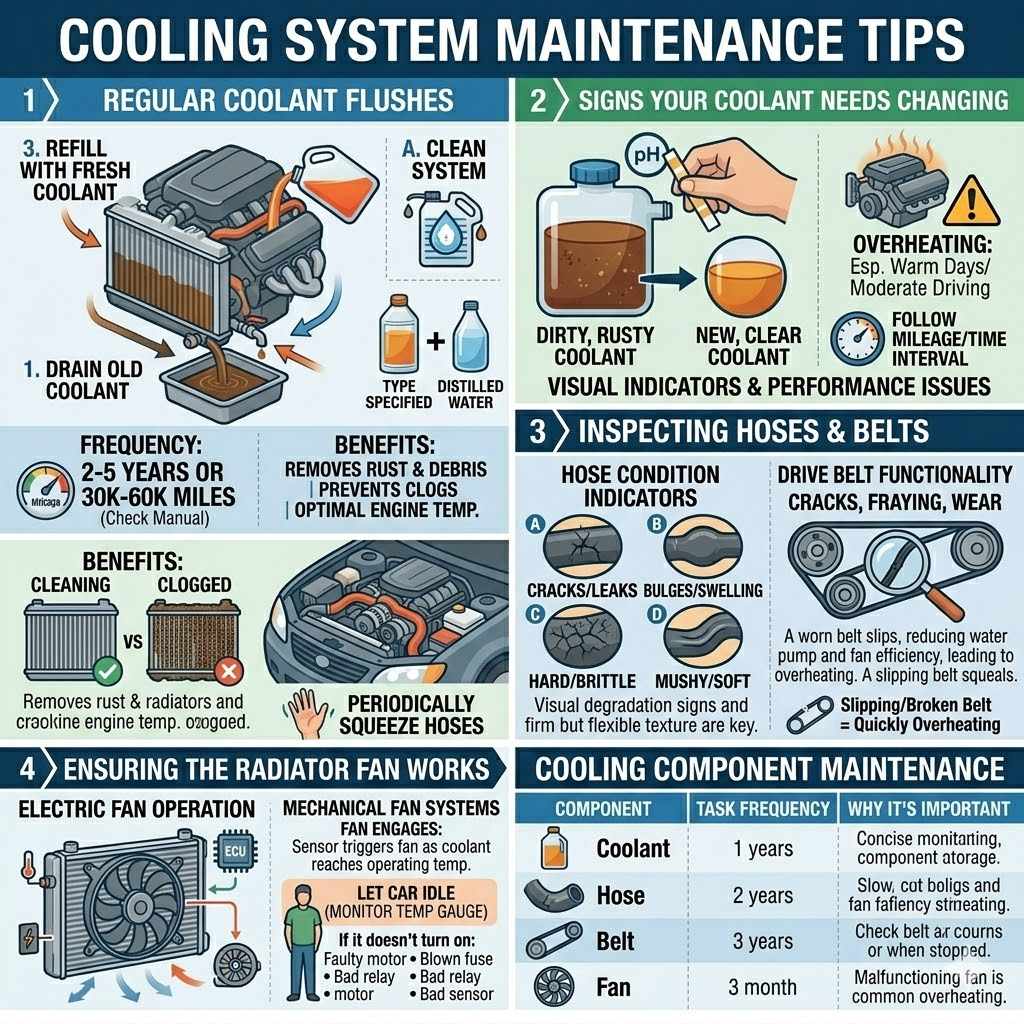
Over time, coolant can degrade, losing its protective properties and accumulating rust and debris. Performing a coolant flush involves draining the old coolant, cleaning the system, and refilling it with fresh coolant. This process removes contaminants that can clog the radiator or water pump.
Most manufacturers recommend a coolant flush and replacement every 30,000 to 60,000 miles, or every 2 to 5 years, depending on the type of coolant used and the vehicle model. Always use the type of coolant specified in your owner’s manual and distilled water for mixing.
A coolant flush is more than just draining the old fluid. It often involves using a flushing agent to break down sludge and mineral deposits. After the flush, the system is rinsed thoroughly with water before the new coolant is added.
This ensures a clean system where the new coolant can work effectively. Neglecting coolant flushes can lead to reduced cooling efficiency, leading to overheating, and can accelerate corrosion within the cooling system, potentially damaging expensive components like the radiator or water pump. This service is usually performed by a mechanic, but can be done by a DIYer with the right tools and knowledge.
Benefits of Regular Flushes
Regular coolant flushes offer several significant benefits. They prevent the build-up of rust, scale, and other deposits that can impede coolant flow and reduce the system’s ability to dissipate heat. This helps maintain optimal engine temperature, preventing costly overheating incidents.
Flushes also remove old, degraded coolant that may have lost its anti-corrosive properties, protecting vital engine components like the radiator, water pump, and heater core from damage. Furthermore, ensuring the coolant is fresh and at the correct concentration (usually a 50/50 mix with distilled water) maintains its freezing and boiling point protection, safeguarding the engine in extreme temperatures. It’s a proactive measure that can save you from major repairs.
Signs Your Coolant Needs Changing
Several signs indicate it’s time to change your coolant. If you notice the coolant in the reservoir looks dirty, rusty, or has particles floating in it, it’s a clear sign it needs to be flushed and replaced. The coolant’s color can also fade over time, but its protective additives degrade regardless of appearance.
If your engine is starting to overheat, especially on warmer days or during moderate driving, it could be a sign that the coolant is no longer effectively cooling the engine. You might also notice a sweet or burning smell from the engine bay, which can indicate a coolant leak. Finally, simply following the mileage or time interval recommended in your owner’s manual is the most reliable way to ensure your coolant is changed on schedule.
Inspecting Hoses and Belts
The rubber hoses that carry coolant throughout the engine can become brittle, cracked, or swollen over time, especially with exposure to heat and chemicals. Regularly inspect these hoses for any signs of wear, such as bulges, cracks, or leaks, particularly around the clamps. Squeeze the hoses; they should feel firm but flexible, not mushy or rock-hard.
The drive belts, which power the water pump and cooling fan, also need inspection. Check them for cracks, fraying, or excessive wear. A worn belt can slip, reducing the efficiency of the water pump and fan, leading to overheating.
If you notice any damage to hoses or belts, they should be replaced promptly.
Hose Condition Indicators
The condition of your coolant hoses can tell you a lot about the health of your cooling system. Look for visual signs of degradation. Cracks, especially near the ends where the hoses connect to the engine or radiator, are a major concern.
These cracks can worsen over time, leading to leaks. Bulging or swelling of the hose indicates that the rubber is weakening, likely due to age or exposure to improper coolant. If a hose feels excessively hard or brittle, it’s also a sign that it needs replacement, as it’s more prone to cracking.
Conversely, a hose that feels mushy or soft suggests internal damage or a breakdown of the rubber. Periodically squeezing the hoses is a good way to detect these issues early.
Drive Belt Functionality
Drive belts, often called serpentine belts or V-belts, are critical for powering various engine accessories, including the water pump. The water pump is responsible for circulating coolant through the engine and radiator. If the drive belt is worn, cracked, or loose, it can slip on the pulley.
This means the water pump won’t spin at its intended speed, or it might not spin at all. A slipping or broken drive belt will quickly lead to engine overheating. You might also hear a squealing noise from the engine bay, especially when starting the car or accelerating, which is a common sign of a worn or loose belt.
Regular inspection and replacement of drive belts are essential for maintaining proper engine cooling.
Ensuring the Radiator Fan Works
The radiator fan is designed to pull air through the radiator, especially when the vehicle is moving slowly or is stopped, helping to cool the coolant. Most modern cars have electric fans. These fans are usually controlled by the car’s computer and turn on automatically when the coolant reaches a certain temperature.
To check if your fan is working, let your car idle for a while (while monitoring the temperature gauge) until it reaches its operating temperature. The fan should then switch on. If the fan doesn’t turn on when the engine is hot, or if it makes strange noises, it might need repair or replacement.
A malfunctioning radiator fan is a common cause of overheating.
Electric Fan Operation
Electric radiator fans are controlled by a temperature sensor and the engine control unit (ECU). When the coolant temperature rises above a specific threshold, the sensor sends a signal to the ECU, which then activates the fan motor. The fan pulls air through the radiator fins, increasing the rate at which the coolant releases heat.
Some vehicles have multiple fans or variable-speed fans that adjust their speed based on the cooling needs. If you suspect an electric fan isn’t working, you can often test it by allowing the car to idle until it reaches operating temperature. Listen for the fan to engage.
If it doesn’t, it could be a faulty fan motor, a blown fuse, a bad relay, or a malfunctioning temperature sensor. Professional diagnosis is often needed.
Mechanical Fan Systems
Older vehicles, and some trucks or SUVs, might use a mechanical fan that is driven by a belt connected to the engine’s crankshaft. These fans are typically always spinning when the engine is running, though their speed varies with engine RPM. Some mechanical fans use a clutch mechanism that allows them to engage or disengage partially based on temperature, improving fuel efficiency and reducing noise when maximum cooling isn’t needed.
If you have a mechanical fan, inspect the belt driving it for wear and tension, similar to other drive belts. If the fan itself seems loose or wobbly on its mount, or if it makes excessive noise, it may require attention from a mechanic.
| Cooling Component | Maintenance Task | Frequency | Why It’s Important |
|---|---|---|---|
| Coolant | Check Level & Condition | Monthly | Prevents overheating and freezing; ensures proper lubrication. |
| Coolant | Flush & Replace | 2-5 Years or 30k-60k Miles | Removes contaminants, restores anti-corrosive properties. |
| Hoses | Inspect for Cracks/Leaks | Monthly | Prevents coolant loss and leaks. |
| Drive Belts | Inspect for Wear/Tension | Monthly | Powers water pump; essential for coolant circulation. |
| Radiator Fan | Test Operation | Annually or if Overheating | Ensures airflow for cooling at low speeds/idle. |
Frequently Asked Questions
Question: Can I top up my engine oil when the engine is hot?
Answer: It’s best to avoid topping up engine oil when the engine is very hot. Wait at least 10-15 minutes after shutting off the engine to allow the oil to drain back into the oil pan for an accurate reading. Checking when hot can lead to overfilling.
Question: What happens if I overfill the coolant reservoir?
Answer: Overfilling the coolant reservoir can cause the excess coolant to be pushed out of the system when the engine heats up and expands. This can create a mess under the hood and potentially lead to a loss of coolant over time. It also suggests an imbalance in the system.
Question: How do I know which type of coolant to buy?
Answer: Always consult your vehicle’s owner’s manual. It will specify the exact type of coolant, often by color and chemical formulation, required for your car. Using the wrong type can damage your cooling system.
Question: Is it okay to use plain water in my radiator if I’m low on coolant?
Answer: Using plain water is only a temporary emergency fix. Water doesn’t have the same boiling or freezing point protection as coolant and lacks anti-corrosive properties. You should
Question: My car overheated. What should I do immediately?
Answer: If your car overheats, pull over safely as soon as possible and turn off the engine. Do not open the radiator cap while the engine is hot. Let the engine cool down completely before checking fluid levels or attempting any repairs.
If it overheats again, have it inspected by a mechanic.
Conclusion
Topping up engine fluids safely means waiting for your engine to cool. A general guideline is 30 minutes to an hour, but always check if the hood is cool to the touch. This simple step protects you from burns and prevents potential engine damage from thermal shock.
Regularly checking and maintaining your coolant and oil levels ensures your car runs smoothly and reliably for years to come.