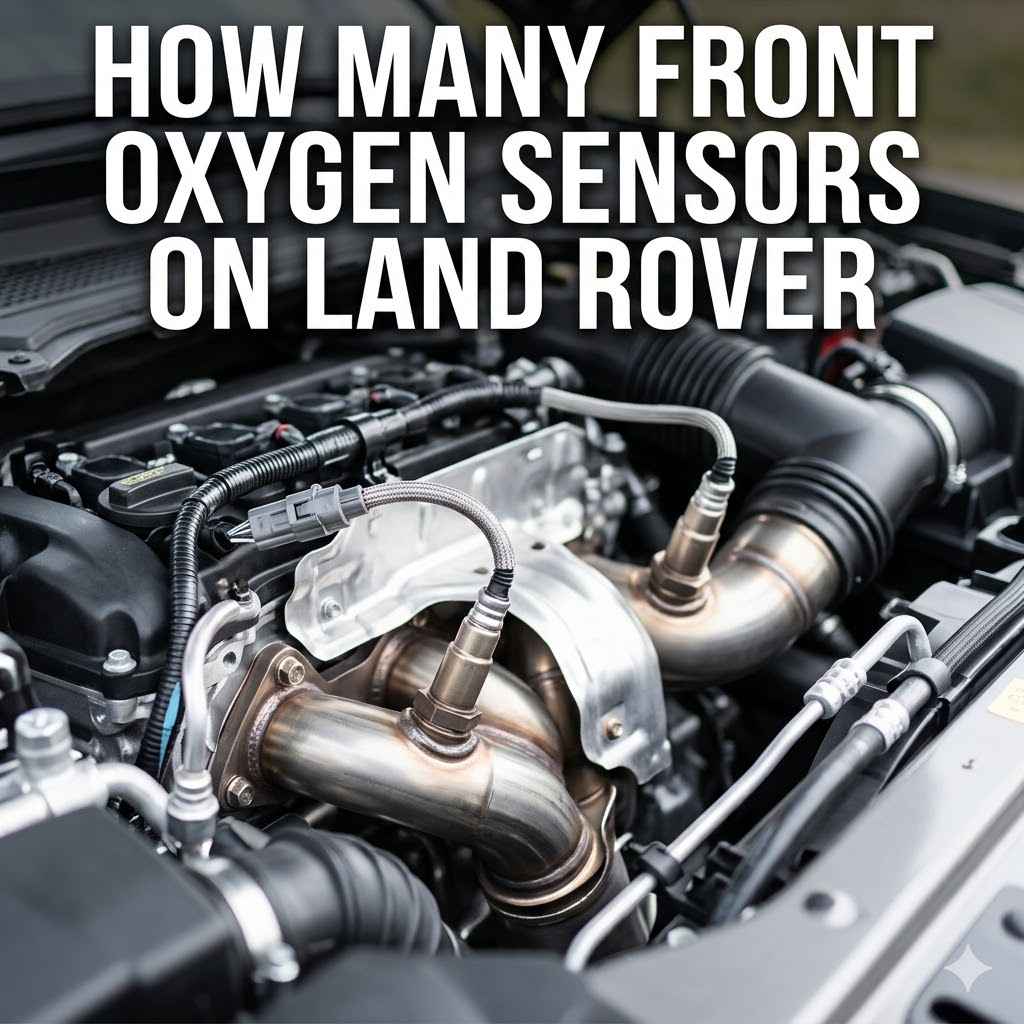
How Many Front Oxygen Sensors On Land Rover
Are you wondering about your Land Rover’s oxygen sensors? Sometimes, knowing simple car parts can seem tricky, especially when you’re new to fixing your own car. You might ask, How Many Front Oxygen Sensors Are on a Land Rover? It’s a common question, and it doesn’t have to be hard to answer.
This guide will walk you through it, step by step, so you can get back on the road with confidence. Let’s find out what you need to know.
Understanding Land Rover Oxygen Sensor Systems
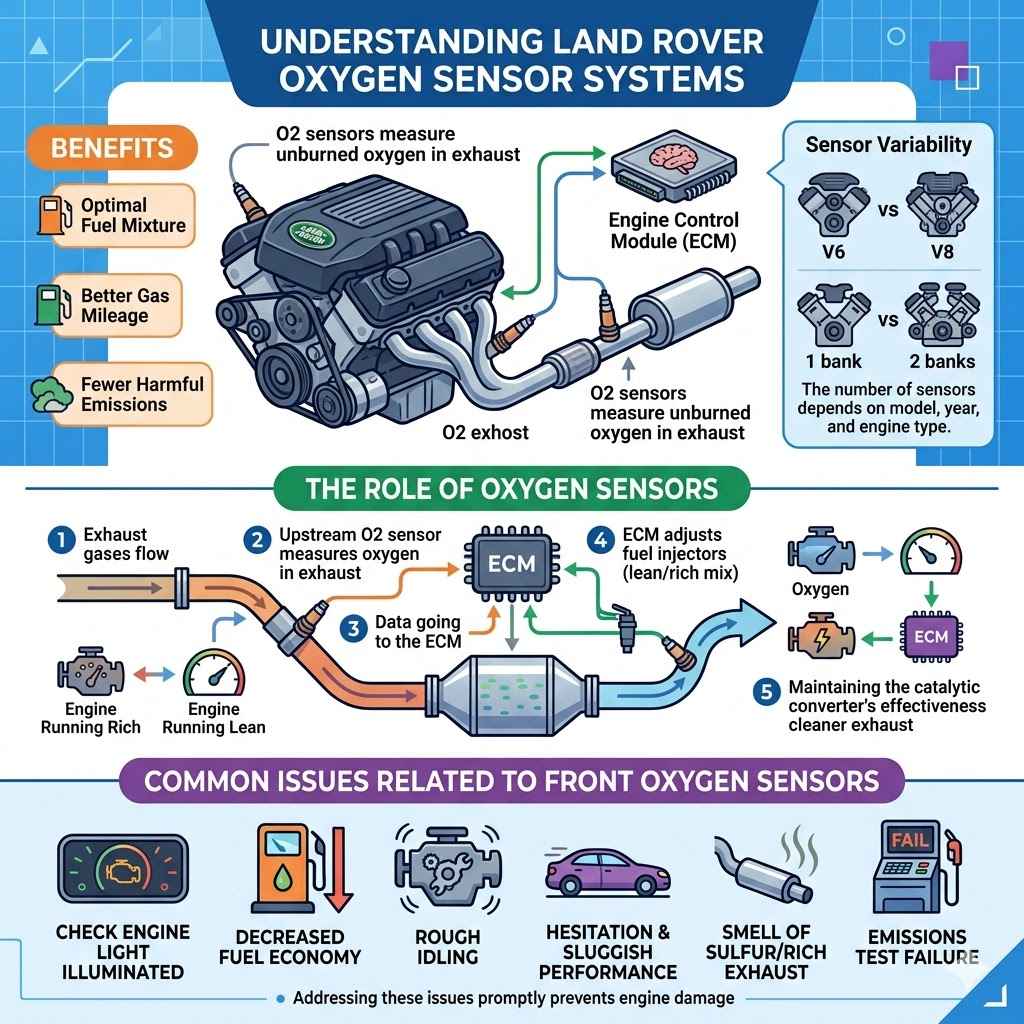
Oxygen sensors, often called O2 sensors, are vital for your Land Rover’s engine performance and emissions control. They measure the amount of unburned oxygen in your exhaust gases. This information helps the engine’s computer adjust the fuel mixture for optimal burning.
A proper fuel mix means better gas mileage and fewer harmful emissions. Without working O2 sensors, your engine might run rough, your check engine light could come on, and you might notice a drop in fuel efficiency. Understanding these sensors is a key step in maintaining your vehicle.
Many drivers find it challenging to pinpoint the exact number of front oxygen sensors on their Land Rover because it’s not a one-size-fits-all answer. The number can vary based on the specific Land Rover model, the year it was made, and even the engine configuration. Some models have one bank of cylinders, while others have two.
Each bank typically has its own set of oxygen sensors. This variability is why a simple answer isn’t always possible, leading to confusion. We’ll break down how to figure this out for your specific vehicle.
The Role of Oxygen Sensors in Your Land Rover
Oxygen sensors play a critical role in your Land Rover’s exhaust system. They are essentially the lungs of your engine’s exhaust, constantly monitoring oxygen levels. This data is sent to the engine control module (ECM), which is like the brain of your car.
The ECM uses this information to fine-tune how much fuel is injected into the engine. If there’s too much oxygen, it means the engine is running lean, and the ECM will add more fuel. If there’s too little oxygen, the engine is running rich, and the ECM will reduce the fuel.
This constant adjustment helps keep the engine running smoothly and efficiently.
A properly functioning oxygen sensor ensures that your Land Rover’s catalytic converter works at its best. The catalytic converter is responsible for cleaning up harmful exhaust gases before they leave the tailpipe. It needs the right fuel-air ratio, which the oxygen sensors help maintain.
When the oxygen sensors aren’t working correctly, the fuel mixture can become unbalanced. This can lead to the catalytic converter not performing its job effectively. Consequently, your vehicle’s emissions will increase, and you might see warning lights on your dashboard.
The lifespan of an oxygen sensor can be affected by factors like engine wear, fuel quality, and driving conditions.
Common Issues Related to Front Oxygen Sensors
When front oxygen sensors start to fail, they can cause a range of problems for your Land Rover. One of the most obvious signs is the check engine light illuminating on your dashboard. This light is a general warning, but a faulty O2 sensor is a frequent cause.
You might also notice a decrease in your vehicle’s fuel economy. If your engine is using more gas than usual, it could be because the computer isn’t getting accurate readings from the sensors, leading to an inefficient fuel mixture.
Other symptoms include rough idling, hesitation during acceleration, and a general decrease in engine performance. The engine might feel sluggish, and you could even experience stalling. In some cases, a failing oxygen sensor can cause your Land Rover to fail an emissions test.
The exhaust smell might also change, sometimes smelling richer or like sulfur. Ignoring these signs can lead to more significant engine damage over time, so it’s important to address them promptly. Regular maintenance and inspections can help catch these issues early.
How Many Front Oxygen Sensors Are on a Land Rover
The question of How Many Front Oxygen Sensors Are on a Land Rover? is best answered by looking at specific models. Generally, Land Rovers are equipped with at least two front oxygen sensors. These are typically located before the catalytic converter in each exhaust bank.
If your Land Rover has a V-engine (like a V6 or V8), it will have two exhaust banks, meaning two sets of front oxygen sensors. Each front sensor is often referred to as a “pre-catalytic converter” sensor. These sensors provide the primary feedback to the engine control module for fuel management.
To determine the exact number for your specific vehicle, you need to know your Land Rover’s model and year. For example, many Range Rover models, Discovery models, and Defender models with V8 engines will have one oxygen sensor per cylinder bank before the catalytic converter. This means a V8 engine would have two front oxygen sensors.
If your Land Rover has an inline engine, which is less common for V-engine configurations but possible in some variations, it might only have one exhaust bank and thus one front oxygen sensor. It’s crucial to consult your vehicle’s service manual or a reputable online parts catalog for precise information.
Identifying Sensor Locations
Locating your Land Rover’s front oxygen sensors involves looking at the exhaust system. The front oxygen sensors are always positioned in the exhaust pipe upstream of the catalytic converter. Think of it as being closer to the engine.
You will typically find one on each side of the engine if it’s a V-configuration. These sensors are screwed into the exhaust pipe and have electrical connectors that run to the engine’s wiring harness.
To get a clear view, you might need to safely raise your vehicle on jack stands or use a car lift. Visual inspection of the exhaust system, starting from the engine manifold and following the exhaust pipes, is the best approach. You’ll see the catalytic converter as a bulge in the exhaust pipe.
The oxygen sensor is threaded into the pipe just before this bulge. Some models may have heat shields that need to be removed for better access. If you’re unsure, a quick search online with your specific Land Rover model and “oxygen sensor location” can provide diagrams or videos.
Determining Sensor Count for Your Specific Model
To accurately determine how many front oxygen sensors are on your Land Rover, the most reliable method is to check your vehicle’s specific documentation. Your owner’s manual is the first place to look. It often contains diagrams and lists of key components.
If the manual doesn’t provide this detail, a Land Rover dealership’s parts department can tell you by checking your VIN (Vehicle Identification Number). This number uniquely identifies your car and all its original specifications.
Alternatively, you can use online automotive parts websites. Many of these sites have a vehicle lookup tool. You enter your Land Rover’s year, make, and model, and it will show you the available parts, including oxygen sensors.
You can then see how many front sensors are listed for your vehicle. For instance, a 2015 Range Rover Sport might list two upstream oxygen sensors, one for each bank. A 2010 Land Rover LR4 with a V8 engine would also typically have two.
Always double-check the part description to ensure it specifies “upstream” or “pre-catalytic converter” to confirm it’s a front sensor.
Variations Across Land Rover Series
Land Rover has produced a wide range of vehicles over the years, and each series can have different configurations. For example, older models like the Discovery Series I or II might have fewer sensors compared to newer models. The engine type is a significant factor.
A 4-cylinder engine, if present in a particular model, would typically have only one exhaust bank and therefore only one front oxygen sensor. However, most Land Rovers are known for their more powerful V6 and V8 engines, which are equipped with two exhaust banks.
Newer generations of Range Rover, Range Rover Sport, Discovery, and Defender models, especially those with V8 engines, almost always feature two front oxygen sensors, one for each bank. Some high-performance variants or models with specific emission control systems might even have additional sensors, though the primary “front” or “upstream” sensors are usually two. It’s always best to confirm by looking up the specific year and model, as manufacturing changes can occur even within the same series.
The technology for emissions control also advances, sometimes leading to more complex sensor setups.
Benefits of Proper Oxygen Sensor Functionality
When your Land Rover’s front oxygen sensors are working correctly, you experience numerous benefits. The most noticeable is improved fuel efficiency. An accurate reading of oxygen levels allows the engine computer to deliver the precise amount of fuel needed for combustion.
This means you’ll be spending less money at the gas pump. Proper sensor function helps ensure your engine runs as efficiently as designed, maximizing every drop of fuel.
Another significant advantage is a reduction in harmful emissions. Oxygen sensors are integral to the effective operation of the catalytic converter, which cleans up pollutants like carbon monoxide and unburned hydrocarbons. By maintaining the correct air-fuel ratio, the sensors help the catalytic converter function optimally, leading to cleaner exhaust gases.
This is not only good for the environment but also ensures your vehicle complies with emissions regulations, preventing potential fines or failure during inspections. A well-functioning O2 system contributes to a healthier planet and a more responsible vehicle.
Enhanced Engine Performance and Responsiveness
Properly functioning front oxygen sensors directly contribute to your Land Rover’s overall engine performance. When the engine control module receives accurate data, it can make instantaneous adjustments to the fuel injection and ignition timing. This results in a more responsive engine that accelerates smoothly and consistently.
You’ll notice a lack of hesitation or stumbling when you press the accelerator pedal, leading to a more enjoyable driving experience.
This precise control also helps your engine run more quietly and smoothly. Without the constant guesswork that occurs with faulty sensors, the engine operates within its optimal parameters. This means less vibration, a steadier idle, and a generally more refined feel to your Land Rover.
Think of it as your engine breathing and performing at its peak, all thanks to the accurate feedback provided by its O2 sensors. This leads to a more reliable and satisfying drive, every time you get behind the wheel.
Reduced Risk of Costly Repairs
Addressing issues with your front oxygen sensors promptly can save you a significant amount of money in the long run. A failing oxygen sensor, if ignored, can lead to a cascade of problems. As mentioned, it can cause the engine to run too rich or too lean, which can damage other engine components like spark plugs, the catalytic converter, and even the pistons.
Replacing a catalytic converter, for example, can be a very expensive repair.
Furthermore, a check engine light indicating a faulty oxygen sensor should not be ignored. If the underlying issue is not addressed, it can eventually lead to more severe engine malfunctions. Catching a failing O2 sensor early, often signaled by a simple dashboard warning light or a slight change in fuel economy, allows for a targeted and relatively inexpensive repair.
This preventative approach helps avoid the much larger and more complex repairs that can arise from prolonged neglect. It’s a simple part that plays a crucial role in protecting your entire powertrain.
Compliance with Emissions Standards
Modern vehicles are built to meet strict environmental regulations regarding exhaust emissions. Oxygen sensors are a cornerstone of these systems. By ensuring the engine operates with the correct air-fuel ratio, the front O2 sensors help the catalytic converter effectively convert harmful gases into less harmful ones.
Without this precise control, your Land Rover would likely exceed the allowed levels of pollutants.
This compliance is not just an environmental concern; it’s also a legal requirement. In many regions, your vehicle must pass regular emissions tests to be registered. A malfunctioning oxygen sensor system is a common reason for failing these tests.
By maintaining your O2 sensors, you ensure your Land Rover remains road-legal and contributes to cleaner air quality for everyone. It’s a vital part of responsible vehicle ownership, helping both you and the environment.
How to Check Your Land Rover’s Oxygen Sensors
Checking your Land Rover’s oxygen sensors can be done through several methods, ranging from simple visual inspections to more advanced diagnostic scans. The easiest way to suspect an issue is by noticing the symptoms: a check engine light, poor fuel economy, or rough engine performance. If you observe these, it’s time to investigate your oxygen sensors.
For a basic check, you can visually inspect the sensors if you can safely access them. Look for any obvious signs of damage, such as a broken wire or a corroded connector. However, this visual check only tells you if the sensor is physically intact; it doesn’t tell you if it’s functioning correctly.
For a more thorough assessment, professional diagnostic tools are often necessary. These tools can read trouble codes stored in your engine’s computer and monitor the real-time performance of the oxygen sensors.
Using an OBD-II Scanner
An On-Board Diagnostics (OBD-II) scanner is a powerful tool for checking your Land Rover’s oxygen sensors. Most vehicles manufactured after 1996 are equipped with an OBD-II port, usually located under the dashboard on the driver’s side. You can purchase an OBD-II scanner yourself or have a mechanic perform the scan.
Once connected, the scanner can communicate with your Land Rover’s engine control module (ECM). If a faulty oxygen sensor is detected, the ECM will store a diagnostic trouble code (DTC). These codes are typically in the format “P0130” through “P0167,” with specific numbers indicating which sensor is reporting an issue (e.g., P0135 might indicate a fault with the O2 sensor heater circuit for Bank 1 Sensor 1).
The scanner can also display live data from the oxygen sensors, showing you how they are responding to changes in engine load and air-fuel mixture. This live data can reveal if a sensor is slow to respond, stuck at a certain reading, or not reading accurately.
Interpreting Diagnostic Trouble Codes (DTCs)
Diagnostic Trouble Codes (DTCs) are your Land Rover’s way of telling you what’s wrong. When an issue is detected, the ECM stores a specific code. For oxygen sensors, these codes often start with ‘P0130’ and go up into the ‘P0160s’.
For example, a code like P0131 might indicate a “O2 Sensor Circuit Low Voltage” on Bank 1, Sensor 1. This suggests the sensor is reading lower voltage than expected, possibly indicating a lean condition or a faulty sensor itself.
Conversely, a code like P0133 might mean “O2 Sensor Circuit Slow Response” on Bank 1, Sensor 1. This implies the sensor is not reacting quickly enough to changes in the exhaust gas composition, which hinders the ECM’s ability to make timely adjustments. Understanding these codes is crucial.
While many generic scanners can read DTCs, Land Rover-specific scanners or software can often provide more detailed information and context relevant to your vehicle’s complex systems. Always consult a repair manual or a qualified mechanic for the most accurate interpretation of DTCs.
Visual Inspection for Damage
A visual inspection can sometimes reveal obvious problems with your Land Rover’s oxygen sensors. First, you need to locate them. As discussed earlier, the front sensors are in the exhaust pipes before the catalytic converter.
You’ll see wires leading to them.
Carefully examine the sensor body for any cracks, damage, or signs of melting. Pay close attention to the electrical connector and wiring. Look for frayed wires, melted insulation, or corroded pins in the connector.
Sometimes, debris or road grime can accumulate around the sensors, which isn’t usually a problem unless it’s blocking airflow or causing physical damage. If you see any of these issues, the sensor or its wiring harness might need replacement. However, remember that internal sensor failure often presents no visible external damage.
Replacing Front Oxygen Sensors on a Land Rover
Replacing front oxygen sensors on a Land Rover is a repair that many DIY enthusiasts can undertake with the right tools and knowledge. It’s generally considered a moderately difficult task. The primary challenges include gaining access to the sensors, which can be in tight spaces, and using specialized tools to remove the old sensor.
Before starting, ensure you have the correct replacement oxygen sensor for your specific Land Rover model and year. Using the wrong sensor can lead to incorrect readings and further problems. It’s also wise to purchase a specialized oxygen sensor socket wrench, which has a slot to accommodate the sensor’s wiring harness, making removal and installation much easier.
Always work on a cool exhaust system to avoid burns.
Tools and Parts Needed
To successfully
You will also need a good set of wrenches and sockets. A standard socket set might work for some bolts, but an oxygen sensor socket wrench is almost essential. These wrenches are designed specifically for O2 sensors, with a cutout to fit over the wire.
You might also need a breaker bar for stubborn sensors, as they can become very tight due to heat and corrosion. Safety equipment is crucial: safety glasses to protect your eyes and work gloves. If you plan to lift the vehicle, jack stands and a reliable jack are necessary for safe elevation.
Penetrating oil can also be helpful for loosening rusted sensors.
Step-by-Step Replacement Process
Begin by ensuring your Land Rover’s exhaust system is completely cool. Safely lift the vehicle and secure it with jack stands if needed for better access to the sensors. Locate the front oxygen sensor(s) you need to replace.
They are typically found in the exhaust pipe just before the catalytic converter.
Next, disconnect the electrical connector from the oxygen sensor. This usually involves pressing a small tab and pulling the connector apart. If the sensor is very difficult to reach or access, you may need to remove heat shields or other obstructing components.
Once accessible, use the oxygen sensor socket wrench and a breaker bar to carefully loosen and remove the old sensor. It might require some force. Once removed, clean the threads in the exhaust pipe lightly if necessary.
Apply a small amount of anti-seize compound to the threads of the new oxygen sensor (if not pre-applied), ensuring it doesn’t get on the sensor tip. Screw the new sensor into place by hand as far as it will go, then tighten it with the socket wrench. Do not overtighten.
Finally, reconnect the electrical connector, ensuring it snaps securely into place. Lower the vehicle if it was raised.
Post-Replacement Checks
After installing the new oxygen sensor(s), it’s important to perform a few checks to ensure the job was done correctly and that the issue is resolved. The first step is to start the engine. Listen for any unusual noises or vibrations.
Then, check if the check engine light has turned off. In many cases, the ECM will recognize the new sensor and clear the fault code automatically. However, sometimes, you may need to use your OBD-II scanner to clear the code manually.
If the check engine light remains on, or comes back on after clearing, there might be another issue at play, or the new sensor could be faulty.
It’s also recommended to take your Land Rover for a test drive. Drive it under various conditions, including city driving and highway speeds, to see if the performance has improved. Pay attention to fuel economy over the next few days, as this should return to normal levels if the sensor was the cause of poor mileage.
If you notice any persistent problems, it’s best to have a mechanic re-scan the vehicle and diagnose further.
Conclusion
Understanding how many front oxygen sensors are on a Land Rover boils down to checking your specific model. Most Land Rovers, especially those with V6 or V8 engines, will have two front oxygen sensors, one for each exhaust bank. These sensors are vital for engine efficiency and emissions control.
By knowing their function and how to check them, you can keep your Land Rover running smoothly and efficiently.
Frequently Asked Questions
Question: How many front oxygen sensors does a Land Rover Discovery typically have?
Answer: Most Land Rover Discovery models, especially those equipped with V6 or V8 engines, will have two front oxygen sensors. One sensor is located in each exhaust manifold before the catalytic converter.
Question: Can a faulty front oxygen sensor cause my Land Rover to fail an emissions test?
Answer: Yes, a faulty front oxygen sensor can absolutely cause your Land Rover to fail an emissions test. It affects the air-fuel mixture, which in turn impacts the catalytic converter’s ability to clean exhaust gases.
Question: What are the main signs of a failing front oxygen sensor on a Land Rover?
Answer: Common signs include the check engine light illuminating, decreased fuel efficiency, rough idling, hesitation during acceleration, and a noticeable drop in engine performance.
Question: Is it safe to drive my Land Rover with a bad front oxygen sensor?
Answer: While your Land Rover will likely still run with a bad front oxygen sensor, it is not recommended for extended periods. Poor fuel mixture can lead to increased emissions and potentially damage other engine components, like the catalytic converter.
Question: Where is the best place to find the exact number of front oxygen sensors for my specific Land Rover model?
Answer: The best places are your vehicle’s owner’s manual, a reputable online automotive parts catalog where you can look up parts by VIN, or by contacting a Land Rover dealership’s parts department.
Summary
Most Land Rovers have two front oxygen sensors, one per engine bank, located before the catalytic converter. These sensors are crucial for optimal engine performance, fuel economy, and emissions control. Knowing how many your vehicle has helps in diagnosing issues and performing maintenance.
Always check your specific model’s documentation for certainty.