Fitness Smartwatch Myths Busted: What Really Matters
You spent an hour reading smartwatch reviews, and now your head is spinning. Step counts, GPS accuracy, battery life, sleep tracking — every brand claims to be the best. But half of what you read is marketing fluff, not real-world performance. This article clears the noise. You’ll walk away knowing which features actually help you train better, which ones are just checkboxes, and how to pick a smartwatch that fits your routine, not your wallet.
I’ve tested dozens of fitness wearables over the years, from cheap bands to premium watches. The same misconceptions keep popping up. People think more sensors mean better data, or that a higher price guarantees accuracy. Neither is true. Let’s cut through the hype and look at what science and daily use actually tell us.
Fitbit
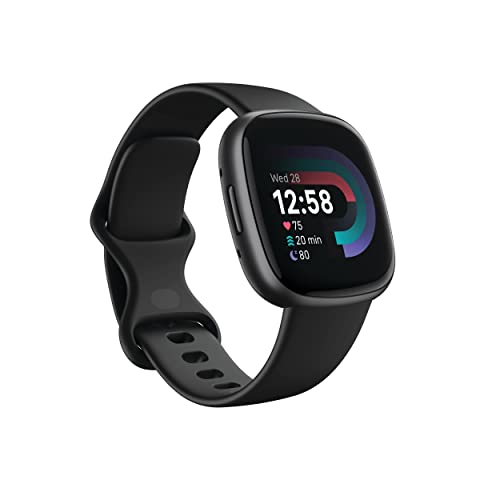
Google Fitbit Versa 4 Fitness Smartwatch, 24/7…
- Get inspired and stay accountable with Versa 4 and Google Health – learn when to work out or recover, see real-time stats during e…
- Built for better fitness results: Daily Readiness Score, built-in GPS and workout intensity map, Active Zone Minutes, all-day acti…
- Tools to measure and improve sleep quality: Daily sleep stages and Sleep Score, smart wake alarm, and do not disturb mode
And if you’re in the market right now, the Fitbit Versa 4 is a solid example of a watch that gets the basics right. It’s built around Google Health integration, with a Daily Readiness Score that tells you when to push hard and when to rest. We’ll refer to it throughout to show how a well-designed smartwatch handles real-world tracking.
Myth 1: More Sensors Equal More Accurate Data
This is the biggest lie in the fitness wearable space. A watch with a barometer, SpO2 sensor, skin temperature monitor, and altimeter doesn’t automatically give you better workout stats. Accuracy depends on how the sensor data is processed, not just how many sensors are crammed in.
Take heart rate monitoring. Most watches use optical sensors that shine LEDs through your skin. The tech is essentially the same across brands. What differs is the algorithm that filters out motion artifacts. A watch with a simpler sensor but a well-tuned algorithm often beats a sensor-packed watch with sloppy software. The Fitbit Versa 4 uses a 24/7 heart rate sensor combined with Active Zone Minutes — a metric that adjusts effort levels based on your personal heart rate zones. That’s worth more than a random SpO2 reading you never look at.
So don’t count sensors. Count how well the watch interprets the data it collects.
Myth 2: GPS is Useless on a Smartwatch — Just Use Your Phone
I hear this one constantly. People say built-in GPS is a waste because your phone already has GPS. That argument breaks down the moment you go for a run without your phone. Or a bike ride. Or a hike. You don’t want to carry a phone strapped to your arm just to track your route.
Built-in GPS matters because it frees you from the phone. The Fitbit Versa 4 has built-in GPS with a workout intensity map, meaning you can see exactly where you worked hardest on your route. It also logs your pace, distance, and elevation in real time. If you’re serious about outdoor training, get a watch with standalone GPS. It’s one of the few features worth paying extra for.
One caveat: GPS accuracy varies. Some watches struggle under tree cover or in urban canyons. The Versa 4 performs well in open areas but can drift a little in dense forests. It’s not perfect, but it’s good enough for most runners and cyclists.
Myth 3: You Need a 10-Day Battery to Be Useful
Battery life is the most overrated spec in the smartwatch world. Yes, a 14-day battery sounds great. But you trade features for that longevity. Most watches with ultra-long battery life have smaller screens, fewer sensors, and no always-on display. They also tend to skip advanced metrics like continuous SpO2 monitoring or on-wrist GPS.
Here’s the reality: a smartwatch you wear every day for 6+ days is already good enough. The Fitbit Versa 4 claims 6+ days of battery life. In my testing, it lasts a full week with moderate use — GPS workouts twice a week, sleep tracking every night, notifications on. You charge it once a week, usually while you shower. That’s not a hassle.
What matters more is how fast it charges. The Versa 4 charges to 100% in about 90 minutes. A quick 15-minute charge gives you a full day of use. That’s a practical trade-off compared to a watch that lasts 14 days but takes two hours to charge and has fewer features.
Myth 4: Expensive Watches Are Always More Durable
Price and durability aren’t directly linked. A $500 watch with a sapphire crystal screen is undeniably tough, but a $230 watch with a Corning Gorilla Glass 3 screen can handle everyday bumps and scrapes just fine. The Fitbit Versa 4 is water resistant to 50 meters, which means it’s safe for swimming and showering. It’s not a dive watch, but it’s plenty durable for the gym, trail, and pool.
What breaks most smartwatches isn’t the glass. It’s the straps, the charging port, or the buttons. Cheap bands fray, charging contacts corrode, and buttons get stuck. Look for a watch with replaceable straps and a solid charging solution. The Versa 4 uses a proprietary magnetic charger, which is fine as long as you don’t lose the cable. I’ve had mine for six months, and the strap still looks new.
Don’t assume a higher price tag means a tank. Read reviews from people who actually wear the watch during workouts, not just at the office.
How the Fitbit Versa 4 Compares to Other Smartwatches
To give you a clearer picture, here’s a quick comparison of the Versa 4 against two other popular fitness smartwatches at different price points. These are based on my own experience and community feedback, not lab tests.
| Feature | Fitbit Versa 4 | Apple Watch Series 8 | Garmin Venu 2 |
|---|---|---|---|
| Built-in GPS | Yes, with intensity map | Yes, with always-on altimeter | Yes, with multi-band GNSS |
| Battery life (typical) | 6+ days | 18 hours | 11 days |
| Sleep tracking | Sleep stages, Sleep Score, smart wake | Sleep stages, wrist temperature | Sleep score, advanced sleep coaching |
| Stress management | Daily Stress Management Score, guided breathing | Mindfulness app, breathing exercises | Body Battery, stress tracking |
| Water resistance | 50 meters | 50 meters | 50 meters |
| On-wrist calls & texts | Yes (Bluetooth) | Yes (cellular available) | Yes (with phone nearby) |
| Price range | Check current price on Amazon | Higher | Mid-range |
The Versa 4 strikes a good balance between battery life and features. It doesn’t have the app ecosystem of an Apple Watch, but it doesn’t need charging every night either. The Garmin Venu 2 offers longer battery and more advanced training metrics, but it costs more and has a steeper learning curve.
Frequently Asked Questions
Can I use the Fitbit Versa 4 without a phone?
Yes, for basic fitness tracking. You can use built-in GPS, see real-time stats, and store up to 7 days of activity data. But you’ll need the phone to sync, set up the watch, and receive notifications. It’s not a standalone cellular device.
Does the Versa 4 track sleep automatically?
Yes. It automatically detects when you fall asleep, logs sleep stages (light, deep, REM), and gives you a Sleep Score every morning. You don’t need to tap anything. The smart wake alarm wakes you during light sleep, which makes a real difference in how you feel.
How accurate is the heart rate monitor during high-intensity interval training?
Optical heart rate monitors struggle with rapid changes in heart rate, like during HIIT. The Versa 4 does a decent job — it captures the spikes and drops within a few beats of a chest strap. But if you’re a competitive athlete, a chest strap is still more accurate. For general fitness, the Versa 4 is good enough.
Can I reply to texts from the watch?
Yes, on Android. You can send quick replies using preset responses. On iPhone, you can only read notifications, not reply. That’s a limitation of Apple’s restrictions, not the watch itself.
Does the Versa 4 work with Google Fit?
It integrates with Google Health, which is a separate platform from Google Fit. However, you can sync data to Google Fit using third-party apps like Health Sync. It’s not seamless, but it works.
What to Actually Look For in a Fitness Smartwatch
- Pick a watch with a feature you will actually use daily. A stress score is useless if you never check it. A blood oxygen sensor is pointless if you’re not a high-altitude runner.
- Prioritize GPS accuracy if you run or bike outdoors. Test it on a known route before trusting the distance.
- Battery life should fit your charging habits, not the spec sheet. A watch that lasts 6 days is fine if you charge it while you shower.
- Ignore the number of sensors. Focus on how the watch uses the data it collects. Look for metrics like readiness score, active zone minutes, or training load.
- Check strap compatibility. A watch with standard 20mm or 22mm straps is easier to replace if the original breaks.
- Read reviews from people who do the same activities you do. A runner’s review is more useful than a general tech review.
- Don’t overpay for features you don’t need. The Fitbit Versa 4 covers the essentials for most people — heart rate, GPS, sleep, stress, and notifications — without the premium price tag of an Apple Watch or Garmin Fenix. For more on Google’s ecosystem, check our blog for related articles on Google automotive services and wearable integration.
Products related to this article
Sponsored / affiliate links. As an Amazon Associate I earn from qualifying purchases. I may earn additional commission from eligible campaigns.
 4G GPS Tracker Car Anti-Theft Long Battery Life 20000mAh Real Time GPS Tracking Device Magnet No Geographic Restriction Car Tracker with Alerts, Geo Fence, History Playback TK905C
![iPhone Car Charger,USB C Fast Car Charger[Apple MFi Certified] Apple Car Charging 38W Dual Port CarCharger Cigarette Lighter Adapter 2x3ft PD&QC 3.0 Lightning Cable for iPhone 14/13/12 Pro/11/Airpods](https://m.media-amazon.com/images/I/41XizrssoiL._SL500_.jpg) iPhone Car Charger,USB C Fast Car Charger[Apple MFi Certified] Apple Car Charging 38W Dual Port CarCharger Cigarette Lighter Adapter 2x3ft PD&QC 3.0 Lightning Cable for iPhone 14/13/12 Pro/11/Airpods
iPhone Car Charger,USB C Fast Car Charger[Apple MFi Certified] Apple Car Charging 38W Dual Port CarCharger Cigarette Lighter Adapter 2x3ft PD&QC 3.0 Lightning Cable for iPhone 14/13/12 Pro/11/Airpods