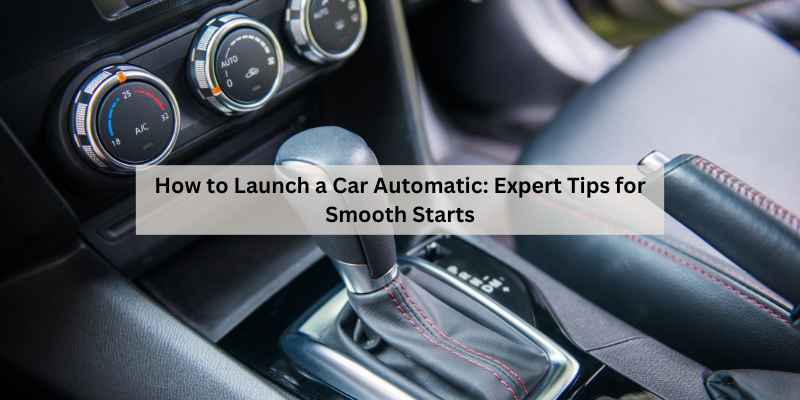
How to Launch an Automatic Car Without Damaging the Transmission
You’re sitting at a red light, the guy next to you revs his engine, and the light turns green. You press the gas, but your car feels sluggish. Meanwhile, he’s gone. You wonder if there’s a trick to launching an automatic car that you’re missing.
There is. But the trick isn’t just mashing the pedal and hoping for the best. Launching an automatic car properly involves understanding how the torque converter works, how traction control helps or hurts, and when it’s actually safe to push the car hard. This guide covers the real techniques, the risks, and the tools that can get you moving faster without turning your transmission into a pile of metal shavings.
Joltekon
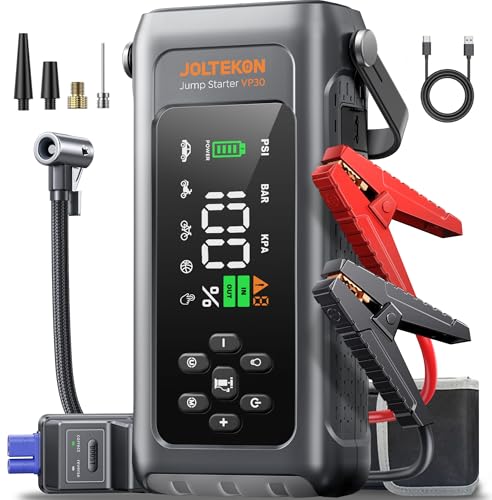
JOLTEKON Car Battery Jump Starter with Air…
- 【8-IN-1 CAR BATTERY JUMP STARTER】This 12V Jump Box highlights highly integrated advanced functions but is more portable, transcend…
- 【START COMPLETELY DEAD BATTERIES 】The jump starter power pack has 4500A and FORCE START FUNCTION as dual safeguard, can instantly…
- 【5+4+3 150PSI FAST AIR PUMP】Inflate your tires to 25 PSI in just a few minutes—faster and easier than ever! Powered by a 19-cylind…
You’ll walk away knowing exactly what to do at that light, what not to do, and how to handle tricky conditions like wet pavement or a car with a completely dead battery.
If you ever find yourself stranded with a battery that won’t turn over, a portable jump starter like the JOLTEKON Car Battery Jump Starter with Air Compressor is a practical addition to your trunk. It combines a 4500A jump starter with a 150PSI tire inflator, so you can handle two common roadside problems without calling for help.
What Actually Happens When You Launch an Automatic
An automatic transmission uses a torque converter instead of a clutch. The torque converter is a fluid coupling that lets the engine spin while the car is stopped. When you press the gas, the fluid transfers power to the transmission, and the car moves.
Launching hard means you’re asking the torque converter to transfer a lot of power quickly. The engine revs up, the converter multiplies torque, and the car shoots forward. The trick is managing that power delivery so the tires don’t spin and the transmission doesn’t overheat.
Most modern automatics have a launch control system built in. If your car has it, the computer handles everything. You just hold the brake, floor the gas, and release the brake when the system tells you. But not every car has launch control, and even those that do can be finicky.
The Basic Launch Technique for a Standard Automatic
This works for most cars with a traditional torque converter automatic. No launch control, no paddle shifters, just a normal PRNDL shifter.
- Turn off traction control. Most cars have a button with a car icon and squiggly lines. Traction control cuts engine power when it detects wheel spin. That’s great in rain, but it kills launches. You want the wheels to spin slightly for maximum acceleration.
- Put the car in Drive or Sport mode. Sport mode changes the shift points and throttle response. If you have it, use it.
- Hold the brake with your left foot. Press the brake pedal firmly. This is called brake torquing. The engine is held back by the brakes while the torque converter builds pressure.
- Press the gas to about 2,000-2,500 RPM. You don’t need to floor it. The torque converter is already multiplying torque at this engine speed. Watch the tachometer and hold it steady.
- Release the brake and floor the gas simultaneously. As soon as you let off the brake, press the accelerator all the way down. The car should launch forward with minimal wheel spin.
- Shift manually if you can. If your car has paddle shifters or a manual mode, shift just before the redline. The automatic will shift itself, but it might shift early and kill your momentum.
That’s the basic method. It works on most front-wheel-drive and rear-wheel-drive cars. But there are a few caveats.
Brake Torquing: The Fine Line
Brake torquing builds heat in the torque converter. The fluid churns and heats up. A few seconds is fine. Holding it for 10 seconds or more can overheat the transmission fluid, especially in older cars. If you see the temperature gauge climb, back off.
Also, some modern cars won’t let you brake torque. The computer detects the brake and gas pressed together and cuts power. If your car does that, you can’t use this technique. You’ll have to rely on a simple launch: release the brake and floor the gas.
Launching a Car With a Dead Battery or Jump Starter
Sometimes the car won’t even start. That’s a different kind of launch. You need to get the engine running first, and that’s where a jump starter comes in.
A typical car battery has about 12.6 volts when fully charged. When it drops below 12 volts, the starter motor can’t crank the engine fast enough. A jump starter supplies the extra current to get the engine spinning.
The JOLTEKON unit mentioned earlier has a claimed 4500A peak current, which is more than enough for most gas engines up to 9 liters and diesel engines up to 8 liters. It also has a force start function for completely drained batteries, which bypasses some of the safety protections that might otherwise block a jump.
To use it: connect the red clamp to the positive battery terminal, the black clamp to a metal ground point on the engine block (not the negative terminal on a dead battery), and press the power button. Then start the car normally.
Once the engine runs, you can launch the car as usual. But remember, a jump starter doesn’t charge the battery. If the alternator is weak or the battery is old, you’ll be stranded again soon. Get the battery tested after a jump.
Launching in Different Conditions
Dry pavement is one thing. Wet pavement, gravel, or snow is another. The technique changes based on traction.
Wet or Slippery Roads
Leave traction control ON. The system will prevent wheel spin and keep you pointed straight. Brake torquing on a wet road is risky because the wheels might break loose the moment you release the brake. Instead, just press the gas smoothly and let the car accelerate without drama.
Gravel or Dirt
You’ll want less throttle input. Too much gas and the tires will dig in and slow you down. A smooth, gradual application of power is faster than a sudden surge. Some drivers prefer to start in second gear if the car has a manual mode, which reduces torque at the wheels.
Cold Weather
Cold transmission fluid is thick. It doesn’t flow as well, and the torque converter doesn’t respond as quickly. Let the car warm up for a minute or two before attempting a hard launch. Also, cold tires have less grip, so you might spin more than expected.
The Risks of Launching an Automatic
Launching an automatic car puts stress on several components. The transmission is the obvious one, but not the only one.
- Transmission fluid overheats. Hard launches increase fluid temperature. Over time, this degrades the fluid and shortens transmission life. If you launch regularly, consider more frequent fluid changes.
- Engine mounts wear faster. The torque of a hard launch twists the engine on its mounts. Worn mounts cause vibration and can allow the engine to shift under load.
- Axles and CV joints take a beating. The sudden torque transfer can stress the half shafts, especially in front-wheel-drive cars. Repeated hard launches can lead to clicking sounds or premature failure.
- Tires wear unevenly. Wheel spin scrubs off rubber quickly. A single launch can take a noticeable amount of tread off a soft performance tire.
None of this means you should never launch your car. It means you should do it occasionally, not every time you leave a stoplight. Your transmission will thank you.
Comparing Launch Methods
| Method | Best For | Effort Level | Risk to Transmission | When to Use |
|---|---|---|---|---|
| Simple floor it | Everyday driving | Low | Low | Normal acceleration from a stop |
| Brake torque | Performance launches | Medium | Medium | Dry pavement, track days, empty roads |
| Launch control (factory) | Sports cars with the feature | Low | Low (computer-managed) | When the system is available and conditions are safe |
| Manual mode shift | Keeping engine in power band | Medium | Low | After the launch, to hold gears longer |
| Neutral drop | Never | High | Very High | Avoid entirely |
Notice the last row. The neutral drop is when you rev the engine in Neutral, then slam the shifter into Drive. It’s a surefire way to destroy the transmission. The shock load can break gears, snap the input shaft, or blow the torque converter. Don’t do it, no matter what you see in movies.
Common Mistakes and How to Avoid Them
Even experienced drivers make errors when launching. Here are the most common ones.
Mistake 1: Holding the brake too long while revving. This overheats the fluid. Keep the brake torque time under five seconds.
Mistake 2: Shifting to Neutral at speed. Some drivers think shifting to Neutral before a launch reduces strain. It doesn’t. It removes the driveline from the engine, and when you shift back into Drive, the sudden engagement shocks the transmission.
Mistake 3: Ignoring the check engine light. If the transmission is already slipping or the engine is misfiring, a hard launch will make it worse. Fix the problem first.
Mistake 4: Launching with a cold engine. Cold engine oil doesn’t lubricate well. Wait until the temperature gauge reaches normal operating range.
Frequently Asked Questions
Is it bad to launch an automatic car?
Occasional hard launches are fine if the car is warmed up and well maintained. Doing it constantly will shorten the life of the transmission, engine mounts, and tires. Think of it like redlining the engine: fine occasionally, not fine every time you drive.
Can you launch an automatic car without brake torquing?
Yes. Just release the brake and floor the gas. The car won’t launch as aggressively because the torque converter hasn’t built up pressure, but it’s safer for the transmission and works in any condition.
Does launch control damage the transmission?
Factory launch control systems are designed by engineers to handle the stress. They manage engine torque, shift points, and traction to minimize damage. Using it occasionally is fine. Using it constantly will still wear parts faster.
Why does my car hesitate when I floor it from a stop?
Several reasons. The transmission might be downshifting (if you’re not in first gear), the traction control might be cutting power, or the engine might have a problem like a clogged fuel filter or dirty air filter. Start by turning off traction control and see if the hesitation goes away.
What’s the best RPM to launch at?
For most cars, 2,000 to 2,500 RPM is the sweet spot. High-performance cars with sticky tires can handle 3,000 RPM or more. If you spin the tires excessively, you’re launching too high.
What to Take Away From This
- Brake torque at 2,000-2,500 RPM for a few seconds, then release and floor it.
- Turn off traction control on dry pavement for maximum acceleration.
- Leave traction control on in wet or slippery conditions.
- Never use the neutral drop method. It will break your transmission.
- Warm up the car before any hard launch.
- Keep a jump starter like the JOLTEKON in your trunk for dead battery situations.
- If your car has launch control, use it instead of manual techniques.
Launching an automatic car isn’t complicated once you understand the mechanics. The torque converter is your friend, not your enemy. Treat it with respect, don’t hold the brake torque too long, and you’ll get consistent, quick launches every time.
For more on getting the most out of your car’s acceleration, check out this launch technique guide. And if you’re new to driving automatics, this gear shifting primer covers the basics.
Products related to this article
Sponsored / affiliate links. As an Amazon Associate I earn from qualifying purchases. I may earn additional commission from eligible campaigns.