How Much Oil Is Too Much in a Car? Warning Signs
Figuring out the right amount of oil for your car can feel tricky, especially if you’re new to car care. It’s easy to wonder about How Much Oil Is Too Much in a Car? Warning Signs.
You don’t want to guess and cause problems. But don’t worry! This guide makes it simple.
We’ll walk through it step by step so you know exactly what to look for and what to do. Let’s make checking your car’s oil easy and stress-free.
Understanding Engine Oil Levels
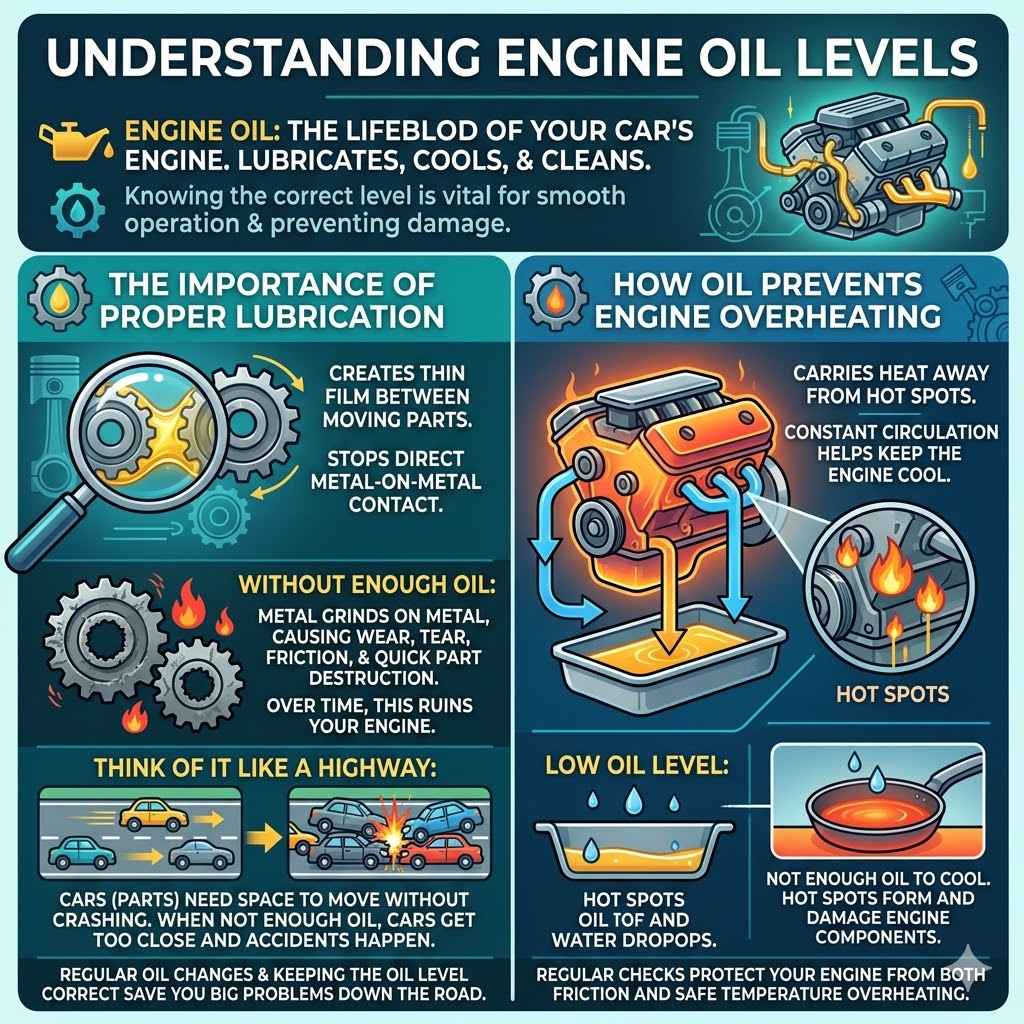
Engine oil is the lifeblood of your car’s engine. It lubricates moving parts, cools the engine, and helps clean out grime. Knowing the correct oil level is super important for keeping your engine running smoothly and preventing damage.
Too little oil means parts can grind together, causing wear and tear. Too much oil can also cause harm in different ways, often leading to serious and expensive repairs if not caught early. This section will explain why oil levels matter so much.
The Importance of Proper Lubrication
Your engine has many metal parts moving very fast. Oil creates a thin film between these parts. This film stops them from touching directly.
Without enough oil, this film breaks. Metal grinds on metal. This creates heat and friction, leading to parts wearing down quickly.
Over time, this can ruin your engine.
Think of it like a busy highway. Cars need space to move without crashing. Oil is the space between the engine parts.
When there’s not enough oil, the cars are too close, and accidents happen.
Regular oil changes and keeping the oil level correct are key to a long-lasting engine. It’s a simple step that saves you big problems down the road.
How Oil Prevents Engine Overheating
Engines create a lot of heat when they run. Many parts get very hot. Oil helps carry this heat away from the hottest spots.
It moves through the engine and then goes to the oil pan. The oil pan is cooler. This constant circulation of oil helps keep the engine from getting too hot.
If your oil level is too low, there isn’t enough oil to do this cooling job. Hot spots can form. These can damage engine components.
Imagine trying to cool down a hot pan with only a few drops of water; it won’t work well.
This is why checking your oil level regularly is not just about lubrication, but also about keeping your engine at a safe temperature.
How Much Oil Is Too Much in a Car? Warning Signs
Many people worry about having too little oil, but having too much is also a big problem. It might seem odd, but an overfilled engine can lead to strange noises, poor performance, and even damage. Knowing the signs that your oil level is too high is just as important as knowing if it’s too low.
This section focuses on the specific warning signals your car might give you when it has too much oil.
Common Warning Signs of Overfilled Oil
Your car often tells you when something is wrong. With too much oil, you might notice a few key things. One of the most common signs is smoke coming from the exhaust pipe.
This smoke is often blueish and smells like burning oil. It happens because the extra oil gets forced into the combustion chamber and burns with the fuel.
Another sign is a change in how your engine sounds. You might hear knocking or tapping noises. This is because the spinning crankshaft can hit the excess oil.
This splashing can cause foaming, which reduces the oil’s ability to lubricate properly. The engine might also feel sluggish or less powerful.
Your dashboard warning lights might also come on. This could be a general engine warning light or sometimes a specific oil pressure warning light. Don’t ignore these signals; they are your car’s way of asking for attention.
Why Overfilling Causes Engine Problems
When an engine has too much oil, the crankshaft, which spins very fast, can dip into the oil. This action whips the oil into a froth or foam. Foamy oil doesn’t lubricate as well as smooth, liquid oil.
This can lead to increased wear on engine parts because they aren’t getting the proper lubrication.
Also, the excess oil can get pushed into places it shouldn’t be. It can leak past piston rings and burn in the combustion chambers. This leads to the smoky exhaust and can foul spark plugs.
Over time, this can cause serious damage to the engine.
Think of it like trying to drink through a straw that’s too full of liquid. You might suck up air bubbles, making it hard to drink. Foamy oil acts the same way, making it hard for the engine to get the lubrication it needs.
Specific Issues Caused by Excess Oil
One of the main issues caused by too much oil is increased oil pressure. The extra oil fills up more space than it should. This can put too much stress on oil seals and gaskets.
Over time, this can cause them to leak or even blow out. Leaks are not only messy but can also lead to low oil levels if not addressed.
Another problem is damage to the catalytic converter. When oil burns in the combustion chamber, it can leave deposits. These deposits can clog the catalytic converter, which is an important part of your car’s exhaust system.
A clogged catalytic converter reduces engine performance and can be expensive to replace.
In severe cases, the engine can suffer from hydro-lock. This happens if a large amount of oil or fluid enters a cylinder and there isn’t enough space for the piston to move. The incompressible liquid can bend or break connecting rods, causing catastrophic engine failure.
How to Check Your Car’s Oil Level
Checking your car’s oil is a basic maintenance task that anyone can do. It’s important to do it correctly to get an accurate reading. This section will guide you through the simple steps to check your oil level, whether you suspect it’s too high or too low.
Following these steps will give you peace of mind and help you keep your car in good shape.
Preparing for the Oil Check
First, make sure your car is parked on a level surface. If the car is on a slope, the oil level reading will be inaccurate. It’s best to check the oil when the engine is cold or has been off for at least 10-15 minutes.
This allows the oil to drain back into the oil pan. If the engine is too hot, you risk burning yourself.
You’ll need a clean rag or paper towel for wiping the dipstick. Have your car’s owner’s manual handy. It will tell you the type of oil your car needs and the correct oil capacity.
The Step-by-Step Oil Checking Process
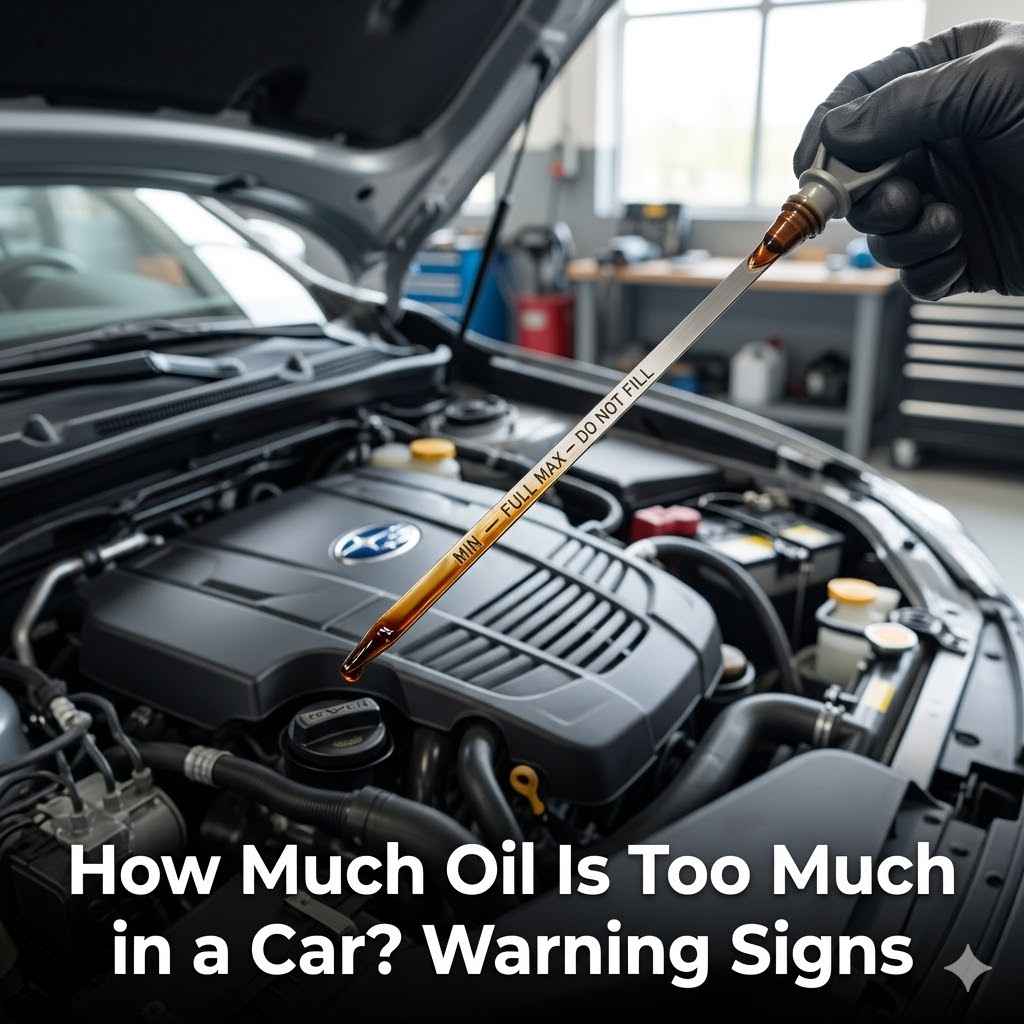
- Locate the oil dipstick. It usually has a brightly colored handle, often yellow or orange, and might have an oil can symbol on it.
- Pull the dipstick out completely.
- Wipe the dipstick clean with your rag.
- Reinsert the dipstick all the way back into its tube.
- Pull the dipstick out again.
- Look at the markings on the end of the dipstick. There are usually two marks, labeled ‘ADD’ or ‘LOW’ and ‘FULL’ or ‘MAX’. Your oil level should be between these two marks.
If the oil level is at or above the ‘FULL’ mark, your car has too much oil. If it’s below the ‘ADD’ mark, you need to add oil. If it’s between ‘ADD’ and ‘FULL’, the level is generally okay.
Interpreting the Dipstick Readings
The dipstick is your main tool for checking the oil level. The oil film on the dipstick tells you where the oil is in the engine. The markings are clear guides.
The area between the ‘ADD’ and ‘FULL’ marks is the safe zone.
If the oil level is right at the ‘FULL’ mark, that’s usually perfect. Some people prefer to keep it slightly below the ‘FULL’ mark if they are concerned about overfilling. If the oil covers the dipstick above the ‘FULL’ mark, it’s a sign that there’s too much oil.
Always re-check after adding oil to avoid overfilling. It’s better to add a little at a time and check frequently.
What to Do if Your Car Has Too Much Oil
Discovering that your car has too much oil can be concerning, but it’s a problem that can usually be fixed. The most important thing is to address it promptly to prevent potential engine damage. This section provides clear instructions on how to remove excess oil from your engine.
Simple Methods for Draining Excess Oil
The most straightforward way to remove excess oil is to drain some of it out. This is often done through the oil drain plug located at the bottom of the oil pan.
First, make sure you have an oil drain pan, a wrench that fits your car’s drain plug, and some clean rags. Place the drain pan directly under the oil drain plug. Carefully loosen and remove the drain plug.
Be ready for the oil to start flowing out.
Let the oil drain until the level appears to be correct on the dipstick or until you’ve drained a small, measured amount. It’s often recommended to drain about a quarter to half a quart (about 250-500 ml) at a time. Once you’ve drained enough, clean the drain plug and the area around the hole, then reinsert and tighten the drain plug securely.
When to Seek Professional Help
If you’re not comfortable working under your car or don’t have the right tools, it’s always best to take your car to a mechanic. Mechanics have the experience and equipment to safely drain the excess oil without causing further issues. They can also check for any signs of damage that might have already occurred due to overfilling.
Also, if you’ve tried draining some oil yourself and are unsure if the level is correct, a mechanic can verify it for you. Some cars have an oil filter that can be removed slightly to let oil out, but this is a more advanced procedure and usually best left to professionals.
Don’t hesitate to ask for help. The cost of a professional oil check and correction is much less than the cost of repairing a damaged engine.
Preventing Future Overfilling
The best way to avoid problems with too much oil is to be careful when adding oil. Always follow the amount recommended in your owner’s manual. When you add oil, start with a smaller amount than you think you need, run the engine for a few minutes to let the oil circulate, and then check the dipstick.
Add more oil in small increments if needed, rechecking each time.
If you’re getting your oil changed at a service shop, pay attention to what they are doing. You can even ask them to double-check the oil level with you after they’ve finished. Being involved in your car’s maintenance helps ensure it’s done right.
Understanding Oil Viscosity and Weight
Oil comes in different weights and viscosities. This affects how well it flows at different temperatures and how it protects your engine. Choosing the right oil is as important as getting the level correct.
This section explains what viscosity and weight mean and why they matter for your engine’s health.
What Viscosity Means for Oil
Viscosity is a measure of a fluid’s resistance to flow. Think of honey versus water. Honey is very viscous; it flows slowly.
Water is not viscous; it flows easily. Engine oil’s viscosity is critical because it needs to flow well enough to lubricate all engine parts, even when cold, but also thick enough to provide a protective film when the engine is hot.
Oil thickens when it’s cold and thins out when it’s hot. This is why multi-grade oils are used. They have additives that help them behave more consistently across a range of temperatures.
Decoding Oil Weight Numbers
Engine oil is graded using numbers, like 5W-30 or 10W-40. The ‘W’ stands for ‘Winter’. The first number (e.g., 5W) indicates the oil’s viscosity at cold temperatures.
A lower number means the oil is thinner and flows better when cold, which is important for starting the engine in cold weather.
The second number (e.g., 30) indicates the oil’s viscosity at operating temperature (when the engine is hot). A higher number means the oil is thicker at high temperatures, providing better protection for engine parts. Your car’s owner’s manual will specify the recommended oil weight for your vehicle.
For example, a 5W-30 oil is thinner at cold temperatures than a 10W-30 oil, but both offer similar protection at hot operating temperatures.
Choosing the Right Oil for Your Car
Always use the oil weight recommended in your car’s owner’s manual. Using the wrong oil weight can affect performance and engine wear. For instance, using an oil that’s too thin in a hot climate might not provide enough protection.
Conversely, using an oil that’s too thick in a very cold climate might make it hard for the engine to start.
Some modern cars also require specific types of oil, such as synthetic or synthetic blend oils, for optimal performance and longevity. Synthetic oils offer better protection across a wider range of temperatures and can last longer than conventional oils.
If you’re unsure about the type of oil to use, consult your owner’s manual or a trusted mechanic. They can help you select the best oil for your car’s make, model, and driving conditions.
Common Mistakes When Checking Oil
Even simple tasks can have common pitfalls. Checking your car’s oil is no different. Avoiding these common mistakes will ensure you get an accurate reading and can confidently maintain your car.
This section highlights what not to do so you can check your oil correctly every time.
Checking Oil on Uneven Surfaces
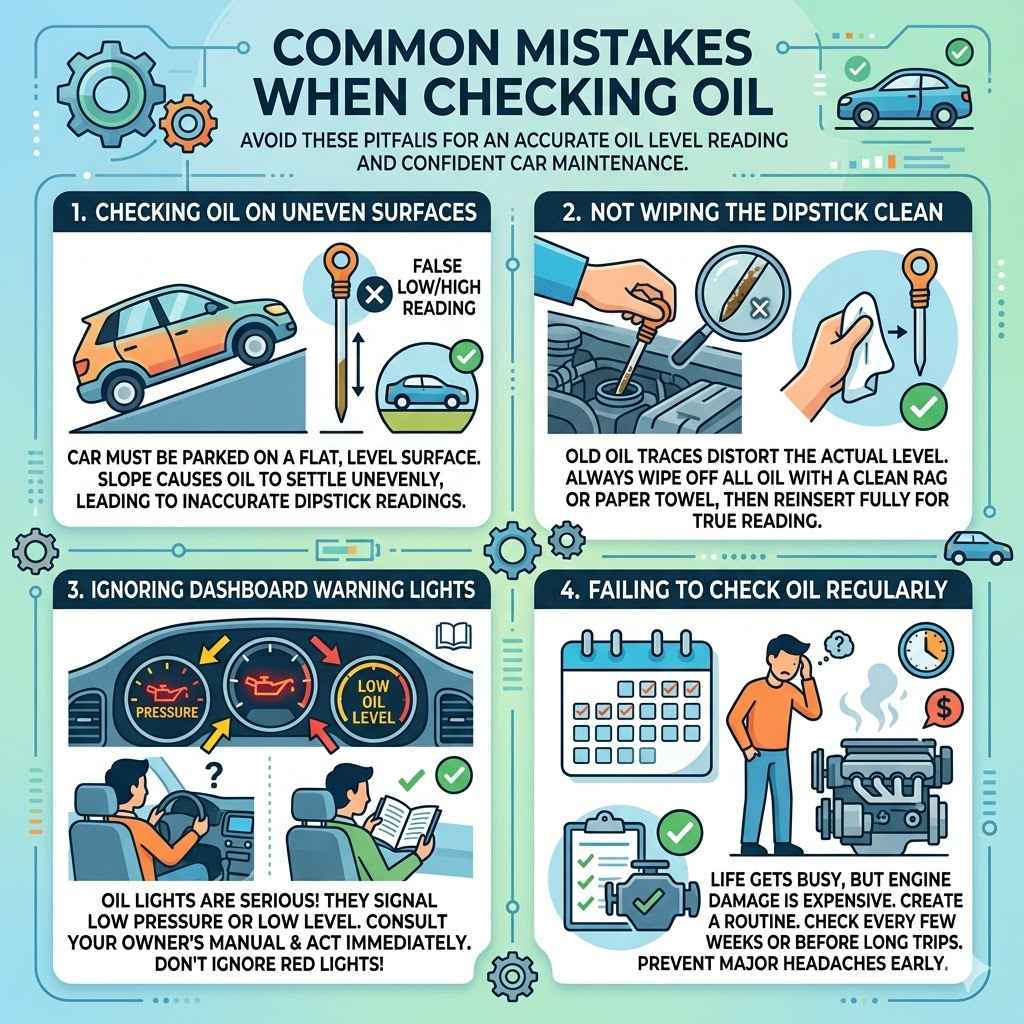
As mentioned before, checking your oil on a slope or uneven ground is a big mistake. The oil in the pan will settle to one side, giving you a false reading. If the car is tilted, the oil might appear lower than it is or higher than it should be.
Always ensure your car is parked on a flat, level surface before pulling out the dipstick.
This is one of the simplest but most overlooked steps. A few extra seconds to find a level spot can save you from adding too much or too little oil.
Not Wiping the Dipstick Clean
If you don’t wipe the dipstick clean before reinserting it, you’ll get a false reading. Old oil on the dipstick can give the impression that the oil level is higher than it actually is. Always use a clean rag or paper towel to wipe off all the oil before you put it back in.
After wiping, reinsert the dipstick fully. Then, pull it out again to get a clear line showing the true oil level.
Ignoring Dashboard Warning Lights
Modern cars have sophisticated sensors that monitor oil pressure and level. If a warning light related to oil comes on, don’t ignore it. This light could indicate low oil pressure or a critically low oil level, both of which are serious.
It might also be related to overfilling in some systems.
Some lights are red and signal an immediate problem that requires stopping the car as soon as it’s safe. Others might be yellow and indicate a need to check the oil soon. Always consult your owner’s manual to understand what each warning light means.
Failing to Check Oil Regularly
One of the biggest mistakes is not checking your oil often enough. Life gets busy, but your car needs regular attention. Checking your oil every few weeks or before a long trip is a good habit.
It helps you catch problems early before they become expensive repairs.
Make it a routine. Maybe check it when you fill up your gas tank. This simple check can prevent major headaches later.
Frequently Asked Questions
Question: What happens if I put too much oil in my car
Answer: If you put too much oil in your car, it can cause problems like smoke from the exhaust, knocking sounds, reduced engine performance, and increased oil pressure that can damage seals and gaskets. In severe cases, it can lead to catastrophic engine failure.
Question: How can I tell if my car has too much oil
Answer: You can tell if your car has too much oil by checking the dipstick. If the oil level is above the ‘FULL’ or ‘MAX’ mark, it’s too high. You might also notice blue smoke from the exhaust, hear knocking sounds, or see the oil warning light come on.
Question: Is it bad to overfill your car with oil
Answer: Yes, it is bad to overfill your car with oil. Excess oil can cause issues like oil foaming, which reduces lubrication, and increased pressure that can damage seals. Burning oil in the engine can also foul spark plugs and damage the catalytic converter.
Question: How long can a car run with too much oil
Answer: A car can sometimes run for a short period with too much oil, but it’s not recommended. The longer it runs, the higher the risk of damage. It’s best to drain the excess oil as soon as possible to prevent long-term harm to the engine.
Question: Should I drain all the oil if I overfill
Answer: No, you don’t need to drain all the oil. You only need to drain enough oil to bring the level back down to the correct range, typically between the ‘ADD’ and ‘FULL’ marks on the dipstick. Draining a small amount at a time is usually sufficient.
Conclusion
Knowing How Much Oil Is Too Much in a Car? Warning Signs helps protect your engine. Check your dipstick on a level surface, wiping it clean each time.
Watch for blue smoke, strange noises, or warning lights. If you find too much oil, drain a small amount carefully or visit a mechanic. Regular checks and correct oil levels ensure your car runs well for years.