How to Remove Excess Oil from a Car: Overfilled Engine Guide
If you have too much oil in your engine, drain it out through the oil drain plug or pull it out through the dipstick tube with an extractor pump — both work, and you should fix it before driving the car again.
Overfilling happens more often than you would think. It is easy to add one splash too many when topping off between oil changes, and it is just as easy for a quick-lube shop to over-pour during a service. Either way, an engine that has too much oil is not a minor issue you can ignore — the fix is simple, but skipping it can cost you a lot more than the ten minutes it takes to correct.
Why Removing Excess Oil Matters
A running engine’s crankshaft spins through the oil sitting in the pan below it. When there is too much oil, the crankshaft acts like a whisk, beating air into the oil and turning part of it into a thin foam. Foamed oil cannot form the stable protective film that clean oil does, so the parts it is supposed to protect — rod bearings, cam lobes, the timing chain — get less lubrication than they need.
Extra oil also has to occupy the same crankcase space that is normally left for air as the pistons move up and down. That raises the internal air pressure, and the pressure looks for the weakest point to escape — usually a seal. The rear main seal and the front crankshaft seal are the two most common casualties, and once one of them blows out from pressure, the resulting leak is expensive and labor-intensive to repair.
If the overfill goes uncorrected for a while, some of that excess oil can get pushed past the piston rings or through the PCV system and into the intake or exhaust, where it burns off as blue or gray smoke. Over time, burned oil residue can foul spark plugs and contaminate the catalytic converter, which is a far costlier repair than removing a few extra ounces of oil today.
No-Mess Removal Tool
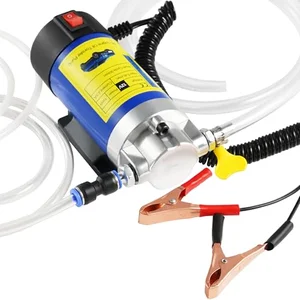 |
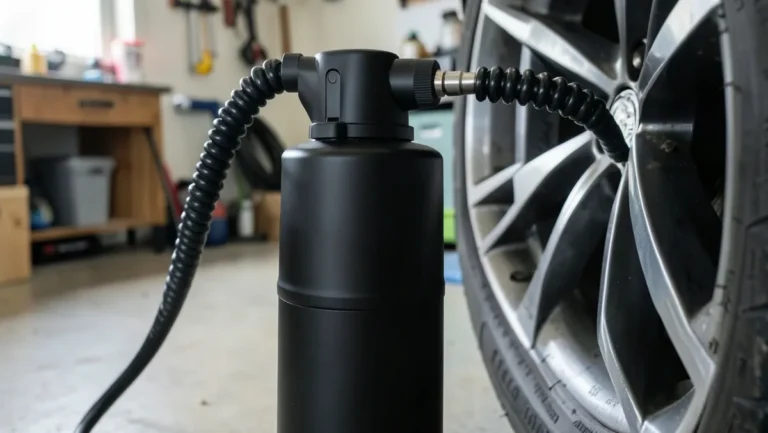
Faitio 12V 100W Oil Extractor Pump – $33.89 Draws excess oil straight out through the dipstick tube in small, controlled amounts — no jacking up the car and no cracking the drain plug.
|
Signs You Have Too Much Oil in Your Engine
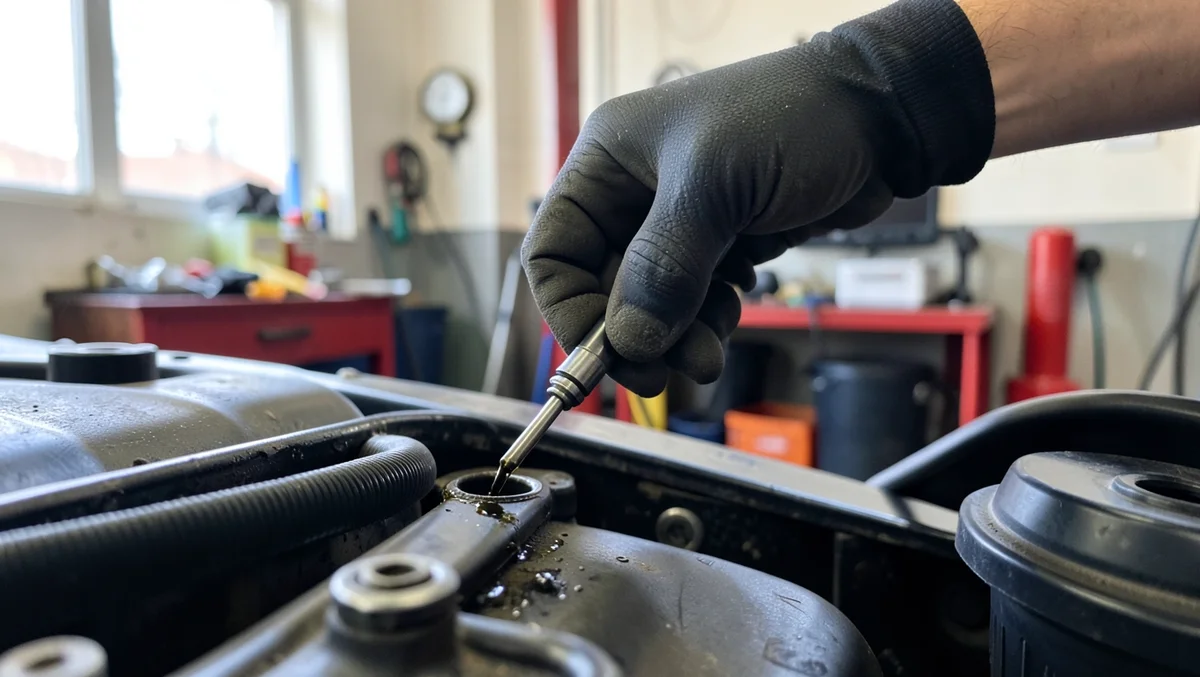
The dipstick is the most reliable way to confirm an overfill. Pull it out, wipe it clean, reinsert it fully, then pull it out again and look at where the oil film ends. If it sits above the top hatched mark or “max” line, you are overfilled and should remove the excess before driving.
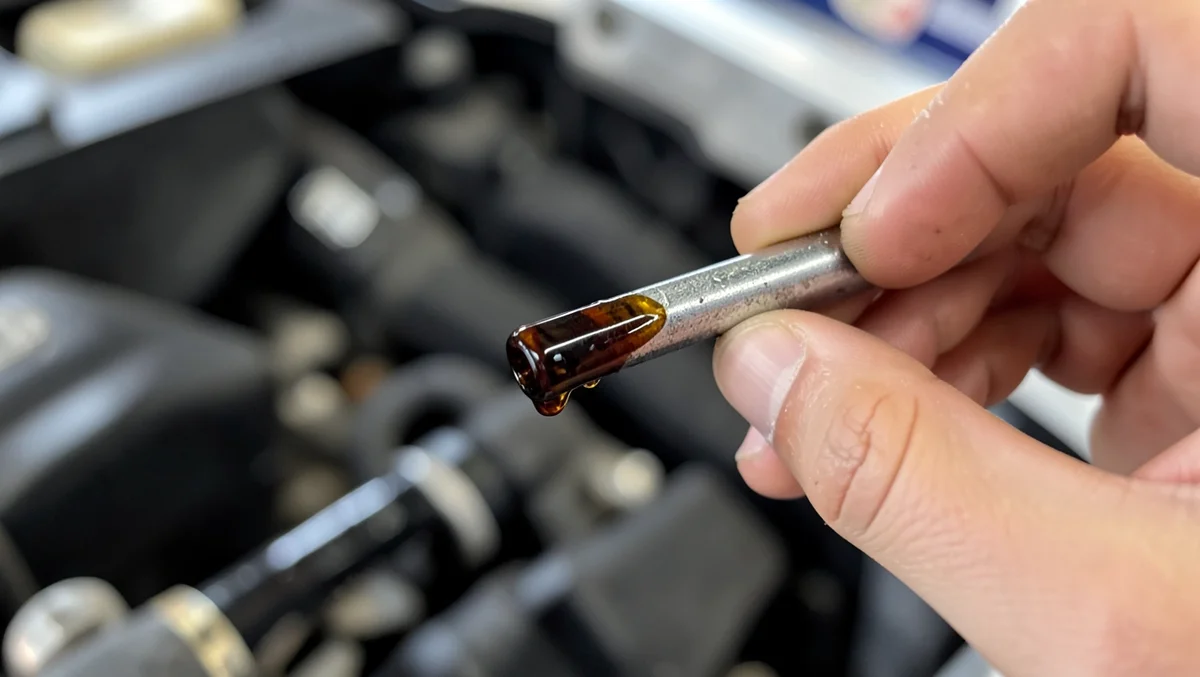
A few other symptoms usually show up alongside a high dipstick reading:
- Blue or gray exhaust smoke — this means oil is already burning inside the engine, not just sitting in the pan.
- A strong burning-oil smell from the engine bay, especially after the car has been driven and has warmed up.
- Rough idle or a slight misfire caused by oil fouling near the spark plugs or intake.
- Fresh oil spots under the car that were not there before — a sign the extra pressure has already found a seal to leak past.
- An oil pressure warning light in some vehicles, since aerated oil can read inconsistently to the pressure sensor.
Tools You Need Before You Start
Whichever method you use, gather these first so you are not stopping halfway through:
- An oil extractor pump (for the dipstick method) or a wrench that fits your drain plug plus jack stands (for the drain-plug method)
- A clean drain pan or catch container
- Disposable gloves
- Shop rags or paper towels
- A sealed, labeled container to hold the removed oil until you recycle it
Method 1: Using an Oil Extractor Pump
This is the cleanest option because it does not require raising the car or touching the drain plug at all.
- Start the engine and let it idle for three to five minutes so the oil is warm enough to flow easily, then shut it off.
- Pull the dipstick out and set it aside so you have a clear tube to work with.
- Feed the extractor’s thin tube down the dipstick tube until you feel it reach the bottom of the oil pan.
- Run the pump in short bursts, pulling a small amount of oil at a time into the attached container.
- Stop every few ounces, remove the extractor tube, and recheck the level with the dipstick.
- Once the oil film sits between the min and max marks, reinsert the dipstick and you are done — no draining, no mess.
Method 2: Draining Through the Oil Drain Plug
If you do not have an extractor on hand, you can release a measured amount of oil the same way you would during a normal oil change.
- Park on level ground and let the engine warm up slightly so the oil flows — it should be warm, not hot enough to burn you.
- Raise the car and support it securely on jack stands. Never work underneath a car that is held up only by a jack.
- Slide the drain pan directly under the drain plug, which is usually at the lowest point of the oil pan.
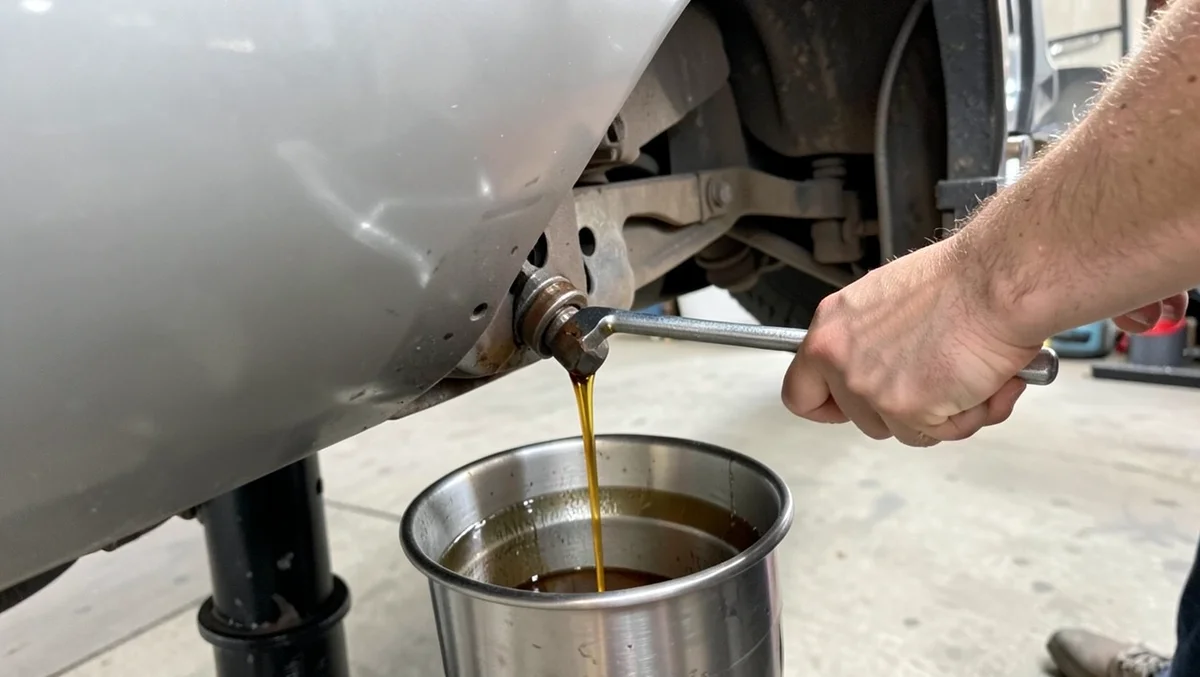
- Loosen the plug with a wrench, then finish backing it out by hand while keeping a finger on it so it does not drop into the pan.
- Let a controlled stream of oil drain out. Because this method is hard to measure precisely, plan to drain a small, deliberate amount and recheck the dipstick rather than guessing a large pour all at once.
- Reinstall the drain plug and tighten it to the torque spec in your owner’s manual, then lower the car and recheck the dipstick one more time.
How to Safely Dispose of the Removed Oil
Whatever oil you remove is still hazardous waste and needs to be handled the same way used oil from a full oil change would be. Pour it into a sealed, labeled container and take it to an auto parts store or a local recycling center — most major auto parts chains accept used motor oil for recycling at no charge. Never pour it down a drain or onto the ground; it can contaminate groundwater and is genuinely harmful to plants, pets, and wildlife.
How to Prevent Overfilling Next Time
Most overfills come down to guessing instead of measuring. Use your owner’s manual to confirm your engine’s exact oil capacity, and add oil a little at a time using a container with clear measurement markings rather than pouring straight from a full jug. Check the dipstick after every partial addition, not just at the end.
If a shop changed your oil recently and you are now overfilled, it is worth going back so they can correct it and confirm they used the right oil type — an over-pour is a common sign that other details of the job were rushed too.
When to Call a Professional
Removing excess oil yourself is a simple job, but get a mechanic involved if any of the following apply: you cannot locate or safely access the drain plug or dipstick tube, the oil pressure or check-engine light stays on after you correct the level, you notice knocking sounds from the engine, or you see foam clinging to the underside of the oil filler cap. Those are signs the overfill may have already caused damage that goes beyond a simple level correction.
Frequently Asked Questions
How Do I Remove Excess Oil From a Car?
Use an oil extractor pump through the dipstick tube for a clean, no-mess removal, or loosen the drain plug slightly to release a measured amount into a drain pan. Either way, recheck the dipstick as you go and stop once the level sits between the min and max marks.
What Happens If I Drive With Too Much Oil in the Engine?
The crankshaft whips the extra oil into foam, which does not lubricate as well as clean oil. The extra volume also raises crankcase pressure, which can blow out the rear main seal or front crank seal and cause a chronic leak. Left long enough, it can also push oil into the exhaust and foul the catalytic converter.
Can I Use a Turkey Baster or Syringe to Remove Excess Oil?
Yes, a large syringe or a baster fed down the dipstick tube works on the same principle as an extractor pump — it just takes longer and more manual effort. Dedicate it to shop use only and never return it to kitchen use afterward.
How Much Oil Should I Drain If I Overfilled by One Quart?
An extractor pump is the more precise choice here, since you can pull out a small amount and recheck the dipstick every few ounces. The drain plug method is harder to measure exactly, so if you are unsure how much came out, keep checking the dipstick rather than assuming you removed a full quart.
Will Overfilled Oil Trigger a Warning Light?
There is no dedicated warning light just for overfilling, but if the excess is enough to cause foaming, the oil pressure sensor can read inconsistently and trigger the oil pressure or check-engine light in some vehicles. Always confirm the level with the dipstick regardless of whether a light comes on.
Does It Matter If a Shop Overfilled My Oil During a Change?
It matters just as much as an overfill you caused yourself — the same removal methods apply. It is also worth going back to the shop so they can correct the level and confirm the right oil type and filter were used, since a rushed over-pour can be a sign other steps were skipped too.
Conclusion
An overfilled engine is a common, fixable mistake, but it is not one worth ignoring. Whether you pull the excess out through the dipstick tube with an extractor pump or crack the drain plug for a measured release, the goal is the same: get the level back between the min and max marks before you drive the car again. Recheck your dipstick after every top-off going forward, and you will not run into this problem twice.
Products related to this article
Sponsored / affiliate links. As an Amazon Associate I earn from qualifying purchases. I may earn additional commission from eligible campaigns.