How to Clean a Car AC Condenser Properly: A Simple Guide
Cleaning your car’s AC condenser might seem a bit tricky at first, but don’t worry! It’s actually a pretty common task for anyone who wants to keep their car running smoothly. The good news is, learning How to Clean a Car AC Condenser Properly doesn’t have to be hard. We’ll show you step-by-step how to do it, so you can keep your car cool and comfortable, all without the need for any special skills. Let’s get started!
What Is an AC Condenser and Why Clean It?
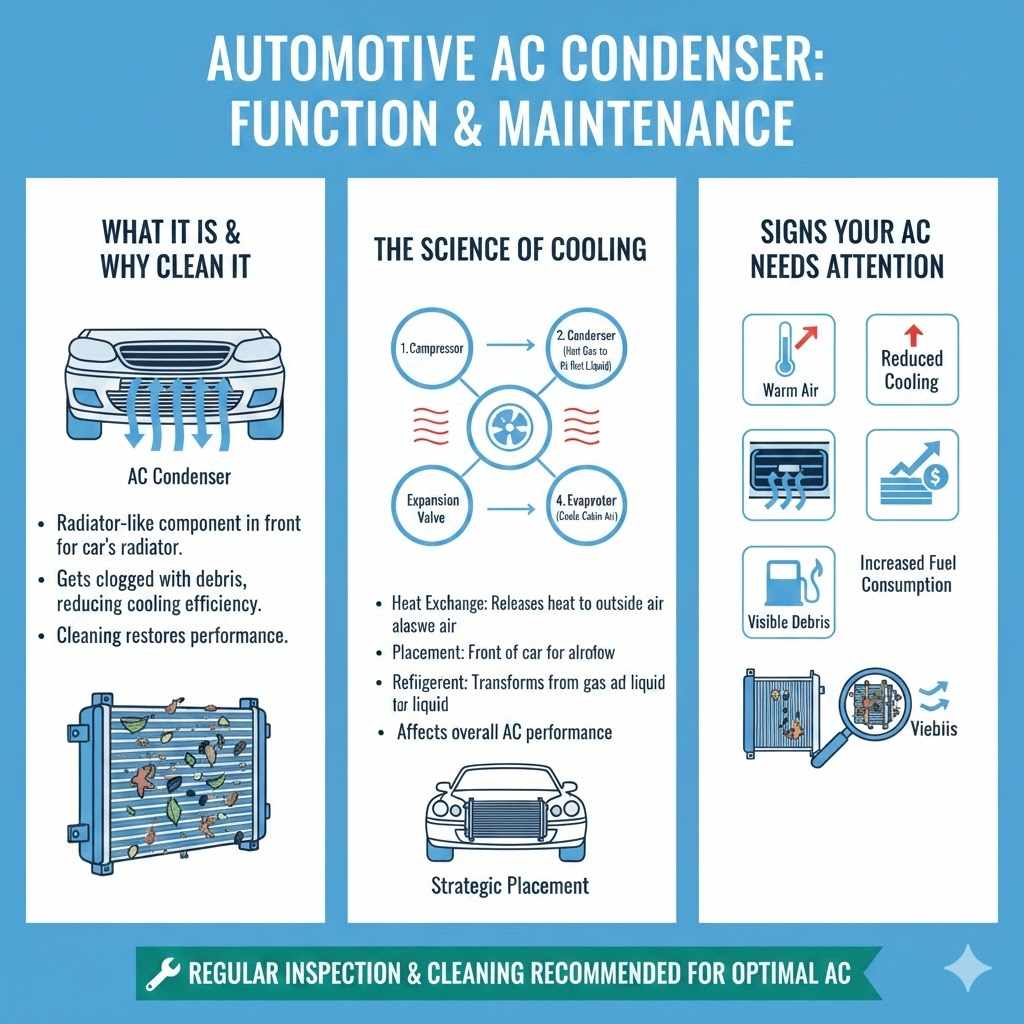
Your car’s AC condenser is like a radiator for your air conditioning system. It sits in front of your car’s radiator and helps to cool down the hot refrigerant that’s been compressed by the AC compressor. This cooling process is super important because it’s what eventually makes the air inside your car cold. Over time, the condenser can get clogged with dirt, leaves, bugs, and road debris, reducing its ability to cool the refrigerant effectively. This can lead to your AC not working as well, or even breaking down completely. That’s why cleaning it is a great idea.
The Role of the AC Condenser in Your Car
The AC condenser works in tandem with several other components in your car’s AC system. The compressor pushes refrigerant through the system, the condenser cools the refrigerant, and the expansion valve or orifice tube controls the flow of the cooled refrigerant. After the condenser, the cooled refrigerant flows to the evaporator, where it absorbs heat from the air inside the car, providing the cooling effect. Think of it like a chain reaction – each part relies on the others to do their job correctly. A clogged condenser can disrupt this entire process, impacting the performance of your AC unit.
- Heat Exchange: The primary job of the AC condenser is to release heat. The hot, compressed refrigerant enters the condenser and passes through a series of tubes and fins. As it moves through these parts, the heat is transferred to the outside air, cooling the refrigerant.
- Placement: The condenser’s location, in front of the radiator, is critical for efficient cooling. The flow of air through the front of the car helps to dissipate heat from the condenser. This strategic placement ensures that cool air can flow through the condenser, removing the heat.
- Refrigerant Transformation: As the hot, high-pressure refrigerant flows through the condenser, it changes from a hot gas to a hot liquid. This phase change is crucial for the AC system to work. It’s what allows the refrigerant to absorb heat inside the car in the next step of the cycle.
- Cooling Efficiency: The efficiency of the condenser directly affects the cooling performance of your AC. If the condenser is blocked by dirt and debris, it won’t be able to cool the refrigerant as effectively. This can cause the AC system to blow warm air or work harder to try and cool the car.
Signs Your AC Condenser Needs Cleaning
There are several signs that suggest your AC condenser needs cleaning or may have a problem. One of the most obvious is if your AC isn’t blowing as cold as it used to. This can be gradual, but you’ll notice it over time. Another sign is reduced airflow from the vents, indicating that something might be blocking the condenser. A visual inspection can also reveal signs of debris buildup. Plus, if you hear unusual noises from the AC system, such as hissing or rattling sounds, there could be a problem.
- Warm Air: The most common symptom of a dirty condenser is warm air blowing from your vents, even when the AC is turned on.
- Reduced Cooling: Your AC may still blow cool air, but it’s not as effective as it used to be. The cooling performance has decreased significantly.
- Increased Fuel Consumption: The AC system might work harder if the condenser is dirty, which can impact your fuel economy.
- Visible Debris: Look for a buildup of leaves, bugs, or dirt on the condenser fins, especially after driving on dusty roads or during certain seasons.
Getting Ready: Tools and Safety Measures Before Cleaning
Before you begin the cleaning process, it’s important to gather the right tools and take safety precautions. This will help you protect yourself and your car. Make sure you work in a well-ventilated area, and never work on your car while the engine is hot. Take your time, and don’t rush the process. A careful approach ensures a more effective cleaning and prevents damage to your car’s AC system.
Required Tools for the Job
Gathering the right tools ahead of time is key to making the cleaning process easier and more efficient. Having everything ready saves time and ensures you can complete the job without any hiccups. Here’s a list of essential tools you’ll need to clean your AC condenser, along with their functions:
- Protective Gloves: These will keep your hands clean and protected. Choose gloves that are made of a material that is chemical-resistant.
- Eye Protection: Safety glasses or goggles are essential to protect your eyes from debris that might be blown around during the cleaning process.
- Shop Vacuum: This tool is important for removing loose debris from the condenser before you start washing it.
- Spray Bottle: A spray bottle will be useful for applying cleaning solution or water to the condenser fins.
- Mild Soap and Water Solution: You’ll use this to help loosen the dirt and debris.
- Soft-Bristle Brush: A brush with soft bristles will help you gently scrub away dirt without damaging the condenser fins. A toothbrush can work too.
- Garden Hose with a Spray Nozzle: This will be used to rinse the condenser after cleaning. A nozzle that offers different spray patterns can be particularly helpful.
- Jack and Jack Stands (Optional): If you need more room to work, these can help you lift the front of your car safely.
- Torx Screwdriver or Wrench: These tools will be required if the car’s grille or any protective elements need to be removed to access the condenser.
Safety First: Important Precautions
Working on your car’s AC system involves some risks, so it’s important to be careful. Always prioritize your safety and follow some important precautions. Doing so protects you from potential hazards.
- Wear Safety Gear: Always wear safety glasses or goggles to protect your eyes from any debris that might get blown around. Gloves are also a good idea to protect your hands from dirt and chemicals.
- Work in a Well-Ventilated Area: Make sure you’re working outdoors or in a garage with good airflow to prevent a buildup of fumes from cleaning products.
- Disconnect the Battery (Optional): Although not always necessary, disconnecting the negative battery terminal is a good practice when working around electrical components. This helps prevent accidental shorts.
- Let the Engine Cool: Never work on a hot engine. The engine and surrounding parts can be very hot and cause burns. Let it cool down completely before you start.
- Avoid High-Pressure Washing: While a garden hose is okay, avoid using a high-pressure washer, as it can bend or damage the delicate fins of the condenser.
- Be Careful with Chemicals: If you use any cleaning solutions, follow the manufacturer’s instructions. Avoid getting chemicals on your skin or in your eyes.
Step-by-Step Guide to Cleaning Your Car AC Condenser
Now, let’s explore the process of how to clean your car AC condenser. This process can be divided into several simple steps. Each step plays a vital role in cleaning the condenser correctly. Take your time and follow the directions carefully to ensure you do the job right. Remember, patience and care are key to a successful cleaning job.
Getting Access to the Condenser
Before you can begin cleaning, you’ll need to get to the condenser. This often means removing the car’s grille or any protective covers. These components often block easy access to the condenser. The exact way you remove them will depend on your car’s make and model. If you are unsure, consult your car’s manual. Ensure that the engine is turned off and cool before you start working. Once you have access, you’ll be able to clean the condenser efficiently.
- Locate the Condenser: The AC condenser is usually located in front of the car’s radiator, behind the grille. Some vehicles might require you to remove parts of the bumper or other trim pieces.
- Remove the Grille: Most cars have a grille that can be removed with a screwdriver or by unfastening clips. Carefully remove the grille to expose the condenser. The exact method will depend on your car’s make and model, so consult your manual.
- Remove Any Protective Covers: Some cars have protective covers in front of the condenser. If present, carefully remove these covers to provide better access.
- Check for Obstructions: Before you start cleaning, check for any large pieces of debris that can be easily removed by hand. You may be able to gently pluck off leaves or twigs.
- Document the Process: Take pictures of how everything fits together before you start. This can be very helpful when putting everything back together.
Cleaning the Condenser
Once you have access to the condenser, the next step is to actually clean it. This involves removing any debris and dirt that has accumulated on the fins. This can be done with a combination of methods, from vacuuming to gentle washing. Remember to be patient and careful. A thorough cleaning is critical to improving the AC system’s performance.
- Vacuum Loose Debris: Use a shop vacuum with a brush attachment to remove loose dirt, leaves, bugs, and other debris from the condenser fins.
- Prepare the Cleaning Solution: Mix a mild soap solution in a spray bottle. Use a car wash soap or a mild dish soap. Avoid harsh chemicals, as they can damage the condenser.
- Apply the Solution: Lightly spray the cleaning solution onto the condenser fins. Make sure not to soak the components, as too much water can cause damage.
- Scrub the Fins Gently: Using a soft-bristle brush, gently scrub the fins to remove dirt and grime. Brush in the direction of the fins to avoid bending them. A soft toothbrush can be helpful for hard-to-reach areas.
- Rinse Thoroughly: Using a garden hose with a spray nozzle set to a gentle setting, rinse the condenser to remove the cleaning solution and any remaining debris.
Drying and Reassembly
Once you have cleaned the condenser, the final step involves drying it and reassembling the components. Drying is critical to prevent corrosion or the buildup of rust on metal parts. Reassembling everything correctly ensures that the AC system functions as it should. Taking your time during this process can help prevent problems later on.
- Air Dry the Condenser: Allow the condenser to air dry naturally. This may take some time. Avoid using compressed air or a high-pressure washer to speed up the drying process, as this could damage the fins.
- Check for Bent Fins: While the condenser is drying, examine the fins for any bends. Use a fin comb or a thin tool to straighten any bent fins. This will help maximize airflow.
- Reinstall Protective Covers: If you removed any protective covers, carefully reinstall them. Ensure they are correctly positioned and secured.
- Reattach the Grille: Carefully reattach the car’s grille using the screws or clips.
- Start the Car and Test the AC: Turn on your car and let the AC run for a few minutes. Check for cool air and make sure the system is working properly.
Common Problems and Troubleshooting
Sometimes, even after cleaning, you might encounter issues. Problems can come up during the cleaning process. This section covers some common problems and offers ways to solve them. By knowing these issues, you will be prepared to fix issues yourself.
What if My AC Still Doesn’t Work After Cleaning?
If you’ve cleaned your AC condenser and your AC still isn’t working, don’t worry. This sometimes happens, and it doesn’t mean you’ve done anything wrong. Several other issues can affect your AC. Here are some potential problems and how to troubleshoot them. These include low refrigerant levels, a malfunctioning compressor, or even electrical problems. In each case, it’s wise to check the AC system for leaks. These leaks can let the refrigerant escape. If you are unsure, it’s always best to consult a professional mechanic.
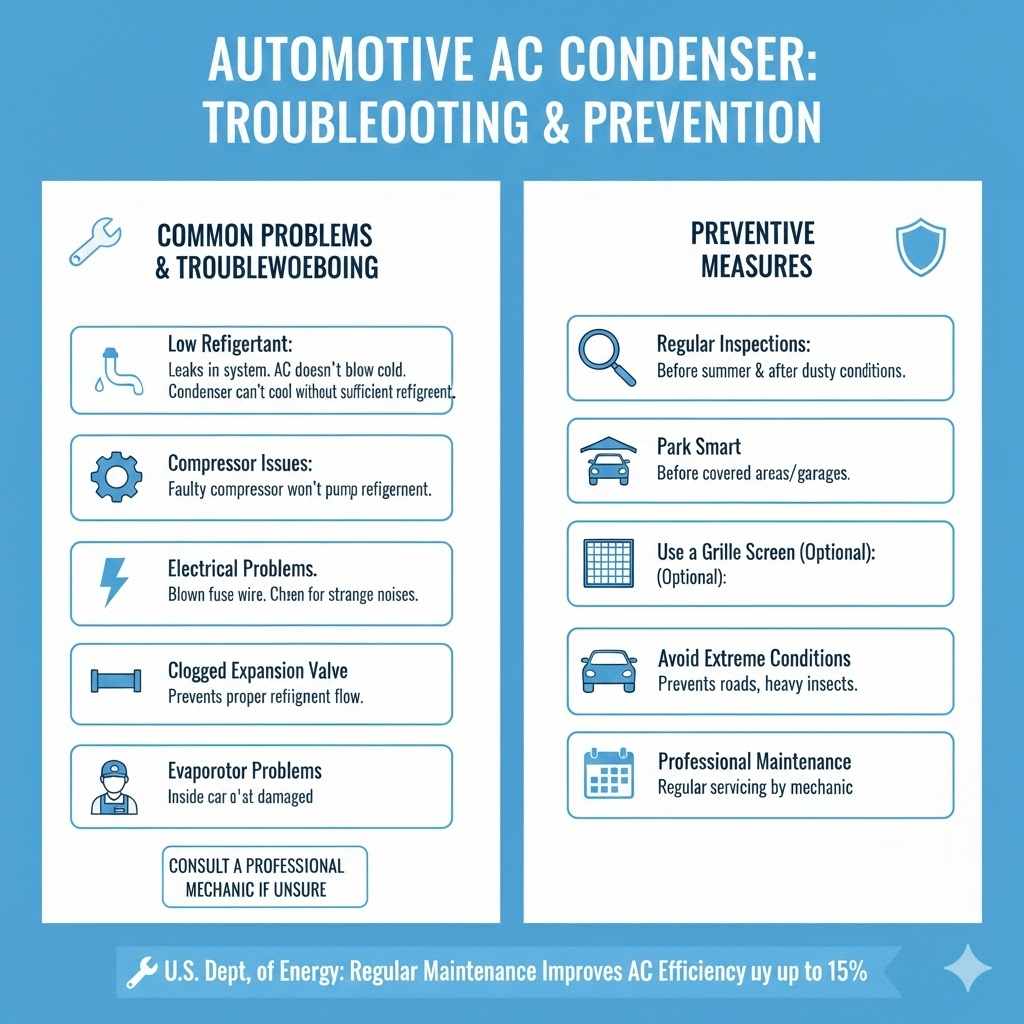
- Low Refrigerant: If the AC still isn’t blowing cold air, you might have low refrigerant levels. This can be caused by leaks in the system. The condenser’s job is to cool, but it can’t cool if there is not enough refrigerant.
- Compressor Issues: The AC compressor can fail. A faulty compressor won’t pump refrigerant through the system, which means no cool air. Listen for strange noises from the compressor when the AC is running.
- Electrical Problems: Check the fuses and wiring related to the AC system. A blown fuse or a loose wire can prevent the AC from working. Consult your car’s electrical diagrams.
- Clogged Expansion Valve or Orifice Tube: These components can become clogged, which prevents refrigerant from flowing properly.
- Evaporator Problems: The evaporator inside your car’s dashboard can become clogged or damaged. This can also prevent the AC from blowing cold air.
Preventive Measures to Keep Your Condenser Clean
The best way to avoid problems with your AC condenser is to take preventive measures. Keeping your condenser clean can extend its lifespan. By regularly checking the condenser and taking steps to protect it, you can keep your car’s AC running smoothly. These efforts not only improve your comfort but also help protect your car’s AC system.
- Regular Inspections: Inspect your condenser regularly, especially before summer and after driving in dusty or off-road conditions.
- Park Smart: If possible, park your car in covered areas or garages to reduce exposure to dirt, debris, and sunlight.
- Use a Grille Screen (Optional): Consider installing a grille screen to help prevent large debris from hitting the condenser.
- Avoid Driving in Extreme Conditions: Driving on dusty roads or in areas with heavy insect activity can quickly clog your condenser.
- Professional Maintenance: Have your AC system serviced regularly by a professional mechanic. They can inspect your system and ensure that everything is working correctly.
According to the U.S. Department of Energy, proper maintenance, including AC system care, can improve a vehicle’s fuel efficiency by up to 4% (Source: U.S. Department of Energy).
Frequently Asked Questions
Question: How often should I clean my car AC condenser?
Answer: It’s a good idea to inspect your AC condenser at least once a year, preferably before the hot summer months. If you often drive in dusty conditions or areas with lots of insects, you may need to clean it more often.
Question: Can I use a high-pressure washer to clean the AC condenser?
Answer: No, it’s best to avoid using a high-pressure washer. High-pressure water can bend or damage the delicate fins of the condenser, which can affect its ability to cool the refrigerant efficiently.
Question: Do I need to remove the bumper to clean the condenser?
Answer: It depends on your car. Some cars have the condenser easily accessible behind the grille, while others might require you to remove parts of the bumper or other trim pieces. Consult your car’s manual.
Question: What’s the best cleaning solution to use?
Answer: A mild soap and water solution is often the best choice. Avoid harsh chemicals, as they can damage the condenser fins. Car wash soap or mild dish soap work well.
Question: What should I do if my AC still doesn’t work after cleaning the condenser?
Answer: If your AC still isn’t working, there might be other issues, such as low refrigerant levels, a malfunctioning compressor, or electrical problems. It’s best to have your car’s AC system checked by a professional mechanic in this situation.
Final Thoughts
Cleaning your car AC condenser is an important part of keeping your vehicle running smoothly, especially as the weather warms. Following the steps, you can keep your car cool and comfortable, improving your driving experience. Remember, taking good care of your car’s AC system involves more than just cleaning. Regular maintenance and being aware of potential problems are key to preventing major issues. Keeping your AC condenser clean is a simple way to help avoid problems down the road. You can help extend your AC system’s lifespan and avoid expensive repairs. So, now that you know How to Clean a Car AC Condenser Properly, go ahead and keep your ride cool and comfortable, all year long!