How to Clean Air Conditioning System in Car: Essential Guide
Cleaning your car’s air conditioning system is a straightforward DIY task that boosts airflow, reduces odors, and improves cooling efficiency. This guide breaks down how to clean the AC system, including the cabin air filter, vents, and essential components, for a fresher, more comfortable drive.
The air in your car can get stale, and sometimes, your AC might not feel as cold as it should, or it might even smell a bit musty. If you’ve noticed this, don’t worry! Your car’s air conditioning system just needs a little love and attention. Keeping it clean isn’t just about comfort; it helps your system work better and last longer. Think of it like giving your AC a breath of fresh air!
We’ll walk through how to clean the most important parts of your car’s AC system. It’s easier than you might think, and doing it yourself can save you money. Ready to get that cool, clean air flowing again? Let’s dive in!
Why Cleaning Your Car’s AC System Matters
Your car’s air conditioning system is more than just a cooler; it’s a complex network designed to keep you comfortable in all conditions. Over time, dust, pollen, mold spores, and other debris can build up inside. This buildup can lead to several problems:
- Reduced Airflow: A clogged system forces your AC to work harder, meaning less air comes out of the vents, and it takes longer to cool or heat the cabin.
- Unpleasant Odors: Moisture can get trapped, creating a breeding ground for mold and bacteria. This causes that musty or foul smell that can be quite unpleasant.
- Decreased Efficiency: When the system is working overtime due to blockages, it consumes more fuel, costing you extra at the pump.
- Air Quality Concerns: If you or your passengers suffer from allergies or respiratory issues, dirty AC components can recirculate allergens and irritants into the cabin.
- Potential for Costly Repairs: Neglecting your AC can cause components to wear out faster, potentially leading to expensive repairs down the line.
Regular maintenance, including cleaning, ensures your AC runs efficiently, smells fresh, and provides a healthier environment for everyone inside your vehicle.
Understanding Your Car’s AC System Components
To effectively clean your car’s AC system, it helps to know its basic parts:
- Compressor: This is the heart of the system. It compresses the refrigerant, a special fluid that cools the air.
- Condenser: Located at the front of your car, often in front of the radiator, it releases heat from the refrigerant.
- Evaporator: This is where the magic of cooling happens. Refrigerant flows through it, absorbing heat from the air inside the cabin.
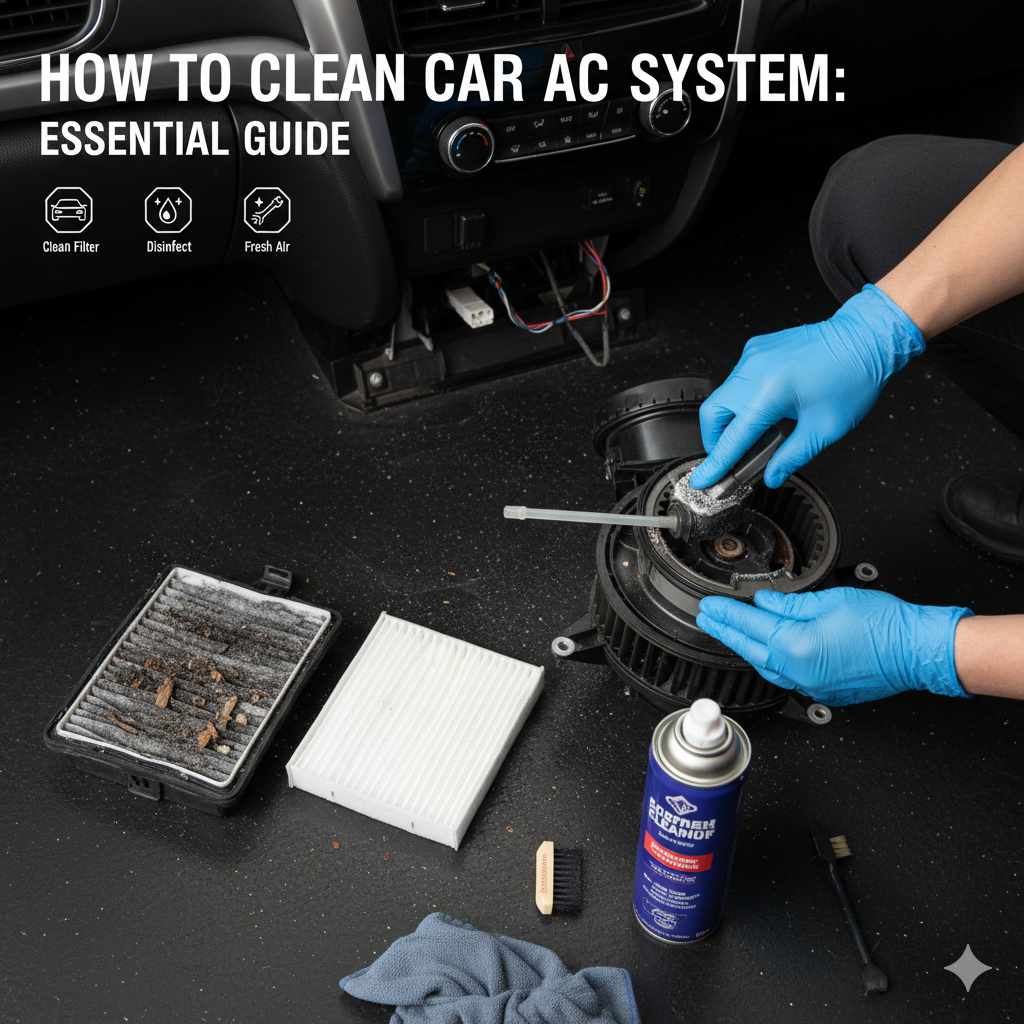
- Cabin Air Filter: This is a crucial piece for air quality. It filters the air entering your cabin, trapping dust, pollen, and other particles. This is often the easiest part for DIY cleaning or replacement.
- Blower Motor & Fan: This pushes the cooled or heated air through the vents and into the cabin.
- Ductwork: These are the tubes that carry air from the AC unit to your dashboard vents.
While you can’t easily access or clean all these parts at home (like the compressor or condenser), focusing on the components you can reach, especially the cabin air filter and vents, will make a significant difference.
Tools and Supplies You’ll Need
Before you start, gather these common tools and supplies. Having everything ready will make the process smoother and more efficient.
-
New Cabin Air Filter: Check your car’s manual for the correct type and size.
- You can often find these at auto parts stores or online retailers. Websites like AutoZone’s cabin air filter section offer a wide selection and helpful guides.
- Screwdriver Set: You might need Phillips head or flathead screwdrivers, depending on how your cabin air filter housing is secured.
- Gloves: To keep your hands clean.
- Mask: Especially if you’re sensitive to dust or mold.
- Vacuum Cleaner with Attachments: For removing loose debris.
- Spray Cleaner for AC Vents: Look for specialized automotive AC vent cleaners.
- Microfiber Cloths: For wiping surfaces.
- Optional: Compressed Air Can: Can be helpful for blowing out dust from hard-to-reach areas.
- Optional: Small Brush (like an old toothbrush or detailing brush): For gently cleaning vent louvers.
Step-by-Step Guide: How to Clean Your Car’s Air Conditioning System
Cleaning your car’s AC system can be broken down into a few key areas: replacing the cabin air filter, cleaning the vents, and treating the system to eliminate odors.
Step 1: Replace the Cabin Air Filter – The Most Important Step!
The cabin air filter is the primary barrier against dust and debris entering your car’s interior through the AC. Replacing it is usually the easiest and most impactful part of cleaning your AC system.
Locating the Cabin Air Filter:
The location varies by car model. Common spots include:
- Behind the glove box.
- Under the dashboard on the passenger side.
- Under the hood, near the firewall on the passenger side.
Consult your car’s owner’s manual for the exact location and instructions specific to your vehicle. You can typically find digital versions of owner’s manuals on manufacturer websites.
Replacing the Filter:
-
Access the Filter Housing:
If the filter is behind the glove box, you might need to remove the glove box. This often involves pressing in clips on the sides or unscrewing a few screws. Some glove boxes simply pull down or out after releasing a stopper.
If it’s under the dashboard or hood, you’ll likely find a plastic cover secured by clips or screws.
-
Remove the Old Filter:
Once you find the filter, carefully pull it out. Note which way the airflow arrow is pointing on the old filter; this will help you orient the new one correctly.
Be prepared for some dust and debris to fall out. You might want to hold a trash bag or cloth below it.
-
Clean the Filter Housing:
Use your vacuum cleaner to remove any loose dust or debris from the empty filter housing. A damp cloth can also be used for a more thorough clean if needed, but ensure it’s completely dry before inserting the new filter.
-
Install the New Filter:
Insert the new cabin air filter, making sure to align it with the airflow arrow pointing in the correct direction (usually indicated by an arrow on the filter itself and on the housing). It should slide in smoothly.
-
Reassemble:
If you removed the glove box or any covers, re-install them. Ensure everything is securely in place.
Step 2: Clean the AC Vents and Louvers
Dust and grime can accumulate on the vent fins, not only looking unsightly but also recirculating particles into the cabin.
-
Prepare the Area:
Open all your car doors to allow for ventilation. You might want to place a towel on the dashboard below the vents to catch any drips or debris.
-
Use a Brush and Vacuum:
Gently use a small brush (like an old toothbrush or a soft detailing brush) to dislodge dust from the vent louvers. As you brush, use the vacuum cleaner with its crevice tool attachment to suck up the loosened dust and debris.
-
Apply AC Vent Cleaner (Optional but Recommended):
For a deeper clean and to help neutralize odors, a specialized AC vent cleaner can be used. These often come in an aerosol can with a long straw attachment.
- Turn your car’s fan on to a medium speed (without the AC compressor running, just fan).
- Spray the cleaner into the vents and the areas where air is drawn in (often at the base of the windshield or under the dash).
- Follow the product’s instructions carefully. Some require you to let it sit, while others are designed to be blown through the system.
A reputable brand like BG Products offers professional-grade cleaning solutions, and you can often find DIY versions at major auto parts retailers. Always ensure the product is safe for automotive interior use.
You can also use a damp microfiber cloth to wipe down the visible parts of the vents.
Step 3: Addressing Odors with AC System Cleaners
If your AC system still smells musty after replacing the filter and cleaning the vents, it might indicate mold or bacteria growth deeper within the system, particularly on the evaporator core. Specialized AC system cleaners are designed to reach these areas.
-
Choose the Right Cleaner:
Look for AC evaporator cleaner sprays or foggers. Some are designed to be sprayed into the air intake vents (often located outside the car at the base of the windshield), while others are designed to be used inside the cabin.
Products like Lysol or Clorox disinfectant sprays are generally NOT recommended for internal AC systems as they can be harsh and leave chemical residues. Stick to automotive-specific products.
-
Apply the Cleaner:
Method 1: Air Intake (Most Common for DIY):
- Locate the air intake vents. This is usually on the cowl panel (the area where the windshield meets the hood) or sometimes at the base of the windshield. Consult your manual if unsure.
- Start your car’s engine and turn the AC fan ON to the highest setting. Ensure the AC compressor is engaged (meaning it’s blowing cold air).
- Locate the fresh air intake vents.
- Insert the straw from the AC cleaner can as far as it will go into each intake vent.
- Spray the cleaner in short bursts, following the product instructions. The fan will draw the cleaner into the system.
- Allow the system to run for about 10-15 minutes after spraying to help circulate the cleaner throughout the evaporator core and ductwork.
- Turn off the engine and allow the system to dry for at least 30 minutes.
Method 2: Internal Application/Fogger:
- To use a fogger, place the can in the passenger footwell, turn on the AC with the recirculate mode engaged, and set the fan to high.
- Activate the fogger (usually by pressing down on the cap).
- Close all doors and windows and let the fogger run for the recommended time (check product instructions).
- After the cycle, turn off the car, open all doors and windows, and air out the vehicle thoroughly for at least 15-30 minutes.
For more potent issues, professional servicing might be required. Reputable sources like AAA often provide guides on car maintenance, including AC servicing, at AAA’s automotive section.
-
Wipe Down Accessible Areas:
While the system is drying or aired out, use a microfiber cloth to clean any visible AC components or surfaces in the cabin, such as around the controls or center console.
Routine Maintenance Schedule for Your Car’s AC
To keep your AC running smoothly, consider this simple maintenance schedule:
| Frequency | Task | Notes |
|---|---|---|
| Every 6 months or 10,000 miles | Replace Cabin Air Filter | Check more often in dusty or high-pollen areas. |
| As needed (when odors appear) | Clean AC Vents | Use a brush, vacuum, and appropriate cleaner. |
| Annually or when odors persist | Treat AC System with cleaner | Focus on evaporator and ductwork. |
| Every 1-2 years | Professional AC Performance Check | Includes checking refrigerant levels and system pressure. Performed by a mechanic. |
This proactive approach can prevent many common AC issues before they become serious problems.
Troubleshooting Common AC Problems
Even with regular cleaning, you might encounter issues. Here are a few common ones and how a clean AC system relates to them:
- AC Not Blowing Cold Enough: This could be due to a dirty cabin air filter restricting airflow, a low refrigerant charge, or a failing compressor. Replacing the filter is the first, easiest step.
- Musty or Mildew Smell: This is a classic sign of mold and bacteria buildup in the evaporator core or ductwork. Cleaning the AC system with specialized sprays is crucial here.
- Weak Airflow: A clogged cabin air filter is the primary culprit. A severely dirty system can also impede fan efficiency.
- Strange Noises: Whining or rattling could indicate a problem with the blower motor or compressor, which isn’t directly solved by cleaning but might be exacerbated by strain from a dirty system.
If you’ve performed basic cleaning and are still experiencing significant issues, it’s wise to consult a qualified mechanic. They can diagnose more complex problems like refrigerant leaks or failing electrical components. For information on understanding common car repairs, resources like the About.com Auto Repair section (though not updated frequently, the core troubleshooting advice often remains valid) can offer general insights.
Frequently Asked Questions (FAQ)
Q1: How often should I clean my car’s AC system?
You should aim to replace your cabin air filter at least once a year, or every 10,000-15,000 miles, depending on your driving conditions. Cleaning the vents and using AC treatment sprays can be done annually or whenever you notice unpleasant odors.
Q2: Can I just spray air freshener in my car to fix the smell?
Air fresheners only mask odors; they don’t address the root cause. Odors in the AC system come from mold, mildew, or bacteria. Using an AC cleaner specifically designed to kill these organisms is necessary to eliminate the smell effectively.
Q3: Is it safe to use household cleaners in my car’s AC?
It’s generally not recommended to use standard household cleaners like bleach or strong disinfectants in your car’s AC. They can be corrosive to the system’s components or leave behind harsh chemical residues. Always opt for automotive-specific AC cleaning products.
Q4: My AC isn’t blowing cold air at all. Is cleaning it enough?
If your AC isn’t blowing cold air, it’s likely a more significant issue than just a dirty filter or vents. It could be a problem with the refrigerant, compressor, or other mechanical parts. While a clean filter improves airflow, it won’t fix a lack of cooling. You’ll likely need professional diagnosis.
Q5: Where is the air intake for my car’s AC system?
The air intake vents are typically located on the exterior of your vehicle, usually at the base of the windshield or on the cowl panel. Your car’s owner’s manual will specify the exact location for your model.
Q6: Do I need to disable my car’s battery when cleaning the AC?
For most DIY AC cleaning tasks, such as replacing the cabin air filter or spraying vents/intakes, disconnecting the battery is not necessary. However, always refer to product instructions or professional guidance if you are unsure about any step.
Conclusion
Keeping your car’s air conditioning system clean is a vital part of maintaining a comfortable, healthy, and efficient vehicle. By regularly replacing the cabin air filter, cleaning out your vents, and occasionally treating the system to combat odors, you ensure that every drive is a pleasant one. These steps are designed to be straightforward and achievable for any car owner.
Remember, a clean AC system means better air quality for you and your passengers, improved fuel efficiency, and potentially fewer costly repairs down the road