Best Car Blower Motor: OEM vs. Aftermarket Picks (2026)
A failing blower motor causes weak, noisy, or no airflow from your vents — but if the fan only works on one speed, the $20-30 resistor is usually the real culprit, not the $75-250 motor. Replacing the wrong part means paying for parts twice. This guide covers the best OEM and aftermarket blower motors, how to tell motor failure from resistor failure, and real replacement costs.
Insert your Affiliate Disclosure reusable block here.
Quick Answer
For GM vehicles, the ACDelco 15-81881 genuine GM Parts blower motor is the safest OEM-match pick. For broader compatibility, the Four Seasons 75743 is a trusted mid-range aftermarket choice, and the MAYASAF 700092 covers older Chevy/GMC/Buick/Isuzu models at a lower price. But first confirm it’s actually the motor: if your fan only works on one speed, the $20-30 blower motor resistor is the more likely (and cheaper) fix.
Signs You Need a New Car Blower Motor
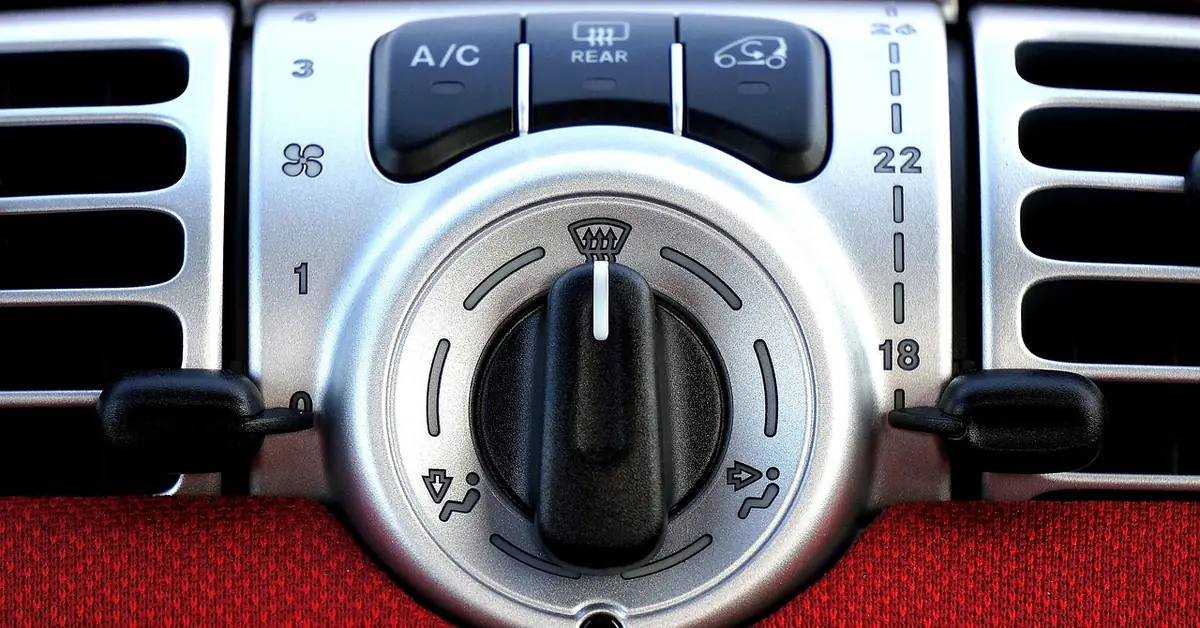
A car blower motor is the electric fan under your dashboard (usually on the passenger side) that pushes heated or cooled air through the vents. It’s a permanent-magnet motor that runs whenever the fan is on, regardless of whether you’ve selected heat, AC, or defrost. When it starts to fail, the symptoms are usually one of these:
- Weak or no airflow from every vent, even on the highest fan setting
- Grinding, rattling, or screeching noise coming from behind the dashboard when the fan runs
- The fan only runs when you tap the dash — a sign of worn motor brushes or a loose connection
- A burning smell or smoke from the vents, which usually means the motor windings are failing
- The fan works on some speeds but not others — this is more often the blower motor resistor, covered below, not the motor itself
Not every noise means a dead motor. Leaves, dust, or small debris can get lodged in the blower fan cage and cause the same rattling sound as worn motor bearings — pull the cabin air filter and check the fan cage for debris before buying a replacement part.
Blower Motor vs. Blower Motor Resistor: Which One Actually Failed?
A blower motor resistor is a small electrical component that controls fan speed by limiting the current sent to the motor — it is not the fan itself. On many vehicles, each fan speed setting routes power through a different resistor path, so a resistor failure knocks out specific speeds while a motor failure knocks out all of them. Confusing the two is the single most common mistake buyers make, and it’s an easy one to avoid with a quick test.
| Symptom | Blower Motor Failure | Resistor Failure |
|---|---|---|
| Fan speed pattern | Doesn’t run on any speed, or runs weakly on all speeds | Works on one speed only — usually just high |
| Sound | Grinding, rattling, or screeching from behind the dash | Usually silent — the fan just stops responding |
| Typical part cost | $50–$250+ | $15–$40 |
| DIY difficulty | Moderate (30–90 min; dash access varies by model) | Easy (10–20 min on most vehicles) |
If the fan only works on high, is it the motor or the resistor? On most vehicles, high-speed fan operation bypasses the resistor entirely and sends full battery voltage straight to the motor. So if high still works but low, medium-low, and medium don’t, the resistor — not the motor — is almost always the failed part.
Best Car Blower Motor Picks (OEM & Aftermarket)
Once you’ve confirmed it’s the motor and not the resistor, fitment is the next thing that matters most — a blower motor that doesn’t match your vehicle’s flange, rotation direction, and connector won’t work even if it’s a “universal” listing. These three cover the most common buying scenarios: exact OEM match, broad aftermarket compatibility, and budget-friendly coverage for older GM and Isuzu models.
Best Car Blower Motor Pick
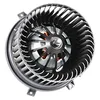
ACDelco GM Original Equipment 15-81881 HVAC Blower Motor With Wheel
Genuine GM Parts blower motor built to the same spec as the factory-installed unit — the safest choice when you want zero fitment guesswork on a compatible GM vehicle.
- Best for: GM owners who want exact factory fit and performance
- Why we picked it: Built under GM’s OEM program, so housing dimensions, blower wheel, and connector match the original part on a correctly matched application — no adapter wiring needed
- Main drawback: Costs more than aftermarket options and only fits GM-brand vehicles
Compare more car blower motor options
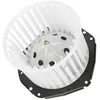
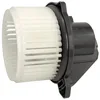 Option 1 Four Seasons 75743 Flanged Vented CCW Blower Motor
|
 Option 2 MAYASAF 700092 HVAC Blower Motor Assembly
|
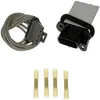 Option 3 Dorman 973-582 Blower Motor Resistor Kit
|
As an Amazon Associate we earn from qualifying purchases.
ACDelco GM Original Equipment 15-81881 — Factory Match for GM Vehicles
ACDelco builds this blower motor to GM’s original engineering spec, which is why it’s the safest bet when you want to rule out fitment or performance guesswork on a GM-brand vehicle. Because it ships under GM’s own OEM parts program, the blower wheel, motor housing dimensions, and electrical connector are engineered to match what came out of the factory — no adapter wiring or bracket modification needed on a correctly matched application.
Four Seasons 75743 — Trusted Mid-Range Aftermarket
Four Seasons has been making HVAC parts for decades, and this flanged, vented, counter-clockwise (CCW) blower motor ships with the wheel already attached. Per the manufacturer’s own listed specs, the windings and magnetic properties are built to meet or exceed OEM performance, and motor RPM is rated equivalent to or above the original unit — worth checking against your vehicle’s specific rotation and flange requirements before ordering, since Four Seasons sells multiple variants for different platforms.
MAYASAF 700092 — Budget Pick for Older GM & Isuzu Models
This assembly is named-fit for a specific list of older GM-family vehicles: 1996–2005 Chevy Astro, 1995–2002 Blazer, 1994–2004 S10, 1986–1996 Corvette, 1989–1992 Camaro, 1996–2005 GMC Safari, 1994–2004 Sonoma, 1995–1997 Jimmy, 1996–1997 Olds Bravada, 1989–1992 Pontiac Firebird, 1988–1990 Buick Electra and LeSabre, and 1996–2000 Isuzu Hombre. It’s backed by a 3-year replacement guarantee from the seller, which offsets some of the risk of buying a budget aftermarket part.
How Much Does It Cost to Replace a Car Blower Motor?
📊 A professional shop replacement typically runs $250–$450 total — parts alone range from about $50 for economy aftermarket motors to $250+ for OEM units, with labor at $90–$320 for a typical 1–2 hour job. Some vehicles with dash-mounted blower motors (common on certain European models) can push total cost past $900. — Source: RepairPal blower motor replacement cost estimator, 2026
Doing it yourself cuts the cost down to just the part price, since the swap itself typically takes 30–90 minutes on vehicles with reasonable dash access. The table below breaks down where the savings actually come from.
| Cost Factor | DIY | Professional Shop |
|---|---|---|
| Parts | $50–$250+ (your choice of economy or OEM) | Same part range, sometimes with a shop markup |
| Labor | $0 — your own time | $90–$320 (1–2 hours typical) |
| Total | Part price only | $250–$450 typical; $600–$900+ on hard-to-access or luxury models |
| Time | 30–90 minutes | 1–2 hours (up to 4+ on dash-mounted units) |
How to Replace a Car Blower Motor (Quick DIY Overview)
Most blower motors are held in by a handful of screws and a single electrical connector, which is why this is considered an intermediate — not advanced — DIY job on most vehicles. The steps below are a general overview; always check your specific make and model, since dash-mounted units on some vehicles require removing trim panels or the glovebox first.
- Confirm it’s the motor, not the resistor: Test every fan speed first — if only one speed works, replace the $15–$40 resistor before buying a motor.
- Locate the blower motor: Look under the dashboard on the passenger side, behind the glovebox, or in some cases on the engine-bay side of the firewall.
- Disconnect the battery, then the motor’s wiring harness: Pull the negative battery terminal first, then unplug the blower motor’s electrical connector to avoid a short.
- Remove the mounting screws and swap the motor: Most units use 3–4 screws; pull the old motor straight out and set the new one in the same orientation before securing it.
- Reconnect everything and test all four fan speeds: Plug the harness back in, reconnect the battery, and run the blower through every speed setting before closing the dash back up.
“Weak airflow or no airflow from the vents is a common sign of a worn-out blower motor. An issue with the blower motor assembly, such as wear to the bearing or other internal components, can result in an abnormal whirring or rattling noise.”
For a deeper look at where the blower motor fits in your vehicle’s broader system, see our car A/C system diagram, or read more on what a blower does on a car. If your issue is warm air instead of weak airflow, that’s usually a different problem — see how to fix a car heater blowing cold air.
Frequently Asked Questions
What are the symptoms of a bad car blower motor?
The most common symptoms are weak or no airflow from every vent, a grinding or rattling noise from behind the dashboard, or a fan that only runs when you tap the dash. A burning smell from the vents usually means the motor’s windings are failing and it needs immediate replacement.
How much does it cost to replace a car blower motor?
A professional shop typically charges $250–$450 total, including $50–$250+ for the part and $90–$320 for 1–2 hours of labor. DIY replacement cuts the cost down to just the part price, usually $50–$250 depending on whether you choose an economy aftermarket or OEM motor.
Can I replace a car blower motor myself?
Yes, on most vehicles it’s an intermediate DIY job that takes 30–90 minutes with basic hand tools — the motor is usually held in by a few screws and one electrical connector. Some vehicles, particularly certain European models, require removing dashboard trim or the glovebox first, which adds time and difficulty.
What’s the difference between a blower motor and a blower motor resistor?
The blower motor is the actual electric fan that pushes air through the vents. The resistor is a separate, smaller electrical component that limits current to control fan speed on many vehicles. A resistor failure knocks out specific fan speeds; a motor failure knocks out airflow entirely, regardless of the speed selected.
If the fan only works on high, is it the motor or the resistor?
It’s almost always the resistor. On most vehicles, high-speed fan operation sends full battery voltage straight to the motor, bypassing the resistor entirely. If high still works but the other speeds don’t, replace the $15–$40 resistor before spending more on a new motor.
Can a dirty cabin air filter cause blower motor problems?
A clogged cabin air filter can restrict airflow and make a healthy blower motor sound like it’s struggling, and debris caught in the blower fan cage can cause the same rattling noise as worn motor bearings. Check and replace the cabin air filter and clear any debris from the fan cage before assuming the motor itself has failed.
Conclusion
The best car blower motor for you depends on your vehicle and your budget: the ACDelco 15-81881 is the safest OEM-match choice for GM vehicles, the Four Seasons 75743 covers broader aftermarket compatibility, and the MAYASAF 700092 is the budget pick for older Chevy, GMC, Buick, and Isuzu models. Before you buy any of them, confirm the fan doesn’t work on every speed the same way — if only one speed is out, a $20–$30 resistor is very likely the real fix.
Products related to this article
Sponsored / affiliate links. As an Amazon Associate I earn from qualifying purchases. I may earn additional commission from eligible campaigns.