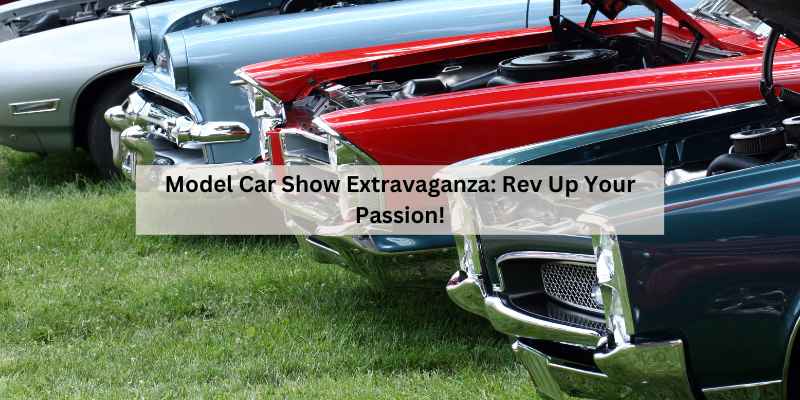
Model Car Show Guide: Entering, Judging, and Attending Like a Pro
You spend months on a build—sanding seams, polishing clear coat, getting the panel gaps just right. Then you walk into a model car show and see a table of 200 entries, each one looking better than the last. It’s exciting, but it’s also a little overwhelming. Where do you put your car? How does the judging actually work? And what’s the difference between a formal contest and a casual club gathering?
This guide covers all of that. You’ll learn the major show formats, a step-by-step entry process, a calendar of recurring regional events, spectator etiquette, and even how to organize your own show. Whether you’re a first-timer with a glue-bomb in a shoebox or a seasoned modeler with a cabinet full of trophies, there’s something here you didn’t know.

One quick note before we dig in: if you’re bringing a finished model to display, you’ll want a way to protect it on the drive and on the table. A clear acrylic case like the Greenlight 1:24 display case keeps dust off your paint and stops curious fingers from leaving smudges. It’s a small investment that pays off every time you transport a build.
What is a Model Car Show? (And How It Differs from a Contest)
People use the terms interchangeably, but they’re not the same thing. A model car show is an event where modelers gather to display their work. A contest is a specific type of show where entries are judged against a set of criteria. Most shows include a contest component, but not all of them do.
Some shows are pure display. You bring your car, put it on a table, and talk to people about how you built it. No winners, no losers, just a room full of people who appreciate the hobby. These are often called “show and shine” events or club gatherings.
Other shows are judged competitions. Entries are grouped into categories, a panel of judges evaluates each model, and awards are given at the end of the day. The stakes can feel high if you’ve never entered before, but the atmosphere is usually supportive. Modelers want to see good work, and they’ll often give you tips on the spot.
The biggest distinction comes down to the judging philosophy. A judged contest rewards technical accuracy and cleanliness. A casual show rewards creativity and personal expression. Knowing which one you’re entering changes how you prepare.
Major Show Formats: IPMS vs. NNL vs. Local Club Shows
If you search for model car shows online, you’ll see three acronyms over and over: IPMS, NNL, and NNL East. They represent three different approaches to the hobby, and understanding them will save you from showing up to the wrong kind of event.
IPMS Judged Competition
The International Plastic Modelers Society (IPMS) runs the most formal contest structure in the hobby. Their shows use a detailed judging system where each entry is scored on construction, paint, and accuracy against the real vehicle. Judges are trained, and the rules are published in advance.
IPMS contests categorize entries by scale, subject, and skill level. A beginner building a box-stock ’69 Camaro won’t compete directly against a master builder with a fully scratch-built dragster. That’s a good thing—it means you’re judged against people at your own level.
The downside? IPMS judging can feel rigid. If you modified a car in a way that’s not historically accurate, you might lose points even if the work looks incredible. That’s the trade-off for a fair, consistent competition.
NNL (Non-National League) Shows
NNL stands for Non-National League, and it started in the 1970s as a reaction to the strict rules of national contests. The philosophy is simple: no judges, no winners, no losers. Every model is a winner, and the event is about sharing ideas rather than competing.
At an NNL show, you set your car on the table and walk around. People look at your work, ask questions, and offer feedback. Some NNL events do have people’s choice awards where attendees vote for their favorite builds, but there’s no formal scoring system.
NNL shows are the best place to bring a wild custom build. If you chopped the roof, sectioned the body, and swapped in an engine from a different kit, you’ll get appreciation here. An IPMS judge might mark you down for inaccuracy, but an NNL crowd will celebrate the creativity.
Local Club Shows
Most cities have a model car club that hosts an annual show. These events blend the two formats. You’ll often find a judged contest alongside a swap meet, vendor tables, and a display area for non-competitive builds.
Club shows are the most accessible entry point for beginners. The entry fees are lower, the categories are broader, and the judging is usually more forgiving. You’ll also meet the people who run the local hobby shop and the regulars who’ve been building for decades.
One thing to watch: club shows vary wildly in quality. Some are professional operations with 500 entries and national sponsors. Others are a few folding tables in a church basement. Check the event’s social media page before you drive two hours.
How to Enter Your Model Car: A Step-by-Step Guide
Entering your first contest feels intimidating, but the process is straightforward once you know the steps. Here’s exactly what to expect, from registration to the awards ceremony.
- Find the show and read the rules. Every event publishes a show flyer or webpage with entry categories, fees, and check-in times. Read it twice. Note whether the show is IPMS judged or NNL style, because that changes your strategy.
- Register in advance if possible. Many shows offer online pre-registration at a discounted entry fee. Walk-in registration is usually available, but you’ll pay more and wait in line. Pre-registering also guarantees you a spot if the show caps entries.
- Prepare your model for transport. This is where a sturdy display case matters. Wrap the model in a soft cloth, place it in a box with padding, and drive carefully. A 1:24 model car is fragile—a single pothole can snap an antenna or crack a windshield.
- Arrive early on show day. Check-in typically opens one to two hours before the show opens to the public. You’ll fill out an entry form, pay your fee, and receive a number. Write your name and contact info on the bottom of your model or the entry tag.
- Place your model in the correct category. The registration table will direct you to a specific table or section. Don’t worry if you’re not sure which category fits—the staff will help you. If your model qualifies for multiple categories, choose one and stick with it.
- Leave your model and step away. Once your car is on the table, don’t touch it until judging is complete. Touching your model during judging can result in disqualification. Use the time to walk the vendor area and talk to other modelers.
- Return for the awards ceremony. Most shows hold awards in the afternoon. If you win, you’ll be called up to receive a trophy or plaque. If you don’t win, don’t take it personally—judging is subjective, and there’s always next year.
One piece of advice that took me years to learn: bring a second model. Even if you only planned to enter one, a backup gives you something to do during the judging period and doubles your chances of a trophy. Just make sure it’s clean and dust-free before you register it.
Top Model Car Shows to Attend This Year (Regional Calendar)
The hobby has a strong regional circuit. Here are some of the most established recurring shows, organized by region. Dates change every year, so always check the organizing club’s website before making travel plans.
East Coast Highlights
NNL East is the biggest model car show on the East Coast, held annually in New Jersey. It’s an NNL-style event, which means no judging—just hundreds of incredible builds spread across a massive vendor floor. If you can only attend one show each year, this is the one.
Other East Coast standouts include the IPMS Region 1 show (rotating location) and the Mid-Atlantic Model Car Show in Maryland. Both feature judged competition and a strong swap meet presence. The IPMS show is more formal, while the Mid-Atlantic event leans casual.
Midwest & West Coast Highlights
The Midwest has the Model Car Show and Swap Meet in Kansas City, hosted by the Kansas City Model Car Club. It’s a classic club show with a judged contest, vendor tables, and a lively crowd. The Chicago area also hosts several smaller shows throughout the year, often tied to local hobby shops.
On the West Coast, the big one is the NNL West show in California. It follows the same no-judging philosophy as NNL East but has its own West Coast flavor. The Southern California Model Car Club also hosts regular events in the Los Angeles area.
For a full list of upcoming events, check the model car shows calendar on this site. It’s updated regularly with dates and locations.
Spectator’s Guide: What to Expect and How to Enjoy the Show
You don’t have to enter a model to enjoy a model car show. Many attendees come just to look, buy parts, and meet people. Here’s how to make the most of your visit.
Bring cash. Many vendors at swap meets don’t accept cards. You’ll find everything from unopened vintage kits to boxes of spare parts, and the best deals go to people who can pay on the spot. Bring small bills—vendors rarely have change for a $100 bill.
Ask before taking photos. Most modelers are happy to have their work photographed, but it’s common courtesy to ask first. Some builders are working on unreleased projects or prototypes and don’t want pictures online. A quick “mind if I snap a photo?” goes a long way.
Don’t touch the models. This should go without saying, but it happens at every show. Models on display are not toys. They’re the result of hundreds of hours of work. Keep your hands behind your back if you’re prone to reaching out.
Talk to the builders. The best part of any show is the conversation. Ask about the build process, the kit, or the paint. Most modelers love explaining their techniques, and you’ll learn more in five minutes of conversation than in an hour of reading forums.
Buy from vendors with a plan. It’s easy to blow your budget on impulse buys. Make a list of what you need before you walk in—specific paint colors, a particular kit, or a new airbrush—and stick to it. The swap meet is also a great place to find discontinued kits at reasonable prices.
How to Start Your Own Model Car Show
If there’s no show in your area, start one. It’s more work than you’d think, but it’s also one of the most rewarding things you can do for the hobby. Here’s the realistic path.
Find a venue. Your first show doesn’t need to be fancy. A VFW hall, a community center, or a large church basement all work. Look for a space with tables, decent lighting, and parking. You’ll need about 20 tables for a small show, and you can scale up from there.
Partner with a local hobby shop. A local hobby shop gives you credibility and a built-in audience. Many shops will co-host a show, provide prize support, or help with promotion. They also have the mailing list you don’t have yet.
Set a date and publish the details. Pick a weekend that doesn’t conflict with a major regional show. Publish the date, location, entry fee, and schedule at least three months in advance. Modelers plan their calendars around shows, so early notice matters.
Recruit volunteers. You cannot run a show by yourself. You need people at the registration table, people to direct parking, and people to help with the awards ceremony. Recruit from your local club or online community. Offer free entry or a small stipend as a thank-you.
Find sponsors. Start with local businesses—the hobby shop, a paint manufacturer, a tool company. Offer them a vendor table or a banner in exchange for prize support. Many companies will donate product for the awards, which keeps your costs down.
Promote relentlessly. Post on Facebook groups, model car forums, and Instagram. Send the event details to the IPMS local chapter. Ask your hobby shop to put up a flyer. The more eyes you get, the better your attendance.
One honest warning: your first show will have problems. The venue will be too cold, the registration line will be slow, and someone will complain about the judging. That’s normal. Every show organizer learns by doing, and your second show will be better than your first.
Frequently Asked Questions About Model Car Shows
Do I need to be a member of IPMS to enter a contest?
Most IPMS shows allow non-members to enter, but they charge a higher entry fee. Membership gets you a discount and is worth it if you plan to attend multiple shows per year. Check the specific show’s rules, as some smaller events require membership.
Can I enter a model that’s already won an award at another show?
It depends on the show. Some events have a “previously awarded” rule that disqualifies models that have won at other contests. Others don’t care. Read the entry rules carefully. If you’re unsure, contact the show organizer and ask.
What’s the difference between a contest entry and a display-only entry?
A contest entry is judged and eligible for awards. A display-only entry is just for show—you put your model on a table and leave it. Display-only is a good option if you’re not ready for judging or if your model doesn’t fit any category.
How do I transport a model car without damaging it?
Use a display case with a solid base for short trips. For longer trips, wrap the entire case in a soft towel and place it in a sturdy box. Never leave a model loose in a car seat—it will slide and break. If you’re flying, carry it on if you can.
Are model car shows family-friendly?
Yes, most shows welcome families. Kids are often fascinated by the detailed builds, and many shows have a junior category for young modelers. Just keep an eye on little ones near the display tables—they may not understand why they can’t touch the cars.
What to Do With Everything You’ve Learned
- Know the format before you go—IPMS contests are judged, NNL shows are not, and club shows vary.
- Pre-register for shows to save money and guarantee your spot.
- Transport your model in a rigid display case with padding, not loose in a bag.
- Arrive early on show day to avoid the registration rush.
- Ask permission before photographing another builder’s work.
- Bring cash to the swap meet—most vendors don’t take cards.
- Start small if you want to host your own show—a VFW hall and a few tables is enough to begin.
The model car show scene is one of the friendliest corners of the hobby. You’ll meet people who’ve been building for fifty years and kids just starting out, all sharing the same passion. Pick a show, prep your build, and go. You won’t regret it.
And if you’re still deciding between a judged contest and a casual gathering, remember this: IPMS will tell you how good your model is, but an NNL show will tell you how much people enjoy it. Both are worth your time.
Products related to this article
Sponsored / affiliate links. As an Amazon Associate I earn from qualifying purchases. I may earn additional commission from eligible campaigns.