How to Find Out What Cylinder Your Car Is
Many people wonder about their car’s engine, especially when it comes to the number of cylinders. It’s not always obvious, and for folks just starting with car knowledge, finding out How to Find Out What Cylinder Your Car Is can seem a bit tricky. But don’t worry!
It’s actually pretty straightforward once you know where to look. We’ll walk you through some easy ways to get this information so you can feel more confident about your vehicle.
Understanding Your Car’s Engine Cylinders
What Are Engine Cylinders?
Think of engine cylinders as the heart of your car. They are the chambers inside the engine where fuel and air mix, ignite, and create the power that makes your car move. When the fuel ignites, it pushes a piston up and down.
This movement is what ultimately turns the wheels.
The number of cylinders your car has is a key part of its engine design. More cylinders generally mean more power and a smoother ride, but also can mean less fuel efficiency. Common cylinder counts include 4, 6, and 8, though some cars have more or fewer.
Why Does the Number of Cylinders Matter?
Knowing your car’s cylinder count can be helpful for several reasons. It affects how your engine performs, its fuel economy, and even how it sounds. When you’re looking up parts, troubleshooting a problem, or just want to know more about your vehicle, this information is often needed.
For instance, if you’re buying spark plugs or considering an upgrade, the cylinder number is essential.
Many car owners might not immediately know this detail. It’s not something you see on the dashboard every day. However, finding this information is usually quite simple, and knowing it can make you a more informed driver and owner.

Simple Ways To Find Out Your Car’s Cylinder Count
1. Check Your Owner’s Manual
The most reliable place to find out How to Find Out What Cylinder Your Car Is is in your car’s owner’s manual. Most manuals have a section dedicated to the vehicle’s specifications. This is usually found in the back of the book, often in a section labeled “Specifications” or “Technical Data.”
Look for details about the engine. You should find information like engine displacement (often in liters or cubic inches), horsepower, torque, and, importantly, the number of cylinders. It will clearly state if your car has a 4-cylinder, 6-cylinder, or V8 engine, for example.
If you don’t have the physical manual anymore, don’t worry. Most car manufacturers offer digital versions of their owner’s manuals on their official websites. You’ll usually need to enter your car’s make, model, and year to find the correct manual.
2. Look Under the Hood
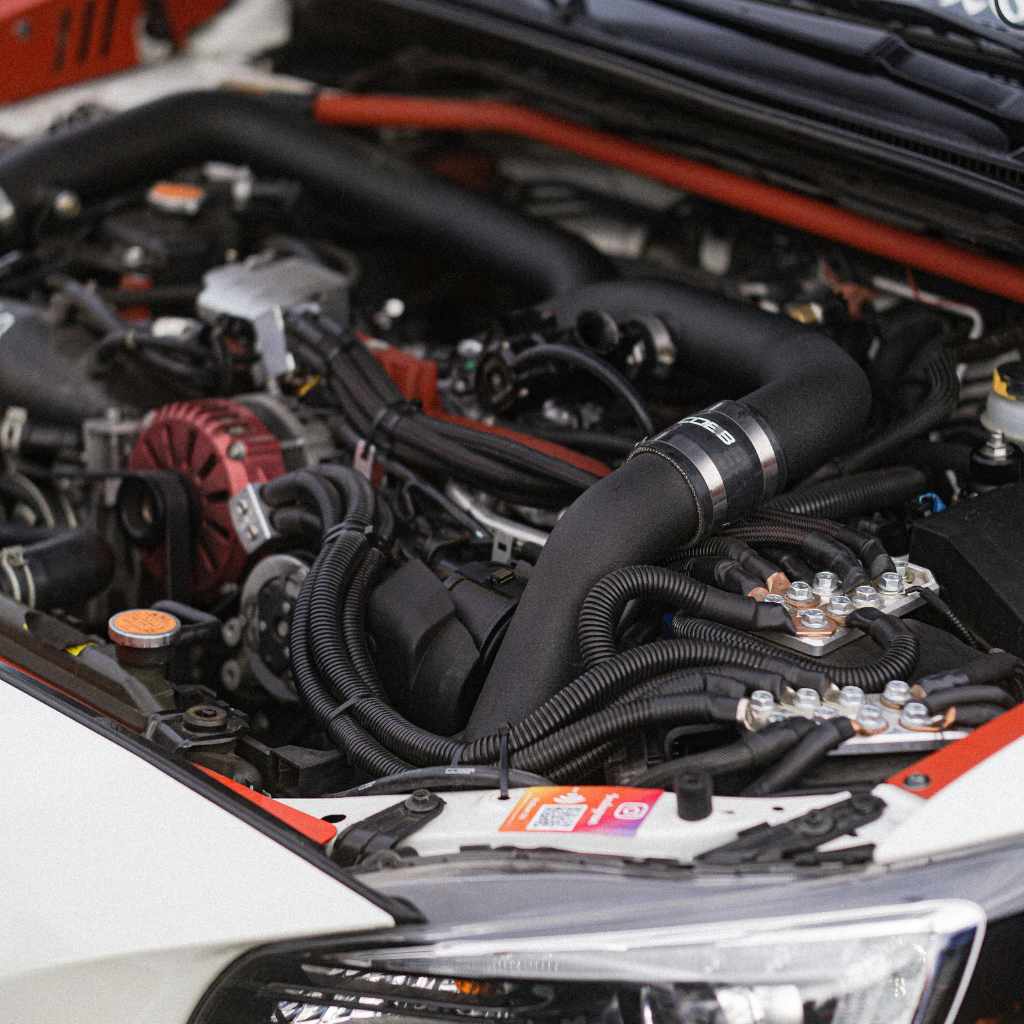
Often, the engine itself will give you clues about its cylinder count. Many engines have a decorative cover, especially on the top. This cover frequently has the engine size or configuration printed on it.
For example, a car with a V8 engine might have a cover that says “V8” or “5.0L V8” (indicating a 5.0-liter V8 engine). A straight-six engine might be labeled as such. Keep in mind that not all engines have these prominent labels, and some covers might be very plain.
When you open the hood, take a moment to look around the engine. See if there are any stickers or plates that mention engine specifications. Sometimes, you’ll find information near the air filter box or on the valve covers.
3. Consult Your Vehicle Identification Number (VIN) Decoder
Your car’s VIN is a unique 17-character code that identifies your specific vehicle. It contains a wealth of information about your car, including its engine type. You can use online VIN decoders to find out details like the number of cylinders.
You can find your VIN in a few places:
- On the driver’s side dashboard, visible through the windshield.
- On the driver’s side door jamb.
- On your insurance documents or vehicle registration.
Once you have your VIN, search for “VIN decoder” online. There are many free services available. Enter your VIN, and the decoder will provide a report that often includes the engine size and cylinder configuration.
It’s important to use a reputable VIN decoder. While most are accurate, some might provide more detailed information than others. This method is a very effective way to confirm your car’s exact specifications.
4. Check Your Vehicle’s Registration or Insurance Card
Your car’s registration card and insurance documents are official records of your vehicle. They typically list key details, including the engine size and sometimes the cylinder count. Look through the listed specifications on these documents.
These are official papers, so the information is usually accurate. It’s a quick way to get the data without having to get under the hood or search through manuals. If you have these documents handy, it’s worth a quick check.
5. Online Vehicle Specification Databases
Beyond VIN decoders, there are many automotive websites that maintain databases of vehicle specifications. These sites allow you to look up your car’s details by make, model, and year.
Simply go to a reputable automotive information website and use their search function. Enter your car’s make, model, and the specific year it was manufactured. The resulting page will usually list engine options available for that model and year, including cylinder counts.
This is a great resource if you don’t have your owner’s manual or VIN handy.
Some popular sites include Edmunds, Kelley Blue Book (KBB), and even general automotive forums where enthusiasts share detailed information.
6. Observe Engine Sounds and Performance (Less Reliable)
While not a definitive method, the sound and feel of an engine can sometimes hint at its cylinder count. For instance, V8 engines often have a deeper, more powerful exhaust note than a 4-cylinder engine. Cars with more cylinders generally feel more powerful and accelerate more smoothly.
However, this is highly subjective and can be misleading. Engine modifications, exhaust systems, and even the car’s overall design can affect sound and perceived performance. Therefore, this method should only be used as a secondary, non-confirming observation.
Common Engine Configurations and What They Mean
4-Cylinder Engines
Four-cylinder engines are very common, especially in smaller to mid-sized cars and economy vehicles. They are known for their good fuel efficiency and are generally less expensive to manufacture and maintain.
Pros:
- Excellent fuel economy
- Lower initial cost
- Compact size, taking up less space in the engine bay
- Generally lower emissions
Cons:
- Less horsepower and torque compared to engines with more cylinders
- Can feel less smooth or powerful, especially during acceleration
- May produce more vibration
You’ll find 4-cylinder engines in a wide range of vehicles, from compact sedans and hatchbacks to smaller SUVs.
6-Cylinder Engines
Six-cylinder engines offer a good balance between power and fuel efficiency. They are often found in mid-sized sedans, larger SUVs, and some sports cars. They provide more power than 4-cylinder engines but are usually more fuel-efficient than 8-cylinder engines.
6-cylinder engines come in different configurations:
- Inline-6 (or Straight-6): The cylinders are arranged in a single straight line. These are known for their inherent smoothness and balance.
- V6: The cylinders are arranged in two banks of three, forming a “V” shape. This configuration is more compact than an inline-6, making it easier to fit into engine bays.
Pros:
- Good power and acceleration
- Smoother operation than most 4-cylinder engines
- Reasonable fuel efficiency, especially compared to V8s
Cons:
- Less fuel-efficient than 4-cylinder engines
- Can be more complex and expensive to maintain than 4-cylinder engines
8-Cylinder Engines (V8)
Eight-cylinder engines, almost exclusively in a V configuration (V8), are the choice for most performance-oriented vehicles, trucks, and larger SUVs. They produce significant power and torque, making them ideal for towing and heavy-duty use.
Pros:
- High horsepower and torque
- Smooth operation and powerful acceleration
- Excellent for towing and hauling
Cons:
- Poor fuel economy
- Larger and heavier than engines with fewer cylinders
- More expensive to buy, operate, and maintain
- Higher emissions
The distinctive rumble of a V8 is often associated with muscle cars and performance vehicles.
Other Cylinder Configurations
While 4, 6, and 8 cylinders are the most common, other configurations exist. You might encounter:
- 3-Cylinder Engines: Increasingly found in very small, fuel-efficient cars. They are an evolution of the 4-cylinder for maximum economy.
- 10-Cylinder (V10) and 12-Cylinder (V12) Engines: These are much rarer and found in high-performance exotic cars or specialized vehicles, offering extreme power.
- Rotary Engines: Some vehicles, like older Mazda RX-7 and RX-8 models, use rotary engines which have a different design altogether and don’t have traditional cylinders.
Common Car Makes and Their Typical Cylinder Counts
Here’s a general look at what you might find in some popular car makes. Keep in mind that most manufacturers offer various engine options for their models, so this is just a guideline.
| Car Make | Common Cylinder Counts | Notes |
|---|---|---|
| Toyota | 4-Cylinder, 6-Cylinder | Known for reliable 4-cylinders in sedans and SUVs. V6 options in larger models. |
| Honda | 4-Cylinder, 6-Cylinder | Famous for efficient 4-cylinders. V6 available in some Accord and Pilot models. |
| Ford | 4-Cylinder, 6-Cylinder, 8-Cylinder | Offers a wide range, from EcoBoost 4-cylinders to powerful V8s in trucks and performance cars. |
| Chevrolet | 4-Cylinder, 6-Cylinder, 8-Cylinder | Similar to Ford, with diverse options from fuel-efficient to robust V8s. |
| BMW | 4-Cylinder, 6-Cylinder, 8-Cylinder | Known for smooth inline-6 engines, but also offers potent 4-cylinders and V8s. |
| Mercedes-Benz | 4-Cylinder, 6-Cylinder, 8-Cylinder | Offers a range from efficient 4-cylinders to powerful V8s and even V12s in some luxury models. |
| Nissan | 4-Cylinder, 6-Cylinder | Commonly found with 4-cylinders in sedans and V6s in SUVs and sports cars. |
This table highlights the typical engine choices. For your specific vehicle, always refer to the methods mentioned earlier to confirm the exact cylinder count.
Frequently Asked Questions
Question: Is it hard to find out the cylinder count of my car?
Answer: No, it’s usually quite simple! The easiest ways are to check your owner’s manual, look for labels under the hood, or use your VIN on an online decoder.
Question: Can the number of cylinders affect my car’s fuel mileage?
Answer: Yes, absolutely. Generally, cars with fewer cylinders (like 4-cylinders) get better gas mileage than cars with more cylinders (like 6 or 8-cylinders).
Question: Where on the engine would I look for cylinder information?
Answer: Often, there’s a decorative engine cover on top of the engine that might have the engine size or cylinder count printed on it. Sometimes, there are stickers or plates elsewhere on the engine.
Question: Is a VIN decoder always accurate for finding cylinder count?
Answer: VIN decoders are very reliable for providing accurate vehicle specifications, including engine details. It’s one of the most precise ways to find this information.
Question: What if my car has an unusual engine type like a rotary?
Answer: If your car has an unusual engine like a rotary, it won’t have a traditional cylinder count. In this case, your owner’s manual or a VIN decoder would specify the engine type (e.g., “Rotary Engine”) rather than a cylinder number.
Final Thoughts
Knowing How to Find Out What Cylinder Your Car Is is a practical piece of knowledge for any car owner. Whether you are performing routine maintenance, troubleshooting a potential issue, or simply curious about your vehicle’s mechanics, this information is readily available. You can easily find it in your owner’s manual, on a sticker under the hood, or by using your VIN with an online decoder.
Even your car’s registration or insurance card might hold the answer. For those who prefer a digital approach, many automotive websites offer detailed specifications for virtually any car model. Remembering these simple methods will empower you with a better grasp of your car’s performance and needs.
Don’t hesitate to use these tools to become a more informed and confident car owner.