How to Fix a Dent in Lower Car Door Fast
Fixing a dent in your car door can seem tricky, especially if it’s near the bottom. Many people worry about making it worse or not getting it just right. This can be a common challenge for beginners.
But don’t worry, it’s often easier than you think! We will show you a simple way to handle it. Get ready to learn a step-by-step method that makes How to Fix a Dent in Lower Car Door Fast manageable for anyone.
Understanding Car Door Dents
Dents on the lower part of a car door are quite common. They often happen from things like shopping carts, road debris, or even minor parking bumps. These dents can be tricky because the metal in this area might be thicker or have supports behind it.
This can make them harder to push out than dents on a flat panel. Beginners might feel intimidated by the thought of repairing their car themselves. They may worry about paint damage or leaving the dent looking uneven.
This section will explore the common causes of these dents and why the lower door panel can be a unique challenge. We will also look at different types of dents you might find in this location. Knowing what you are dealing with is the first step to fixing it effectively.
We will explain the basic principles behind dent repair so you can feel more confident.
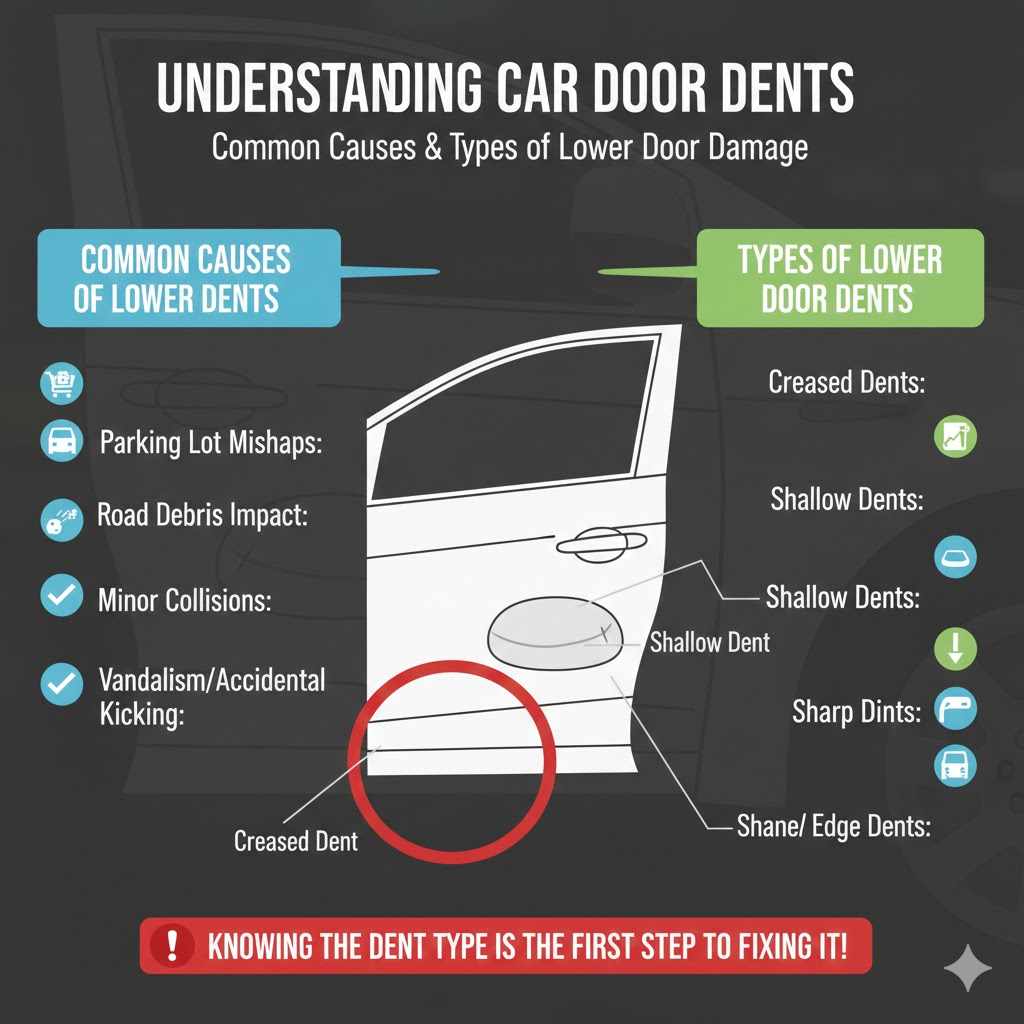
Common Causes of Lower Door Dents
Several everyday situations can lead to a dent in the lower part of your car door. These are usually accidental and can happen to anyone. Understanding these causes helps in preventing future damage.
- Parking Lot Mishaps: This is a big one. Shopping carts rolling away, car doors opening into yours, or even minor nudges from other vehicles in tight parking spaces are frequent culprits. The lower door panel is often at the right height to catch these impacts.
- Road Debris Impact: Driving over rough roads or construction areas can send small stones, gravel, or other objects flying. These can hit your car door with surprising force, causing small but noticeable dents.
- Minor Collisions: Even low-speed bumps, like backing into a bollard or a small object, can result in dents on the lower door. The impact area is often right at the bottom edge.
- Vandalism or Accidental Kicking: Though less common, sometimes dents can be caused by intentional damage or an accidental kick from a pedestrian or cyclist.
These impacts can create various types of dents. Some are simple creases, while others might be deeper impressions in the metal. The material of the door panel and any internal bracing can affect how the metal reacts to the impact and how easy it is to repair.
Types of Lower Door Dents
The way a dent looks can tell you a lot about how to fix it. Lower door dents can vary significantly in shape and depth, influencing the best repair method. Recognizing the type of dent is key to choosing the right tools and techniques.
- Creased Dents: These dents have sharp lines or creases running through them. They are often caused by sharp impacts. Creases are generally harder to remove perfectly because the metal is stretched and folded.
- Shallow Dents: These are more rounded and less sharp. They appear as a gentle push-in of the metal. Shallow dents are usually the easiest to fix with simple methods.
- Sharp Dents: These are deep, pointed dents. They can be challenging as the metal is significantly deformed. Sharp dents might require more advanced techniques or professional help.
- Panel Edge Dents: Dents located right on the curved edge of the door can be tricky. The metal here is often doubled up or has a different structure, making it less flexible.
The severity of the dent, its location on the lower panel, and whether the paint is damaged all play a role in the repair process. For a beginner, focusing on shallow to moderately shallow dents is often the best starting point.
Simple Methods to Fix Lower Door Dents Fast
You don’t always need expensive tools or a trip to the body shop to fix a dent. Several simple, DIY methods can be very effective, especially for shallow dents on lower car doors. These techniques are designed to be easy for beginners to try at home with readily available items.
The goal with these methods is to gently encourage the metal to pop back into its original shape. We’ll explore options that use common household items as well as inexpensive tools you can buy. These approaches aim to save you time and money while restoring your car’s appearance.
The Hot and Cold Method
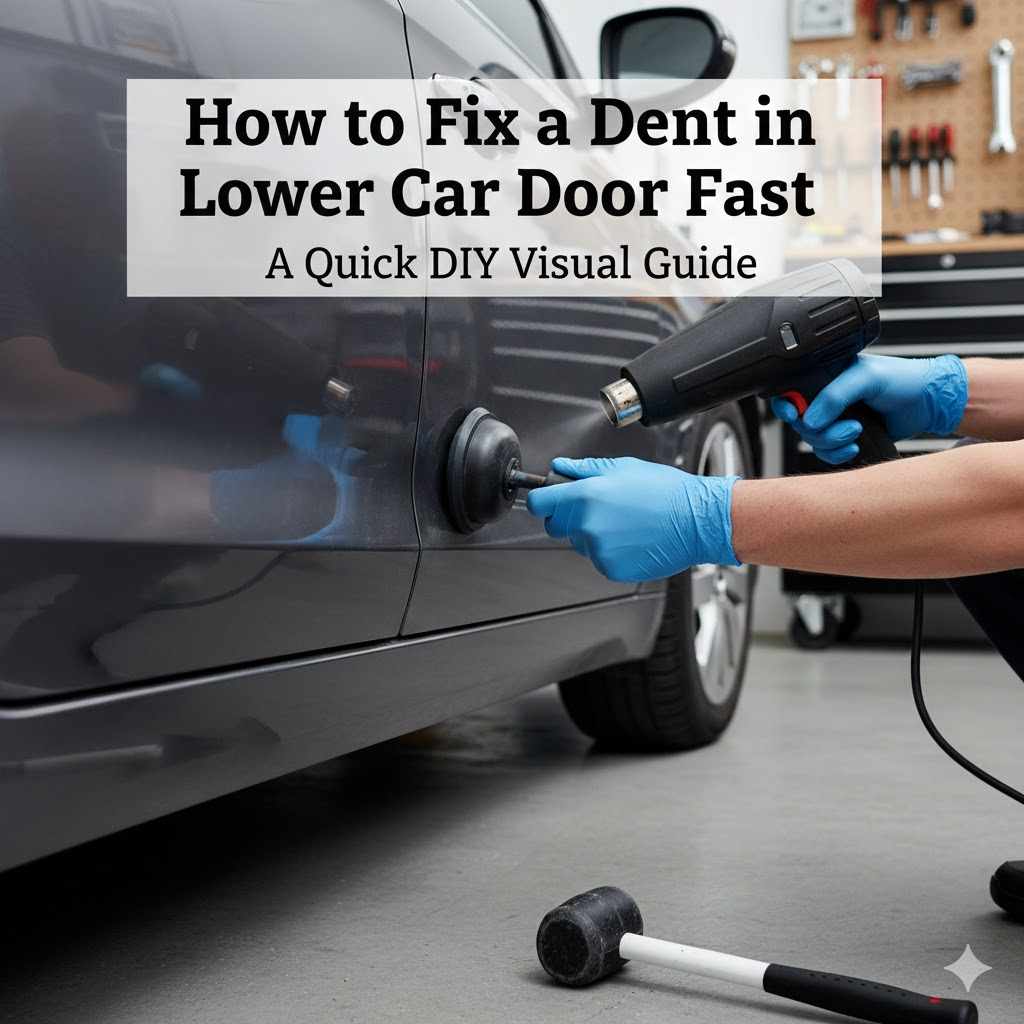
This method uses the principle that metal expands when heated and contracts when cooled. By rapidly changing the temperature of the dented area, you can sometimes cause the metal to pop back out. It’s a popular DIY technique for shallow dents.
- Materials Needed:
- Hair dryer or heat gun
- Compressed air can (held upside down)
- Clean cloth
How it Works:
- Clean the dented area thoroughly with a clean cloth. This ensures no dirt interferes with the process.
- Heat the dented area gently with a hair dryer or heat gun. Keep the heat source moving to avoid overheating any single spot, which could damage the paint. Apply heat for about one to two minutes.
- Immediately after heating, take a can of compressed air. Hold it upside down and spray the dented area for about 15-30 seconds. The rapid cooling causes the metal to contract quickly.
- Listen for a popping sound. Sometimes, the dent will pop back into place on its own.
This technique is best for dents that are not creased and where the paint is not cracked. The rapid temperature change can cause the metal to flex and return to its original form. It’s a safe method to try first for many minor dents.
A real-life example: Sarah had a small, shallow dent on her lower car door from a shopping cart. She tried the hot and cold method. After heating the area for a minute and then spraying it with compressed air, she heard a small pop, and the dent was gone.
She saved hundreds of dollars by avoiding a repair shop.
Using a Plunger
A simple suction cup, like a toilet plunger or a specialized car dent puller suction cup, can be surprisingly effective for larger, shallow dents. The suction creates a pull that can draw the metal outward.
- Materials Needed:
- Clean plunger (preferably a small, flat-faced one) or a dent puller suction cup
- Water
- Clean cloth
How it Works:
- Clean the dented area and the plunger cup thoroughly. Any debris can prevent a good seal.
- Slightly dampen the rim of the plunger cup with water. This helps create a better suction seal against the car’s surface.
- Press the plunger firmly onto the center of the dent, ensuring a good seal.
- Gently but firmly pull the plunger straight out. You may need to try this several times. If the dent moves slightly, try re-sealing and pulling again.
- If the dent doesn’t pop out completely, try applying a little more pressure or repositioning the plunger.
This method relies on creating enough vacuum pressure to lift the dented metal. It works best on smooth, relatively flat surfaces without sharp creases. For lower door dents, ensure the plunger can get a good grip on the surrounding metal.
A scenario: Imagine a car parked too close to another, and the door of the other car leaves a shallow imprint on your lower door panel. A clean sink plunger, dampened and applied firmly, could potentially pull that imprint out with a few tries.
The Dry Ice Method
Similar to the compressed air method, dry ice can be used to rapidly cool and contract the metal of a dent. This can cause the dent to pop out.
- Materials Needed:
- Dry ice
- Thick gloves (very important for handling dry ice)
- Clean cloth or towel
- Insulated container for dry ice
How it Works:
- Ensure the dented area is clean and dry.
- Put on your thick gloves. Dry ice is extremely cold and can cause frostbite.
- Place a piece of dry ice on the dent. You can wrap it in a thin cloth or towel to make it easier to handle and control the cooling process.
- Hold the dry ice on the dent for about one to two minutes, or until you hear a popping sound.
- Remove the dry ice and let the metal return to normal temperature.
This method requires careful handling due to the extreme cold of dry ice. It is most effective on shallow, rounded dents where the metal is not severely stretched or creased. The rapid contraction of the metal is what helps to pop the dent out.
Advanced Techniques for Stubborn Dents
When simpler methods don’t quite do the trick, especially for slightly deeper or creased dents, more advanced techniques can be employed. These methods often involve specialized tools designed to carefully manipulate the metal without damaging the paint.
These techniques require a bit more finesse and sometimes a small investment in tools, but they can still be done by a determined DIYer. The key is patience and a gentle approach to avoid making the dent worse.
Paintless Dent Repair (PDR) Tools
Paintless Dent Repair (PDR) is a professional technique that many DIYers can learn to do with the right tools. It involves using specialized rods and levers to push the dent out from the inside of the panel, or using glue tabs to pull it from the outside.
Pushing from the Inside
- Materials Needed:
- PDR rod set or similar tools
- PDR light (optional, but helpful for seeing the dent contours)
- Tap-down tools or hammers (for minor adjustments)
- Trim removal tools
How it Works:
- Access the back of the dented panel. This often involves removing interior door panels or access plugs.
- Use PDR rods to carefully apply pressure to the backside of the dent. Work slowly and methodically, gradually pushing the metal back into its original shape.
- Use a PDR light to observe the deformation and guide your movements. The goal is to smooth out the metal without over-pushing.
- Once the dent is mostly out, you might use tap-down tools to gently knock down any high spots that can occur as the metal is reshaped.
This method requires a good feel for the metal and patience. Over-pushing can create high spots or even crack the paint if done too aggressively. For lower door dents, access might be limited, making this technique more challenging.
Glue Pulling from the Outside
This is another PDR technique that doesn’t require access to the inside of the panel. It’s ideal for areas where you cannot easily reach the back of the dent.
- Materials Needed:
- Glue pulling kit (includes special glue, pull tabs, and a pulling tool like a slide hammer or bridge puller)
- Rubbing alcohol for cleaning
- Plastic scraper
- Tap-down tool
How it Works:
- Clean the dented area thoroughly with rubbing alcohol.
- Apply a small amount of PDR glue to the underside of a glue pull tab.
- Place the glued tab onto the center of the dent.
- Allow the glue to set for the recommended time (usually a few minutes).
- Attach the pulling tool to the tab.
- Slowly and steadily pull the dent outwards. You will likely need multiple pulls with progressively stronger pulls or by using a slide hammer.
- Once the dent is pulled out, use a plastic scraper to gently remove the tab and any glue residue.
- Use a tap-down tool to level any high spots.
Glue pulling is a popular DIY method because it doesn’t require taking the car apart. However, it’s crucial to use the right type of glue and pull tabs to avoid damaging the paint. The technique is very effective for medium-sized, shallow to moderately deep dents.
A case study: A car owner had a noticeable dent on the bottom of their passenger door after hitting a low curb. They purchased a PDR glue pulling kit. After carefully cleaning the area and applying a tab, they used the slide hammer.
With several pulls, the dent was significantly reduced, appearing almost unnoticeable. They then tapped down a slight high spot, leaving a much-improved finish.
Using Heat and Pressure Carefully
While the hot and cold method uses rapid temperature changes, this technique involves sustained heat and gentle pressure. It’s a more controlled approach than the quick hot/cold method and can be useful for slightly deeper dents where the metal might be a bit more stubborn.
- Materials Needed:
- Heat gun or powerful hair dryer
- Gloves (for handling warm metal)
- Soft cloth or rubber mallet (for gentle pressure)
How it Works:
- Clean the dented area.
- Gently heat the dented area with a heat gun, keeping it moving to avoid scorching the paint. Heat the surrounding metal as well.
- Once the metal is warm and pliable, use a soft cloth or the padded end of a rubber mallet to gently push or tap the dent outwards. Work from the edges of the dent towards the center.
- Apply steady, gentle pressure rather than forceful blows.
- You may need to reheat the area and repeat the process.
This method requires a good sense of touch and patience. The heat makes the metal more flexible, allowing you to carefully massage it back into shape. It’s important not to overheat the paint, as this can cause it to blister or discolor.
A sample scenario: Imagine a dent from a slight impact that has pushed the metal inwards but hasn’t created a sharp crease. Gently warming this area with a heat gun can make the metal softer. Then, using the heel of your hand (with a glove on) or a soft cloth, you can apply gentle, steady pressure to push the dent out slowly.
When to Call a Professional
While many dents can be fixed at home, some situations call for professional help. Knowing your limits is important to avoid causing more damage that could be costly to repair later. Professionals have specialized tools, extensive training, and experience that make them ideal for tougher jobs.
This section will help you identify when a dent is beyond the scope of DIY repair. It will also give you an idea of what to expect when you take your car to a professional dent repair service.
Identifying Difficult Dents
Certain types of dents are simply more challenging to fix, even for experienced DIYers. These often require precise tools and techniques that are hard to replicate at home.
- Deep, Sharp Creases: Dents with very sharp, defined creases are difficult because the metal is severely stretched and folded. Pushing these out perfectly without leaving evidence can be very hard.
- Dents on Body Lines or Edges: Dents that occur directly on a body line, a curve, or the edge of a panel are challenging. The metal in these areas is often reinforced or has a complex shape, making it less forgiving.
- Hail Damage and Multiple Dents: If your car has suffered extensive hail damage or has numerous small dents spread across the panel, a professional PDR technician can often address them more efficiently and effectively.
- Paint Damage: If the paint is cracked, chipped, or has started to peel due to the impact, DIY methods that rely on intact paint (like PDR) may not be suitable. The area will likely need traditional bodywork and repainting.
- Large Dents Covering Significant Area: Very large, shallow dents that cover a wide area of the door might be difficult to pull out evenly with simple tools. Professionals have specialized equipment to handle these.
If your dent falls into any of these categories, it’s usually best to seek professional assistance. Trying to force these types of dents out yourself could lead to high spots, paint damage, or an uneven finish that looks worse than the original dent.
The Benefits of Professional Dent Repair
Taking your car to a professional for dent repair, especially using Paintless Dent Repair (PDR) techniques, offers several advantages.
- Expertise and Experience: Professionals have years of experience and are trained to identify the exact cause and structure of a dent. They know how the metal will react and how to manipulate it without causing further damage.
- Specialized Tools: They possess a wide array of PDR rods, glue pulling systems, specialized lights, and other equipment that allows them to access and repair dents in ways that are not possible with common household items.
- Paint Preservation: PDR aims to restore the metal without disturbing the factory paint. This preserves your car’s original finish, which is important for its appearance and resale value.
- Speed and Efficiency: While DIY methods can take time and multiple attempts, professionals can often repair dents much faster due to their skill and equipment.
- Warranty and Guarantee: Many professional services offer warranties on their work, giving you peace of mind that the repair will be done correctly.
In 2022, the global Paintless Dent Repair market size was valued at approximately $2.5 billion and is projected to grow significantly. This indicates a strong demand for these specialized services, highlighting their effectiveness and value for consumers seeking to repair vehicle damage.
Maintaining Your Car’s Appearance
Once you’ve fixed a dent, or even if you’re just keeping an eye on your car’s condition, taking good care of its appearance is key. Regular maintenance can prevent minor issues from becoming major problems and helps keep your car looking its best.
This final part will touch on how to keep your car looking good after a repair and general tips for preventing future dents, ensuring your efforts to fix your car door look great for a long time.
Preventing Future Dents
The best way to deal with dents is to avoid them in the first place. While accidents happen, there are common-sense practices that can significantly reduce the risk of new dents on your lower car doors.
- Park Smart: Whenever possible, choose parking spots that offer more space around your car. Avoid parking close to other vehicles, especially in busy lots. Parking further away from entrances can often provide more room and fewer hazards.
- Be Aware of Your Surroundings: When opening your car doors, especially in tight spaces, always check for other vehicles, pedestrians, or obstacles that could cause damage.
- Consider Door Edge Guards: These are inexpensive strips that attach to the edge of your car doors. They can help prevent minor dings if your door accidentally bumps into something.
- Protect Against Debris: If you frequently drive on unpaved roads or in areas with construction, consider getting a clear protective film applied to the lower parts of your car doors.
By being mindful of these preventive measures, you can help preserve your car’s paint and bodywork, reducing the need for repairs.
Post-Repair Care
After successfully fixing a dent, it’s important to follow up with some simple care to ensure the repair lasts and the area looks seamless.
- Keep the Area Clean: Regularly wash and wax your car, paying attention to the repaired area. This helps protect the paint and the metal underneath.
- Monitor for Changes: Keep an eye on the repaired area over time. If you notice any new issues, like paint cracking or the dent reappearing, address it promptly.
- Avoid Harsh Cleaning Products: Stick to car-specific cleaning products. Harsh chemicals can degrade paint and protective coatings, potentially affecting your repair.
Taking these steps helps maintain the integrity of your repair and the overall look of your vehicle. A well-maintained car not only looks better but also holds its value longer.

Frequently Asked Questions
Question: Can I really fix a dent in my lower car door with simple household items?
Answer: Yes, for many shallow dents, simple methods using items like a hairdryer, compressed air, or a plunger can be very effective. These work by using temperature changes or suction to encourage the metal to pop back out.
Question: How do I know if a dent is too deep to fix myself?
Answer: If a dent has sharp creases, is very deep, or has damaged the paint (cracked or chipped), it’s usually best to call a professional. These types of dents are much harder to repair without specialized tools and expertise.
Question: Will the hot and cold method damage my car’s paint?
Answer: When done carefully, the hot and cold method is generally safe for paint. The key is to avoid overheating any single spot with the heat source and to use the compressed air only for a short duration. Overheating can damage the paint.
Question: What is Paintless Dent Repair (PDR)?
Answer: PDR is a method used by professionals and skilled DIYers to remove dents without affecting the car’s paint. It involves carefully pushing the dent out from the inside or pulling it from the outside using specialized tools and techniques.
Question: How long does it take to fix a dent using DIY methods?
Answer: For simple dents and easy methods, it might take anywhere from 15 minutes to an hour. More complex dents, or if you need to try a method multiple times, could take longer. Professional PDR is often quicker.
Summary
Fixing a dent in your lower car door fast is achievable for many common issues. We’ve covered simple home methods like using heat and cold or a plunger for shallow dents. For tougher dents, advanced techniques like PDR glue pulling can be effective.
Always assess the dent carefully and know when to call a professional for the best results.