
How to Fix a Powertrain Fault on a Ford Fusion Fast
Start with battery voltage and codes: if the Fusion cranks weakly or shows multiple module codes, fix low voltage or wiring first; if it has hard misfires, transmission slip, or a flashing CEL, stop driving and diagnose the affected system. Ignore the warning and you can strand the car, overheat the catalyst, or buy the wrong parts. This guide walks you through a symptom-first check of battery, scan codes, charging system, sensors, and transmission clues.
What does a powertrain fault mean on a Ford Fusion?
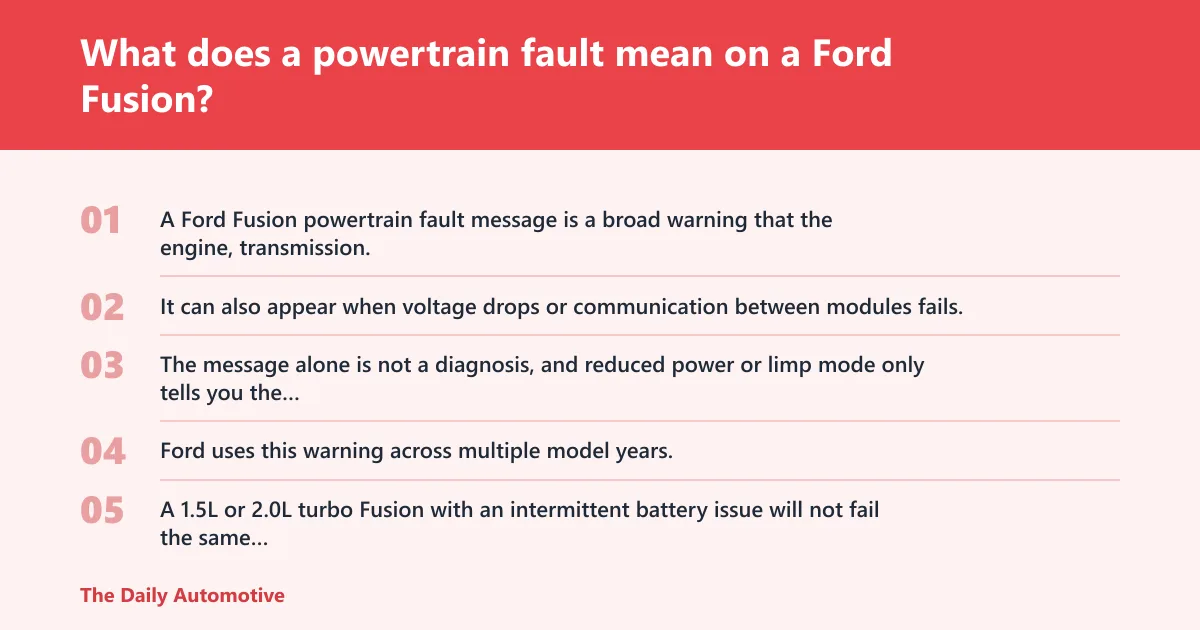


A Ford Fusion powertrain fault message is a broad warning that the engine, transmission, throttle control, or a related module has detected a problem. It can also appear when voltage drops or communication between modules fails. The message alone is not a diagnosis, and reduced power or limp mode only tells you the car is protecting itself.
Ford uses this warning across multiple model years, so the likely cause varies by engine and control architecture. A 1.5L or 2.0L turbo Fusion with an intermittent battery issue will not fail the same way as a V6 or hybrid with shift or module communication faults. That is why symptom pattern matters more than the dash message.
Common owner confusion starts here: a power steering assist fault is separate from a powertrain fault. They can appear together if voltage is low, but one does not prove the other.
What reduced power or limp mode tells you
Reduced power usually means the PCM has limited throttle opening, fuel delivery, or shift strategy to keep the car drivable. Limp mode is a clue, not a fix. If the engine idles rough, the transmission bangs into gear, or the check engine light flashes, the fault is active enough that continued driving can make the damage worse.
Can you drive a Ford Fusion with a powertrain fault message?
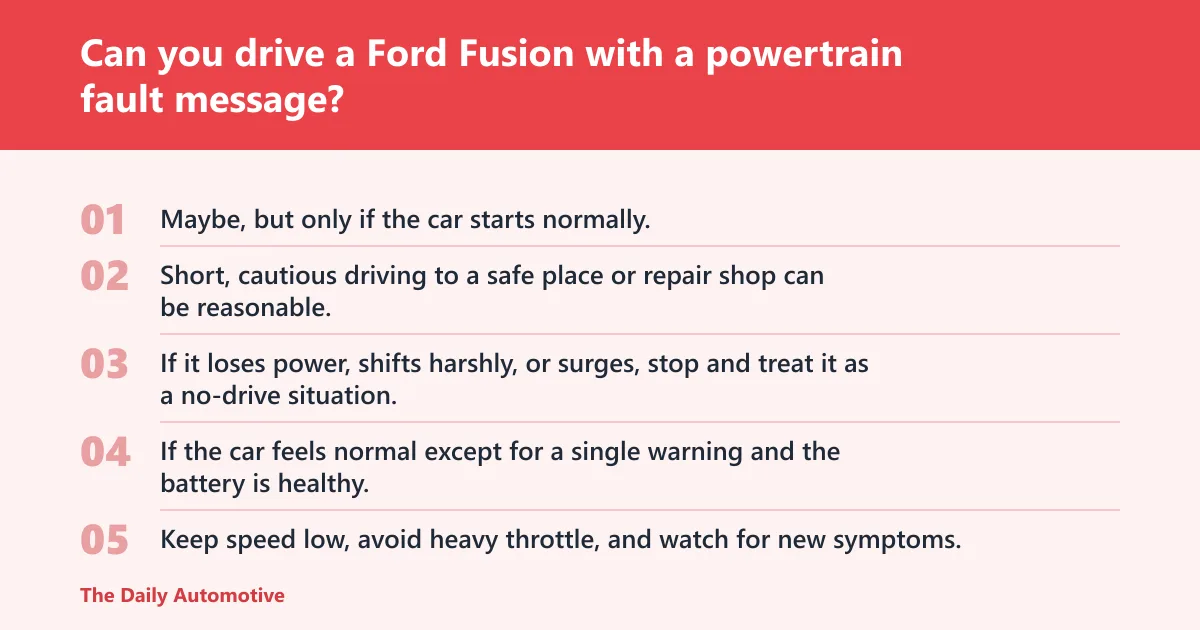
Maybe, but only if the car starts normally, the message is not paired with a flashing CEL, and the Fusion still accelerates and shifts smoothly. Short, cautious driving to a safe place or repair shop can be reasonable. If it loses power, shifts harshly, or surges, stop and treat it as a no-drive situation.
When to keep driving cautiously
If the car feels normal except for a single warning and the battery is healthy, you can usually drive a short distance while you gather codes. Keep speed low, avoid heavy throttle, and watch for new symptoms. A message that clears and returns with no drivability change often points to voltage or communication rather than a failed engine part.
When to stop and check for limp mode, misfire, or harsh shifting
Stop driving if the Fusion shakes under load, won’t upshift, slams into gear, or loses throttle response. Those symptoms suggest an active engine, transmission, or electronic throttle fault. A flashing check engine light often points to a serious misfire that may risk catalyst damage, so towing is usually safer than “seeing if it improves.”
When towing is the safer call
Tow the car if it will not accelerate normally, if the transmission stays in one gear, if the engine stalls repeatedly, or if multiple warning lights appear after a jump start or battery replacement. A tow is also the right call when a scanner shows major communication faults and the car will not stay running long enough for a basic check.
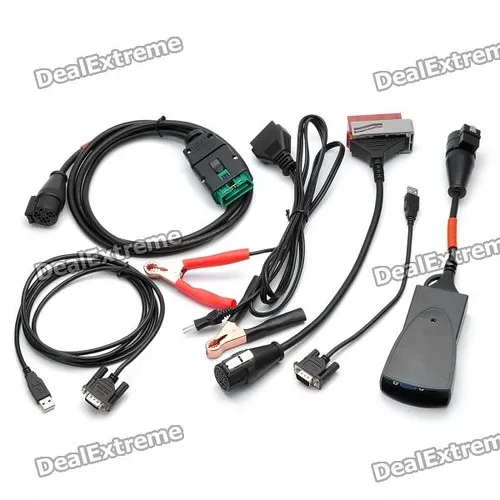
Read the codes before you buy parts
Scan for stored and pending diagnostic trouble codes before you replace anything. Those codes tell you whether the fault family is engine, transmission, throttle, communication, or voltage-related. Record the code numbers and freeze-frame data before clearing anything.
Sort codes by family
- Engine: misfire, fuel, air, throttle, or sensor codes such as P03xx, P01xx, or P02xx families.
- Transmission: shift, pressure, ratio, or solenoid codes such as P07xx families.
- Throttle control: accelerator pedal, throttle body, or air-throttle codes.
- Communication: U-codes often point to module network or wiring issues.
- Voltage: low-voltage or control-module undervoltage faults can create false warnings.
Why pending codes matter
Pending codes can sometimes catch an intermittent problem before it becomes a hard fault. If the Fusion warns once after a cold start, then drives fine for the rest of the trip, the code may point to a weak battery, a connector issue, or a sensor signal that drops out under load. That is better than guessing at a throttle body.
For repair references, iFixit describes itself as a free repair manual, says guides are created by real fixers, and lists 63,545 free guides. It also reports 100M+ successful repairs and 248,940 solutions. If you need tools, the Pro Tech Toolkit costs $79.95, the Repair Business Toolkit costs $299.95, and iFixit offers free shipping on domestic orders $75+. Those figures matter less than the diagnosis, but they can help you plan the repair.
Check battery and charging voltage first
Low voltage can create false powertrain warnings on a Ford Fusion, especially after a weak start, battery replacement, alternator issue, or corroded terminal. A module can misread sensor values or lose communication when supply voltage drops. That is why a battery and charging check belongs before any parts order.
What a basic voltage check should show
- With the engine off, a fully charged 12-volt battery is often around 12.6 volts.
- During cranking, voltage should not sag so low that modules reboot or the starter labors heavily.
- Engine running, alternator output should be high enough to support the electrical system without repeated dips.
- Inspect both battery terminals for looseness, corrosion, and damaged cable ends.
- Check major engine and body grounds for rust, looseness, or broken strands.
Why loose terminals and weak grounds matter
A small resistance problem at the battery clamp or ground strap can act like a bigger failure under starter load or while the radiator fan kicks on. That can throw communication codes, throttle faults, or power steering messages at the same time. Tight, clean connections are a low-cost first check.
Use this Ford Fusion decision matrix to narrow the fault
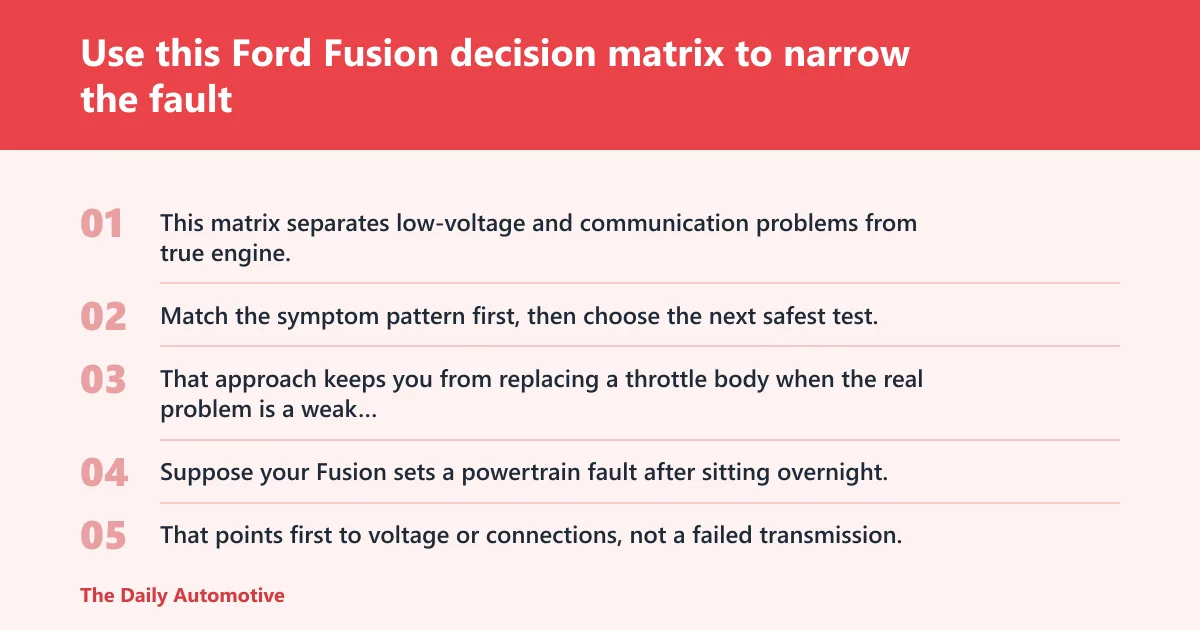
This matrix separates low-voltage and communication problems from true engine, transmission, throttle, or wiring failures. Match the symptom pattern first, then choose the next safest test. That approach keeps you from replacing a throttle body when the real problem is a weak battery or an open ground.
| Symptom pattern | Likely fault family | Next safest test | Drive or tow? |
|---|---|---|---|
| Weak crank, multiple module warnings, random U-codes, message appears after battery drain | Low voltage or communication | Battery load check, alternator check, terminal and ground inspection | Limit driving; tow if it stalls or will not restart |
| Flashing CEL, rough idle, shaking under load, P0300-series codes | Engine misfire or fuel/air fault | Scan stored and pending codes, check coil, plug, injector, and vacuum leak clues | Stop driving if the flash continues |
| Harsh shifting, stuck in one gear, delayed engagement, P07xx codes | Transmission or TCM fault | Check fluid condition where applicable, scan TCM data, inspect transmission connectors | Limit driving; tow if it is stuck in limp mode |
| No throttle response, reduced power, accelerator pedal feels normal, throttle codes present | Throttle body, pedal sensor, or wiring | Inspect throttle body connector, pedal sensor data, and wiring integrity | Do not push it if response is erratic |
| Powertrain fault plus power steering assist fault after jump start or battery replacement | Voltage or module communication | Fix charging issue first, then clear and recheck codes | Drive only if steering assist is normal and the car stays stable |
Suppose your Fusion sets a powertrain fault after sitting overnight, then starts with a slow crank and shows both a U-code and a steering assist warning. That points first to voltage or connections, not a failed transmission. Fixing the battery-side problem may clear both messages without buying a module.
What common Ford Fusion fixes should you inspect next?
After you sort the code family, inspect the likely hardware: wiring, connectors, fuses, grounds, the throttle body, and the accelerator pedal sensor. On Ford Fusion models, intermittent connector corrosion and chafed wiring can mimic expensive module failures. Software calibration and module resets belong in the plan when the repair path points to PCM, ECM, or TCM logic.
Wiring harness, connector, fuse, and ground checks
Look for broken lock tabs, water intrusion, green corrosion, bent pins, and wiring rubbing near brackets or the battery tray. A fused circuit can fail intermittently if the fuse contacts are loose. Grounds deserve special attention because a bad ground can create several unrelated warnings at once.
Throttle body and accelerator pedal sensor checks
Throttle body faults and accelerator pedal sensor faults are code-dependent, not guesswork. If the scan data shows implausible pedal position, throttle angle mismatch, or a throttle actuator code, inspect the connector and the throttle plate before replacing parts. Clean mechanical buildup may matter, but only when the code and live data support it.
PCM, ECM, and TCM software or communication issues
Some Ford Fusion warnings come from software calibration or a communication fault that needs a reflash, relearn, or module reset after the root cause is fixed. That step belongs after voltage, wiring, and component checks, not before them. If the code returns after a reset, the underlying fault is still present.
Is the power steering assist fault related?
Sometimes, yes, but it is a separate system from the powertrain warning. The steering assist fault often appears when battery voltage falls, a connector has an issue, or a module loses communication. If both warnings appear together, start with power supply and network checks before replacing steering parts.
What to check if both warnings appear together
Check battery state, alternator output, and main grounds first. Then scan all modules, not only the engine module, because a steering warning may store its own code set. If the steering assist is heavy or intermittent, do not assume the powertrain code explains everything.
Frequently asked questions
what is a powertrain fault on a ford fusion
It is a broad warning that the engine, transmission, throttle control, or a related module has detected a problem. The message is not specific enough to diagnose the fault by itself. Read stored and pending codes first, then sort the symptoms by voltage, communication, engine, transmission, or throttle behavior.
how to fix powertrain fault ford fusion
Start with battery voltage, charging output, and an OBD-II scan. If the car has weak cranking or multiple module codes, repair low-voltage or wiring issues first. If the codes point to a misfire, transmission fault, or throttle problem, diagnose that system before you clear anything.
how to fix powertrain fault
Begin with the code family, then follow the symptom pattern. A powertrain fault can come from low voltage, a bad ground, a sensor signal loss, a throttle fault, or a transmission control problem. Clearing the code alone is not a repair unless the underlying cause is fixed.
how to reset power steering assist fault ford fusion
There is no safe universal reset that replaces diagnosis. Check battery and charging health first, because low voltage often triggers the warning. If the warning remains after the voltage issue is fixed, scan the steering and body modules for stored codes and inspect connectors, grounds, and related fuses.
What codes commonly trigger a Ford Fusion powertrain fault?
Common triggers include misfire codes, transmission range or ratio codes, throttle actuator or pedal sensor codes, and communication codes. Voltage-related faults can also create the message even when the engine and transmission are fine. The exact code family matters more than the warning text on the dash.
When does a powertrain fault require a mechanic?
Use a mechanic when the code returns after you clear it, the car stays in limp mode, the check engine light flashes, or the transmission will not shift correctly. A technician with scan data can test the module network, wiring, calibration, and live sensor values faster than parts swapping can.
Products related to this article
Sponsored / affiliate links. As an Amazon Associate I earn from qualifying purchases. I may earn additional commission from eligible campaigns.