How to Get Mouse Odor Out of Your Vehicle Easily
Dealing with a mouse problem in your car can be tricky. You might be wondering, How to Get Mouse Smell Out of a Car Fast? It’s a common issue, and the strong, unpleasant odor can be tough to eliminate if you don’t know the best approach. Don’t worry, you’re not alone, and it’s definitely fixable. We’re going to share a simple, step-by-step guide to help you remove that stubborn smell and get your car smelling fresh again. Let’s get started.
Identify and Remove the Source of the Problem
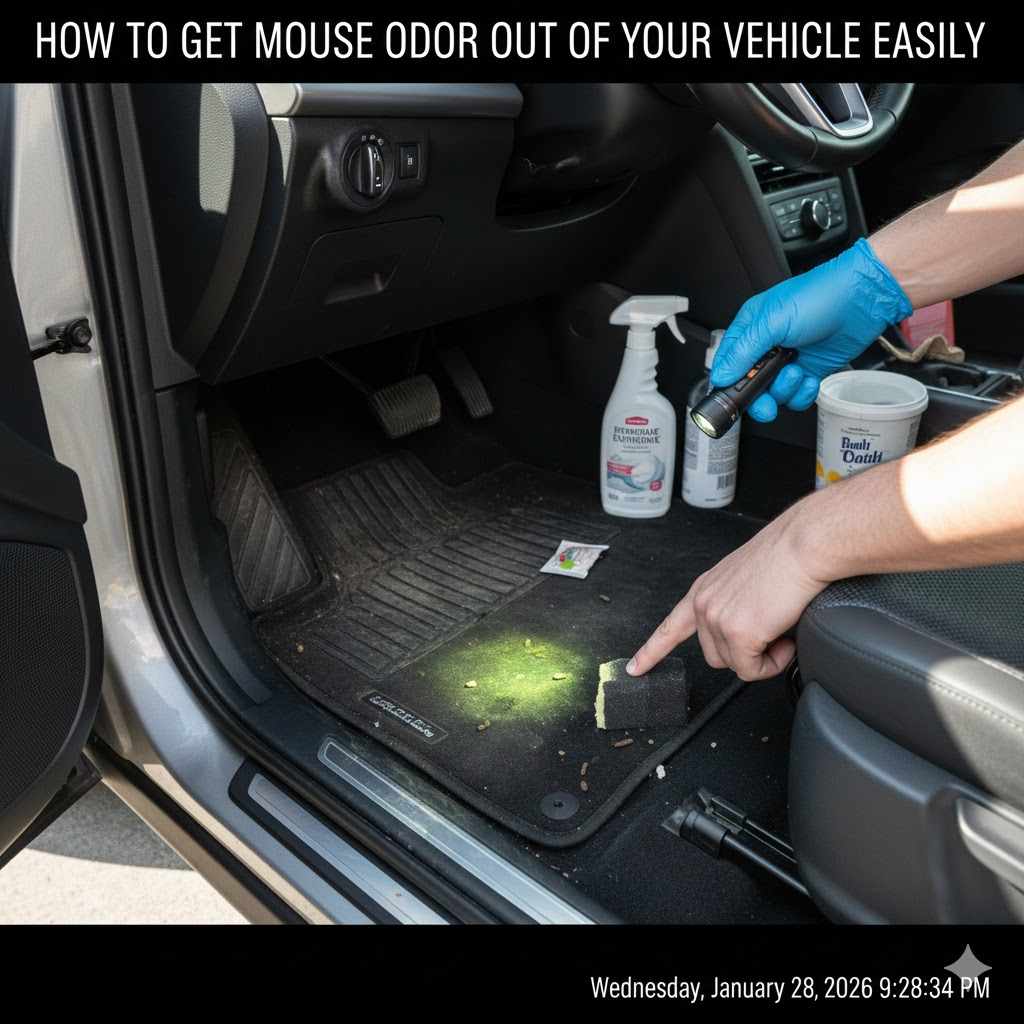
The first step in removing the mouse smell is to pinpoint the source. Mice tend to build nests in warm, protected areas, such as under the seats, inside the air vents, or in the engine compartment. Ignoring this step won’t get you far. You must identify any droppings, nests, or deceased rodents because removing these items is the beginning of the removal process. Make sure to wear gloves and a mask for protection from any potential health hazards.
Inspecting Your Car
Start by thoroughly inspecting your car’s interior. Check under the seats, in the glove compartment, and in the trunk. Look for droppings, shredded materials like paper or fabric (used for nesting), and, of course, the mice themselves. Also, don’t forget to examine the engine compartment, where mice often seek shelter and warmth. This involves opening the hood and looking for any signs of activity. A flashlight can be useful for looking in darker spots.
- Check Under Seats: Mice often build nests here, especially in areas with fabric and cushioning.
- Inspect Vents and Air Ducts: Mice can crawl into the ventilation system.
- Look in the Glove Compartment and Trunk: These areas offer enclosed spaces and are commonly used by rodents.
- Examine the Engine Compartment: Mice often find refuge here, especially when the weather gets cold.
- Don’t Forget Hidden Areas: Sometimes, mice get into hard-to-reach places, like behind the dashboard or inside the door panels.
Once you’ve identified the nesting areas, carefully remove any visible nests or droppings. Use a trash bag to dispose of these materials immediately. After removing the visible signs, consider using a strong disinfectant to clean the affected areas to remove any lingering scents and prevent attracting new pests.
Health and Safety Precautions
Dealing with rodents carries health risks. Mouse droppings can spread diseases like hantavirus, so it’s important to handle everything safely. Before you start, put on gloves, a mask, and eye protection. Make sure the area is well-ventilated. After you finish, wash your hands thoroughly with soap and water. Never sweep or vacuum droppings, as this can make airborne particles.
- Wear Protective Gear: Use gloves, a mask, and eye protection to avoid direct contact with mouse waste.
- Ensure Proper Ventilation: Open windows and doors to allow fresh air to circulate while you clean.
- Avoid Disturbing Droppings: Never sweep or vacuum droppings directly.
- Proper Disposal: Seal all waste in a plastic bag and dispose of it immediately in an outdoor trash bin.
- Wash Your Hands: After cleaning, wash your hands thoroughly with soap and water to prevent the spread of germs.
After you remove the bulk of the mess, it’s time to clean and sanitize. Use a disinfectant to get rid of any lingering traces of the nest. Spray it on surfaces where you saw mouse activity and give it time to work before wiping it down. Remember, mice leave behind a scent, so it’s important to clean up properly to avoid attracting more pests.

Thorough Cleaning to Remove Mouse Odor
Once you’ve removed the source, it’s time for a deep clean. This step is about getting rid of the odor and any germs left behind. This involves cleaning all surfaces inside your car. Make sure you don’t miss anything. The goal is to freshen up your car and get rid of any lingering smells.
Cleaning Interior Surfaces
Begin by removing all loose items from your car, including floor mats, seat covers, and any personal belongings. Vacuum the interior thoroughly, paying special attention to areas like under the seats, along the floorboards, and in the crevices. Vacuuming is a key step, removing surface dirt and any remnants of nesting materials or droppings. This prepares the surfaces for the next phase of cleaning and helps remove the odor-causing particles.
- Vacuum Thoroughly: Remove all loose dirt, debris, and mouse droppings.
- Clean Fabric Seats and Carpets: Use a fabric cleaner or upholstery shampoo, following the product’s instructions.
- Wipe Down Hard Surfaces: Use an all-purpose cleaner to wipe down the dashboard, door panels, and console.
- Clean the Headliner: Use a gentle cleaner specifically designed for headliners to avoid damage.
- Don’t Forget Small Spaces: Use a detail brush or cotton swabs to clean hard-to-reach areas, such as air vents.
For fabric seats and carpets, use an upholstery cleaner or fabric shampoo. Follow the product’s instructions and test it in a hidden area first to make sure it doesn’t cause any discoloration. For hard surfaces, wipe them down with an all-purpose cleaner. Don’t forget to pay attention to the air vents; mice often leave their scent there. Cleaning these surfaces will help neutralize the smell and give your car a fresher feel.
Sanitizing and Deodorizing
After cleaning the surfaces, it’s essential to sanitize and deodorize. This eliminates any lingering bacteria and unpleasant smells. Use an enzymatic cleaner designed for pet messes because these are very effective at breaking down organic matter. Apply the cleaner to the areas where you detected mouse activity, letting it sit for the recommended time before wiping it down.
- Use an Enzymatic Cleaner: These cleaners break down organic matter, removing the source of the odor.
- Apply to All Affected Areas: Spray the cleaner on carpets, seats, and any other surfaces where mice may have been.
- Follow Product Instructions: Allow the cleaner to sit for the recommended time before wiping it away.
- Consider an Air Purifier: Use an air purifier with a HEPA filter to remove any lingering odors from the air.
- Repeat as Needed: You may need to repeat the process to completely get rid of the mouse smell.
In addition to cleaning agents, you can use odor-absorbing products like baking soda or activated charcoal. Sprinkle baking soda on the carpets and seats, let it sit for a few hours, and then vacuum it up. Activated charcoal, known for its odor-absorbing properties, can be placed in small containers around your car to further eliminate odors. These methods will help to neutralize the lingering scents and ensure a fresh car interior.
How to Get Mouse Smell Out of a Car Fast Using Airflow and Ventilation
Ventilation is a key factor in removing lingering odors. Airing out your car is a simple yet effective way to eliminate odors. This process allows fresh air to circulate, which helps to remove the smelly particles and improve the car’s scent. This is a very useful technique in combination with cleaning.
Maximize Airflow
The first step is to open all the doors and windows of your car. This will allow the air to circulate freely. If possible, park your car in a shady or well-ventilated area, away from direct sunlight, which can trap heat and worsen odors. You should leave the doors and windows open for several hours, preferably during a time when the weather is cool and breezy. This simple step can greatly help to remove the odor from your car. This method helps to circulate air, which pushes out stale air and
- Open All Doors and Windows: Let air circulate freely.
- Park in a Shaded Area: Avoid direct sunlight, which can intensify odors.
- Use Fans: Place a fan inside the car to help circulate the air more effectively.
- Air Dry the Car: If any areas are wet from cleaning, allow them to air dry completely to avoid mold.
- Consider the Weather: Choose a day with mild temperatures and low humidity for the best results.
Another helpful step is to use fans inside your car. Place a few fans inside your car to circulate the air even more effectively. Position the fans to blow air across the seats, carpets, and other areas that smell the worst. This will help to move the air around and speed up the deodorizing process. This is particularly useful if your car has a lingering odor even after cleaning. Make sure the fans are securely placed and that you have a power source nearby.
Using Air Fresheners and Odor Absorbers
After airing out your car, you can add air fresheners and odor absorbers. These products help to mask the lingering scents and make your car smell fresh. There are a variety of choices, from air freshener sprays to hanging air fresheners. You can also use odor-absorbing products such as activated charcoal or baking soda. The combination of airflow, air fresheners, and odor absorbers will leave your car smelling much better.
- Use Air Fresheners: Choose air fresheners that fit your preferences.
- Try Odor Absorbers: Activated charcoal or baking soda can absorb odors.
- Place Strategically: Put air fresheners and odor absorbers throughout the car, including in the vents.
- Consider Different Scents: Experiment with different fragrances to find what you like.
- Replace Regularly: Change air fresheners and odor absorbers regularly to maintain effectiveness.
For more effective odor removal, consider using air fresheners specifically designed for cars. These products can neutralize odors at the source. Hanging air fresheners are easy to use and can provide a continuous fragrance. Other options include vent clips and sprays. Make sure to place air fresheners in areas where the odor is strongest, like under the seats or in the air vents. You can enhance the effect of the air fresheners by combining them with odor absorbers, creating a pleasant and fresh atmosphere in your car.
Preventing Mice from Returning
Once you’ve successfully removed the mouse odor, the most important step is to prevent them from coming back. This means taking steps to make your car less appealing to mice. This involves making your car less hospitable to mice, so they don’t return. By being proactive and taking the necessary precautions, you can protect your car from future mouse problems and keep it smelling fresh.
Sealing Entry Points
The first step is to inspect your car for potential entry points. Mice can squeeze through incredibly small holes, so you need to check carefully. Common entry points include holes in the floor, around the wiring, or gaps in the doors and windows. Seal up any holes or cracks you find with steel wool, caulk, or expanding foam. These materials are difficult for mice to chew through and will help prevent them from getting back inside.
- Inspect the Car: Check for any holes or cracks, no matter how small.
- Use Steel Wool: This is a great barrier that mice cannot chew through.
- Apply Caulk and Expanding Foam: These materials can seal larger gaps.
- Check Wiring and Cables: Ensure that all wiring is protected and that no openings are present.
- Maintain the Vehicle’s Exterior: Ensure that the body panels fit together.
Consider adding preventative measures around the engine compartment, as mice often enter through the engine bay. Check for gaps around the firewall, where the wiring and hoses pass through. Use steel wool or caulk to close these gaps. By sealing these entry points, you create a barrier that protects the vehicle from pests.
Keeping Your Car Clean and Unattractive
Once you’ve sealed the entry points, the next step is to make your car less attractive to mice. Mice are attracted to food and shelter. Remove any food sources from your car, such as crumbs, food wrappers, and any stored snacks. Regularly vacuum your car to remove any leftover food particles. Keep the car clean, and remove any items that could be used for nesting, such as paper, tissues, or fabric scraps.
- Remove Food Sources: Crumbs and food wrappers are magnets for mice.
- Vacuum Regularly: Regular vacuuming removes any food particles and debris.
- Keep the Car Tidy: Remove clutter, such as paper and fabric scraps, that could be used for nesting.
- Avoid Storing Food: Never leave food inside your car for extended periods.
- Regular Maintenance: Check the interior of your car during each regular cleaning.
By regularly cleaning your car, you can reduce the chances of a mouse infestation. Also, regularly check your car’s interior. Look for any signs of new mouse activity, such as droppings or shredded materials. The combination of sealing entry points and maintaining a clean environment significantly reduces the risk of future mouse problems.
| Preventive Measure | Effectiveness | Benefits |
|---|---|---|
| Sealing Entry Points | High | Prevents mice from entering the vehicle. |
| Regular Cleaning | Medium | Removes food sources and nesting materials. |
| Storing Food Securely | Medium | Eliminates food as an attractant. |
| Using Repellents | Low to Medium | May deter mice, but not a guaranteed solution. |
How to Get Mouse Smell Out of a Car Fast: Advanced Tips and Tricks
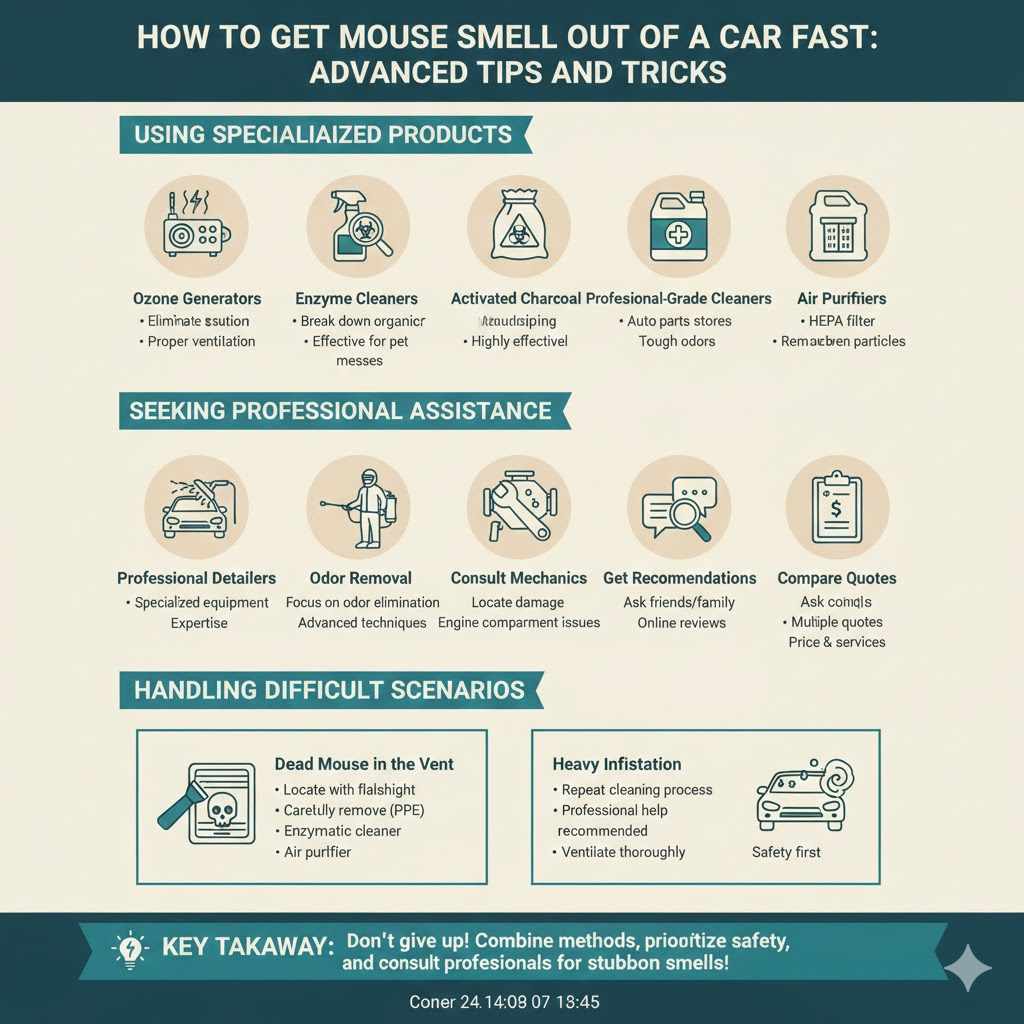
Beyond the basics, several advanced tips and tricks can help you eliminate the mouse smell more quickly and effectively. These involve using specialized products, employing professional cleaning techniques, and addressing challenging situations. This is useful for those facing stubborn odors or recurrent problems.
Using Specialized Products
Sometimes, the standard cleaning methods aren’t enough, and you’ll need to use more specialized products. This may be the right choice if the mouse smell persists. Consider using an ozone generator. Ozone generators are useful for removing strong odors, but they need to be used with caution, as ozone can be harmful if inhaled. Follow all safety guidelines and air out your car thoroughly after use.
- Ozone Generators: These can eliminate strong odors but should be used with caution and proper ventilation.
- Enzyme Cleaners: Designed specifically for pet messes, they break down organic matter.
- Activated Charcoal: Highly effective at absorbing and neutralizing odors.
- Professional-Grade Cleaners: Available at auto parts stores and designed for tough odors.
- Air Purifiers: Use with a HEPA filter to remove lingering airborne particles.
Enzyme-based cleaners are also highly effective at removing the source of the mouse smell. These cleaners break down organic matter, which can help eliminate the odor. These are often used for removing pet urine and other organic residues, and they work well for mouse smells, too. Apply the cleaner directly to affected areas, letting it sit for the recommended time before wiping it down. Regular maintenance is a key component to preventing these issues from resurfacing.
Seeking Professional Assistance
If you’ve tried everything and the mouse smell persists, it might be time to call in the professionals. The benefits include special equipment and expert knowledge that can help address the problem. A professional detailer will have specialized equipment, such as steam cleaners and ozone generators, that can thoroughly remove odors. They can also inspect your car for hidden nesting sites and other issues you might have missed.
- Professional Detailers: Have access to specialized equipment and expertise.
- Odor Removal Specialists: Focus on odor elimination and may offer specialized treatments.
- Consult Mechanics: Mechanics can help locate any damage to your car.
- Get Recommendations: Ask friends and family for recommendations or search online reviews.
- Compare Quotes: Get multiple quotes to compare prices and services.
Consider contacting an odor removal specialist. These professionals specialize in removing all kinds of odors, including those caused by mice. They often use advanced techniques, like ozone treatments or thermal fogging, to get rid of even the most persistent smells. Getting professional help can save you time and provide a solution to stubborn problems, ensuring your car is fresh again.
Handling Difficult Scenarios
Sometimes, you might encounter scenarios that make removing the mouse smell more difficult. This involves a dead mouse in a hard-to-reach area or extensive damage to the car’s interior. Take immediate action to find and remove the source of the smell.
- Locate and Remove Dead Mice: The primary source of the problem is the deceased rodent.
- Address Heavy Infestations: You might have to repeat cleaning steps if the infestation was extensive.
- Deal with Extensive Damage: Repair or replace any damaged interior components.
- Thorough Inspections: Regularly check your car and address any issues.
- Safety First: Prioritize health precautions to prevent the spread of diseases.
- Dead Mouse in the Vent: If you suspect a dead mouse in your car’s ventilation system, you can use a combination of methods. First, try to locate the source by using a flashlight. If accessible, gently remove the mouse with gloves and a mask. Then, use an enzymatic cleaner specifically designed to remove odors. Finally, use an air purifier to remove any lingering scents.
- Heavy Infestation: If your car had a heavy infestation, you might have to repeat the entire cleaning process. This means a thorough inspection, vacuuming, and deep cleaning. It can be useful to seek professional help. Remember to use effective odor-removing agents, and make sure that you properly ventilate your car.
If you suspect a dead mouse, start by searching for it. Mice can get trapped in hard-to-reach places, so you might need to disassemble parts of your car’s interior. Once you find and remove the dead mouse, the next step is to remove any scent left behind. Use a strong disinfectant to clean the area thoroughly. Then, consider using an ozone generator or professional odor removal services. You can prevent problems by taking these steps.
Frequently Asked Questions
Question: How long will it take to get the mouse smell out of my car?
Answer: It depends on how bad the smell is and how many steps you take. If it’s a small problem, it can take a few hours. If it’s a big problem, it may take a few days of cleaning and airing out.
Question: What can I use to remove mouse smell from my car?
Answer: You can use a combination of things. You should start by thoroughly cleaning the car and vacuuming. Use an enzymatic cleaner, baking soda, activated charcoal, and an air freshener.
Question: Is it safe to use an ozone generator to get rid of mouse smell?
Answer: Ozone generators are powerful, and you must use them safely. Always follow the manufacturer’s instructions, wear a mask, and air out your car thoroughly after use.
Question: Can I use air fresheners to get rid of mouse smell?
Answer: Air fresheners can help mask the odor, but they won’t remove the smell. It’s best to use them after you’ve cleaned the car.
Question: What can I do to keep mice from coming back?
Answer: Keep your car clean by getting rid of any food and regularly vacuuming. Seal any entry points where mice can get in.
Final Thoughts
Now you know the best way How to Get Mouse Smell Out of a Car Fast. You learned how to find and eliminate the source of the problem. You also explored cleaning the interior of your car, including how to ventilate, and using odor-absorbing products. By following these steps, you can remove even the most stubborn mouse smells and make your car fresh again. Prevent the problem from resurfacing by keeping your car clean, sealing any entry points, and regularly checking for any signs of mice.