Why Is a Bird Pecking at My Car? Fix the Trigger Fast
Repeated bird pecks on a parked car usually point to a few common triggers, such as mirror or glass reflections, territory defense, food residue, or nesting nearby. If the attacks hit one shiny spot, start with a reflection fix. Leave it alone, and you can end up with scratched clear coat, dirty glass, and damaged trim. This guide shows how to tell which trigger you have and which fix matches mirrors, chrome, paint, or windows.
Why is a bird pecking at my car?


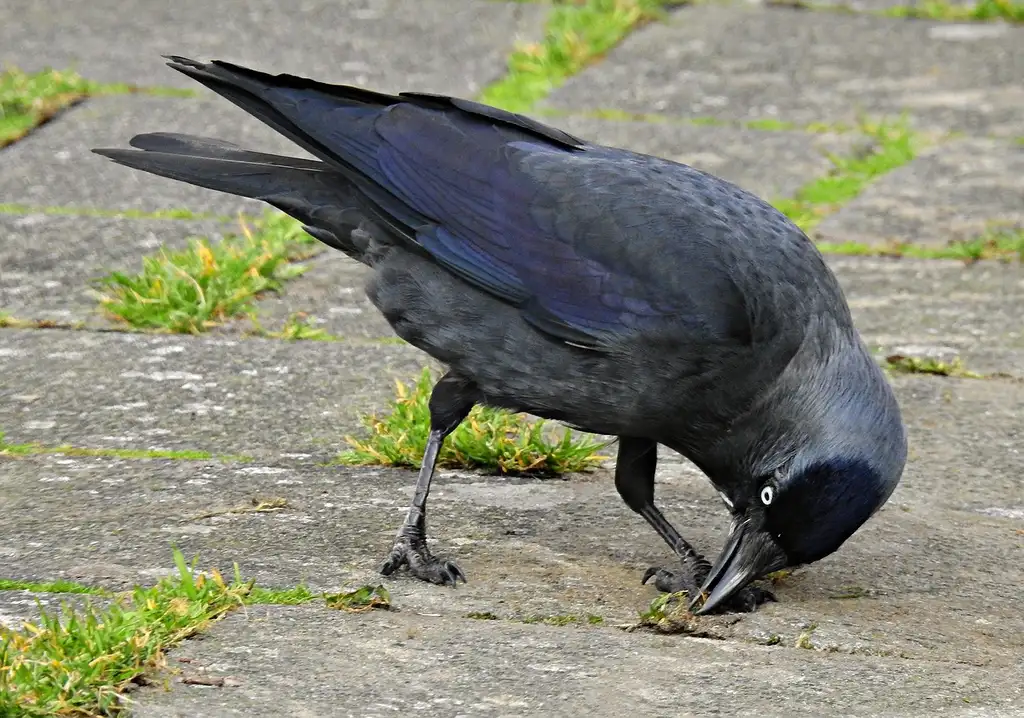
Start with the surface, not the bird
The same bird may peck at a mirror, tap a windshield, or hit a glossy door panel for different reasons. Car mirrors and glass are most likely to trigger a mistaken-rival response, while food residue or a nest close by can pull attention to a specific area. That is why the surface matters.
Bird reflection is the most common clue on mirror-like surfaces. Many bird species defend territory, and birds use calls and body displays to warn off rivals. Bird chirping is also a main way birds communicate, especially during the dawn chorus, which is tied to mate attraction and territory defense.
Reflection, territory, curiosity, and attention-seeking are not the same thing
If a bird keeps pecking the same shiny point, reflection is the first suspect. If the bird only appears in a certain season, or returns to the same car mirror day after day, territorial behavior is more likely. If the tapping is brief, irregular, or aimed at something inside the car, curiosity is a better fit.
Attention-seeking behavior can also show up when a bird reacts to movement, shadows, or a person walking near the car. That pattern may continue if the trigger stays in place. A nest nearby can shift the behavior toward repeated visits, especially if the car is parked close to a shrub, eave, or tree used for nesting.
Which car surfaces birds target most
Birds do not treat every surface the same way. Highly reflective parts invite a different response than matte paint or textured trim. The most useful fix depends on whether the bird is reacting to a mirror image, investigating a surface, or defending an area near the car.
| Car surface | Likely trigger | Immediate action | When to escalate |
|---|---|---|---|
| Side mirrors | Reflection, territorial response | Fold in the mirror or cover it while parked | If pecking returns after you cover it, change parking location |
| Side glass or rear glass | Window reflection | Reduce reflection with a screen, shade, or decal pattern | If tapping continues at the same spot, move the car away from the trigger area |
| Windshield | Reflection from sky, trees, or nearby birds | Wash the glass and test a different parking angle | If the same bird returns, use decals or alter parking |
| Chrome trim, badges, polished paint | Reflection or movement cue | Cover the area, park in shade, or change angle | If the bird targets multiple shiny panels, reduce all reflective surfaces |
| Door handle, bumper, lower panel | Food residue, curiosity, nearby nesting activity | Clean the surface and check for nesting nearby | If the bird is persistent, inspect the parking area and nearby trees |
Why mirrors are a frequent target
Car mirrors are highly reflective and often draw repeat pecks when birds see a rival. A side mirror can act like a bright, isolated signal, which is why folding it in or covering it is often one of the fastest fixes. Mirror housings with chrome or glossy caps can have the same problem.
Say a sedan is parked near a driveway fence and one mirror gets pecked every morning. Folding that mirror in may stop the target from looking like a rival bird. If the bird simply shifts to the windshield or side glass, reflection management needs to expand beyond the mirror.
When a window or windshield is the real trigger
Window reflection is a well-documented bird trigger, and car glass behaves the same way as other reflective windows. Windshields can pick up sky, trees, and moving shapes. Side glass can show a clear bird image, especially in bright daylight. When the same bird taps glass more than one panel, reflection is the leading explanation.
Painting over a problem is not the answer here. Reflection management matters more than trying to outlast the behavior. Screens, decals, and parking changes work better when the bird is reacting to its own image or to a bright, mirrored surface.
Chrome trim and glossy paint can mislead you
Chrome trim, badges, and polished paint can trigger the same response as glass. Glossy paint does not reflect as sharply as a mirror, but it can still present a moving or bird-shaped image under the right light. That is why a pecking pattern on one door can look different from pecking on the mirror.
Food residue changes the diagnosis. If the bird is pecking at crumbs, spilled seed, or sticky residue on the hood or bumper, the behavior is less about rivalry and more about interest in a food source. Clean the area first before adding deterrents.
What the season and species can tell you
Spring breeding season often increases territorial pecking because birds are defending territory, attracting mates, and responding more aggressively to perceived rivals. Species matters too. Some birds repeat a fixed pattern at the same vehicle, while others tap briefly and move on. A persistent, shiny-surface pattern fits reflection better than random curiosity.
Why some birds repeat the same attack pattern
When a bird returns to the same mirror or windshield, the surface is likely delivering the same signal each time. That can happen with a parked car in the same spot, the same angle to sunlight, or the same bird territory. Repetition is the clue that tells you the problem is environmental, not random.
A common first-timer mistake is treating one tap as proof of aggression. Intermittent pecking can be curiosity, especially if the bird seems to inspect rather than strike. If the behavior is brief and changes with movement, the fix may be different from a full territorial response.
How do you stop birds from pecking your car?
The fastest way to stop repeated pecking is to remove the trigger, then make the surface less attractive. Move the car if you can, fold or cover mirrors, clean off residue, and reduce reflections with decals, screens, or a different parking angle. If the bird keeps returning, change the parking spot rather than waiting it out.
Use this order first
- Move the car a short distance, if possible, to break the bird’s visual pattern.
- Clean the affected surface to remove food residue, sap, or sticky spots.
- Fold in side mirrors or cover them before parking.
- Add decals, screens, or reflective tape where the bird is aiming.
- Park under different light, farther from nesting cover, or away from the same sight line.
Deterrents that fit the problem
Decals, screens, and reflective tape can reduce pecking, but they work best when matched to the surface. Reflective tape is named as one way to discourage birds from pecking windows, and screens are also suggested as a deterrent. Decals help break up a clean reflection, especially on glass and shiny panels.
Environment changes matter too. Moving the vehicle away from nesting cover, shifting the angle, or parking in a garage can change what the bird sees. If the bird is reacting to movement, even a small change in location may be enough to break the habit.
Bird-pecking triage checklist for car owners
| If the pecking is on this surface | Likely trigger | First move | Escalate when |
|---|---|---|---|
| Mirror | Rival reflection or territorial response | Fold it in or cover it | Bird returns after two or more parking changes |
| Window or windshield | Window reflection or curiosity | Use a screen, decal pattern, or different parking angle | The same panel keeps drawing attention |
| Chrome or glossy paint | Reflection or movement cue | Reduce shine and park away from the bird’s line of sight | Multiple shiny panels are being targeted |
| Lower panel or bumper | Food residue or nearby nesting | Clean the area and inspect the parking spot | Birds keep returning after cleaning |
Say your SUV is parked under a tree and the passenger mirror gets pecked each morning. That points to reflection first. If the same bird then starts tapping the side glass, the answer is probably not one damaged part but a single visual cue repeated across multiple reflective surfaces.
Will bird pecking damage paint, glass, or trim?
Yes. Repeated bird pecking can damage paint and nearby exterior surfaces such as clear coat, mirror housings, trim, seals, weatherstrips, chrome, and badges. Glass is tougher than paint, but repeated impact or sharp pecks can still leave marks, dirt buildup, or edge damage if the behavior continues. The risk rises with frequency.
What is most vulnerable
Clear coat and paint are the first concerns on glossy panels. Mirror housings and chrome trim can scuff, and seals or weatherstrips around glass can wear if the bird keeps striking the same edge. Even if the damage is minor at first, the surface can become easier to target once it stays marked or dirty.
Bird pecking at windows can also cause stress and anxiety for pets. Some pets may become agitated or anxious when birds peck at windows, especially if the car is parked at home near a living room, patio door, or driveway where the bird activity is visible and noisy.
Should you move the car if a bird keeps pecking it?
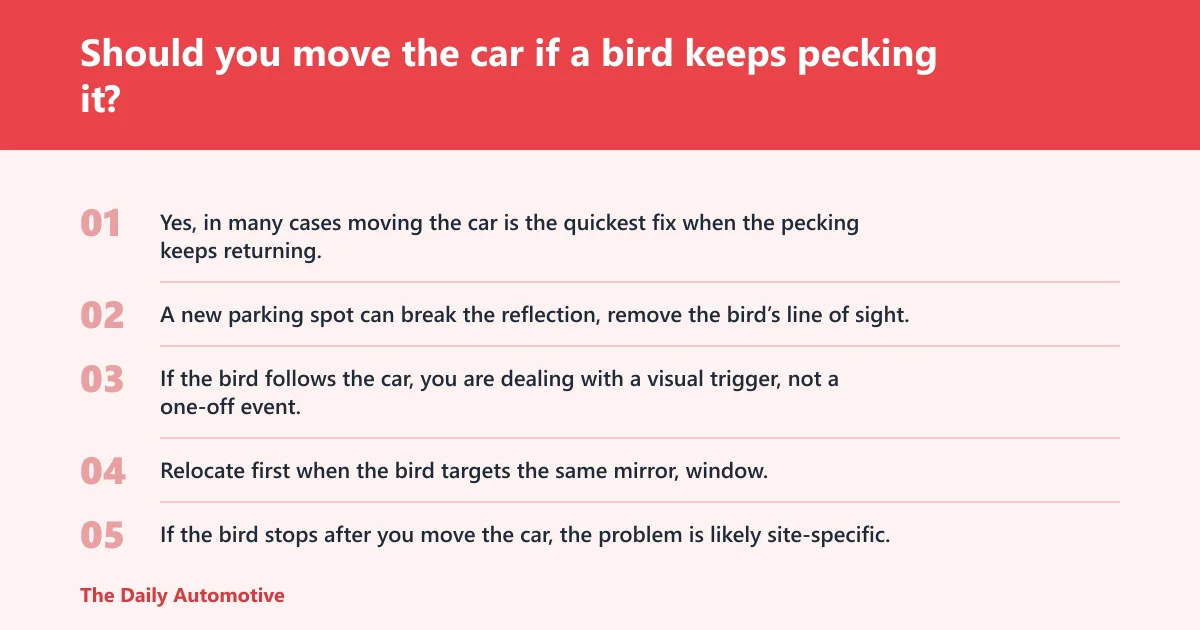
Yes, in many cases moving the car is the quickest fix when the pecking keeps returning. A new parking spot can break the reflection, remove the bird’s line of sight, or separate the vehicle from nesting cover. If the bird follows the car, you are dealing with a visual trigger, not a one-off event.
When relocation is the best answer
Relocate first when the bird targets the same mirror, window, or shiny panel several times in a row. If the bird stops after you move the car, the problem is likely site-specific. If the bird returns at a new angle, use a mirror cover, decal, or screen before parking there again.
How to keep pets calmer at home
If the car is parked at home and birds keep startling nearby pets, reduce the stimulus quickly. Close blinds near the parking spot, move the car out of the pet’s view if possible, and cut down reflections on the side facing the house. Persistent pet stress is a reason to take the issue seriously.
For ongoing distress, consulting a professional animal behaviorist is suggested. That step makes sense when birds, noise, and repeated window-side activity keep agitating pets even after you change the parking setup.
Do decals or covers help stop birds pecking cars?
Yes. Decals or covers can help stop birds pecking cars when the problem is reflection-driven, especially on mirrors, side glass, windshields, and glossy trim. They work by breaking up the image the bird sees. They are less useful if food residue or nesting proximity is the main trigger.
Where each deterrent works best
Decals are useful on windows and windshields because they disrupt a clean reflection. Screens help where glass is the main target. Reflective tape can discourage pecking on windows when placed to interrupt the bird’s view. Mirror covers or folded mirrors are best for side mirrors and mirror housings.
If the bird is pecking because of a nearby nest, deterrents alone may not be enough. In that case, changing parking location is usually more effective than layering on more shiny objects. The goal is to stop the bird from seeing the car as a rival, a feeding spot, or a territorial marker.
Frequently asked questions
Why is a bird pecking at my car?
Most repeated pecking comes from one of four things: reflection, territorial defense, food residue, or a nest nearby. If the bird focuses on a mirror, window, or glossy panel, reflection is the first thing to test. If the behavior is brief and irregular, curiosity is also possible.
Why do birds attack car mirrors?
Car mirrors are highly reflective, so birds may see a rival and respond as if they are defending territory. That is why mirrors often get repeated pecks, especially during breeding season. Folding the mirror in or covering it can remove the signal quickly.
How do I stop birds from pecking my car?
Start by changing the trigger, not by waiting for the bird to quit. Move the car, clean off residue, fold mirrors, and reduce reflection with decals, screens, or reflective tape. If the same surface keeps getting hit, change parking location or angle.
Is a bird pecking my car trying to fight its reflection?
Often, yes. Birds may peck at windows because they see their reflection and mistake it for a rival bird. Many bird species defend territory, so a shiny mirror, side glass, or chrome edge can look like a challenger rather than a car part.
Will bird pecking damage car paint or glass?
It can. Repeated pecking may mark clear coat, paint, mirror housings, chrome, seals, weatherstrips, and trim. Glass is usually more resistant, but repeated hits can still leave damage or grime. If one spot keeps getting pecked, treat it as a repair risk.
What time of year do birds peck cars most often?
Spring is a common time for more aggressive pecking because territorial behavior ramps up during breeding season. The dawn chorus is linked to mate attraction and territory defense, so mornings can be especially active. That said, reflection can still trigger pecking outside spring.
Products related to this article
Sponsored / affiliate links. As an Amazon Associate I earn from qualifying purchases. I may earn additional commission from eligible campaigns.