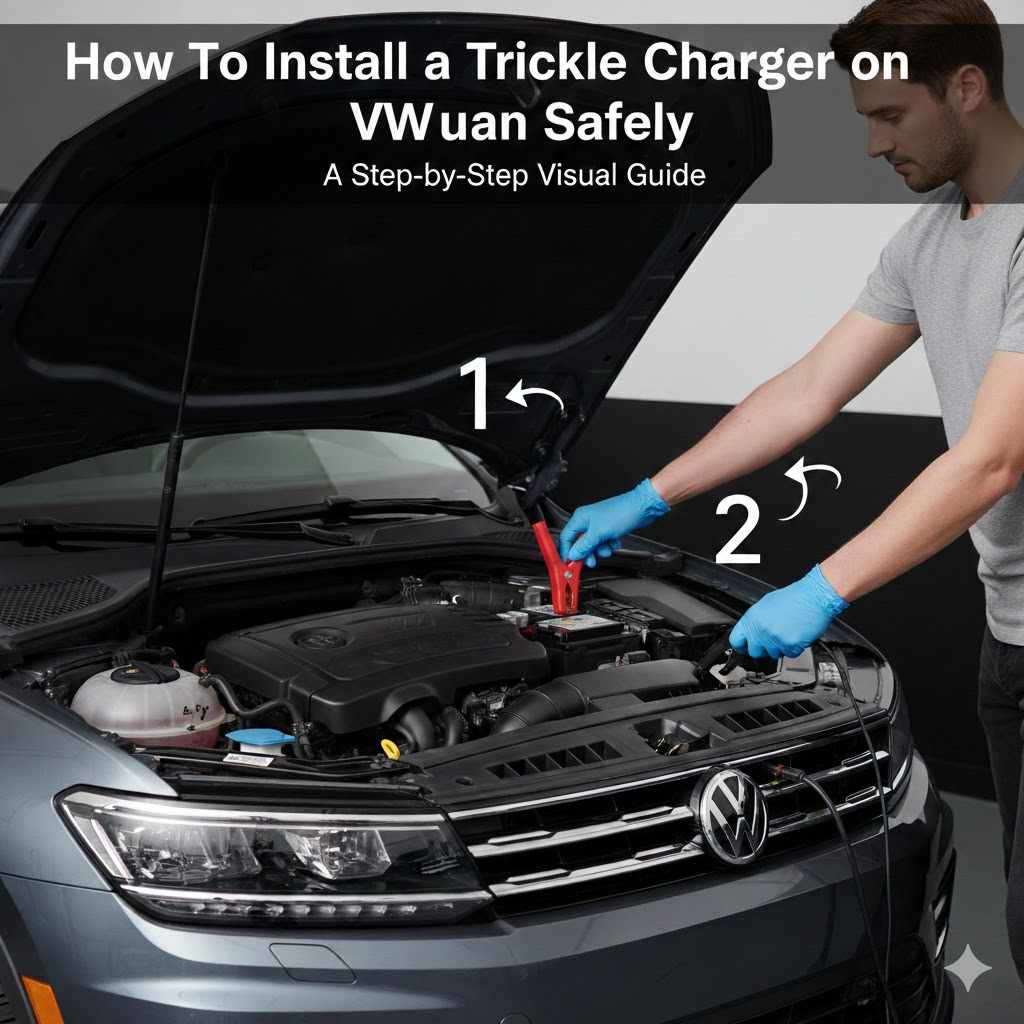
How To Install a Trickle Charger on VW Tiguan Safely
Many VW Tiguan owners wonder if hooking up a trickle charger is tricky. It might seem a bit confusing at first, especially if you’re new to car maintenance. But don’t worry!
It’s actually a pretty simple task for most people. This guide will walk you through exactly how to Install a Trickle Charger on VW Tiguan Safely, step by step, making it easy for anyone to do. We’ll show you all you need to know to get it done right.
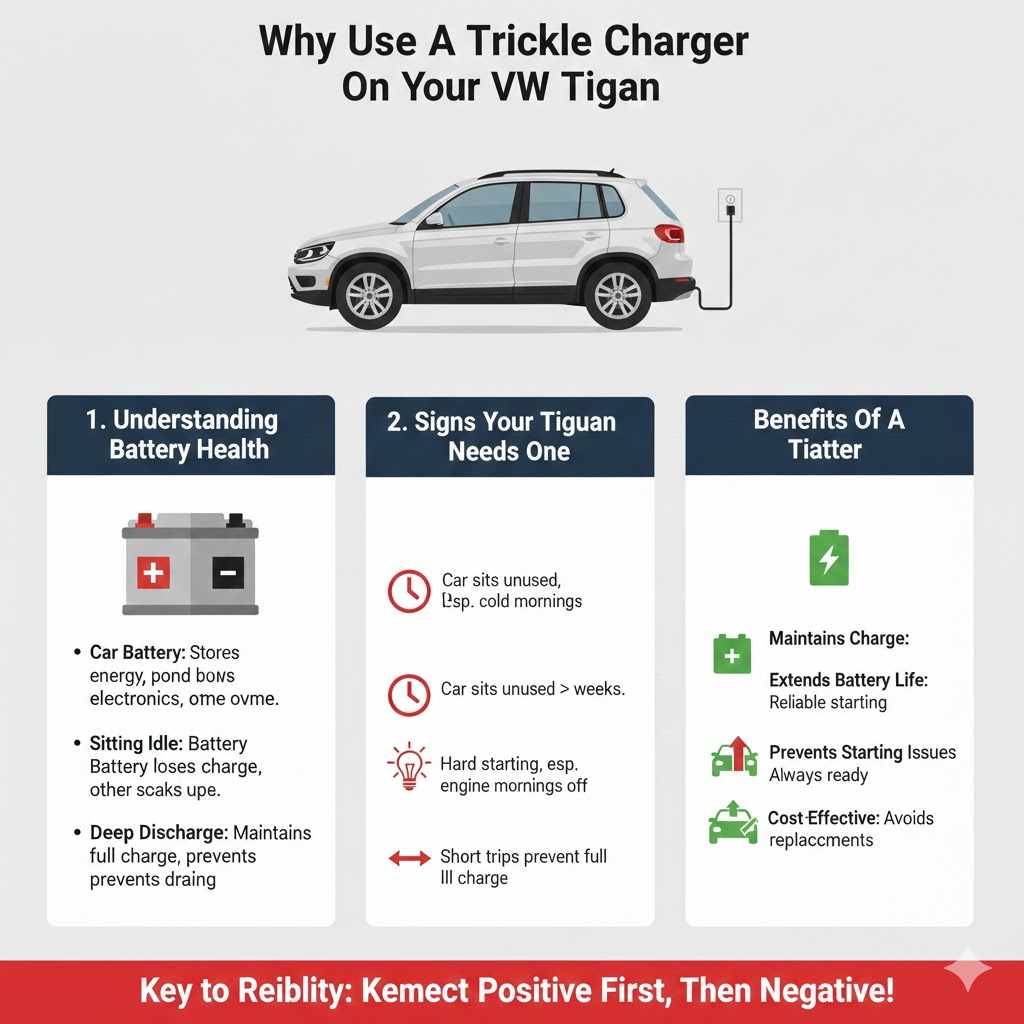
Why Use A Trickle Charger On Your VW Tiguan
A trickle charger is a small device that keeps your car’s battery topped up. It’s different from a regular charger because it delivers a slow, steady flow of power. This is super useful if your VW Tiguan sits for long periods, like during vacations or if it’s a second car.
Without a trickle charger, your battery can lose its charge. Then, you might have trouble starting your car. This section explains why keeping that battery healthy is important and how a trickle charger helps your Tiguan stay ready to go.
Understanding Battery Health
Your car battery is like the heart of your vehicle. It stores the energy needed to start the engine and power all the electrical bits when the engine isn’t running. Over time, especially with modern cars that have more electronics, batteries can drain.
Sitting idle is a big culprit. A battery that’s always low on charge won’t last as long. It can also lead to starting problems.
Think of it like a phone battery. If you never let it get fully charged, it won’t hold power for long. Car batteries are the same.
A trickle charger prevents this deep discharge. It maintains a full charge without overcharging, which is also bad for a battery. This simple maintenance can save you from costly repairs and frustrating dead-battery mornings.
Signs Your Tiguan Might Need A Trickle Charger
- Your car sits unused for more than a week or two at a time.
- You’ve had trouble starting your Tiguan recently, especially on cold mornings.
- Your headlights or dashboard lights seem dimmer than usual when the engine is off.
- You use your Tiguan for short trips mostly, which don’t give the alternator enough time to fully recharge the battery.
If you notice any of these signs, it’s a good idea to consider a trickle charger. It’s a proactive step to ensure your Tiguan is always ready when you need it. It also extends the life of your battery, saving you money in the long run.
Benefits Of A Trickle Charger
- Maintains Battery Charge: It keeps your battery at an optimal charge level, preventing it from draining when the car is parked for extended periods. This ensures your Tiguan will start reliably.
- Extends Battery Life: By preventing deep discharges and constant topping up, a trickle charger significantly extends the lifespan of your car’s battery. Batteries that are constantly drained and recharged can degrade faster.
- Prevents Starting Issues: A consistently charged battery means no more dead-battery mornings. Your Tiguan will be ready to go whenever you are, avoiding the stress and inconvenience of a car that won’t start.
- Cost-Effective Solution: Compared to the cost of replacing a dead battery or dealing with jump starts, a trickle charger is a very affordable way to protect your investment and avoid potential problems.
Choosing The Right Trickle Charger For Your VW Tiguan
Not all trickle chargers are the same. For your VW Tiguan, you’ll want one that’s suitable for its battery type and size. Most modern Tiguans use sealed lead-acid batteries, but some might have AGM or EFB batteries.
Picking the right charger ensures it works safely and effectively without damaging your battery. This section helps you figure out what features to look for and how to make sure you get a charger that’s a good fit for your car.
Types Of Trickle Chargers
- Basic Trickle Chargers: These are the simplest and most affordable. They provide a low, constant current. They’re good for maintaining a charge but might not be the best for reviving a slightly discharged battery.
- Smart Trickle Chargers (Automatic/Maintainers): These are more advanced. They monitor the battery’s voltage and adjust the charging current accordingly. Many can also diagnose battery issues and have modes for different battery types. These are usually the best choice for most car owners.
- Solar Trickle Chargers: These use solar panels to charge the battery. They’re great for cars parked outdoors but might not provide enough power in low-light conditions or for larger batteries.
For a VW Tiguan, a smart trickle charger is generally recommended. It offers the best balance of safety, efficiency, and features. They can handle the specific needs of your car’s battery system more effectively.
Key Features To Look For
- Voltage and Amperage Compatibility: Ensure the charger is designed for a 12-volt battery, which is standard for cars like the Tiguan. The amperage (current) should be relatively low, typically 1-2 amps for a trickle charger. Higher amperages are for faster charging, not maintenance.
- Battery Type Settings: If your Tiguan has an AGM or EFB battery, look for a charger that has specific settings for these types. Using the wrong setting can damage the battery.
- Multi-Stage Charging: Smart chargers often use multi-stage charging (e.g., analyzing, bulk, absorption, float). This process is optimized for battery health and longevity.
- Safety Features: Look for features like reverse polarity protection (prevents damage if you connect the clamps backward) and spark-proof connections. Overcharge protection is also essential.
- Indicator Lights: Simple LED lights that show charging status (charging, fully charged, error) are very helpful.
Understanding Your Tiguan’s Battery
Most modern VW Tiguans come equipped with either a standard flooded lead-acid battery, an Absorbed Glass Mat (AGM) battery, or an Enhanced Flooded Battery (EFB). These battery types have different charging requirements.
Flooded Lead-Acid Batteries: These are the traditional car batteries. They contain liquid electrolyte. They are more tolerant of overcharging than other types but still benefit from proper charging.
AGM Batteries: These batteries use a special absorbent glass mat to hold the electrolyte. They are more resistant to vibration and leakage and can handle higher charging currents. They require specific charging profiles to avoid damage.
EFB Batteries: These are designed for cars with start-stop systems. They are more robust than flooded batteries and can handle more frequent charging and discharging cycles. They also have specific charging needs.
Check your Tiguan’s owner’s manual or look at the battery itself to identify its type. This information is crucial for selecting a charger that will maintain its health. Using a charger not suited for your battery type can reduce its lifespan or even cause damage.
How To Install A Trickle Charger On VW Tiguan Safely
Now for the practical part: connecting the charger. Doing this safely is key. You don’t want to short-circuit anything or harm yourself.
This section breaks down the process into easy steps. We’ll cover where to connect, what to do before you start, and some safety tips to keep in mind. Follow these instructions, and you’ll have your trickle charger hooked up correctly and safely in no time.
Preparation Steps
- Gather Your Supplies: You’ll need your trickle charger, its manual, a clean cloth, and possibly gloves and eye protection for extra safety.
- Read The Charger Manual: Even though this guide provides steps, always read the specific instructions that came with your trickle charger. They may have unique recommendations.
- Park In A Safe Location: Ensure your Tiguan is parked on a level surface, in a well-ventilated area, away from flammable materials.
- Turn Off The Engine And Accessories: Make sure the car’s engine is completely off. Turn off all lights, radio, and any other electrical accessories. Remove the key from the ignition.
- Open The Hood: Carefully open the hood of your VW Tiguan.
Locating The Battery
The battery in a VW Tiguan is typically located under the hood. In many models, it’s situated on one side of the engine bay. You’ll see two terminals on top of the battery, usually covered by plastic caps.
One terminal is marked with a “+” (positive) and the other with a “-” (negative).
Sometimes, the battery might be under a cover or behind a bracket. Consult your owner’s manual if you’re having trouble finding it. It’s important to identify both the positive and negative terminals correctly before proceeding.
Connecting The Charger
This is where safety is most important. Follow these steps carefully to connect the trickle charger to your VW Tiguan’s battery.
- Identify The Positive Terminal: This terminal is usually larger and marked with a red “+”. You might also see a red wire or cover on it.
- Connect The Positive Clamp: Take the red clamp from your trickle charger and attach it firmly to the positive (+) battery terminal. Make sure it has a good metal-to-metal connection.
- Identify The Negative Terminal: This terminal is usually smaller and marked with a black “-” or “NEG”. It might have a black wire or cover.
- Connect The Negative Clamp: Take the black clamp from your trickle charger. For safety, it’s best to connect this to a solid, unpainted metal ground point on the engine block or chassis, away from the battery. This prevents sparks near the battery, which can release flammable hydrogen gas. Look for a sturdy metal bolt or bracket. Ensure a secure connection.
- Connect The Charger To Power: Once both clamps are securely attached, plug the trickle charger into a grounded electrical outlet.
Important Note on Connecting the Negative Clamp: Some trickle charger manuals might tell you to connect the negative clamp directly to the negative battery terminal. While this is common, connecting to a ground point away from the battery is a safer practice. It minimizes the risk of igniting any battery gases.
If you are unsure, always refer to both your trickle charger’s manual and your VW Tiguan’s owner’s manual.
Post-Connection Checks
- Check Indicator Lights: The trickle charger should have indicator lights to show its status. Make sure they show that it’s charging or maintaining the battery. Refer to your charger’s manual to understand what each light means.
- Secure Cables: Ensure all cables are routed neatly and are not dangling where they could get caught by moving parts or interfere with anything.
- Close The Hood: Once you’ve confirmed everything is connected correctly and safely, you can close the hood of your Tiguan.
Leave the charger connected as recommended by its manual. Smart chargers will automatically stop or switch to a maintenance mode when the battery is fully charged, so you don’t need to worry about overcharging.
Maintaining Your Trickle Charger And Battery
Once your trickle charger is installed, it does most of the work for you. However, there are a few simple things you can do to ensure it keeps working well and your battery stays in great shape. This section covers what to check periodically and how to keep everything running smoothly.
It’s about making sure your investment in a trickle charger pays off.
Periodic Checks
- Inspect Clamps and Cables Regularly: Every few weeks or months, check the clamps and cables for any signs of wear, corrosion, or damage. Ensure they are still making good contact. Corrosion can prevent a good electrical connection.
- Monitor Indicator Lights: Pay attention to the indicator lights on your trickle charger. If they show an error or unusual status, consult your charger’s manual to troubleshoot.
- Check Battery Terminals for Corrosion: While not directly part of the charger’s function, it’s good practice to check your battery terminals for white or bluish powdery corrosion. If you see any, clean them with a wire brush and a mixture of baking soda and water. This ensures optimal conductivity.
When To Disconnect The Charger
For most users, a smart trickle charger can be left connected indefinitely. They are designed to safely maintain the battery charge without overcharging. However, there are a few situations where you might need to disconnect it:
- When You Need To Drive The Car: If you plan to use your Tiguan, you’ll need to disconnect the trickle charger before starting the engine. Disconnect the negative clamp first, then the positive clamp.
- During Major Maintenance Or Repairs: If your Tiguan is going into a repair shop or undergoing significant electrical work, it’s best to disconnect the trickle charger to avoid any interference with the diagnostic equipment or procedures.
- If The Charger Shows An Error: If the charger’s error light comes on, or if you notice unusual behavior, disconnect it and consult the manual or the manufacturer for support.
- During Extreme Weather or Power Outages: While rare, it’s wise to disconnect the charger during severe thunderstorms, especially if it’s plugged into an outdoor outlet, or during prolonged power outages.
Always disconnect the negative clamp first, then the positive clamp when unplugging the charger from the car battery. This order helps prevent accidental sparks.
Understanding Charger Limitations
It’s important to know that a trickle charger is for maintaining a healthy battery, not for reviving a completely dead or damaged one. If your battery is very old or has been deeply discharged multiple times, a trickle charger might not be able to bring it back to full health. In such cases, you might need professional battery testing and possible replacement.
Also, if your car has a very high parasitic drain (a constant small drain of power when the car is off), a trickle charger might struggle to keep up. This is less common in well-maintained vehicles but can happen. If you notice your battery consistently draining despite using a trickle charger, you may need to have your car’s electrical system checked for issues.
Troubleshooting Common Issues
Sometimes, things don’t go perfectly. You might run into a small issue, and knowing how to fix it can save you a lot of hassle. This part looks at some common problems people face when installing or using trickle chargers on their VW Tiguan and how to solve them.
It’s all about being prepared.
Charger Not Charging
If your trickle charger’s indicator light shows that it’s not charging, there are a few things to check.
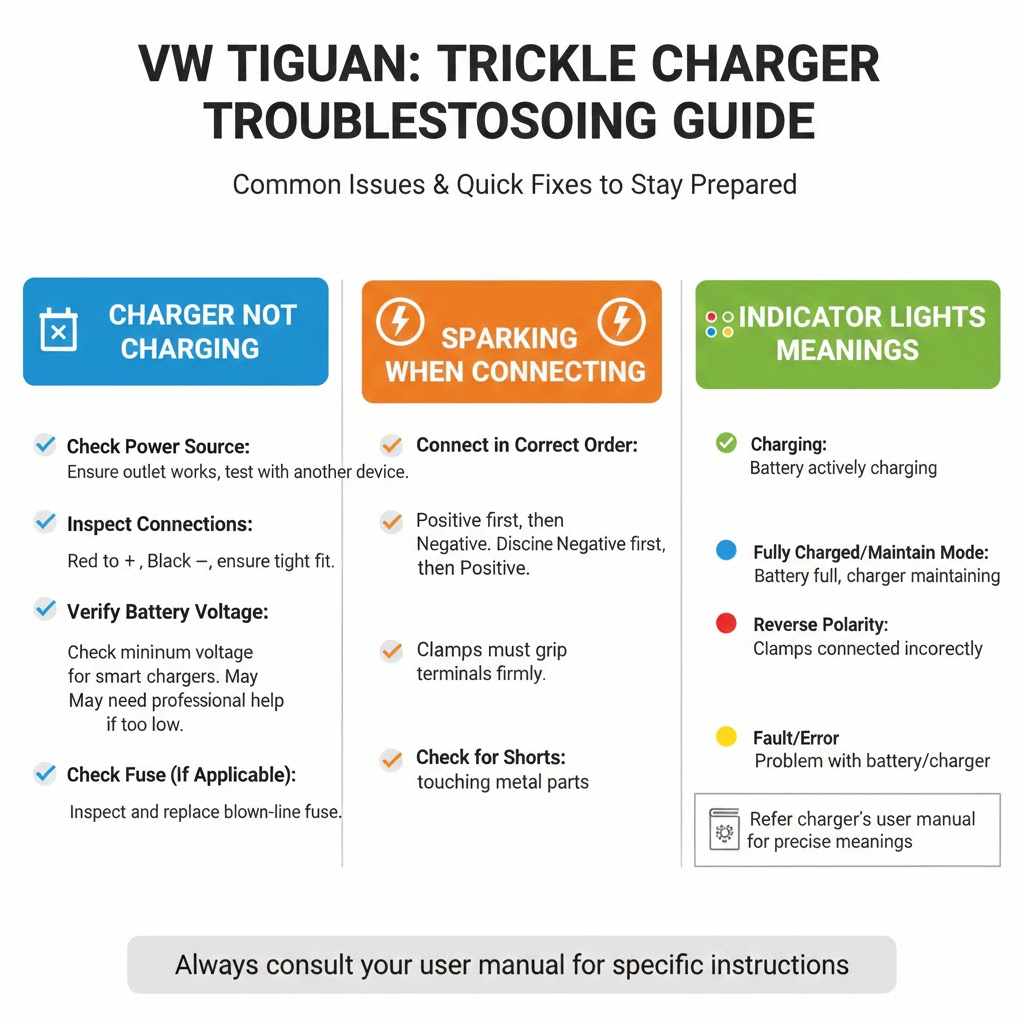
- Check Power Source: Make sure the charger is plugged into a working electrical outlet. Try plugging another device into the same outlet to confirm it has power.
- Inspect Connections: Ensure the red clamp is securely attached to the positive battery terminal and the black clamp is firmly connected to a good ground point. Loose connections are a common cause of charging problems.
- Verify Battery Voltage: Some smart chargers won’t start charging if the battery voltage is extremely low. Check your charger’s manual for minimum voltage requirements. If the battery is too low, it might need a different type of charger or professional attention.
- Check Fuse (If Applicable): Some chargers have an in-line fuse. Check if this fuse has blown and needs replacing.
Sparking When Connecting
A small spark when connecting the last clamp is sometimes normal, especially if there’s a slight residual charge in the system. However, excessive sparking indicates a problem.
- Connect in the Correct Order: Always connect the positive clamp first, then the negative clamp. When disconnecting, remove the negative clamp first, then the positive. This order minimizes sparking.
- Ensure Solid Connections: A loose clamp can cause an arc. Make sure the clamps are gripping the terminals firmly.
- Check for Shorts: Ensure the clamps aren’t accidentally touching other metal parts of the car while you’re connecting them.
Charger Indicator Lights Meanings
Different trickle chargers use different light patterns to indicate status. It’s essential to know what your specific charger’s lights mean.
Typically, you’ll see lights for:
- Charging: Indicates the battery is actively being charged.
- Fully Charged/Maintain Mode: Shows the battery has reached full charge and the charger is now maintaining it.
- Reverse Polarity: Alerts you if the positive and negative clamps have been connected incorrectly.
- Fault/Error: Signals a problem with the battery or the charger itself.
Refer to your trickle charger’s user manual for a precise explanation of its indicator lights. This is the best way to diagnose any issues based on the charger’s feedback.
Frequently Asked Questions
Question: Can I leave a trickle charger connected to my VW Tiguan all the time?
Answer: Yes, smart trickle chargers are designed to be left connected continuously. They monitor the battery and switch to a low-power maintenance mode once the battery is fully charged, preventing overcharging.
Question: What is the difference between a trickle charger and a battery maintainer?
Answer: The terms are often used interchangeably. A true trickle charger provides a constant, low current. A battery maintainer is typically a “smart” charger that adjusts its output based on the battery’s needs, offering more advanced charging and protection.
Question: Does connecting to the chassis ground instead of the negative terminal really make a difference?
Answer: Yes, connecting the negative clamp to a ground point away from the battery is a safety measure to prevent sparks near potentially flammable battery gases. It’s a recommended practice for increased safety.
Question: How long does it take for a trickle charger to charge my Tiguan’s battery?
Answer: It depends on the battery’s current charge level and the charger’s amperage. For a deeply discharged battery, it could take 24 hours or more. However, for maintenance, it’s an ongoing process that keeps the battery topped up.
Question: Will a trickle charger fix a bad battery?
Answer: No, a trickle charger is designed to maintain a healthy battery. It cannot repair or revive a battery that is old, damaged, or has a failed cell.
Summary
Installing a trickle charger on your VW Tiguan safely is straightforward. By picking the right charger and following simple connection steps, you protect your battery. This ensures your Tiguan starts reliably and extends battery life.
Keep an eye on connections and indicator lights for best results.