How to Test a Car Battery: Voltage Chart + Health Check Steps
To test a car battery, set a digital multimeter to DC volts and touch the red lead to the positive terminal and the black lead to the negative terminal with the engine off. After the battery has rested, roughly 12.6V means a full charge on a standard lead-acid battery, about 12.1V means roughly half, and under about 11.8V means it is nearly flat. Then start the engine: a healthy charging system reads about 13.7 to 14.7V, and cranking voltage should not sag below 9.5V at 70 degrees F.
Voltage tells you how charged a battery is, not how healthy it is. A battery can show a perfect resting reading and still fail to start the car, which is why this guide pairs the voltage chart with a cranking check and a few tests that separate a bad battery from a bad alternator or a hidden drain. For a deeper look at one reading, see our guide to whether 12.3 volts is a good battery reading.
What You Need to Test a Car Battery
A digital multimeter is the only tool required for the voltage tests below. Any meter with a DC volts range above 15V will do, and a fused meter with overload protection is worth having because you are working near a battery that can deliver very high current if a lead slips.
| Best Budget Multimeter Pick | |
 |
KAIWEETS Digital Multimeter with Case
|
| View Our Pick on Amazon | |
As an Amazon Associate we earn from qualifying purchases. This is a spec-based pick from the product listing, not a hands-on test.
A shop or parts counter can also run a load test with a dedicated tester, and AAA says its roadside battery service includes a free diagnostic test for members in most areas. Call ahead, because testing policies differ from store to store.
Safety First Before You Touch a Battery
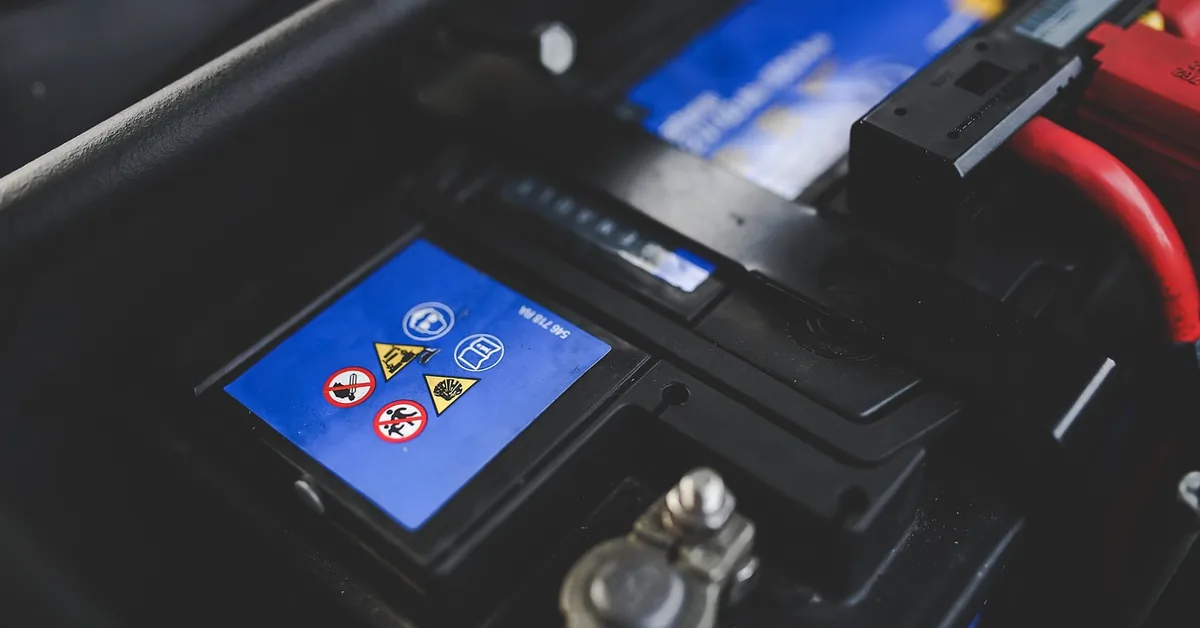
- Explosive gas. The Honda CR-V 2024 owner manual says the battery gives off explosive hydrogen gas in normal operation and a spark or flame can make it explode. Keep sparks and flames away and work in a ventilated area.
- Acid. Interstate Batteries’ safety data sheet for battery acid lists the electrolyte as 30 to 40 percent sulfuric acid that causes severe skin burns and eye damage. For eye contact, rinse cautiously with water for at least 15 minutes and get medical attention.
- Eyewear, jewelry, shorts. Discover Battery says to remove all jewelry, wear safety glasses and a face shield, and avoid grounding the terminals against any metal. A ring or tool bridging the terminals can short the battery.
- Terminal order. If a battery must be disconnected, Discover Battery says to disconnect the negative (ground) cable first and connect it last. Reading voltage does not require disconnecting anything.
- Stop and call a pro if the case is cracked, leaking or swollen, or you smell rotten eggs near the battery.
Flagged for human review: this section is built from owner manuals, a safety data sheet and battery-maker guidance. Your own owner manual overrides it.
Signs Your Car Battery Might Be Failing
AAA lists a slow-cranking starter and an illuminated battery or charging warning lamp as the classic signs of a battery problem. Add these common ones, then confirm with a real test instead of guessing. Our guide to when you need a new car battery covers the replacement decision in more detail.
- Slow engine crank: a sluggish, dragging start, especially on a cold morning.
- Dim headlights or interior lights when the engine is off or at idle.
- Battery or charging warning light on the dashboard. This can point to the battery or to the charging system, so test both.
- Age: AAA says wear typically takes three to five years, and Interstate Batteries puts the general range at 3 to 5 years, with some lasting up to 10.
- Swollen or cracked case: replace it, do not test it. See how long a car battery should last.
- Corrosion on the terminals: chalky buildup can mimic a dead battery on a healthy one.
How to Check Car Battery Health: Step-by-Step
Step 1: Visual Inspection
With the engine off, look for white, blue or green crust on the posts, a cracked or bulging case (replace it), and cables or hold-downs you can move by hand (tighten them first). The Honda manual recommends checking terminals for corrosion monthly, and AAA says to inspect the battery at every oil change. For light corrosion, Yuasa’s manual says to neutralize acid with water and baking soda (1 lb per gallon); wear eye protection and gloves, and reconnect the ground cable last.
Step 2: Listen to Your Car Start
A slow, labored crank is the first sign AAA lists. Go straight to the voltage test. Only rapid clicking with no crank means a very low battery or poor connection; see our guide to fixing a dead car battery.
Step 3: Test Voltage with a Multimeter
- Turn off the engine, lights and every accessory (Fluke).
- Remove the surface charge. A battery just charged or driven reads high. Optima suggests 12 to 24 hours of rest, or headlights on for 30 seconds with the engine off. Yuasa turns the ignition on for about three minutes, off, then waits about 10 minutes.
- Set the meter to DC volts, in a range above 15V.
- Touch the black lead to the negative (-) terminal and the red lead to the positive (+) terminal, as Optima describes.
- Read the display and compare it with the voltage chart below.
Engine-running check: keep the leads on the terminals and clear of belts and fans, and have a helper start the car. Fluke says a good alternator produces 13.7 to 14.7V, and above 13.0V shows it is charging.
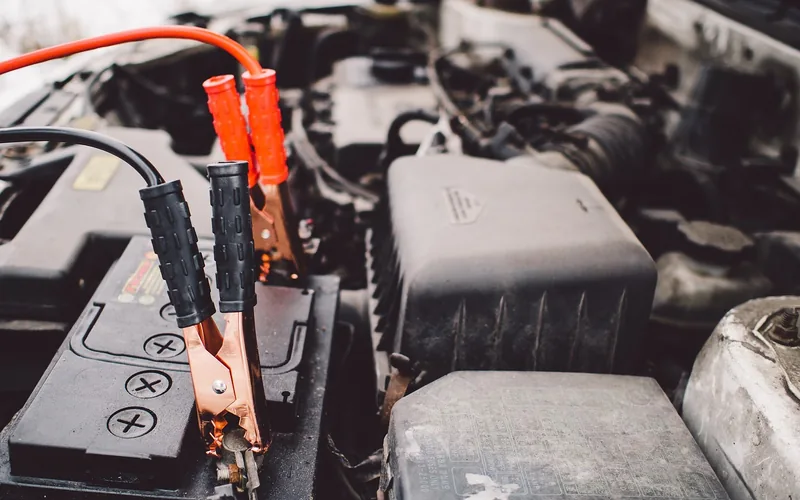
Step 4: Load Test (Most Accurate)
Yuasa’s manual says a battery can pass the voltage test and still be unable to start a vehicle, so a load test is needed. With a dedicated tester, follow its instructions; Yuasa’s rule is that a good 12V battery does not fall below 9.5V at 70 degrees F under load. With a meter, connect it to the terminals, have a helper crank the engine, and note the lowest reading just before it fires; below 9.5V at 70 degrees F, Yuasa says replace the battery. Interstate Batteries says a technician can run a sophisticated test in under a minute. Yuasa’s manual covers powersports batteries, but the lead-acid principle is the same; if a shop’s tester disagrees, trust the shop’s, which accounts for your CCA rating and temperature.
Step 5: Check Reserve Capacity
Reserve capacity is the minutes a fully charged battery can run your car if charging fails. A multimeter cannot measure it, but the rating is on the label, so match or exceed it when replacing the battery (see the specifications table below).
Car Battery Voltage Chart: Resting, Cranking and Charging Voltage
This is the open circuit voltage chart from Yuasa’s technical manual for a conventional (flooded) battery, read after the surface charge has dissipated.
| Resting voltage (engine off) | Approx. state of charge | What to do |
|---|---|---|
| 12.6V or higher (12.8V with Yuasa Sulfate Stop) | 100% | Healthy charge. If the car still struggles, run the cranking test. |
| 12.4V | 75% | Fine to drive. Short trips may not be recharging it fully. |
| 12.1V | 50% | Charge it, then retest. Repeat low readings point to a charging or drain problem. |
| 11.9V | 25% | Discharged. Charge fully and retest before blaming the battery. |
| Below 11.8V | Near 0% | Yuasa says below 11.5V may need a special charger; if it will not accept a charge it is likely finished. |
| Test | Reading to look for | Source |
|---|---|---|
| Cranking | Stay above 9.5V at 70 degrees F | Yuasa |
| Engine running | About 13.7 to 14.7V | Fluke |
| Fully charged AGM, resting | About 12.8 to 13.0V | Yuasa |
| Optima REDTOP, fully charged | About 12.6 to 12.8V (YELLOWTOP: 13.0 to 13.2V) | Optima |
Charts differ. Fluke lists about 12.2V for 50 percent while Yuasa says 12.1V, so treat any chart as bands of about 0.1V. Optima notes an eight-year-old REDTOP at 12.57V may be fully charged while a new one reads 12.92V. AGM batteries rest higher than flooded ones; see our guide to AGM car batteries, plus whether 13 volts is good and our voltage-reading walkthrough.
The corrected myth: a rested 12.6V proves the battery is charged, not healthy. A tired battery can recharge to 12.6V and still sag during cranking, which is why the cranking test decides replacement.
Battery or Alternator? Reading the Results
If the battery rests normally but the car dies after driving, suspect charging. If the engine-running reading stays near resting voltage instead of 13.7 to 14.7V, the alternator, belt or wiring is not doing its job; Interstate Batteries notes the alternator needs about 1,000 rpm to charge at all. See signs of a bad alternator and whether a battery charges while idling. Interstate also says five-minute drives can wear a battery down and 10 to 20 minutes at highway speed helps refresh it. To top it up, see how to charge a car battery, our best car battery chargers and jump starter vs battery charger.
Parasitic Drain: When a Good Battery Keeps Going Flat
If the battery tests fine but is flat again days later, something may draw current with the car off. Identifix says readings under 50 milliamps are acceptable for most vehicles (it varies by model) and modules can take from a few minutes to over an hour to sleep. The test puts an ammeter in series with the negative cable, so the meter must be rated for the current, and you must never crank with it connected that way; pulling fuses one at a time narrows down the circuit. If unsure, let a shop do it, since disconnecting a modern car battery can cause side effects. See normal amp readings for a car battery and why a battery dies fast.
Start-Stop, AGM and Newer Cars: Special Rules
- Battery sensor. The Honda manual says a sensor on the negative terminal monitors battery condition. Porsche’s technical bulletin hosted by NHTSA places its sensor between the negative terminal and ground cable, and warns that connecting a charger or jump leads directly to the battery can damage the sensor; use the defined connection points. Check your car’s jump points in its manual.
- Replace like with like. That bulletin says the car’s AGM battery must not be replaced with a conventional one, and Varta says an AGM must always be replaced with an AGM.
- Registering a new battery. The bulletin says serial number, part number, manufacturer and size must be entered with the workshop tester after replacement, and Varta says the energy management system is programmed with a diagnostic device. Not every make requires this, so check your manual first.
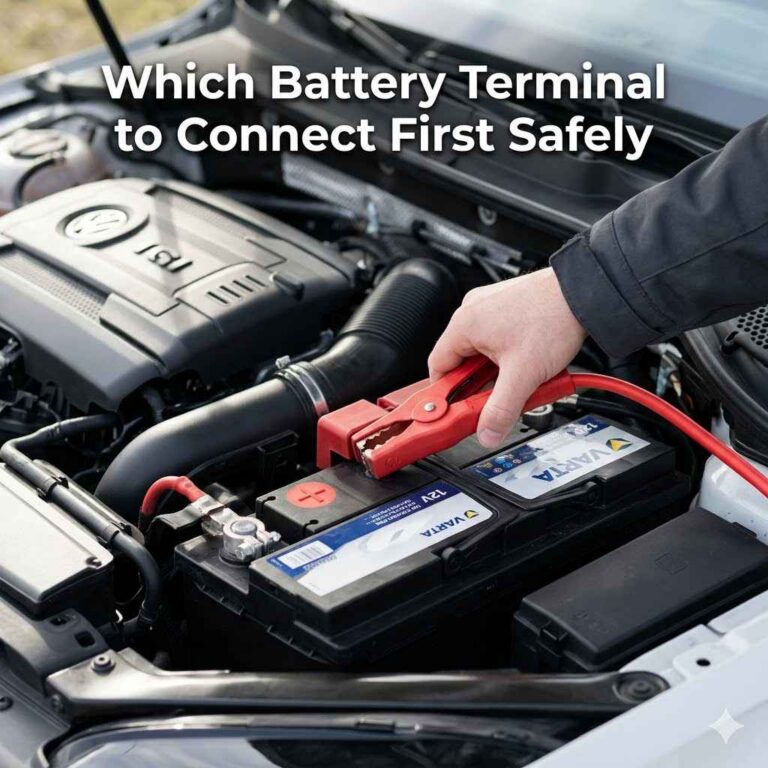
- Jump-starting order. The Hyundai owner manual on jump starting says positive on your vehicle, positive on the helper, negative on the helper, then negative to a chassis ground on your vehicle, and never the negative terminal of the discharged battery, because a spark could cause the battery to explode.
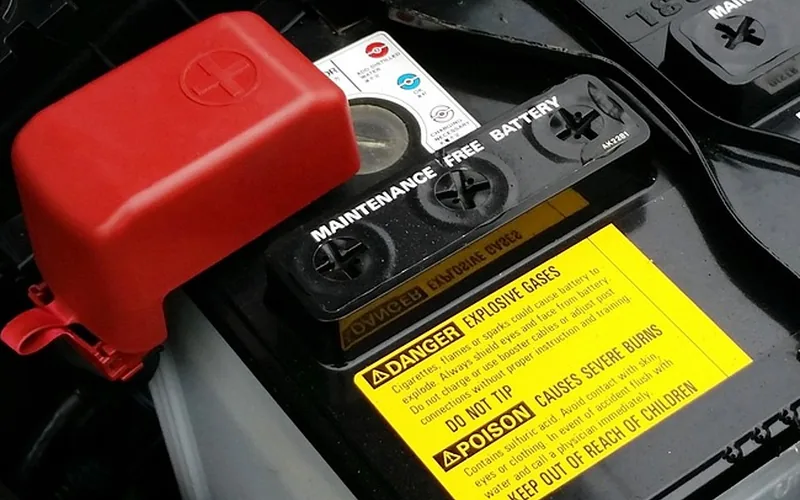
After a swap, see what to do after replacing a car battery and which terminal goes on first. Our car battery basics hub lists every battery guide, and what liquid is in a car battery covers the electrolyte.
Understanding Battery Specifications
| Specification | What It Means |
|---|---|
| CCA (Cold Cranking Amps) | Amps a battery can produce at 0 degrees F for 30 seconds without cell voltage falling below 7.2 volts (Yuasa glossary). Match or exceed your vehicle requirement. |
| RC (Reserve Capacity) | Minutes a fully charged battery delivers 25 amps at 80 degrees F before falling to 10.5 volts (Optima). Low RC means less backup time if the alternator fails. |
When to Call a Professional
- The case is cracked, leaking or swollen: battery acid causes severe burns.
- It will not hold a charge after a full charge and retest, or cranking voltage falls below 9.5V: replace it.
- The car still will not start with a good battery: suspect the starter, alternator or ignition.
- Your car has start-stop, an AGM battery or a battery sensor: have it replaced where the new battery can be registered if the maker requires it.
- You smell rotten eggs, see smoke or hear hissing: stay back and call for help.
Old batteries contain lead and acid and belong at a recycler; ask where you buy the new one.
Frequently Asked Questions
How often should I check my car battery health?
AAA suggests inspecting the battery at every oil change and testing it annually once it reaches its third year. Interstate Batteries suggests a test at least once every six months.
Is it safe to check my car battery myself?
Reading voltage is a routine home check if you wear safety glasses, remove jewelry, keep sparks and flames away, and never let a tool touch both terminals. If the case is cracked or leaking, do not touch it and call a mechanic.
What’s the difference between a dead battery and a bad battery?
A dead battery is discharged and may recover with a full charge. A bad battery has failed internally and sags under load. Charge it fully, retest, then run a cranking test: below about 9.5V at 70 degrees F, replace it.
Can extreme weather affect my car battery?
Yes. Interstate Batteries says batteries are most efficient around 80 degrees F and that brutal summers can leave permanent damage. Yuasa notes a deeply discharged battery can freeze at temperatures as high as 32 degrees F, so keep it charged.
My car battery warning light is on: what should I do?
The light can mean a battery or charging system problem. If the engine-running reading stays near resting voltage instead of 13.7 to 14.7V, suspect the alternator, belt or wiring, and get the charging system tested soon.
How long can I expect a car battery to last?
AAA says three to five years is typical: five or more in cooler northern climates, about three in hot southern ones. Interstate Batteries gives the same range, with some lasting up to 10 years.
Sources, named without links: Yuasa Technical Manual for Powersports Batteries, Optima Batteries, Fluke, AAA, Interstate Batteries, Identifix, Varta, Discover Battery, the Hyundai and Honda owner manuals, and Porsche technical information hosted by NHTSA. Always confirm vehicle-specific steps in your own owner manual.
Products related to this article
Sponsored / affiliate links. As an Amazon Associate I earn from qualifying purchases. I may earn additional commission from eligible campaigns.