How to Kill Cockroaches in Your Car for Good (It Works)
Learning how to kill cockroaches in your car is the only way to reclaim your vehicle from these resilient pests. Nothing ruins a commute faster than spotting a roach scurrying across your dashboard. This complete guide walks you through every step, from deep cleaning to long-term prevention, so you can get rid of roaches for good.
Simply put, to kill cockroaches in your car for good, you must eliminate their food sources, apply a potent gel bait or spray, fog the interior, and set out glue traps to monitor activity. Consistency in cleaning and reapplication of treatments is the only way to break the breeding cycle.
Key Takeaways
- Kill cockroaches in your car requires a multi-step approach: cleaning, baiting, and fogging.
- Food crumbs, sticky spills, and cardboard boxes are the primary attractants for roaches in vehicles.
- Effective roach treatment combines immediate chemical killers (like gel baits) with long-term monitoring (glue traps).
- Prevention is the ultimate game-changer; regularly cleaning your car and avoiding eating inside it stops roaches from returning permanently.
What Attracts Cockroaches to Your Car in the First Place?
Cockroaches invade cars for the same reason they invade homes: food, water, and shelter. Your vehicle provides a warm, dark, and humid environment that is perfect for the German cockroach (Blattella germanica), which is the most common species found in cars. These pests are experts at squeezing into tiny crevices, hiding under seats, and breeding inside your dashboard.
Understanding what draws them in is the first step to keeping them out. You can clean all you want, but if you don’t address the root attractants, the roaches will keep coming back.
Primary Roach Attractants in Vehicles
- Food Crumbs and Spills: Even a single cracker crumb under the seat is a feast. Sugary drinks, coffee creamer, and greasy fast food residue are irresistible to roaches. According to the University of Florida Entomology Department, cockroaches can survive for a month without food, but they will actively seek out and colonize any consistent food source.
- Cardboard and Paper: Grocery bags, fast food bags, and cardboard boxes are like five-star hotels for roaches. Cardboard is a food source itself, and the glue in paper products provides a perfect nesting material.
- Moisture and Humidity: Spilled water bottles, wet umbrellas, and high humidity levels attract roaches looking for hydration. A leaky air conditioning drain or a damp floor mat is a major red flag.
- Clutter and Hiding Spots: Piles of clothes, bags, kids’ toys, and general clutter give roaches a safe space to hide and breed without being disturbed. The average female German roach carries an egg case (ootheca) containing 30-40 eggs, and she will plant it in the safest, darkest corner she can find.
- Friendly Neighbors: If you park next to a dumpster, a restaurant, or a heavily infested apartment building, roaches will routinely explore your car for new territory.
Once you identify these attractants, you can systematically remove them. This is the foundation of any successful plan to kill cockroaches in your car permanently.
Step 1: How to Deep Clean a Roach-Infested Car
A deep clean is non-negotiable. You cannot chemically treat a car that is full of food debris and clutter. The pesticides will not reach the roaches if they are buried under layers of trash.
You need to strip the car down to its bare bones to expose every hiding spot.
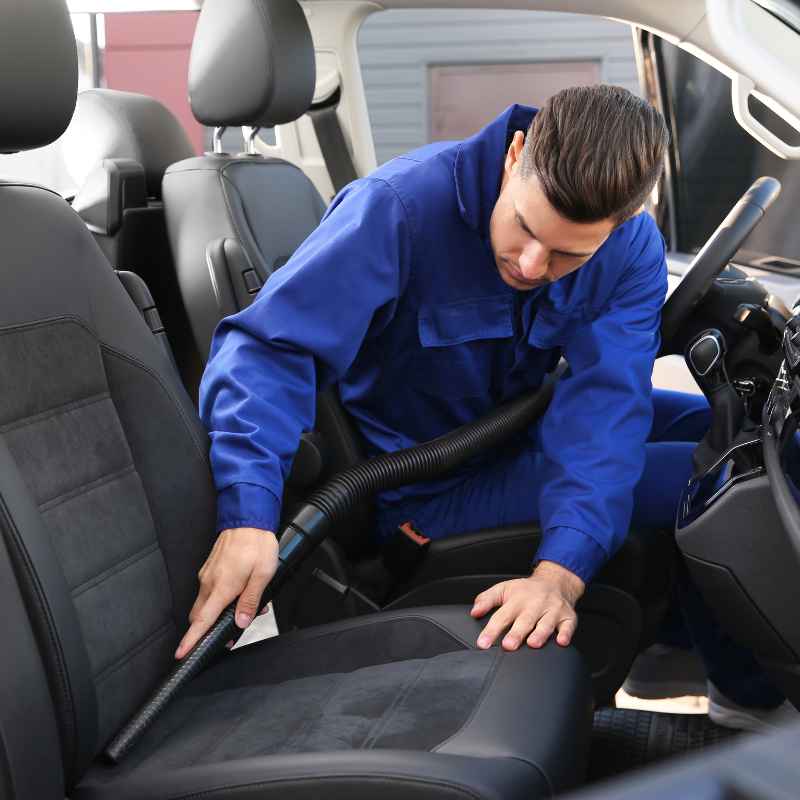
Set aside an entire afternoon for this. You will need a powerful vacuum, a steam cleaner, and a lot of trash bags. The goal is to remove every single particle of organic matter from the vehicle.
Essential Cleaning Tools Checklist
| Tool | Purpose |
|---|---|
| Shop Vacuum with Crevice Tool | Removing debris from deep cracks and under seats |
| Steam Cleaner (Handheld) | Killing bacteria and dissolving sticky residue in carpets |
| Microfiber Cloths (Pack of 20) | Wiping down hard surfaces without leaving lint |
| Flashlight or Headlamp | Spotting egg cases and droppings in dark corners |
| Trash Bags (Heavy Duty) | Removing trash and contaminated materials |
These tools will help you physically remove the roaches’ food sources and habitat. Vacuuming alone can remove up to 50% of a small infestation, but it must be thorough.
The Deep Cleaning Process
- Remove Everything: Take out all floor mats, seat covers, kids’ car seats, and any loose items. Shake them out and wash them with hot soapy water or replace them if heavily infested.
- Power Clean the Carpets: Use a stiff brush to loosen dirt and debris from the carpet pile before vacuuming. Then, use the crevice tool to vacuum along the edges of the carpet, under the pedals, and along the seat rails.
- Steam the Upholstery: Steam cleaning kills roach eggs and larvae on contact. The high heat (over 200°F) penetrates deep into the foam and kills the bacteria that roaches feed on.
- Wipe Down Every Surface: Use a non-ammonia cleaner (vinegar and water works great) to wipe down the dashboard, center console, door panels, and cup holders. Ammonia can mimic roach pheromones and attract more roaches.
Warning: Never mix bleach with ammonia or vinegar. This creates toxic chlorine gas. Stick to one cleaning agent at a time and ensure your car is well-ventilated during the cleaning process.
After the deep clean, your car is ready for chemical treatment. Do not skip this step. Applying pesticides to a dirty car is like painting over a rotten board.
It won’t stick, and the infestation will return quickly.
Step 2: What Are the Best Insecticides and Baits for Cars?
Once the car is clean, you need to introduce a lethal agent that roaches can carry back to their nest. Spraying a repellent insecticide (like Raid) will only scatter the colony and force them to hide deeper inside your dashboard. Instead, you need a non-repellent gel bait or an Insect Growth Regulator (IGR).
Gel baits work like a Trojan horse. Roaches are attracted to the food-based bait, eat it, and then return to their harborage where they die. Other roaches then eat the dead roach or its feces, ingesting the poison and dying as well.
This is called the “horizontal transfer” effect, and it is the most effective way to wipe out an entire colony.
Top 3 Roach Killers for Vehicles Compared
| Product | Type | Best For | Longevity |
|---|---|---|---|
| Advion Cockroach Gel Bait | Indoxacarb (Non-repellent) | Deep crevices, under seats, in the glovebox | Up to 3 months |
| Maxforce FC Magnum Gel | Fipronil (Non-repellent) | Large infestations, high resistance areas | Up to 3 months |
| Gentrol Point Source IGR | Hydroprene (Juvenile Hormone) | Preventing reproduction, stopping nymphs | Up to 4 months |
Advion and Maxforce are the industry standards used by professional exterminators. Gentrol does not kill adult roaches; instead, it sterilizes them and prevents nymphs from maturing. Using a gel bait alongside a IGR is the most comprehensive approach to kill cockroaches in your car completely.
Application Tips for Gel Baits
- Apply small dabs (the size of a grain of rice) in corners and along edges.
- Place bait in hidden spots: under the seats, inside the center console, behind the glovebox trim, and near the spare tire.
- Do not spray repellent insecticides near the bait. The roaches need to feel safe to feed.
- Reapply the bait every 2 weeks until you stop seeing roaches on your sticky traps.
Step 3: How to Use Natural Remedies and Traps Effectively
If you prefer a non-toxic approach or want to create a secondary defense line, natural remedies and traps are excellent options. While chemical baits do the heavy lifting, natural dusts and traps provide 24/7 monitoring and protection.
Diatomaceous Earth (DE) is a fine powder made from fossilized algae. It is sharp at a microscopic level and cuts through the waxy exoskeleton of a cockroach, causing it to dehydrate and die. Boric acid works similarly, but it is also a stomach poison if the roach ingests it while grooming.
Diatomaceous Earth vs. Boric Acid for Cars
| Method | Kill Time | Safety | Application |
|---|---|---|---|
| Diatomaceous Earth (Food Grade) | 24-48 hours | Safe for pets and humans (inhalation risk) | Light dusting in crevices |
| Boric Acid | 3-5 days | Moderate toxic if ingested in large amounts | Light dusting, avoid air vents |
According to the Journal of Economic Entomology, boric acid is effective against roaches that have developed resistance to pyrethroid sprays. However, it works slower than gel baits. Stick to sticky traps for monitoring and DE or boric acid for long-term residual protection.
Tip: Place sticky traps under the front seats and in the trunk. Check them every week. This tells you exactly where the roaches are coming from and how bad the infestation is. If the traps stay clean for a full month, you have won the war.
Step 4: When Should You Fumigate Your Car?
Fumigation is the nuclear option for eradicating cockroaches. If you have a severe infestation that persists despite deep cleaning and baiting, a total release fogger (bug bomb) or professional whole-car fumigation is necessary.
DIY automotive bombs are available at hardware stores, but they have limitations. Foggers kill roaches that are active and exposed, but they do not penetrate deep into the foam or inside sealed egg cases. This means you must time the treatment carefully to catch newly hatched nymphs.
How to Use a Car Fogger Safely (Step-by-Step)
- Read the label. Buy a fogger explicitly labeled for vehicle use. Use enough foggers for the volume of your car (usually 1 per small car, 2 for an SUV).
- Remove the bait. Gel baits and foggers do not mix. The fog will contaminate the bait. Remove any gel bait you applied in Step 2 before fumigating.
- Seal the car. Close all windows, doors, and vents. Activate the fogger, place it on the floorboard, and close the door. Do not stay inside.
- Wait 4-6 hours. The mist needs time to settle. Do not re-enter the car while it is foggy.
- Air out for 1 hour. Open all doors and let the car air out thoroughly. Vacuum up dead roaches and reapply your gel baits.
Important: Professional fumigation using sulfuryl fluoride (Vikane) is over 99% effective in a single treatment, according to the National Pest Management Association. This gas penetrates every crack and crevice, killing all life stages including eggs. If your infestation involves a rental car or a fleet vehicle, professional fumigation is the best investment.
Step 5: How to Maintain a Roach-Free Car Long-Term
Eliminating a roach infestation is useless if you invite them back the next week. Long-term prevention is the phase where most people fail. You must change your car habits to make the environment uninhabitable for roaches.
Roaches are constantly exploring for new territory. A clean car is a strong deterrent, but it is not a vaccine. You need to be proactive.
7 Habits to Keep Roaches Out of Your Car
- No Eating Policy: Do not eat inside your vehicle. If you must, clean up every single crumb immediately. A single drive-thru run can leave enough residue to feed a colony.
- Take Out Trash Daily: Never let trash accumulate. Wrappers, receipts, and empty cups are roach magnets. Take them out every time you exit the car.
- Use the Sun: On a hot day, park your car in direct sunlight with the windows closed. Interior temperatures can exceed 140°F. Roaches die at 120°F. This natural heat treatment costs nothing and kills roaches hiding in the dashboard.
- Park Away from Dumpsters: If possible, park away from commercial dumpsters, restaurant vents, and heavily wooded areas. These are roach superhighways.
- Inspect Your Belongings: Roaches often hitchhike inside grocery bags, backpacks, and gym bags. Inspect these items before bringing them into your car.
- Keep It Dry: Fix any leaking seals or A/C drains. Use a dehumidifier bag or place silica gel packs under the seats to absorb moisture.
- Use Repellent Scents: Peppermint oil, bay leaves, and catnip are natural repellents. Place a few drops of peppermint oil on a cotton ball and tuck it under the seat. Roaches dislike the strong scent.
By combining these habits with the initial deep clean and baiting strategy, you can ensure that your car remains a roach-free zone permanently.
Common Mistakes People Make When Treating Their Car
Even with the best intentions, many DIY roach treatments fail. Understanding these common pitfalls can save you time, money, and frustration. A study in the Journal of Economic Entomology found that up to 70% of DIY pest control efforts fail due to improper product selection or application.
Top 5 Mistakes to Avoid
- Mistake 1: Using Repellent Sprays First. Spraying a harsh repellent like pyrethrin or bleach sends the colony scattering deeper into the vehicle’s structure. This makes it impossible for gel baits to reach them later. Always start with non-repellent baits.
- Mistake 2: Only Fogging Without Cleaning. Fogging kills live roaches but leaves behind egg cases (oothecae). The eggs will hatch in 2-4 weeks, and you will have a brand new infestation. You must vacuum and steam clean to physically remove the eggs.
- Mistake 3: Ignoring the Trunk. The trunk is a dark, quiet, and often neglected space. It is a prime hiding spot for roaches. Treat the trunk with the same deep cleaning and baiting strategy as the cabin.
- Mistake 4: Stopping Treatment Too Early. Roaches have a life cycle of about 90 days. If you stop treating after 2 weeks, you will miss the next generation. Continue baiting and monitoring for at least 60 days.
- Mistake 5: Leaving Cardboard Boxes in the Car. Cardboard is a food source and nesting material for roaches. Remove any cardboard immediately and replace with plastic storage bins if you must keep items in your car.
Avoiding these mistakes significantly increases your chances of successfully eradicating the infestation on your first attempt.
Frequently Asked Questions
How did roaches get in my car in the first place?
Roaches generally enter your car by hitchhiking. They can crawl into grocery bags, backpacks, or even climb up from the parking lot through the door weatherstripping. If you park near a dumpster or in a heavily infested area, roaches will explore your warm vehicle for shelter and food.
Can roaches survive in a hot car?
No, roaches cannot survive extreme heat. German cockroaches die when exposed to temperatures above 120°F (49°C) for a sustained period. On a sunny summer day, a closed car can reach 140-160°F.
Using the sun’s heat is a natural and effective way to kill roaches in a car.
What is the best cockroach killer for cars?
The best roach killer for cars is a non-repellent gel bait like Advion or Maxforce FC Magnum. These baits trick roaches into thinking they have found a safe food source. They eat the poison, return to the nest, and die, which triggers a chain reaction that kills the entire colony.
IGRs like Gentrol are also excellent for preventing reproduction.
Should I hire a professional exterminator for my car?
You should hire a professional if you have tried DIY methods twice without success, if the infestation is extremely severe (hundreds of roaches visible), or if you are dealing with a rental or fleet vehicle. Professional fumigation with Vikane gas is the most effective treatment and guarantees 99% eradication in one visit.
How long does it take to get rid of roaches in a car?
It typically takes 1 to 3 months to fully eliminate a roach infestation from a car. The initial deep clean and treatment kill the active roaches, but you must continue monitoring and reapplying baits for 60-90 days to ensure that newly hatched nymphs are also killed before they can reproduce.
Final Thoughts
Killing cockroaches in your car permanently requires a systematic strategy: eliminate the attractants, attack the colony with gel baits, and relentlessly monitor for survivors. It is a battle of consistency, not luck. Stay vigilant with your cleaning habits and reapply treatments on schedule.
You can and will reclaim your car from these resilient pests.
Products related to this article
Sponsored / affiliate links. As an Amazon Associate I earn from qualifying purchases. I may earn additional commission from eligible campaigns.
 Coverado Car Seat Covers Front Seats, Luxury Leather Car Seat Covers, Automotive Mesh Seat Covers 2 Pack, Airbag-Compatible, Black Gray Seat Covers for SUV Sedan Truck
 Optimum Power Clean - All Purpose Car Cleaner - Exterior and Interior, Bug and Tar Remover, Great for Boat, Motorcycle, RV, and Car Detailing (17 Oz)