What Are GM Cars? A Buyer’s Guide to Chevrolet, GMC, Buick, and Cadillac
What Does GM Stand For, and Why Does It Matter?
General Motors is the parent company behind some of the most recognizable vehicles on American roads. When you see a Chevy Silverado, a GMC Sierra, a Buick Enclave, or a Cadillac Escalade, you’re looking at a GM product. The company builds everything from $20,000 commuter sedans to six-figure electric luxury SUVs.
Understanding the corporate structure helps you shop smarter. GM doesn’t sell cars under one name. It operates four distinct brands, each with its own dealership network, pricing strategy, and target buyer. That separation matters when you’re comparing warranties, service experiences, and resale values.
This guide walks through each brand, the shared technology underneath them, and the practical differences that should drive your purchase decision. You’ll also learn why some older GM brands like Pontiac disappeared and what the company’s electric future looks like.
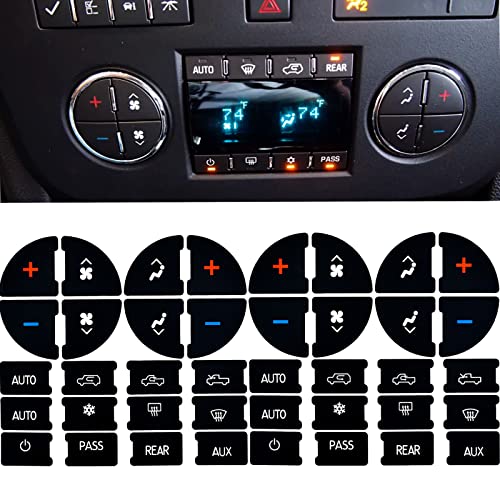
If your GM vehicle’s interior is showing age, a simple fix can restore it. The NOTISH AC dash button repair kit replaces faded A/C control decals on select 2026-14 Chevy and GMC models. It’s a cheap way to make an older dashboard look fresh again without replacing the whole control unit.
The Four Core Brands: A Side-by-Side Comparison
Each GM brand has a clear job. Chevrolet handles volume and value. GMC sells premium trucks and SUVs. Buick sits between mainstream and luxury. Cadillac competes head-on with German and Japanese luxury marques.
| Brand | Price Point | Target Buyer | Key Models |
|---|---|---|---|
| Chevrolet | Entry to mid-range | First-time buyers, families, fleet operators | Silverado, Equinox, Malibu, Corvette |
| GMC | Mid to upper | Truck owners wanting more refinement | Sierra, Yukon, Canyon, Terrain |
| Buick | Mid to upper | Older buyers, comfort-focused commuters | Enclave, Envision, Encore GX |
| Cadillac | Luxury | Professionals, luxury shoppers | Escalade, CT5, Lyriq |
Chevrolet: The Mainstream Value Leader
Chevrolet is the volume brand. It sells more cars than the other three GM divisions combined. The lineup covers every segment, from the budget-friendly Trax crossover to the legendary Corvette sports car.
Chevy’s sweet spot is the Silverado pickup, which competes directly with the Ford F-150 and Ram 1500. The Equinox and Trailblazer SUVs dominate the affordable family market. If you want the most choices and the lowest entry price, Chevy is the default answer.
The trade-off is interior quality. Chevy uses more hard plastics than GMC or Buick. You pay less, but you notice the difference when you run a hand across the dash.
GMC: Premium Utility and Trucks
GMC is essentially the upscale version of Chevrolet’s trucks and SUVs. The Sierra shares its bones with the Silverado, but adds a nicer cabin, exclusive styling, and features like the MultiPro tailgate with six different positions.
The Yukon and Yukon XL are GMC’s full-size SUVs. They compete with the Chevy Tahoe and Suburban, but GMC positions them as more premium. The Denali trim level has become a status symbol in its own right, recognizable by its mesh grille and chrome accents.
GMC also owns the Hummer EV nameplate now. That electric pickup starts around $80,000 and pushes the brand further upmarket. GMC doesn’t sell sedans or small hatchbacks. If you want a car, you need to look at Chevrolet or Buick.
Buick: The Upscale Comfort Choice
Buick has reinvented itself as a crossover-only brand. The sedan lineup is gone. Every current Buick is an SUV, and they all prioritize soft rides and quiet cabins over sporty handling.
The Enclave is the largest Buick, seating seven or eight people comfortably. The Envision is a compact luxury crossover that undercuts German rivals on price. Buick’s design language leans conservative, which appeals to buyers who want luxury without flashy attention.
Buick has a strong following in China, where it’s considered a prestige brand. In the US, it skews toward older buyers, but the new all-electric Electra E5 and E4 models aim to change that perception.
Cadillac: Luxury and Performance
Cadillac is GM’s flagship luxury division. It competes with BMW, Mercedes-Benz, and Lexus. The Escalade remains the king of full-size luxury SUVs, often seen in celebrity driveways and executive fleets.
The CT4 and CT5 sedans offer rear-wheel-drive platforms and available V-Series performance versions. The Lyriq is Cadillac’s first serious electric SUV, and it’s a strong contender against the Tesla Model Y and Audi Q4 e-tron.
Cadillac also introduced Super Cruise, a hands-free driver assistance system that works on over 400,000 miles of mapped highways. It’s one of the best systems on the market, beating Tesla’s Autopilot in real-world highway testing. The brand’s weakness is its dealership experience, which historically lags behind Lexus and Genesis.
Shared GM Technology Across All Brands
GM spends billions on research and development. Some of that technology appears across all four brands. Knowing what’s shared helps you avoid paying extra for features you can get cheaper elsewhere in the lineup.
The Ultium Electric Vehicle Platform
Ultium is GM’s modular battery and motor platform. It’s the foundation for all future GM electric vehicles. The system uses large-format pouch cells arranged in flexible configurations, allowing different battery sizes and ranges.
The Hummer EV uses a 200-kWh battery pack for extreme off-road performance. The Chevy Equinox EV uses a smaller pack to keep the price near $30,000. The Cadillac Lyriq splits the difference. One platform, many price points.
Ultium batteries support 800-volt charging on some models, which means adding 100 miles of range in about 10 minutes at a DC fast charger. That’s competitive with Tesla’s V3 Superchargers. GM also announced a shift to Tesla’s North American Charging Standard connector, so future GM EVs can use the Tesla Supercharger network without an adapter.
Super Cruise and OnStar Connectivity
Super Cruise is GM’s hands-free driving system. It uses lidar map data, GPS, and a driver-facing camera to monitor attention. You can take your hands off the wheel on mapped divided highways, but you must keep your eyes on the road.
OnStar is GM’s embedded connectivity service. It includes automatic crash response, remote start via smartphone, and stolen vehicle assistance. Every new GM vehicle comes with a trial subscription, but the service costs money after that. Many buyers skip it because smartphone integration covers most needs.

Wireless Apple CarPlay and Android Auto are standard on most new GM vehicles. The company recently announced it will phase out CarPlay in future EVs, which has drawn criticism from buyers who prefer phone integration over built-in Google software.
Discontinued Brands: Pontiac, Oldsmobile, and Saturn
GM once owned more brands. Pontiac, Oldsmobile, Saturn, Saab, and Hummer all existed under the GM umbrella. The 2026 financial crisis forced GM to shed several of them.
Pontiac was killed in 2026. It was supposed to be GM’s performance brand, with cars like the GTO and Firebird. But it overlapped too much with Chevrolet, and GM couldn’t justify the cost of keeping it alive.
Oldsmobile was discontinued in 2026, before the bankruptcy. It was one of America’s oldest car brands, but sales had declined for decades. Saturn was also shut down in 2026. It had a unique no-haggle dealership model, but the cars themselves were unremarkable.
These closures mean fewer choices for buyers, but they also simplified GM’s operations. The company now focuses its resources on four brands instead of eight. That focus shows in the quality of recent products like the Chevy Colorado and Cadillac Lyriq.
How to Choose the Right GM Car for You
Start with your budget and body style. If you need a truck, decide between Chevy and GMC. The Silverado is cheaper. The Sierra feels nicer inside. If you want a family SUV, the Chevy Traverse and Buick Enclave share similar bones, but the Buick costs more for a quieter ride and better materials.
For luxury, Cadillac is the obvious choice, but consider a loaded GMC Denali instead. Many buyers find the Denali’s interior comparable to Cadillac at a lower price. The Escalade is bigger and more prestigious, but the Yukon Denali offers 90% of the experience for less money.
Electric buyers should look at the Chevy Equinox EV for value, the Blazer EV for style, or the Cadillac Lyriq for luxury. The Hummer EV is a statement piece, not a practical daily driver. It weighs over 9,000 pounds and gets poor efficiency for its size.
Check fleet availability. If you live near a major city, many GM dealers sell used fleet vehicles from rental companies and corporate leases. Those cars often have higher mileage but significantly lower prices. A used Chevy Impala or Malibu from a former rental fleet can be a smart budget buy.
Don’t ignore the warranty. GM offers a 3-year/36,000-mile bumper-to-bumper warranty and a 5-year/60,000-mile powertrain warranty. That applies to all four brands equally. Certified pre-owned vehicles get extended coverage, which is worth considering for higher-end models like the Cadillac CT5.
Before you buy, check the specific model’s reliability history. Some GM engines, like the 5.3L V8 in older Silverados, had known issues with cylinder deactivation. Others, like the 3.6L V6, are generally solid. Look up owner forums and Consumer Reports data for the exact year and powertrain you’re considering.
The Future of General Motors: EVs and Autonomous Driving
GM plans to sell only electric passenger vehicles by 2035. That’s an ambitious target, and the company is investing $35 billion in EV and autonomous vehicle development through 2026.
The Ultium platform is the backbone of this transition. GM has also created BrightDrop, a commercial EV brand that makes delivery vans and electric pallets for logistics companies like FedEx and Walmart. BrightDrop doesn’t sell to consumers, but it represents a significant revenue stream for GM.
Cruise, GM’s autonomous driving subsidiary, operates a robotaxi service in San Francisco and several other cities. The Cruise Origin is a purpose-built autonomous shuttle with no steering wheel. It’s still in limited deployment, and the technology has faced regulatory scrutiny and safety concerns.
GM’s internal combustion engines aren’t going away overnight. Trucks and SUVs will remain gasoline-powered for years. The company is also developing hybrid systems for its full-size pickups, which could arrive by 2026. If you’re not ready for an EV, you’ll still have plenty of traditional GM options.
Frequently Asked Questions about GM Cars
Are GM cars reliable?
Reliability varies by model and year. The 3.6L V6 engine and the 10-speed automatic transmission are generally solid. Some older models with cylinder deactivation had issues. Check specific model years on owner forums before buying. Modern GM vehicles are competitive with Toyota and Honda in most segments.
What is the difference between Chevy and GMC?
GMC is the premium version of Chevrolet’s trucks and SUVs. The Sierra and Silverado share the same platform and engines. GMC adds nicer interiors, exclusive features like the MultiPro tailgate, and higher price tags. GMC doesn’t sell sedans or compact cars.
Does GM still make Buick cars?
Buick no longer sells sedans in the US. The current lineup is all SUVs, including the Enclave, Envision, and Encore GX. Buick has announced future electric models, but they’re not on sale yet.
Which GM brand is the most luxurious?
Cadillac is GM’s luxury brand. The Escalade is the flagship, and the Lyriq is the electric entry. However, a fully loaded GMC Yukon Denali can rival a Cadillac in comfort and features at a lower price.
Can I use Tesla Superchargers with a GM electric car?
Starting in 2026, GM adopted Tesla’s North American Charging Standard connector. That means new GM EVs can plug directly into Tesla Superchargers. Older GM EVs with the Combined Charging System will need an adapter, which GM provides.
What You Should Take Away
- GM is a parent company with four active brands: Chevrolet, GMC, Buick, and Cadillac.
- Chevrolet offers the most models and the lowest prices; GMC adds premium features to trucks and SUVs.
- Buick is a comfort-focused crossover brand, while Cadillac competes with BMW and Mercedes.
- Ultium is GM’s shared EV platform, used across all brands from the Equinox EV to the Hummer EV.
- Super Cruise is a hands-free highway driving system available on select Cadillac, Chevy, and GMC models.
- Pontiac, Oldsmobile, and Saturn were discontinued due to brand overlap and the 2026 financial crisis.
- Match the brand to your needs: budget buyers pick Chevy, truck buyers choose between Chevy and GMC, and luxury buyers look at Buick or Cadillac.
GM’s lineup covers nearly every segment, so the hardest part is narrowing down the options. Use the brand comparison table as your starting point, then test drive the top two or three models in your price range. The right GM car is the one that fits your budget, your garage, and your daily routine.
Products related to this article
Sponsored / affiliate links. As an Amazon Associate I earn from qualifying purchases. I may earn additional commission from eligible campaigns.