How to Make Your Car Sound Louder and Stay Out of Trouble
Lots of people want to know How to Make Your Car Sound Louder Safely. It’s a common topic, especially for people who are new to cars. It can seem tricky because you want a cool sound, but you also want to follow the rules and keep your car running well. Don’t worry, it’s totally doable! This guide will show you simple steps to get a louder, more impressive exhaust note, all while staying safe and legal. Let’s explore how to make your car sound the way you want it to.
Choosing Exhaust Upgrades
The exhaust system is key to making a car louder. This system starts right after the engine and goes all the way to the back. Modifying this system can change the sound your car produces. There are many options, from small changes to full system replacements. Each change affects the sound differently. Knowing the difference between them is a good start to figuring out what you want.
Muffler Modifications
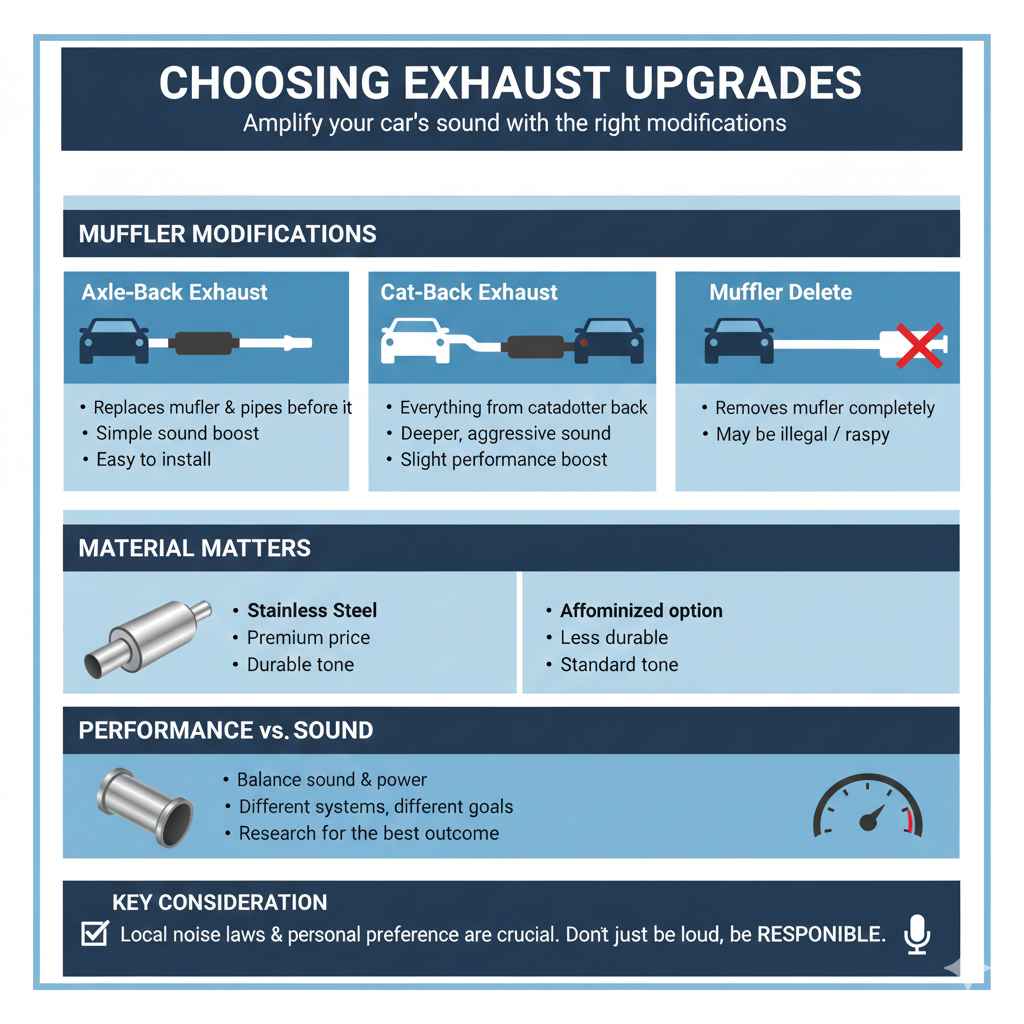
The muffler is where the sound of the engine gets quieted down. Changing the muffler is one of the easiest ways to make your car sound louder. There are many different kinds of mufflers you can choose from. Some are designed for performance, while others are built for sound. Think about what kind of sound you are looking for. Do you want a deep rumble, or something sharper? The muffler is the first place to look. Consider the size of the muffler and your budget, too. There are many options.
Axle-Back Exhaust: This type of exhaust replaces the muffler and the pipes just before it. It’s a simple change, and great for a boost in sound. It’s usually easy to install.
Installing an axle-back exhaust system is fairly straightforward. You remove the old muffler and pipes, and bolt in the new one. Most kits include everything you need, and you can often do it with basic tools. This type of upgrade offers a good mix of sound improvement and ease of installation. It also means you don’t have to modify the entire exhaust system.
Cat-Back Exhaust: This system replaces everything from the catalytic converter back. It gives a bigger sound change than just changing the muffler. It will give you a deeper, more aggressive sound. It also can boost performance slightly.
This is a more involved job, but still doable for many car owners. You’ll need to remove sections of the exhaust system, including the catalytic converter, and install the new pipes. Cat-back systems often use larger diameter pipes than stock, helping the engine breathe more freely. This means a little more power and a lot more noise.
Muffler Delete: Removing the muffler completely is another option. This results in a much louder sound. This is not legal everywhere, and can sometimes result in a raspy sound.
This is the simplest way to get a loud exhaust note, but it’s not always the best. A muffler delete involves cutting out the muffler and welding in a straight pipe. While it’s cost-effective, it can make your car extremely loud, and that may draw unwanted attention from law enforcement. Make sure you check the local laws about exhaust noise before you decide on this.
Material Matters
The materials the exhaust system is made from also affect the sound. Stainless steel and aluminized steel are the most common choices. Stainless steel is often preferred because it’s stronger and resists rust longer. Aluminized steel is more affordable, but it may not last as long. The thickness of the metal also makes a difference in sound quality. This will contribute to the sound’s tone and resonance. Keep in mind, different materials have different properties.
Performance vs. Sound
When selecting exhaust components, balance sound enhancement with performance improvements. You want to make sure your choice fits your needs. Some exhaust systems are built for better sound, while others focus on performance gains. Many options balance both. The right choice depends on your priorities. Consider if you want more power or just a louder exhaust note. Some systems boost power while creating a great sound. Researching exhaust systems can provide better outcomes for the user.
Legal and Safety Considerations
Changing your exhaust means following the law and making sure your car is still safe. Rules about exhaust systems vary from place to place. It’s important to know the rules in your area. Loud exhaust systems that exceed the decibel limits can result in tickets. You can cause damage to other parts of your car if the exhaust modifications aren’t done correctly. Always prioritize safety while upgrading your car’s sound.
Decibel Limits
Most places have rules about how loud your car can be. These rules are usually written as decibel limits. These limits are the maximum sound levels allowed. Testing is usually done with the car’s engine running at a certain speed. You can easily find the local rules online. Make sure you know what’s allowed. If your exhaust is too loud, you could be fined. You might also have to fix your exhaust to meet local standards.
Checking Local Regulations: Before you start, find out about your area’s noise laws.
Check your state and local government websites to be sure.
Search online for “exhaust noise regulations” plus the name of your city or county. Many places have websites with the rules clearly explained. It’s important to be aware of these rules. These rules can vary a lot, so it’s best to be up-to-date.
Understanding Decibel Levels: Learn what decibels are and what noise levels are considered safe.
You can use a decibel meter to get an estimate.
Decibels measure sound pressure. A normal conversation is about 60 decibels. A loud car exhaust might be over 100 decibels. Exposure to loud noises can affect your hearing. Keeping an eye on the decibel level helps you stay within legal limits.
Enforcement and Penalties: Know what can happen if your exhaust is too loud.
The police could give you a ticket, and you could be forced to fix your exhaust.
The penalties can range from a warning to a hefty fine. Some places might even require you to get your car inspected. If your car is too loud, you could have your license suspended. Make sure to stay within legal boundaries. If you get a ticket, you’ll need to correct the problem.
Safety First
When working on your exhaust system, safety is key. Use the proper tools and follow the correct procedures. Always wear safety glasses and gloves to protect yourself. Make sure your car is stable and won’t move while you are working. Many exhaust components can be very hot, so avoid touching them after use. Take time to do it safely to prevent injuries and damage to your car. Working safely means you can enjoy your improved exhaust without issues.
Consider the following safety precautions while working:
Use Jack Stands: If you need to raise your car, always use jack stands. Never work under a car supported only by a jack. This will prevent injury.
Jack stands are essential for safety. They provide solid support and stop the car from moving if the jack fails. Place the jack stands on a firm, level surface. Make sure the stands are rated for the weight of your car.
Wear Safety Gear: Wear safety glasses, gloves, and ear protection.
Exhaust parts can be sharp, and the noise can damage your hearing.
Safety glasses will protect your eyes from debris, and gloves will protect your hands. Ear protection is a good idea when working around loud exhausts. Good safety gear is an important part of your toolbox. This will reduce your chances of getting hurt.
Allow for Cooling: Let your exhaust cool down before starting work.
Exhaust components can get extremely hot.
Exhaust systems get very hot while the engine is running. Give the exhaust plenty of time to cool down before you work on it. This can prevent serious burns. You’ll be able to work more easily. Safety is always important, especially when working on a car.
DIY vs. Professional Installation
Deciding between doing the work yourself or having a professional install your exhaust is a big choice. The right choice depends on your skills, budget, and how complex the modification is. DIY installation can save money, but it requires some mechanical knowledge. Professional installation ensures the job is done correctly, but it costs more. Both options have pros and cons. Understanding these will help you make a good decision.
Pros and Cons of DIY
Doing it yourself can be a great way to save money and learn about your car. It can be satisfying to do your own upgrades. But, you also need to have the right tools and be comfortable working on your car. If you do not have the right experience, it can be risky. You also have to think about how much time you want to spend on the project. Considering all these elements will help you decide if DIY is right for you. Making the right decision can make the process more enjoyable and successful.
Cost Savings: You can save a lot of money by doing the work yourself.
You only pay for the parts.
Labor costs at a shop can be expensive. By doing it yourself, you avoid these costs. You have more control over the budget. Plus, you can shop around for the best prices on parts. However, don’t forget to factor in the cost of tools you don’t already have. This is an excellent way to save money, particularly if you have the knowledge and tools needed.
Learning Experience: Working on your car can be a great learning experience. You will gain a deeper understanding of how your car works.
This is a great advantage if you like learning about cars. You will learn how the exhaust system works. This may help you with any future car problems. You’ll gain valuable mechanical knowledge. Many people enjoy the hands-on experience and the ability to customize their car. Your knowledge will grow by leaps and bounds.
Time Commitment: Working on your car can be time consuming. You will need to set aside time for the job.
It can take a long time to do the job yourself. This depends on your skill level and how complex the installation is. You have to plan for unforeseen problems. Professional installation can usually be done more quickly. This is important to consider, especially if you need your car every day. Doing the work yourself means setting aside extra time.
Potential Risks: You can accidentally damage your car. If you are not careful, you could damage parts or make mistakes.
Incorrect installation can cause problems like leaks, poor performance, or even damage to your engine. If you’re not sure about a step, it’s best to get help from a professional. Safety is especially important. Some repairs may also be difficult and require special equipment. This is important to consider, especially if you are inexperienced.
Professional Installation
Hiring a professional ensures your exhaust system is installed correctly. A professional has the experience and tools to do the job right. This reduces the risk of making mistakes or damaging parts. However, professional installation costs more. You also need to find a reputable shop that you can trust. This approach ensures a quality job and saves time, but you pay more for these benefits. It’s a good choice if you aren’t comfortable working on your car.
When choosing a professional, consider these tips:
Shop Reputation: Look for a shop with good reviews and a good reputation.
Check reviews online and ask for recommendations.
A reputable shop will have experienced mechanics. They will use high-quality parts. Word-of-mouth recommendations are very valuable. Many people choose local shops with a good reputation. This can provide confidence in their services.
Get a Quote: Get a quote from several shops before deciding.
Get a written quote that details the parts and labor costs.
This helps you compare prices and ensure you’re getting a fair deal. Ask about any additional charges that might arise. The quote should include a breakdown of the cost. You can also make a good choice by comparing quotes.
Ask about Warranties: Ask about warranties on parts and labor.
A warranty protects you if something goes wrong after the installation.
A warranty provides peace of mind. It means the shop stands behind its work. It shows that they have confidence in their quality. A warranty covers the labor and the parts. Knowing the terms of the warranty is very important. Always be sure to know what a warranty covers.
Inspect the Work: After installation, inspect the work.
Make sure everything looks right and sounds right.
Look for leaks, loose connections, or any other problems. Listen for any unusual noises. Be sure everything is done to your satisfaction. You should make sure your exhaust sounds exactly how you want it. This ensures that the installation meets your expectations.
Improving Sound Without Breaking the Bank
Making your car louder doesn’t always mean spending a lot of money. There are affordable ways to enhance your car’s sound. These options allow you to change the exhaust sound without putting a huge dent in your wallet. Even small adjustments can make a big difference, if you plan carefully. There are options that can fit many budgets, if you know where to start.
Budget-Friendly Options
You can get a better exhaust sound without expensive parts. There are simple, cost-effective adjustments that make a real difference. These options are usually easier to install yourself. They are a good starting point if you want to enhance your car’s sound. They provide a noticeable improvement without costing a fortune. They allow you to test out different sound profiles.
Resonator Delete: Removing the resonator, a small chamber in the exhaust system, will alter the sound. This can produce a deeper sound.
A resonator delete is a relatively easy modification. You simply remove the resonator and
Muffler Tip Upgrade: Upgrading the exhaust tip can change the sound. It can also improve the look of your exhaust.
A new exhaust tip is easy to install, as well. It provides a visual upgrade. It also changes the way the exhaust sound is released. It can change the tone of the sound. This also can affect the sound volume. There are many sizes and materials to choose from. A new exhaust tip is a nice, budget-friendly change. It’s a great way to improve your car’s appearance, as well as the sound.
Exhaust Wrap: Wrapping your exhaust pipes with heat-resistant wrap can reduce sound and give a unique look.
Exhaust wrap helps to contain the sound. It also protects other parts from heat. It’s easy to apply. You simply wrap the exhaust pipes with the material. This will reduce noise. The wrap can change the sound. It also protects undercarriage parts from heat. It can also add a custom look. This is a good way to modify the sound of your car.
Used Parts
Shopping for used parts is another way to save money. You can often find quality exhaust components at a lower price. Always inspect the parts carefully before you buy them. Make sure there are no leaks or damage. Check the reviews. This lets you save money while still getting an upgrade. It’s important to research the history of the parts. This will give you confidence in your choice.
Consider these points when purchasing used parts:
Check for Damage: Inspect used parts thoroughly before you buy them. Look for cracks, rust, or other damage.
Make sure the parts are in good condition. Look closely to find any possible problems. Damaged parts may lead to leaks. They may not perform as expected. A quick inspection can help you avoid problems later. Make sure you inspect the parts very carefully before purchasing.
Verify Compatibility: Make sure the used parts are compatible with your car. Check the part numbers and measurements.
Ensure the parts will fit your car. Parts for other models or years might not fit correctly. Comparing your car’s specifications with the part’s is a must. Double-check before you buy. This keeps you from wasting time and money on the wrong parts. The right fit is critical to the process.
Check for Leaks: Check the used parts for potential leaks. Look for signs of damage that might lead to exhaust leaks.
Exhaust leaks can cause noise and loss of performance. The leaks might damage other car parts. Make sure the parts are sealed properly. Ensure that any seals or gaskets are in good condition. If you find leaks, you might not want to buy the part. Checking for leaks is an important part of the process.
Review Seller Reputation: Buy from sellers with a good reputation. Check online reviews and ratings.
A reputable seller is more likely to provide quality parts. Read reviews from other customers. Look for a seller with positive feedback. A good seller can offer a warranty or returns. They should provide accurate descriptions and photos. A good seller improves the chances of a positive experience. Checking a seller’s reputation can reduce the chance of problems.
Making Your Car Sound Louder Safely: Putting It All Together
Modifying your car’s exhaust can be an enjoyable way to personalize it. You have to consider safety, local laws, and your budget. Choosing the right components and installing them properly is critical. Doing your homework helps you make good decisions. Starting small and staying within legal limits can improve your car’s sound. Carefully plan your changes. Then you can make your car sound the way you want.
Research Your Car: Understand your car’s exhaust system. Look at what types of exhaust you can add or change.
Find out what’s currently installed. Learn how the different parts work. Doing this will let you make informed decisions. Also check online forums. Car owners often share their experiences. Knowing your car’s current exhaust configuration will help you make a good plan. Researching your car’s exhaust system is an important first step.
Set a Budget: Determine how much you want to spend. This helps you narrow your choices.
Setting a budget is important. Decide how much money you want to spend. This will help you choose parts that you can afford. This will prevent overspending. Then you can find the best value for your money. Think about the costs of both parts and labor. Then you can stay within your financial means. Knowing how much you can spend is a key part of the process.
Choose Your Parts: Pick the exhaust components that meet your goals. Consider sound quality, performance, and your budget.
Explore your options carefully. Weigh the pros and cons of each choice. Research different brands and models. Read reviews from other car owners. See what components fit your needs. Remember, safety should be a priority. Selecting the right parts will allow you to make the sound you desire.
Decide on Installation: Decide if you’ll do the work yourself or hire a professional. If you decide to do it yourself, ensure you have the proper tools and workspace.
The choice between DIY and professional installation depends on your skills and comfort level. If you are handy, you might install the new exhaust yourself. If not, a professional will do the job for you. Make sure you fully understand what the process requires. Evaluate your comfort level before you begin. Choosing the right route is a crucial step.
Install the Exhaust: Follow the manufacturer’s instructions, or let a professional do the work. Remember to wear safety gear and double-check your work.
If you’re doing the job, follow the instructions. Take your time. Ensure that everything is connected properly. Double-check your work to be sure there are no leaks. If a professional does the work, make sure the shop has a good reputation. Also ensure there is a good warranty.
Test and Adjust: After installation, start your car and listen to the new sound. Ensure there are no leaks or odd noises. Adjust if needed.
Start your car and see how it sounds. Listen for any unusual sounds or leaks. Make sure you like the way it sounds. If something seems wrong, double-check your work. Take the car for a drive and see how the sound changes at different speeds. Be sure that everything is working as you expected.

Frequently Asked Questions
Question: Is it legal to make my car louder?
Answer: It depends on the local rules. Check the laws in your area about exhaust noise levels and modifications.
Question: What’s the easiest way to make my car’s exhaust louder?
Answer: Replacing the muffler or deleting the resonator are quick ways to make your exhaust louder.
Question: How much does it cost to make my car sound louder?
Answer: The cost varies. You can spend a little for a muffler tip, or a lot for a full system.
Question: Will making my exhaust louder improve my car’s performance?
Answer: Some exhaust upgrades can improve performance slightly, but the main goal is sound.
Question: Should I install the exhaust system myself, or go to a professional?
Answer: It depends on your skill level and how comfortable you are working on cars. Professional installation ensures it is done correctly.
Final Thoughts
Learning How to Make Your Car Sound Louder Safely requires some research, a bit of planning, and a commitment to following the rules. By selecting the right parts, following safety precautions, and being aware of local laws, you can greatly improve the sound of your car without getting into trouble. Start with a budget and determine your goals.
You can improve your car’s exhaust sound without breaking the bank. Always make sure safety is a priority. Once you have a plan, you can begin the project. You’ll then enjoy a more satisfying driving experience. Now, take what you’ve learned and start exploring the options that are right for your car and your budget!