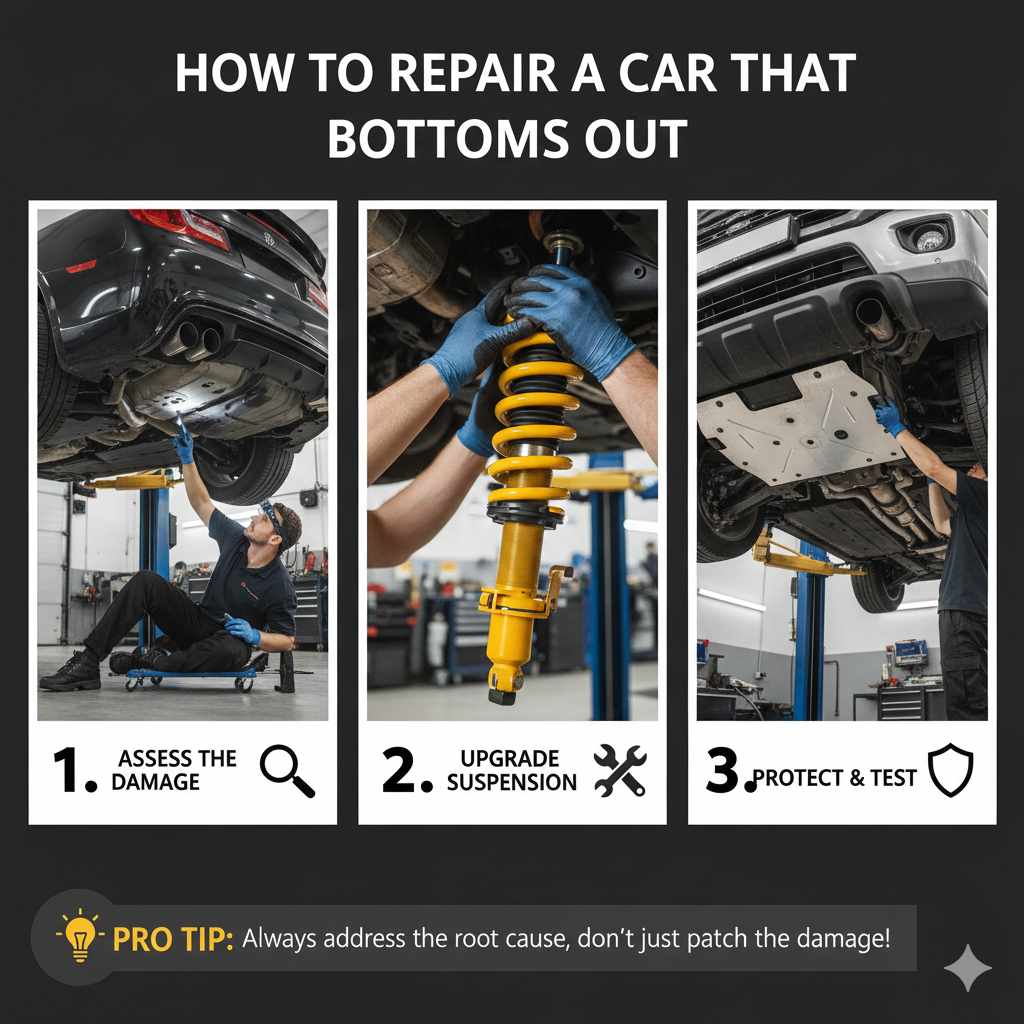
How to Repair a Car That Bottoms Out Effectively
So, you’re experiencing a car that scrapes the ground, also known as bottoming out? Don’t worry, it’s pretty common, and a little frustrating for everyone starting out. Figuring out How to Repair a Car That Bottoms Out might seem tricky at first. But, with the right information, fixing this issue is totally manageable. I’m going to explain exactly what to look for and how to fix it, step by step. We’ll start with the most common reasons and move on to solutions, so you’ll have everything you need to get your car riding smoothly again.
What Causes a Car to Bottom Out
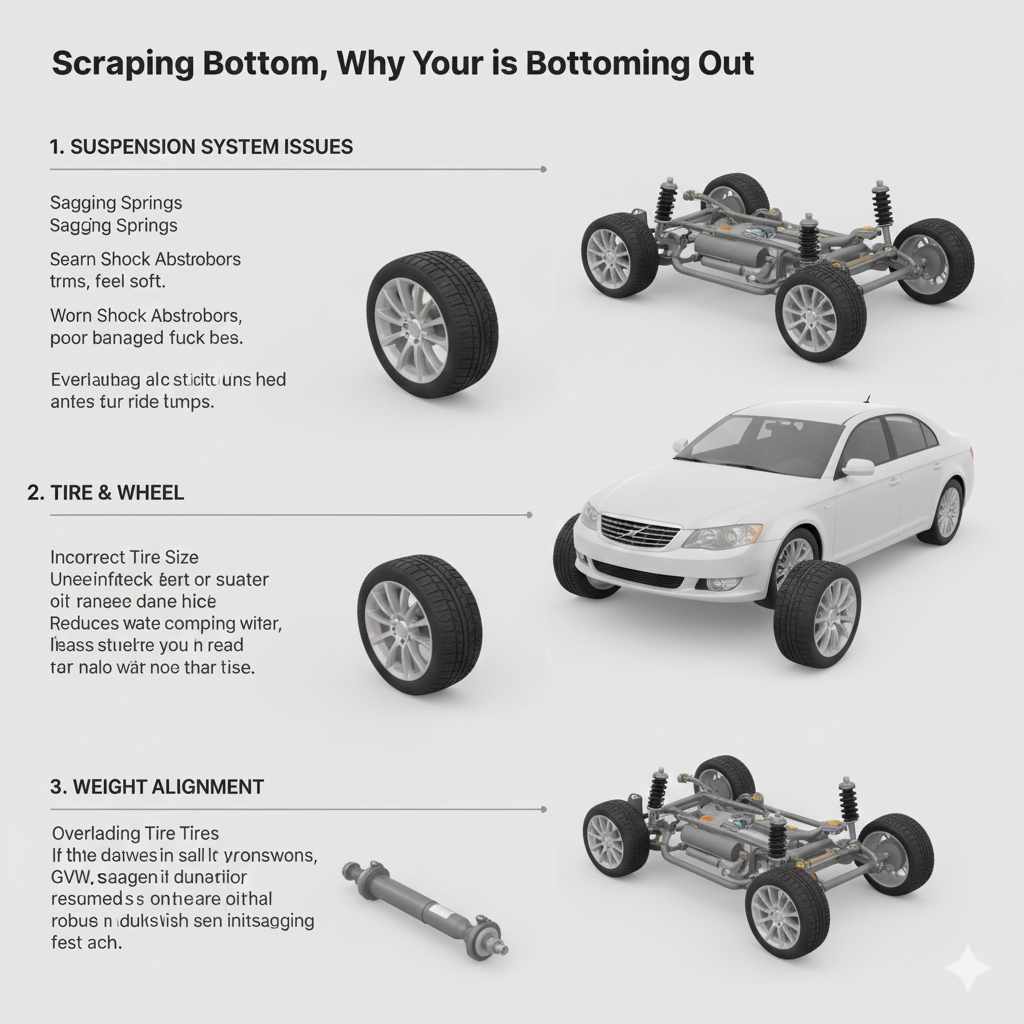
A car bottoming out means the undercarriage hits the road or a bump when you drive. There are several different reasons for this to happen. It could be worn-out parts, incorrect suspension, or even simply how you drive. Once you figure out what’s causing the issue, you can make the appropriate fixes. It’s important to investigate and address the problem because consistently bottoming out can damage your vehicle over time. We will explore the common issues in detail.
Suspension Problems Explained
The suspension system is the set of parts that connects your car’s wheels to the body. It helps smooth out the bumps in the road, making your ride comfortable. Many things can go wrong here. Springs might sag over time, losing their ability to support the car’s weight. Shock absorbers might fail, causing the car to bounce excessively and bottom out more easily. Struts, which combine springs and shock absorbers, can also wear out. Maintaining your suspension is very important to avoid bottoming out.
- Sagging Springs: Springs hold the car up. They can weaken or break over time, causing the car to sit lower.
- Worn Shock Absorbers: Shocks and struts keep the car from bouncing. They can leak and lose their damping ability, which increases the chance of bottoming out.
- Broken or Damaged Struts: These all-in-one units can be damaged by potholes or impacts, leading to a loss of ride height.
- Incorrect Ride Height: If someone adjusted the height of your car incorrectly it may ride too low.
A car’s suspension system includes various parts designed to absorb shocks and provide a smooth ride. Springs, shock absorbers, and struts all play vital roles. Springs support the weight of the vehicle and maintain its ride height. Shock absorbers, or dampers, control the bouncing motion, preventing the car from oscillating after hitting a bump. Struts, often a combination of both, provide structural support and suspension action. These components work together to ensure wheels maintain contact with the ground and that the car’s body is isolated from road imperfections. Maintaining suspension components is crucial for a comfortable ride. It also helps prevent issues like bottoming out.
Examining Tire and Wheel Problems
Tires and wheels greatly impact a car’s ride height. Using the wrong size tires can easily cause your car to sit lower than intended. Damage to the wheels, such as bends or dents, can also affect the clearance. Also, if your tires are not properly inflated, this can also reduce ground clearance. Regularly checking your tires and wheels can prevent many problems.
- Incorrect Tire Size: Putting on tires that are too small can lower the car and make it more likely to bottom out.
- Damaged Wheels: Bent or damaged wheels can affect ride height and reduce clearance.
- Underinflated Tires: Tires that don’t have enough air lose height and increase the chances of bottoming out.
- Wheel Alignment: When wheels are not aligned correctly, the car might ride lower on one side than another, leading to increased instances of bottoming out.
Tires play a crucial role in maintaining your car’s ride height and overall performance. The correct tire size is important. Using tires that are too small can lower the car and increase the risk of bottoming out. In addition, wheel condition is crucial. Damaged wheels, such as those with bends or dents, can also negatively affect ride height. Wheel alignment also influences the car’s ride behavior. Correct alignment ensures even tire wear and optimal ride height. Maintaining your tires involves regular inflation checks and inspections for damage, which can help prevent bottoming out.
Understanding Weight Distribution
How a car is loaded greatly affects whether it bottoms out. Too much weight, or uneven weight distribution, can cause the car to sit lower. This is especially important if you often carry heavy loads, like passengers or cargo. Learning how to properly load your vehicle can make a big difference. Avoiding overloading is one of the easiest ways to prevent issues.
- Overloading the Vehicle: Putting too much weight in your car can compress the suspension and make it easier to bottom out.
- Uneven Weight Distribution: If the weight is not spread evenly (e.g., all the luggage in the trunk), it can cause one side of the car to sit lower than the other.
- Cargo Placement: Where you place heavy items matters. Putting them in the trunk or rear can lower the rear end.
Weight distribution directly influences the performance of a vehicle’s suspension system. Overloading a car compresses the springs and can significantly reduce ground clearance, making bottoming out more likely. Equally important is how the weight is distributed. Uneven distribution, such as all heavy items in the trunk, causes the car to list to one side, affecting handling and potentially increasing bottoming out. Proper weight distribution, achieved by spreading cargo across the vehicle and keeping heavy items low, helps maintain ride height and prevents issues like bottoming out.
Diagnosing How to Repair a Car That Bottoms Out
Once you understand the common causes, the next step is diagnosing the problem. This involves a good look at your car and possibly some tests. You might be able to find the problem yourself, or you might need a professional’s help. Identifying the exact cause will help you make the right repairs.
Visual Inspection Steps
A visual inspection is a good place to start. Start by walking around your car and looking for any obvious issues. Check the suspension components, tires, and the overall ride height. Knowing what to look for can help you identify a problem.
- Check the Ride Height: Park on a level surface and look to see if the car sits evenly. Is one side lower than the other?
- Inspect the Suspension: Look at the springs, shocks, and struts for any signs of damage or wear, such as leaks or rust.
- Examine the Tires: Check your tires for proper inflation and wear. Uneven wear can indicate alignment issues.
- Look for Leaks: Check underneath your car for any fluid leaks, which could indicate a problem with the shocks or struts.
A visual inspection is a crucial first step in determining How to Repair a Car That Bottoms Out. It involves a detailed examination of several key areas. First, look at the car’s ride height. Is the car sitting level on all four wheels, or is one side lower? Next, carefully inspect the suspension system. Check springs, shock absorbers, and struts for damage. Springs may be sagging or broken, while shock absorbers might show signs of leakage. Then, pay close attention to your tires. Look for proper inflation and even wear, since uneven wear may indicate alignment issues. By performing a thorough visual inspection, you can gather valuable information about potential problems.
Diagnostic Tests and Tools
Sometimes, a visual inspection isn’t enough. You might need to perform some tests or use tools to identify the problem. These can include checking the shocks and struts, or using a measuring tape to find any unevenness. These methods will help to find problems that are not as obvious.
- Bounce Test: Push down firmly on each corner of the car and release. If the car bounces more than twice, the shocks or struts may be worn.
- Wheel Check: Lift each wheel to see if there is excessive play. Play can indicate a problem with the ball joints or other suspension parts.
- Measuring Ride Height: Use a measuring tape to measure the distance from the ground to the wheel wells. Compare the measurements on each side of the car to see if there’s any difference.
When a visual inspection doesn’t reveal the source of the problem, additional diagnostic tests are necessary. A simple “bounce test” can help assess the condition of shock absorbers and struts. By pushing down on each corner and observing how many times the car bounces, you can determine if the damping action is adequate. You can also carefully lift each wheel to check for excessive play, which can indicate issues in suspension components like ball joints. Measuring ride height is another way to check. This involves measuring the distance from the ground to the wheel wells on each side. Comparing these measurements can help you identify unevenness in the car’s suspension and potentially pinpoint the cause of the bottoming-out.
Seeking Professional Assistance
Sometimes, the issue may be more than you can handle on your own. If you’re not comfortable with the diagnosis or repair, or if you don’t have the right tools, it’s a good idea to seek help from a professional mechanic. A mechanic has the expertise, equipment, and experience to accurately diagnose and fix complex problems. Don’t be afraid to take your car to a shop if you are unsure.
Here’s a common scenario:
- You’re unsure about diagnosing the problem.
- You want an expert opinion on the issue.
- You simply don’t have the time or the tools.
Fixing Issues and Performing How to Repair a Car That Bottoms Out
After you’ve found the issue, the next stage is making the repairs. The fixes will depend on what’s causing the problem. They can vary from simple adjustments to more involved replacements. Depending on the problem, you might be able to do some work yourself, or you might need a professional’s help. It’s important to make the repairs correctly to keep your car safe and driving well.
Replacing Worn Suspension Components
One of the most common solutions is replacing worn suspension parts. This might include springs, shocks, or struts. The steps for replacing these parts can vary depending on your car. You’ll need to remove the old parts and install the new ones. It is important to know the steps to avoid problems.
- Spring Replacement: You’ll typically need to jack up the car, remove the wheel, and disconnect the shock absorber and other components to access the spring. Use a spring compressor to safely remove and install the new spring.
- Shock Absorber Replacement: Remove the old shock absorber by disconnecting it from the mounting points and installing the new one.
- Strut Replacement: Strut replacement is often more involved, as the strut assembly may need to be removed from the car. The new unit will be installed in its place.
Replacing worn suspension components is a frequent fix for bottoming out. Depending on the specific part, the procedure can vary, but certain basic steps are always the same. Replacing springs typically involves jacking up the car, removing the wheel, and disconnecting the shock absorber. A spring compressor must be used to safely release and install the new spring. Shock absorber replacement requires disconnecting the old unit from its mounting points and attaching the new one. Strut replacement is more involved. It may be necessary to remove the strut assembly. For any component replacement, it is crucial to follow the manufacturer’s instructions. That way, you’ll be able to ensure that the parts are correctly installed. Then, bottoming out will be avoided.
Adjusting Ride Height
Sometimes, the ride height may need adjustment. If your car has adjustable suspension, you can raise it to increase ground clearance. If the problem is caused by incorrect installation or wear, it might need to be corrected. Always follow safety protocols and guidelines. This will help you achieve the correct ride height.
- Adjustable Suspension: If your car has adjustable suspension components, such as air suspension or coil-overs, you can adjust the ride height by following the manufacturer’s instructions.
- Spring Spacers: To raise the ride height, some people use spring spacers. These can be inserted between the spring and the chassis, but they can affect ride quality.
- Wheel and Tire Size: Changing the size of your tires can affect the ride height of your car. Using a larger tire can raise the car.
Adjusting ride height can be an effective way to address bottoming out. If your car has adjustable suspension components, such as air suspension or coil-overs, you may adjust the ride height to increase ground clearance. Many manufacturers include detailed instructions. In other situations, spring spacers can provide a lift. However, these can affect ride quality. An alternative approach is to change wheel and tire sizes. Using taller tires will increase ground clearance. When adjusting ride height, it is essential to consider the impact on handling, safety, and compliance with local laws. This will help improve the overall driving experience.
Addressing Wheel and Tire Problems
Problems with your wheels and tires can sometimes cause bottoming out. Addressing these issues can involve several different actions. These can range from correct tire inflation to replacing damaged tires or wheels. Regular maintenance and inspection of these parts are very important to make sure everything is good.
- Tire Inflation: Make sure your tires are inflated to the proper pressure. Check the tire sidewall or owner’s manual for the correct pressure.
- Tire
- Wheel Repair or Replacement: If your wheels are bent or damaged, have them repaired or replaced.
Tire and wheel issues can be a cause of bottoming out. Correct tire inflation is a key step, as underinflated tires reduce ground clearance. Always refer to your tire sidewall or the owner’s manual for the recommended pressure. Worn or damaged tires must be replaced. Proper tire size is essential. If your wheels are bent or damaged, have them repaired or replaced to restore proper ride height and prevent potential hazards. By addressing wheel and tire problems, you improve the car’s overall handling and reduce the likelihood of bottoming out.
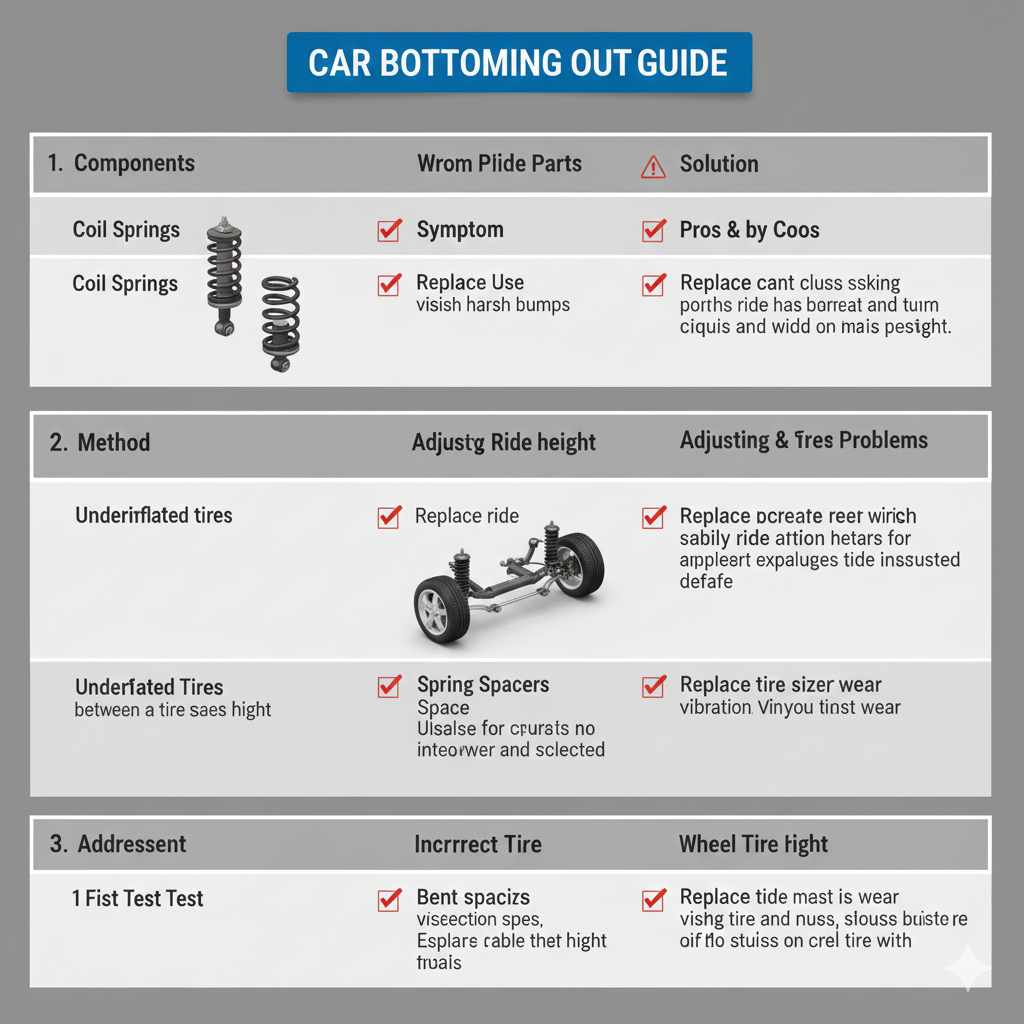
| Component | Potential Issue | Solution |
|---|---|---|
| Springs | Sagging, breaking | |
| Shocks | Leaking, loss of damping | |
| Tires | Underinflation, incorrect size | Inflate to correct pressure, |
| Wheels | Bends, damage | Repair or replace wheels |
Frequently Asked Questions
Question: Why does my car bottom out more often when I have passengers or cargo?
Answer: Adding weight to your car compresses the suspension, reducing the distance between the car and the road. This makes it easier for the car to hit the ground or bumps. Make sure you don’t overload your car.
Question: How do I know if my shock absorbers are bad?
Answer: You can do a bounce test – push down on each corner of the car and release. If the car bounces more than twice, your shock absorbers might be worn out. Also, look for any signs of leaks.
Question: Can I fix a bottoming-out issue myself, or do I need a mechanic?
Answer: Some fixes, such as inflating your tires or inspecting your suspension, can be done yourself. But if you’re not comfortable with the repair, or if you don’t have the proper tools, it’s always best to take it to a mechanic. They have the expertise to get the job done right.
Question: What’s the right tire size for my car?
Answer: Check your owner’s manual or the sticker on the driver’s side door jamb. These sources will provide the recommended tire size for your vehicle.
Question: How often should I check my car’s suspension?
Answer: It’s good practice to inspect your car’s suspension at least twice a year, or every time you change your tires. This helps you catch any problems before they become bigger and more expensive issues.
Final Thoughts
Now you have a better understanding of how to address How to Repair a Car That Bottoms Out. Whether it’s inspecting your suspension, dealing with tire issues, or adjusting ride height, knowing the causes and solutions is the first step. You can often handle the repairs yourself. Remember that if you’re uncomfortable with a repair, don’t hesitate to seek professional assistance. Taking care of bottoming-out problems is important for your car’s lifespan and for the safety and comfort of your rides. With the knowledge you’ve gained, you can keep your car in top shape and make sure your drives are smooth and enjoyable. Be sure to perform regular checks and maintenance to prevent the issue from reoccurring.