How Wide Is A Standard Two-Car Garage Door?
It’s a common question for homeowners and DIY enthusiasts alike: How Wide Is a Standard Two-Car Garage Door? Figuring this out might seem tricky at first, especially if you’re planning a renovation or just curious about your home. But don’t worry, it’s actually quite simple once you know what to look for. We’ll walk through it step-by-step so you can get a clear answer.
Let’s get started on finding that measurement!
Standard Two-Car Garage Door Dimensions
When most people think about garage doors, they often picture a single door that covers the entire opening for their cars. For a two-car garage, this typically means a wider door. This section will break down the common measurements you’ll encounter for these larger doors, helping you understand the typical size.
We’ll look at the standard width and height specifications that are widely used by manufacturers and builders.
Typical Widths for Two-Car Garage Doors
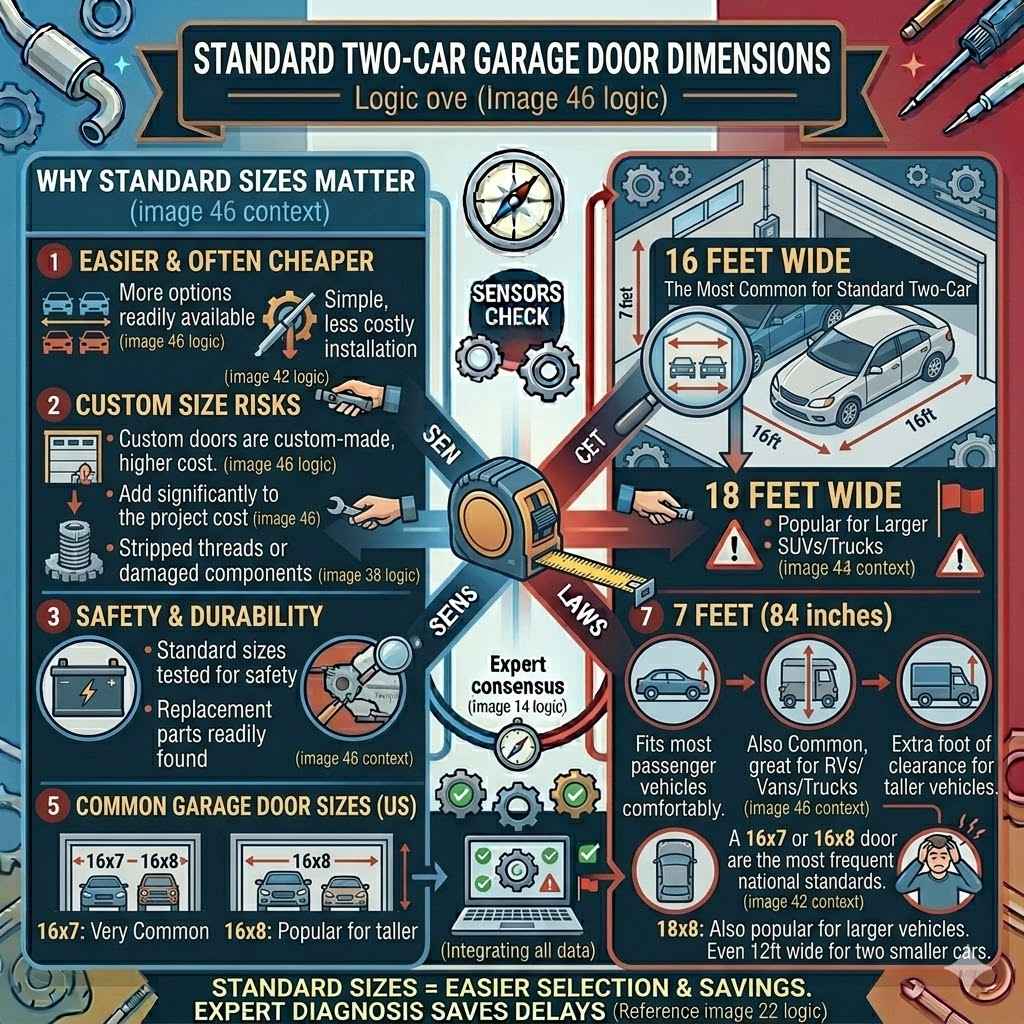
The most common width for a standard two-car garage door is 16 feet. This measurement is very popular because it provides ample space for two vehicles to park side-by-side comfortably. Many builders select this size as a default for new construction, making it a familiar option.
Sometimes, you might see doors that are 15 feet or 18 feet wide. These are also considered two-car doors but might be chosen for garages that have slightly different layouts or for owners who want a bit more maneuverability. An 18-foot door offers even more room, which can be helpful for larger SUVs or trucks.
A 16-foot wide door is usually what you’ll find. This size is great for most cars and smaller SUVs.
For bigger vehicles, an 18-foot door might be a better fit. It gives you more space to get in and out.
Some garages are built a little narrower, and a 15-foot door could work for two smaller cars. Always measure your opening to be sure.
Standard Height for Garage Doors
Besides the width, the height of a garage door is also important. For a standard two-car garage, the most common height is 7 feet. This is 84 inches.
This height works well for most passenger vehicles.
However, if you have larger vehicles like RVs, trucks, or vans, you might need a taller door. In these cases, 8-foot (96 inches) high doors are also quite common for two-car garages. This extra foot of height can make a big difference for clearance.
So, a very common size for a two-car garage door is 16 feet wide by 7 feet high.
If you have taller vehicles, look for doors that are 16 feet wide and 8 feet high.
Always remember to measure your garage opening before you decide on a door size.
Why Standard Sizes Matter
Sticking to standard sizes makes things easier and often cheaper. Manufacturers produce doors in these common dimensions because there’s a big demand for them. This means you have more options readily available.
It also means installation is usually simpler and less costly because installers are very familiar with these sizes.
If you choose a non-standard size, you might have to pay more for a custom-made door. This can add significantly to the cost of your project. Standard sizes are designed to fit most typical garage openings, making the selection process straightforward.
Manufacturers also test standard sizes for safety and durability.
Using standard sizes can save you money on installation.
You will find more replacement parts for standard doors.
Common Garage Door Sizes in the US
In the United States, standard garage door sizes are quite consistent. The most frequent width for a single-car garage door is 9 feet. For a two-car garage door, as we’ve discussed, 16 feet is the most common width.
Heights generally fall into 7 feet or 8 feet. So, a 16×7 or 16×8 door are the most popular choices for two-car garages across the country. Some areas might see more variations due to local building codes or specific architectural styles, but these remain the national standards.
A 16×7 door is a very common choice.
An 18×8 door is also popular for larger vehicles.
Even 12-foot wide doors can sometimes be used for two smaller cars side by side.
Factors Affecting Garage Door Width
While there are standard sizes, several factors can influence the exact width of a two-car garage door. These include the specific dimensions of your garage structure, the type of vehicles you own, and even local building regulations. Understanding these can help you choose the best fit for your needs.
Garage Structure Dimensions
The structural opening of your garage is the most critical factor. This is the space that the garage door will cover. Builders aim to create openings that accommodate standard door sizes, but sometimes garages are built with slightly different dimensions.
It’s crucial to measure the actual rough opening, including the width of the framing.
For example, if your garage framing leaves a clear opening of 15 feet 8 inches, a 16-foot door will likely be the best choice, as it allows for proper installation within the frame. If the opening is significantly different, you might need a custom door.
Measure the rough opening width.
Also, check the header size above the door.
Consider the side room for mounting tracks.
Vehicle Size and Maneuverability
The size of the vehicles you typically park in the garage plays a huge role. While a 16-foot door is standard for two cars, it might feel tight if you regularly park large SUVs, pickup trucks, or minivans. In such cases, an 18-foot door provides much-needed extra clearance.
This extra width allows for easier entry and exit, especially when parking close to each other.
Think about how much space you need to open your car doors fully. This is often overlooked but is important for daily use. If you have tight parking spots, more width is always better.
Consider your largest vehicle’s width.
Allow space for opening car doors.
Think about extra items you might carry, like bikes or strollers.
Local Building Codes and HOA Rules
In some areas, local building codes or homeowner association (HOA) rules might specify certain dimensions or styles for garage doors. While less common for simple width measurements, it’s always a good idea to check if there are any restrictions. HOAs, in particular, often have guidelines to maintain neighborhood aesthetics, which could impact door size or color choices.
These rules are in place to ensure uniformity and visual appeal within a community. It’s best to review any relevant documents or contact your HOA board before making a purchase. Violating these rules can lead to fines or the requirement to replace the door.
Check with your HOA first.
Review local building regulations.
Some areas have historical district rules.
Measuring Your Garage Door Opening Correctly
Accurate measurements are the most important step when selecting a new garage door. An incorrectly measured opening can lead to a door that doesn’t fit, causing installation problems and potential safety hazards. This section will guide you through the simple process of measuring your garage door opening for width and height, ensuring you get the right size.
How to Measure the Width
To measure the width, you need to find the inside edge of your garage door frame on one side and measure straight across to the inside edge of the frame on the other side. This is your rough opening width. It’s best to measure at the top, middle, and bottom of the opening and use the smallest measurement.
This ensures the door will fit within the frame.
Make sure you are measuring the opening itself, not the existing door. A tape measure is all you need. Use a sturdy metal tape measure for accuracy.
Measure the opening inside the tracks.
Take three measurements: top, middle, and bottom.
Use the smallest measurement to ensure a good fit.
How to Measure the Height
Measuring the height is similar. You’ll measure from the floor (or the finished floor level) straight up to the underside of the header beam or the top of the frame. Again, measure in a few spots and use the smallest measurement.
This is important to ensure the door clears any obstructions and operates smoothly.
Pay attention to any obstructions like low beams or pipes that might limit the door’s upward travel. This measurement is critical for ensuring proper operation of the garage door opener as well.
Measure from the floor up to the header.
Measure in a few different spots along the opening.
Ensure there are no low pipes or beams.
Checking Side and Top Clearance
Beyond the opening itself, you also need to consider the space on the sides and above the opening. This is called headroom and sideroom. The garage door tracks need space to mount, and the door needs clearance when it opens.
Typically, you need at least 4 inches of sideroom on each side for standard installations, but more is better for easier operation. For headroom, you’ll need at least 9 inches for a standard torsion spring system, and more if you have an opener. If you have low headroom, specialized kits are available.
Sideroom is needed for the tracks.
Headroom is vital for the door to lift fully.
Measure these clearances carefully before ordering.
When a Two-Car Garage Door Isn’t Standard
While standard sizes are convenient, some garages are simply not built for them. This could be due to unique architectural designs, older homes with non-uniform structures, or garages intended for specialized vehicles. In these cases, you’ll need to consider custom garage doors.
Custom Garage Door Options
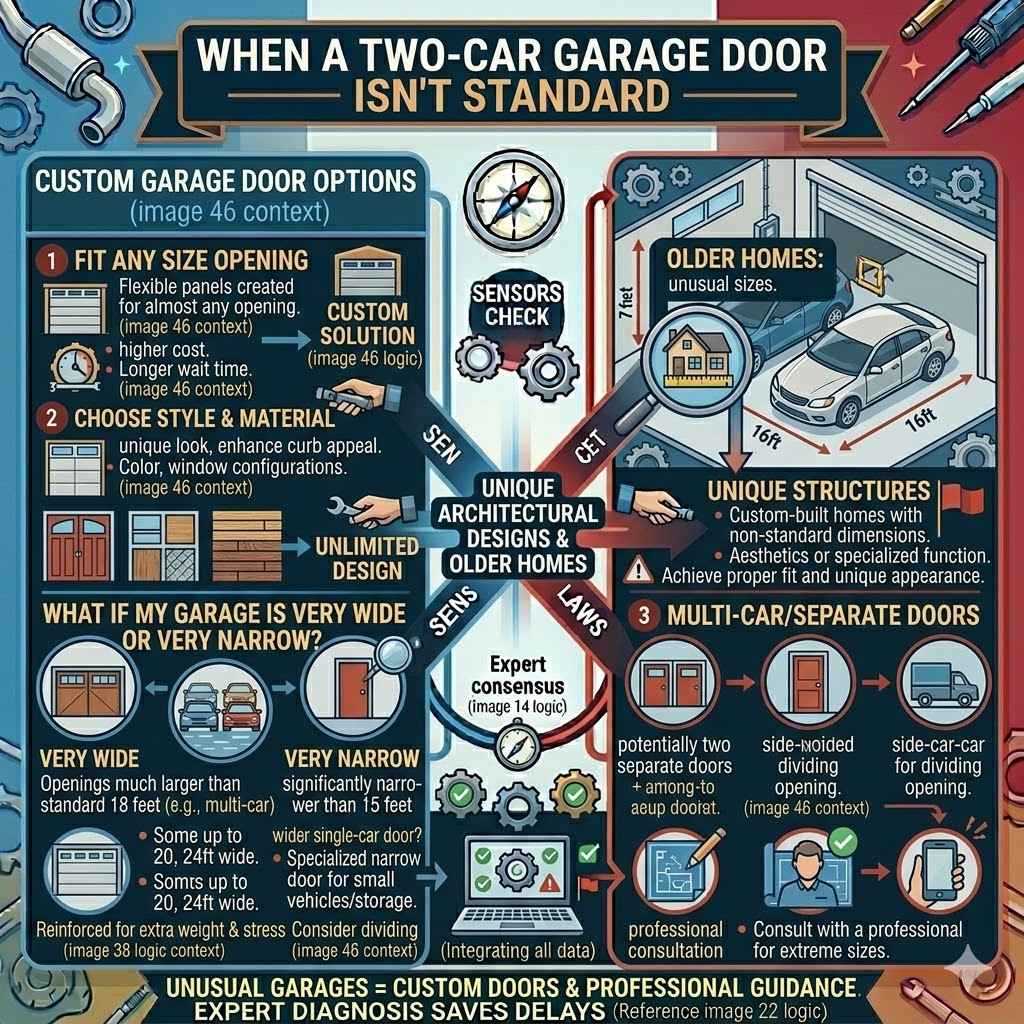
If your measurements fall outside the standard ranges, a custom garage door is the solution. Manufacturers specializing in custom doors can create panels to fit almost any opening. This flexibility comes at a higher cost and often a longer lead time for production.
Custom doors allow you to choose not only the size but also the style, material, color, and even window configurations. This is a great opportunity to enhance your home’s curb appeal with a unique look.
Custom doors fit any size opening.
They offer more style choices.
Expect a higher price and longer wait time.
Older Homes and Unique Structures
Older homes, in particular, may have garage openings that do not conform to modern standards. Building practices have changed over the years, and what was standard decades ago might be different today. If your home is older, it’s especially important to measure precisely.
Unique or custom-built homes might also feature non-standard garage dimensions from the outset. Architects and builders may design these spaces for specific aesthetic or functional reasons. In these situations, custom doors are often the only way to achieve a proper fit and appearance.
Older homes may have unusual sizes.
Custom designs can match unique architecture.
Always measure thoroughly in older properties.
What If My Garage Is Very Wide or Very Narrow?
If your garage opening is significantly wider than a standard 18 feet, you might be looking at a multi-car garage door that’s even larger, or potentially two separate doors. For openings much narrower than 15 feet, you might be considering a wider single-car door or a specialized narrow door if it’s intended for very small vehicles or storage.
For very wide openings, some manufacturers offer doors up to 20 or even 24 feet wide. These are often reinforced to handle the extra weight and stress. For very narrow openings, you might explore options like a wider single-car door or even consider dividing a larger opening into two smaller ones if structurally feasible and desired.
Very wide openings may need special doors.
Narrow openings might use wider single doors.
Consult with a professional for extreme sizes.
Frequently Asked Questions
Question: What is the most common width for a standard two-car garage door?
Answer: The most common width for a standard two-car garage door in the US is 16 feet.
Question: Can I use a 12-foot wide door for two cars?
Answer: A 12-foot door is typically for a single-car garage. While two very small cars might fit, it would be very tight, and a 16-foot door is standard for two cars.
Question: Do I need to consider the garage door opener when choosing a door size?
Answer: Yes, the opener needs adequate headroom and clearance to operate correctly. Ensure your measurements account for this, especially for taller doors.
Question: What if my garage opening is exactly 16 feet wide?
Answer: A 16-foot garage door is designed to fit a 16-foot rough opening, with a small margin for proper installation within the frame.
Question: How much more does a custom garage door cost?
Answer: Custom garage doors can cost anywhere from 20% to 100% more than standard doors, depending on the complexity of the customization and materials used.
Conclusion
Knowing how wide a standard two-car garage door is gives you a clear starting point. Most are 16 feet wide, often paired with a 7-foot height. Always measure your own garage opening carefully for the best fit.
This simple step ensures your new door operates smoothly and enhances your home’s look.