Car Window Repair Cost: The Real 2026 Price Range
Car window repair cost in 2026 is commonly reported at roughly $150-$450 for a side window repair, $300-$900 for a windshield replacement, and $450-$1,500+ if calibration or OEM glass is required. Check the line items before you approve anything. A quote can hide extra labor, trim, and parts charges. This guide breaks down a quote line by line so you can separate glass, labor, calibration, trim, and extras before you approve the work.
Typical repair prices and fees that raise the bill
Most drivers will see the lowest bill on a small chip repair, then a higher bill for side or rear glass, and the highest bill when a windshield needs replacement plus calibration. A fair 2026 quote depends on the part, the labor rate, and whether the job involves cameras, trim, or cleanup.
Quick price ranges by repair type
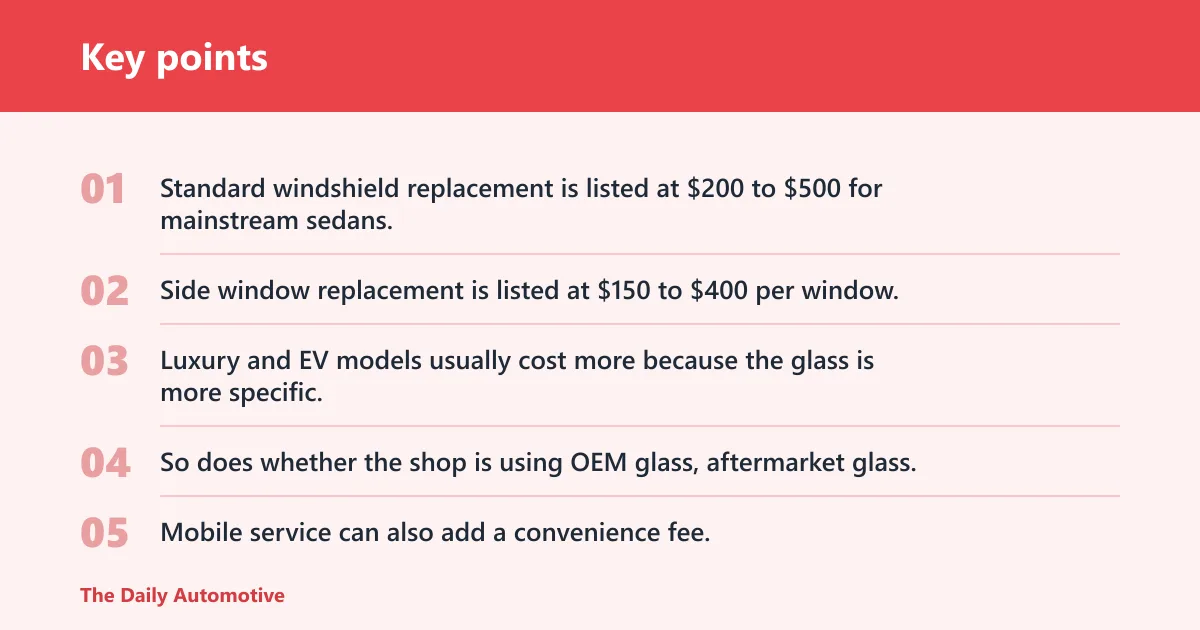
Chip repair commonly costs $50 to $150. Standard windshield replacement is listed at $200 to $500 for mainstream sedans, while windshield replacement with ADAS calibration can run $800 to $1,500+. Side window replacement is listed at $150 to $400 per window, and rear window replacement is listed at $250 to $600.
Those numbers can still move. Luxury and EV models usually cost more because the glass is more specific, the trim takes more work, and the camera or heating elements may be tied into the glass assembly.
What pushes a quote higher
Labor rate matters. So does whether the shop is using OEM glass, aftermarket glass, or a part with defroster lines, antenna integration, or a special curvature. Mobile service can also add a convenience fee. Disposal, molding, clip replacement, and post-install verification are common places where a quote grows.
Suppose a sedan windshield quote starts at about $390. If the line items include about a $125 calibration charge, $45 for molding, and $30 for disposal, the total is no longer a simple glass swap. That is the moment to ask which charges are required and which are optional.
Chip repair or full replacement?
Chip repair is the cheaper path when the damage is small, the impact point is repairable, and the crack has not spread into the driver’s line of sight or across too much of the glass. Full replacement becomes the right answer when the crack is long, the glass is shattered, or the safety system requires a new pane.
When a chip can be repaired
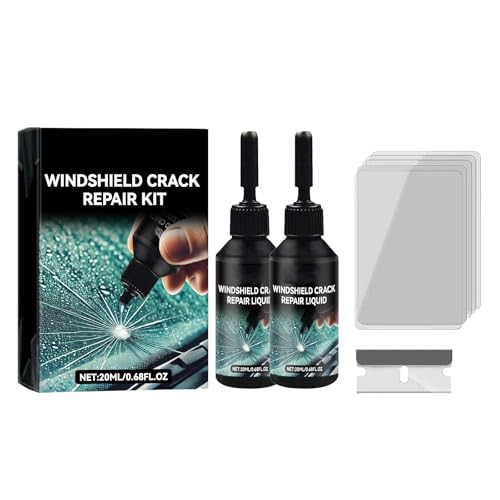
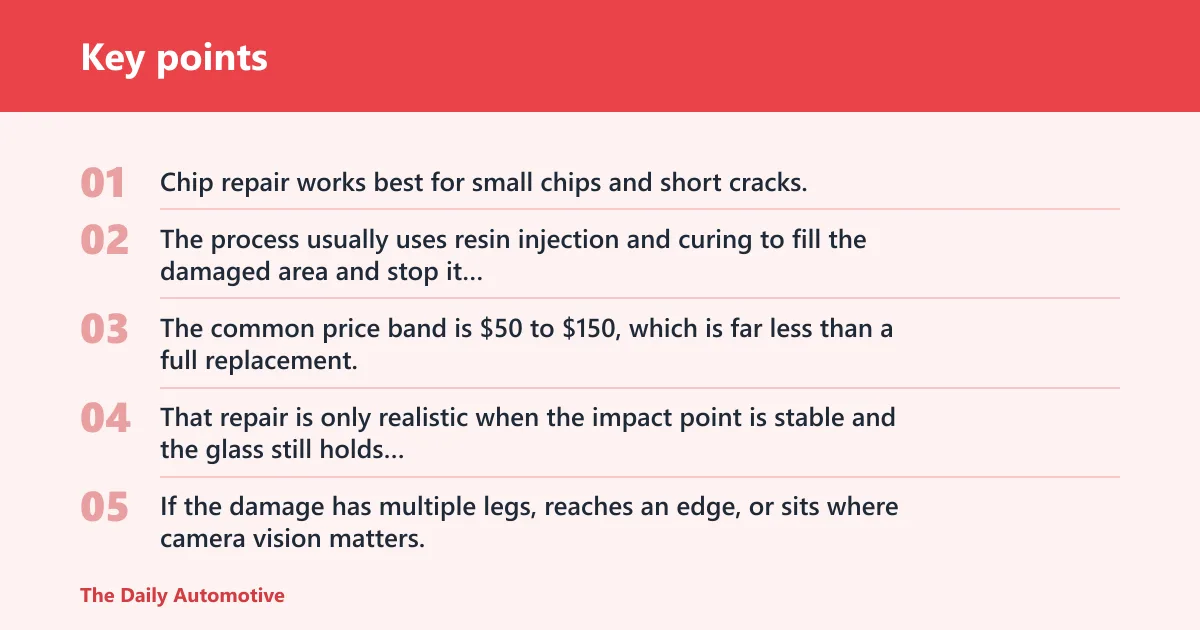
Chip repair works best for small chips and short cracks. The process usually uses resin injection and curing to fill the damaged area and stop it from spreading. The common price band is $50 to $150, which is far less than a full replacement.
That repair is only realistic when the impact point is stable and the glass still holds together. If the damage has multiple legs, reaches an edge, or sits where camera vision matters, the shop may refuse repair and recommend replacement instead.
When replacement is the only option
Replacement is the safer choice when the glass is cracked through, the chip has turned into a long crack, or the pane is tempered side glass that has already broken apart. A windshield also needs replacement if the damage interferes with a camera view or threatens the structural seal.
A common mistake is choosing a cheap sealant fix for a rear window regulator issue when the glass itself is actually shattered and needs replacement. That usually wastes time and still ends with a replacement bill.
Windshield replacement cost drivers
Windshield replacement costs more than side glass because the part is usually laminated safety glass, the installation uses urethane adhesive, and the job often needs surface prep plus verification. The national range often lands at $200 to $450, with mainstream sedans commonly listed at $200 to $500.
Laminated glass and urethane labor
A proper windshield installation is said to take at least an hour of labor plus materials. The glass has to be set cleanly, bonded correctly, and left with the right cure time. If the shop rushes prep or skips verification, the job may not be safe.
Why sensors and trim change the bill
Windshield replacement gets pricier when the vehicle has a forward-facing camera, rain sensor, heater grid, or trim that must be transferred. Some vehicles need extra removal steps to access the cowl, clips, or molding. That labor belongs on the estimate.
ADAS-equipped vehicles are the biggest swing factor. If the camera or driver-assistance system must be reset or calibrated after the glass is installed, the total can jump fast.
Car window quote decoder
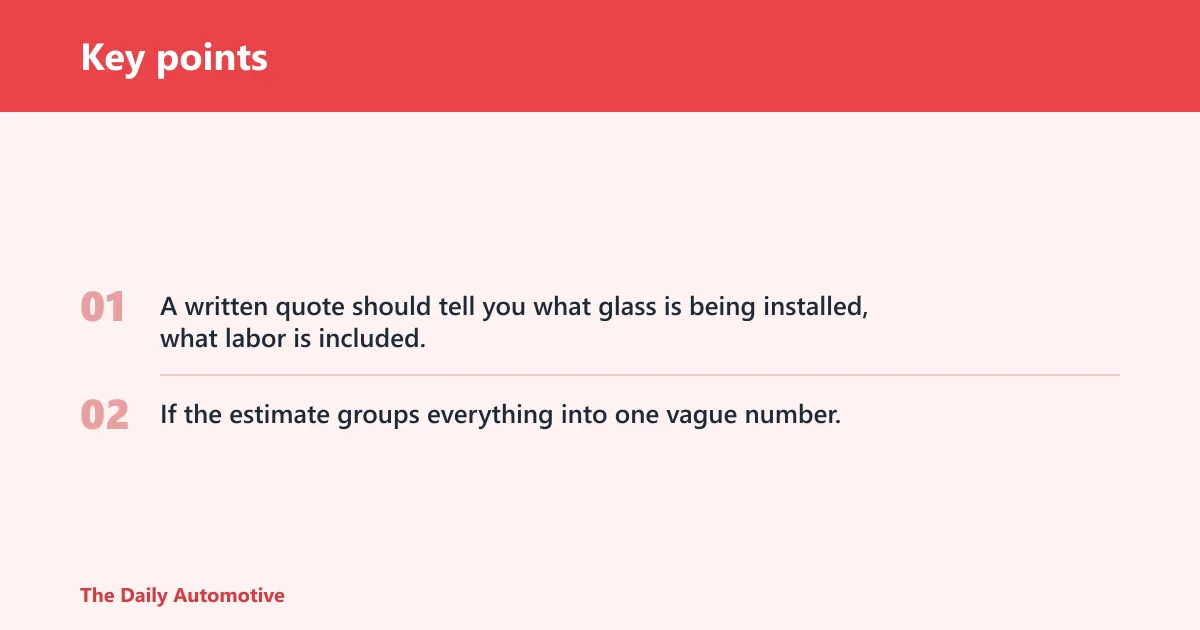
A written quote should tell you what glass is being installed, what labor is included, and what extras are on top. If the estimate groups everything into one vague number, you cannot tell whether you are paying for the part, the setup, or optional charges.
| Line item | Status | Realistic price band | Ask the shop |
|---|---|---|---|
| Chip repair | Expected for small damage | $50 to $150 | Is the impact point repairable, or does it need replacement? |
| Windshield glass | Expected | $200 to $500 for mainstream sedans | Is this OEM glass or aftermarket glass? |
| Side window glass | Expected | $150 to $400 per window | Does this include the correct tint, trim fit, and hardware transfer? |
| Rear window glass | Expected | $250 to $600 | Does the price include defroster lines and antenna integration? |
| Labor | Expected | Varies by shop rate | How many labor hours are included? |
| Urethane adhesive | Expected for windshield work | Usually bundled or billed separately | Is adhesive and prep included in the install price? |
| Molding or trim | Expected on many cars | Varies | Are molding and trim clips included, or extra? |
| ADAS calibration | Optional on some vehicles, required on many newer ones | $100 to $600+ or $200 to $400 add-on | Does my vehicle need static, dynamic, or no calibration? |
| Regulator or motor | Expected only if the window will not move | $100 to $500 | Did you diagnose the motor, regulator, or switch before quoting? |
| Mobile service fee | Optional | Varies | Is the mobile charge separate from the repair price? |
| Disposal fee | Usually expected | Small added charge | Is glass disposal already built into the total? |
| Diagnostic or verification fee | Red-flag if not explained | Varies | What test or verification step requires this fee? |
How much is it to fix a broken side window?
A broken side window usually costs $150 to $400 per window, with many quotes landing in the $150 to $350 range. The bill depends on whether the glass is a simple tempered pane or part of a power window system that also needs a regulator, motor, or switch repair.
Tempered glass and cleanup costs
Side windows are usually tempered glass, which means they break into small pieces rather than a single cracked panel. That creates cleanup labor, and the shop may charge for vacuuming, door-panel removal, and glass removal from the track. Aftermarket glass is usually acceptable for side windows if it matches the vehicle’s trim and features.
Manual versus power window differences
Manual windows often cost less because there are fewer parts to inspect. Power windows can add a motor, regulator, switch, and connector diagnosis. If the window fell into the door or stopped halfway up, the problem may be mechanical rather than glass-related.
Picture a power side window that drops into the door and refuses to rise. The glass may still be intact, but a failed regulator can turn a basic glass repair into a $100 to $500 part-and-labor job.
Does ADAS calibration add cost?
Yes. If a windshield replacement affects a forward-facing camera or other driver-assistance hardware, calibration can add roughly $100 to $600+ to the bill. Many newer vehicles need either static calibration in the shop or dynamic calibration during a road test after the glass is replaced.
Which features trigger calibration?
Forward-facing cameras are the main trigger, but lane departure, automatic emergency braking, adaptive cruise support, and traffic-sign recognition can also depend on windshield alignment. If the camera looks through the glass, the shop should tell you whether a reset is required.
Static versus dynamic calibration
Static calibration happens in the shop with targets and fixed measurements. Dynamic calibration happens while the vehicle is driven under set conditions. Some vehicles need one method, some need both, and some need no calibration at all after a non-camera windshield job.
OEM glass or aftermarket glass?
OEM glass usually costs more than aftermarket glass, but it can be worth it on windshields with cameras, sensors, or strict fitment needs. Aftermarket glass is often fine for side windows and many rear windows if the part matches the vehicle’s mounting points, tint, and built-in features.
Where OEM makes sense
OEM glass is often the safer pick for camera-equipped windshields because optical quality and vehicle-specific fit matter more there. If the quote includes a forward-facing camera, rain sensor, or heating element, ask whether the shop recommends OEM for the best alignment.
Where aftermarket is usually fine
Aftermarket glass is usually acceptable for a broken side window and is often a cost-saving choice when the part has no camera or sensor function tied to it. The key is fit, not brand names. A bad fit is still a bad fit, no matter the label.
Can insurance cover car window repair or replacement?
Yes, insurance may cover glass repair or replacement if you have comprehensive coverage, though you still need to check the deductible. Some policies treat chip repair more favorably than full replacement, and glass coverage can reduce or remove your out-of-pocket cost.
Ask whether filing a glass claim affects your premium, whether the policy requires a preferred network shop, and whether calibration is covered when the windshield is replaced. If the deductible is higher than the repair, paying cash can be the simpler choice.
Insurance, mobile service, and hidden fees
Hidden fees often show up as mobile service, shop supplies, molding, trim clips, disposal, diagnostic work, or calibration verification. Those charges are not automatically wrong, but they should be itemized. If the estimate only gives one lump sum, ask for the line-by-line breakdown.
What belongs on the estimate?
- Glass type and part number, if available.
- Labor hours or labor rate.
- Any required urethane, molding, clips, or trim.
- Calibration method, if the vehicle needs it.
- Mobile service fee, if you requested it.
- Disposal and cleanup charges.
What to question before you approve
Ask which charges are required by the vehicle and which are convenience items. If a shop adds a line called “verification” or “shop supplies,” ask what that covers and whether it is already part of the labor rate.
Say your SUV windshield has a small crack near the edge and the quote includes glass, labor, trim, calibration, and mobile service. If the camera is not behind that area, the calibration may still be required; if the shop cannot explain why, that is a quote worth questioning.
Frequently asked questions
How much does it cost to repair a car window in 2026?
Calibration can push the total much higher.
Why is windshield replacement so expensive?
Windshield work costs more because the glass is laminated, the install uses urethane adhesive, and many vehicles need prep, trim removal, and post-install verification. If ADAS calibration is required, the bill can rise to $800 to $1,500+.
Does ADAS calibration increase car window repair cost?
Yes. When the windshield holds a forward-facing camera or other driver-assistance hardware, calibration may be required after replacement. That can add $100 to $600+ depending on the vehicle and whether the shop uses static, dynamic, or both calibration methods.
Should I use aftermarket glass for a side window?
Usually, yes, if the part matches the vehicle’s trim, mounting points, tint, and features. Aftermarket glass is often a sensible cost-saving choice for side windows, while OEM glass matters more when the windshield supports cameras or other optical systems.
When is a chip repair cheaper than full replacement?
Chip repair is cheaper when the damage is small, the impact point is repairable, and the crack is short. Once the crack spreads, reaches an edge, or interferes with safety features, replacement becomes the better answer even if the upfront bill is higher.
Products related to this article
Sponsored / affiliate links. As an Amazon Associate I earn from qualifying purchases. I may earn additional commission from eligible campaigns.