Is It Bad to Not Service Your Car? What Happens Next
Skipping scheduled service for even one overdue interval can let oil degrade, fluids run low, and wear accelerate; after multiple missed intervals, failure risk can rise quickly. Missed service can turn inexpensive maintenance into brake, engine, cooling, or transmission repairs that cost far more. This guide ranks the first failures you’re likely to see by safety risk, repair cost, and how quickly each one can escalate.
Is it bad to not service your car?


Yes. Regular service is meant to catch wear before it stacks up, and the first things to suffer are usually oil quality, filter flow, brake wear, and fluid condition. Skipping service can lead to lower vehicle performance, higher repair costs, and a greater chance of unexpected breakdowns.
What routine service is meant to prevent
Manufacturer service intervals vary by vehicle, engine, driving style, and usage pattern. That schedule exists to replace oil and filters, inspect brake components, rotate tires, and spot leaks or low fluids before they become larger repairs.
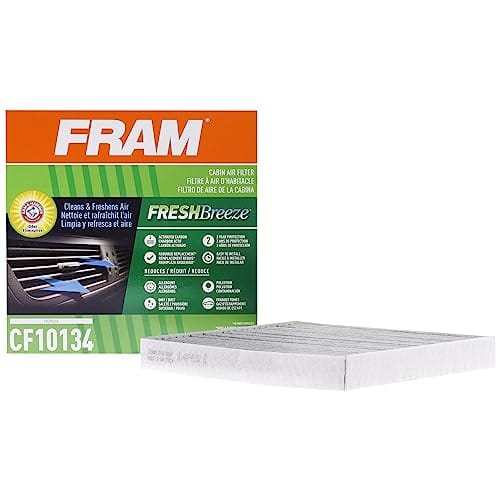
Routine maintenance includes oil changes and tire rotations. It also covers common items such as air filters, cabin filters, brake inspections, coolant checks, and fluid replacement when the manufacturer calls for it.
Why some skipped items become urgent faster than others
Not every missed service carries the same risk. Brake neglect can become a safety problem quickly. Oil neglect often starts as a wear problem and turns into an engine repair later. A clogged filter usually hurts efficiency and drivability before it causes a failure.
What happens if you miss a car service?
The first changes are usually subtle: rougher operation, lower fuel efficiency, longer stopping distances, and a higher chance of a roadside problem. Damage often starts before a warning light comes on, because wear, contamination, and low fluid quality build quietly.
Early warning signs you may notice
- Engine sounds rougher on cold start or idle.
- Fuel economy drops without a clear driving change.
- Brakes feel spongy, noisy, or less responsive.
- The car feels slower, or shifts less cleanly.
- A service light, check engine light, or tire-pressure light appears.
Why damage often starts before the dashboard light comes on
Many problems develop mechanically before electronics detect them. Dirty oil may still circulate, but it does so with less protection. Filters may still pass air or fuel, but not enough for best efficiency. Brake pads may still stop the car, but with less margin before failure.

How the main failures stack up by risk
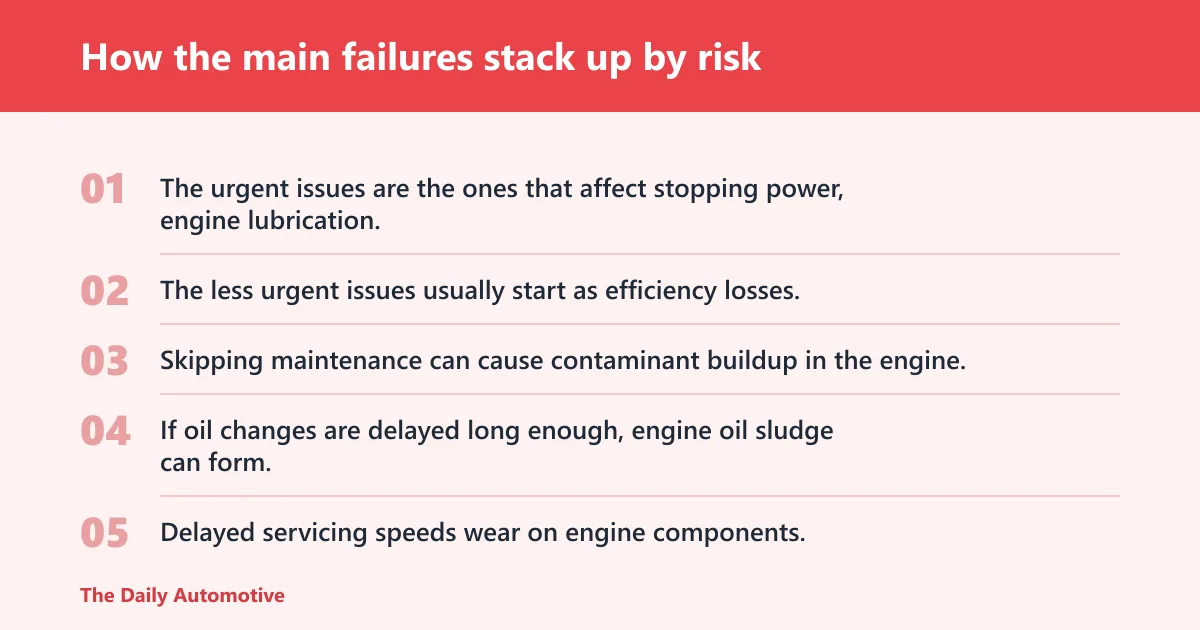
The urgent issues are the ones that affect stopping power, engine lubrication, and roadside reliability. The less urgent issues usually start as efficiency losses, then turn into bigger repair bills if ignored long enough. That is the basic severity ladder.
Engine oil sludge and internal wear
Skipping maintenance can cause contaminant buildup in the engine. If oil changes are delayed long enough, engine oil sludge can form, which reduces lubrication and raises wear risk on bearings, camshafts, timing components, and turbocharger parts where fitted. Delayed servicing speeds wear on engine components.
Brake component wear and stopping distance
Neglected maintenance can compromise brake system safety. Pads, rotors, calipers, and brake fluid do not all wear out at the same pace, but using the brakes past safe limits can lengthen stopping distance and raise the chance of metal-on-metal damage. That is one of the most urgent failures on this list.
Clogged filters and fuel efficiency loss
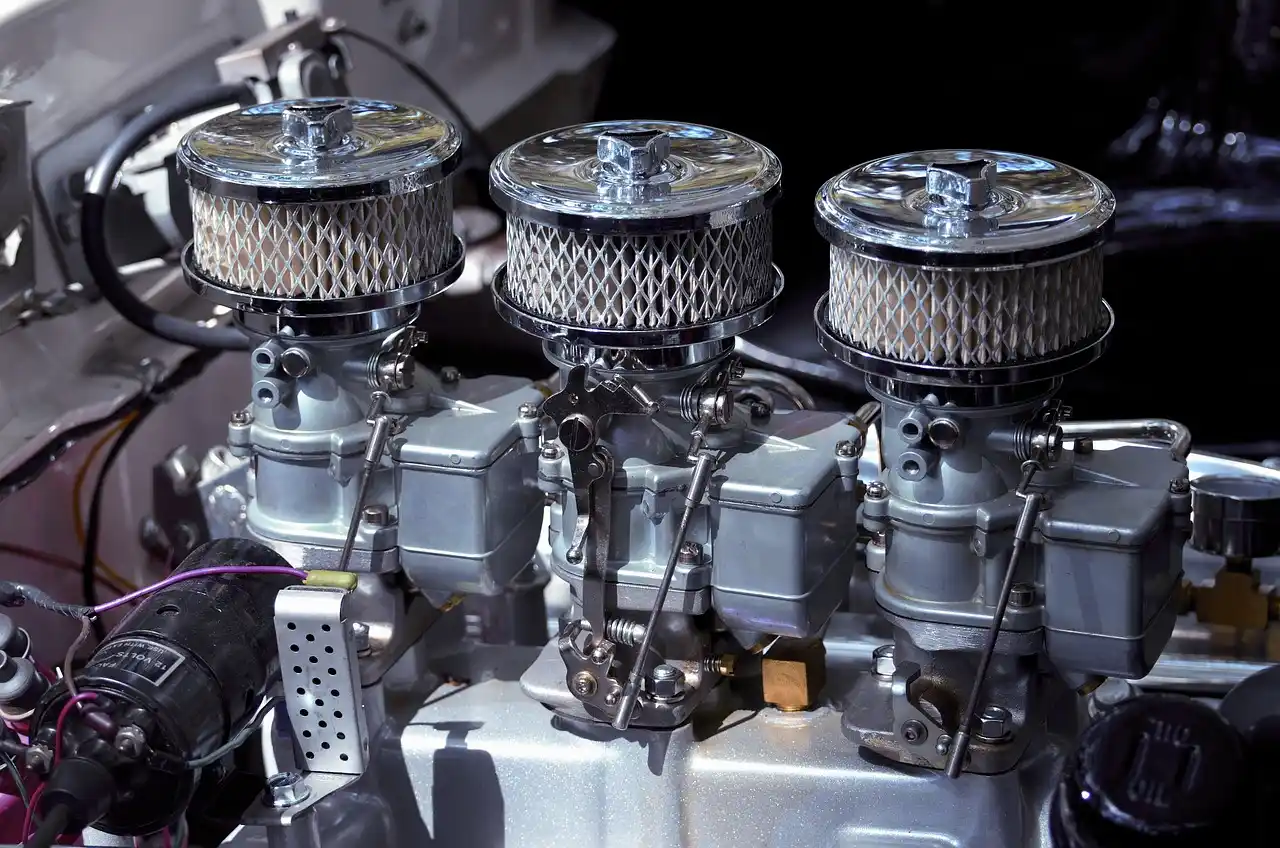
Clogged filters are common routine maintenance items. A dirty engine air filter can restrict airflow and make the engine work harder. A clogged fuel filter can limit delivery. Either way, fuel efficiency can fall, throttle response can soften, and drivability can decline.
Breakdown risk and roadside repairs
Skipping service can increase the likelihood of unexpected breakdowns. Neglected maintenance can leave drivers stranded and lead to towing bills. That risk rises as fluids age, belts wear, batteries weaken, and small leaks or misfires go unnoticed for too long.
Say your compact commuter is 8,000 miles past an oil change and its air filter is packed with dust from stop-and-go traffic. The engine may still run, but it can run hotter, use more fuel, and become noisier while wear keeps building in the background.
Suppose a midsize SUV has brake pads near their limit and the driver keeps putting off inspection because the pedal still feels “fine.” The first symptom may be squeal, then longer stopping distances, then rotor damage that turns a routine brake job into a larger repair.
Skipped service items, first symptoms, and likely consequences
| Skipped item | First symptom | Likely consequence if ignored for 1,000 / 5,000 / 10,000 miles |
|---|---|---|
| Engine oil change | Louder startup, darker oil, slower revving | After a relatively small delay, wear can begin to rise; with more delay, sludge risk and hotter running can increase; and after a longer delay, internal wear may become severe and engine damage can become possible. |
| Brake inspection and pad replacement | Squeal, vibration, longer stopping distance | After a relatively small amount of additional driving, pad material may fall below a safe margin; with more driving, rotor damage may begin; and after a longer delay, braking safety can be compromised and repair costs can climb sharply. |
| Engine air filter | Reduced acceleration, poorer fuel economy | 1,000: small efficiency loss; 5,000: engine works harder and drivability may soften; 10,000: contamination can spread deeper and performance loss becomes noticeable |
| Cabin filter | Weak airflow, musty odor | 1,000: comfort only; 5,000: HVAC strain may rise; 10,000: blower performance and defogging can worsen |
| Coolant service or leak check | Temperature swings, low reservoir level | 1,000: small leaks may grow; 5,000: overheating risk increases; 10,000: head-gasket or engine damage can follow if ignored |
How to read the table: the left side is what you skipped, the middle is what you may notice first, and the right side shows how fast the repair path worsens. Brake items sit near the top because safety risk rises quickly. Oil and coolant issues often cost more the longer they are ignored.
How long can you go without servicing your car?
There is no universal mileage answer. Mileage, time, and driving conditions all matter, and the manufacturer schedule should set the baseline. A short delay is one thing; repeated delays past the recommended maintenance interval are where compounding damage begins.
Why mileage, time, and driving conditions all matter
A car driven mostly on short trips ages oil faster than one driven on long highway runs. Stop-and-go traffic, towing, dust, heat, and cold all change service needs. Time matters too, because fluids and rubber parts age even when mileage is low.
When a short delay is one thing and when it is risky
A brief delay usually means you should schedule service soon, not panic. It becomes risky when the delay affects oil condition, brake wear, fluid level, or tire condition, or when the vehicle has already missed multiple intervals. At that point, failures spread from one system to another.
Does skipping service damage the engine, brakes, or fuel economy?
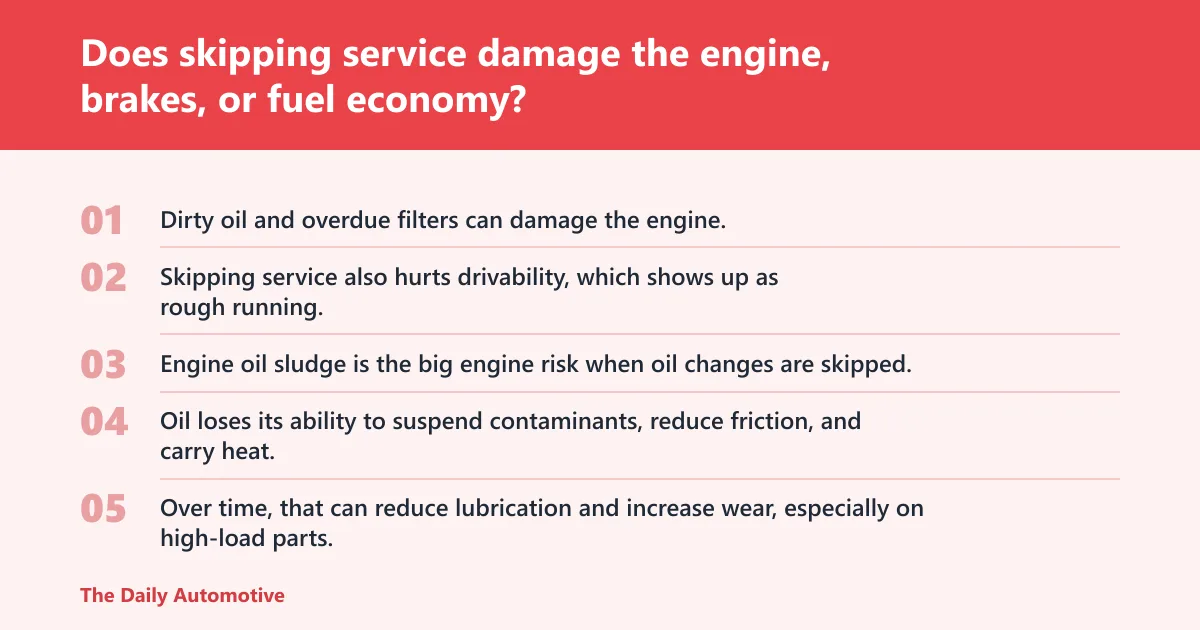
Yes. Dirty oil and overdue filters can damage the engine, neglected brakes can become a safety issue, and fuel economy often falls as contamination and restriction build up. Skipping service also hurts drivability, which shows up as rough running, poor throttle response, and more frequent breakdowns.
Engine damage from dirty oil and overdue filters
Engine oil sludge is the big engine risk when oil changes are skipped. Oil loses its ability to suspend contaminants, reduce friction, and carry heat. Over time, that can reduce lubrication and increase wear, especially on high-load parts. The air filter also matters because restricted airflow can make the engine work harder.
Brake wear that turns into a safety issue
Does not servicing your car affect brakes? Yes. Brake components are safety-critical, and neglect can let pads and rotors wear past safe limits. Once that happens, stopping distance can increase and repair cost usually rises because the damage spreads beyond the original wear item.
How neglected service can hurt fuel economy and drivability
Clogged filters, old plugs where applicable, stale fluids, and neglected tire maintenance can all hurt fuel efficiency. The car may still move normally, but it can burn more fuel, feel slower, and strain more under load. That is a performance decline, even before a major failure appears.
What this means for warranty protection, resale value, and different drivers

Warranty protection can depend on following the maintenance schedule and keeping records. Resale value usually drops when service history is incomplete or clearly neglected. Buyers and warranty reviewers both look for proof that the car got the maintenance the maker asked for.
Warranty records and manufacturer schedules
Does skipping service void warranty? It can affect warranty protection, especially if a repair can be tied to neglected maintenance and the records are missing. Keep invoices, dates, mileage, and the work performed. Manufacturer recommendations matter because they show whether the car was maintained on schedule.
Why service history affects resale value
Does an old service history lower resale value? Yes, often. Poor maintenance can lower market value because buyers worry about hidden wear, expensive catch-up work, and future reliability. Good documentation helps confidence; missing records do the opposite.
What high-mileage commuters, low-mileage drivers, and used-car buyers should do next
- High-mileage commuter: service on schedule, not when something feels wrong. Frequent stop-and-go use makes oil, brakes, and filters age faster.
- Low-mileage driver: do not skip time-based maintenance just because the odometer looks low. Fluids, rubber parts, and battery condition still age.
- Used-car buyer: compare the service book, receipts, and mileage gaps. Missing oil changes or brake records are warning signs that repair bills may arrive soon.
An early warning tool worth having
An OBD II scanner can help you catch stored fault codes before a small issue becomes a tow bill. It will not replace maintenance, but it can help you spot engine misfires, sensor faults, and emissions problems early enough to avoid larger damage.
Frequently asked questions
Is it bad to not service your car?
Yes. Skipping service can lead to lower vehicle performance, more breakdowns, higher repair costs, and lower resale value. The risk depends on what was skipped, how long it was overdue, and whether the car is already showing warning signs.
What happens if you miss a car service?
You may notice rougher running, lower fuel economy, brake noise, or fluid-related problems before a major failure appears. Missed service also raises the odds of unexpected breakdowns, and small issues can turn into towing and repair bills if they keep being ignored.
How long can you go without servicing your car?
That depends on the manufacturer schedule, the type of service, and how the car is used. A short delay is usually less dangerous than repeated overages, but mileage, time, towing, heat, dust, and stop-and-go driving all shorten the safe window.
Will my car break down if I skip maintenance?
Not always right away, but the likelihood goes up. Some problems build slowly, such as oil sludge or filter restriction, while others, like brake wear, may become urgent sooner. The more intervals you miss, the more the odds rise.
Can skipping service damage the engine?
Yes. Skipping maintenance can cause contaminant buildup in the engine, reduce lubrication, and increase wear on internal parts. Over time, dirty oil and overdue fluid service can lead to expensive engine damage that would likely have been avoided with routine care.
Does skipping service void warranty?
It can affect warranty protection, especially if the missing maintenance is linked to the failure and the vehicle lacks records. Keep documentation, follow the manufacturer-recommended schedule, and save receipts so you can show the car was maintained properly.
Does an old service history lower resale value?
Usually, yes. Buyers pay more for proof that the car received regular service, because records reduce uncertainty about hidden wear and future repairs. Gaps in the history can lower trust and give buyers a reason to negotiate the price down.
Products related to this article
Sponsored / affiliate links. As an Amazon Associate I earn from qualifying purchases. I may earn additional commission from eligible campaigns.