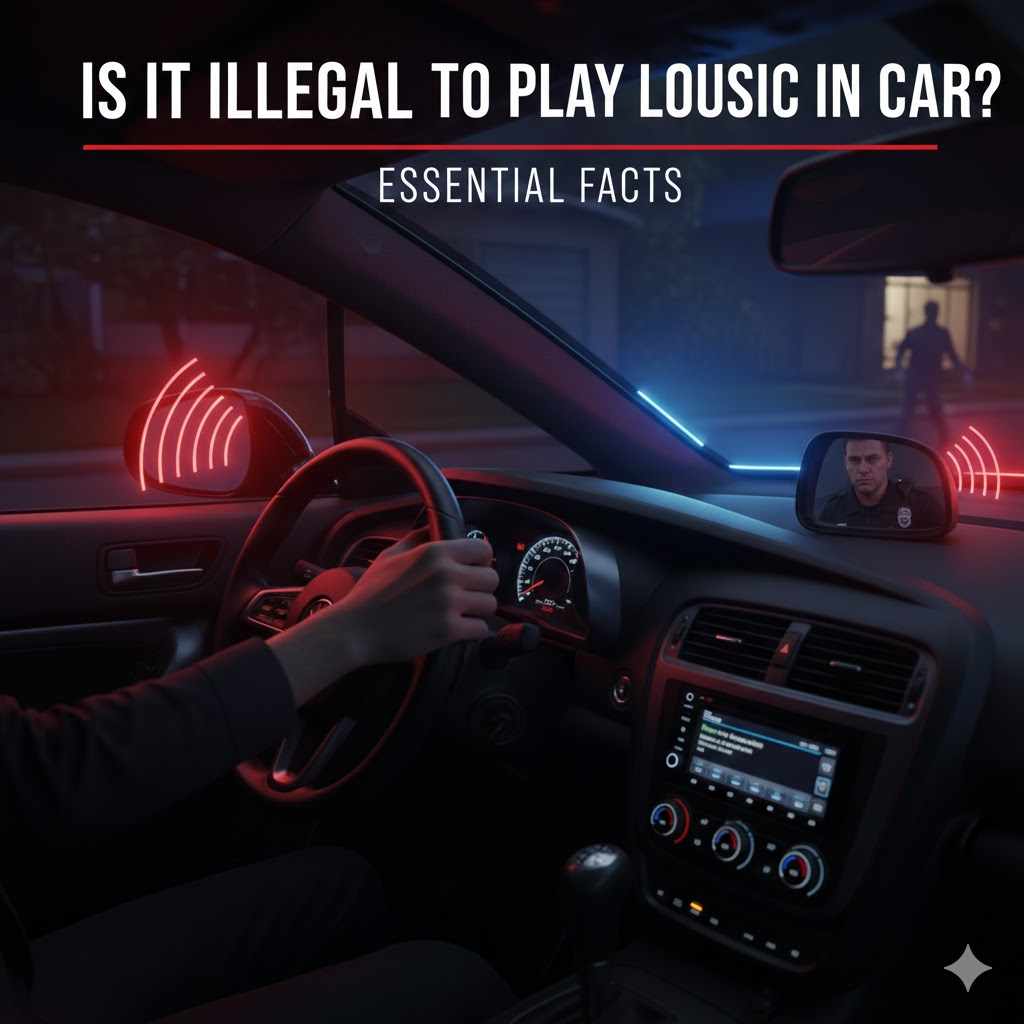
Is It Illegal To Play Loud Music In Car: Essential Facts
Quick Summary: Playing excessively loud music in your car is often illegal, as most jurisdictions have noise ordinances or specific vehicle sound level laws. These rules exist to prevent disturbance and ensure driver focus. Always check your local city and state laws to avoid fines and keep your driving experience safe and legal.**
We have all been there: cruising down the road, feeling the beat, and turning the volume up just a little too high. Suddenly, you see flashing lights in your rearview mirror. Your heart sinks. Is blasting your favorite song actually breaking the law?
It is a common question, and the answer isn’t always a simple yes or no. Laws about loud car music vary a lot depending on where you live. Dealing with noise complaints or traffic stops because of your stereo can be frustrating.
Don’t worry! As your trusted automotive guide, I am here to clear up the confusion. We will break down the rules in easy-to-understand terms. You will learn exactly what is generally considered too loud, what the laws say, and how you can enjoy your music without getting a ticket. Let’s dive into the essential facts about loud car music legality!
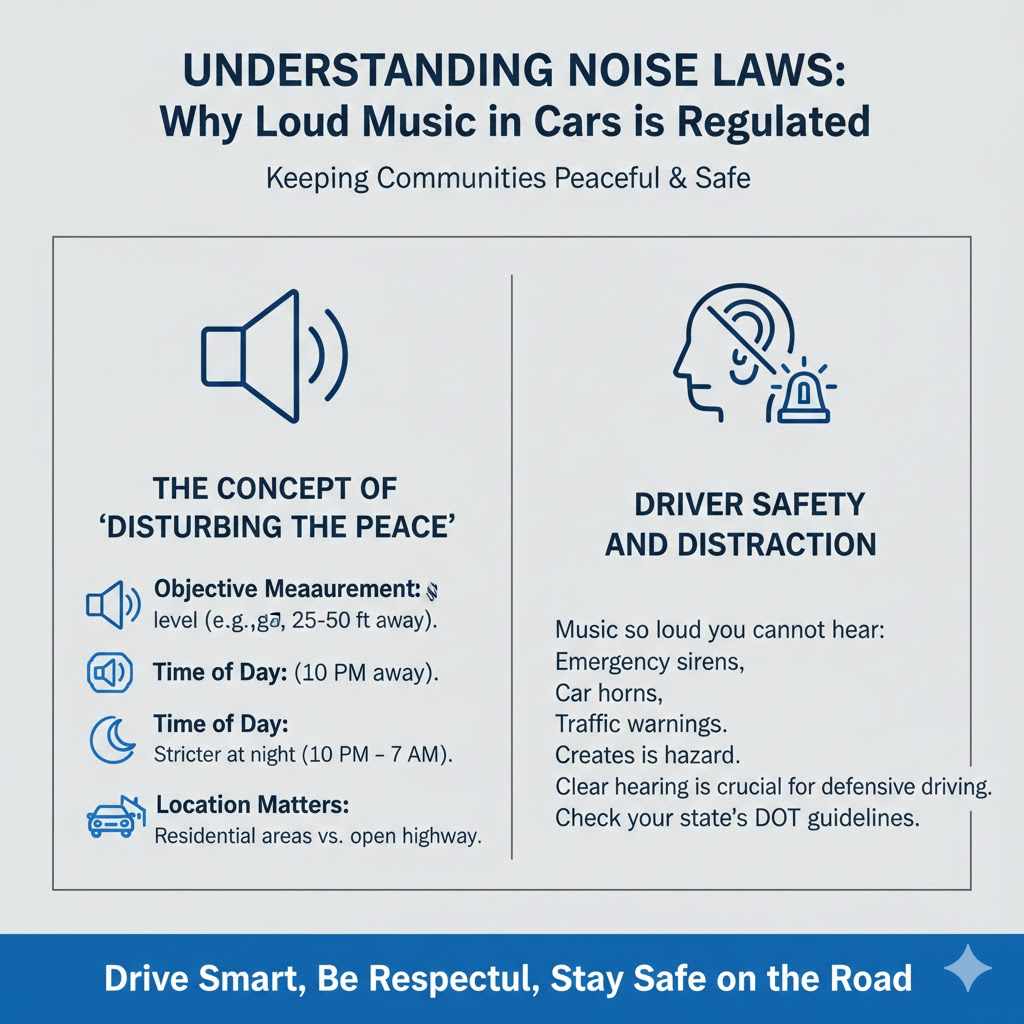
Understanding Noise Laws: Why Loud Music in Cars is Regulated
Governments worldwide, and certainly here in the US, put rules in place to keep communities peaceful and safe. Loud noises, especially at certain times or places, can disturb neighbors, affect concentration, and even distract drivers. When it comes to car stereos, the law usually focuses on two main areas: public disturbance and driver safety.
The Concept of “Disturbing the Peace”
Many local ordinances—rules set by a city or county—focus on whether your sound is disturbing the peace. This is often subjective, meaning it depends on what a police officer or neighbor perceives as too loud or disruptive.
- Objective Measurement: Sometimes, laws require the noise to be measurable above a certain decibel (dB) level, often measured from a specific distance (like 25 or 50 feet away from the vehicle).
- Time of Day: Noise restrictions are almost always stricter late at night (e.g., between 10 PM and 7 AM) than during the daytime.
- Location Matters: Noise that might be acceptable on an open highway might result in a citation if you are driving slowly through a quiet residential neighborhood.
Driver Safety and Distraction
A huge safety factor that many people forget is driver distraction. If your music is so loud that you cannot hear important things—like emergency sirens, car horns, or traffic warnings—it creates a hazard. Law enforcement looks at this seriously, as clear hearing is crucial for defensive driving.
For many states, exceeding safe volume levels on the road isn’t just about annoying others; it’s about maintaining the ability to operate your vehicle safely. For more background on general traffic safety regulations, you can often refer to your state’s Department of Transportation (DOT) guidelines.
Is It Illegal To Play Loud Music In Car? State-by-State Differences
The most important thing to know is that there is no single federal law dictating exactly how loud your car stereo can be across the entire United States. Regulation falls to state, county, and city governments. This means the rules change significantly when you cross a state line.
Common Types of Vehicle Noise Ordinances
While specifics vary, most laws fall into one of these general categories. Understanding which category your local area uses is the first step to staying compliant.
- Decibel Limit Laws: These are the most objective. The law states that sound cannot exceed a specific decibel reading at a certain distance. For example, a city might forbid sounds over 85 dB measured from 50 feet away.
- Reasonable Person Standard: This is more subjective. If a “reasonable person” would find the noise excessive, offensive, or disruptive to their enjoyment of property, it can be illegal. This is often used when no specific dB meter is readily available.
- Specific Frequency Bans: Some laws target systems that primarily produce low-frequency bass sounds, as these travel farther and cause more structural vibration than mid or high-range frequencies.
A Look at General State Examples
Since I cannot list every single local ordinance, here is a simplified look at how some states approach the issue. Always check your specific municipal codes for the definitive answer!
| Jurisdiction Type | Typical Focus | Enforcement Example |
|---|---|---|
| State Law (General) | Public nuisance or excessive engine/exhaust noise (sometimes includes stereos). | Often a citation issued alongside a traffic stop. |
| County/City Ordinance | Specific decibel readings, especially in residential areas or after 10 PM. | Fines that increase with repeat offenses. |
| Custom Installation Regulations | Some areas regulate the installation of extremely large aftermarket sound systems. | Requires inspection if system exceeds a certain power threshold. |
As an example of variation, some states, like New York, have strong statutes regarding loud vehicle operation, often referencing standards from the National Highway Traffic Safety Administration (NHTSA) regarding noise pollution prevention, though enforcement details are local. Always search for “[Your City/County Name] vehicle noise ordinance” to find the exact text.
How Loud Is Too Loud? Decibels Explained for Beginners
Numbers can be confusing. What does 80 dB actually sound like? Understanding the decibel scale helps you gauge when you might be pushing the legal limit.
The Decibel (dB) Scale Comparison
The decibel scale is logarithmic, meaning every small increase in the number represents a much larger jump in sound intensity. What sounds twice as loud to your ear is often about 10 dB louder on the scale.
Here is a quick guide to common noise levels. Remember, most vehicle noise ordinances start issuing warnings or citations somewhere between 75 dB and 95 dB, measured outside the vehicle:
- 30 dB: A whisper or rustling leaves. Very quiet.
- 60 dB: Normal conversation or background music in a quiet room.
- 85 dB: The level at which many laws begin to consider noise excessive, especially over long periods. This is similar to a loud vacuum cleaner.
- 100 dB: Very loud music, a garbage disposal, or a power lawnmower. Prolonged exposure causes hearing damage.
- 115 dB: A motorcycle or a loud rock concert. This is often the level an enthusiast’s stereo can easily hit right near the speaker.
If your music is causing people standing 25 feet away to visibly wince or cover their ears, you are likely well over the threshold for a complaint, even if you don’t have a meter handy.
What Happens If You Get Caught Playing Music Too Loud?
If an officer pulls you over specifically for loud music, you will likely face one of several escalating consequences. Knowing what to expect can help you remain calm and handle the situation professionally.
Phase 1: The Warning
For a first offense, especially if the music wasn’t dangerously loud or if it was late at night, the officer might simply ask you to turn it down. This is common, especially in areas where noise enforcement isn’t strictly based on measurement.
How to Handle It: Be polite, apologize sincerely, and immediately turn the volume down significantly. Do not argue. This interaction often ends right there.
Phase 2: The Citation (The Ticket)
If the music is clearly excessive, if you ignore a prior warning, or if you are in an area with very strict ordinances (like near a hospital or school), you may receive a citation. This is essentially a traffic ticket for a noise violation.
Fines vary widely. They can range from a small fee (around $50–$100) for a minor infraction to hundreds of dollars for repeated offenses or extreme violations.
Phase 3: Equipment Violation/Seizure (Rare but Possible)
In some jurisdictions, if you have massive, competing speakers designed solely for extremely loud exterior sound (like sound competition setups), the officer might cite you for an equipment violation, suggesting the equipment itself violates vehicle safety standards. In very rare cases related to organized street takeovers or extremely prolonged noise violations, the equipment itself could theoretically be subject to seizure, though this is uncommon for standard aftermarket stereos.
Step-by-Step: How to Check Your Local Loud Music Laws
Taking proactive steps is the best way to avoid tickets. As your guide, I recommend following these steps to find out exactly what the rules are where you drive most often.
Step 1: Identify Your Primary Driving Areas
List the specific cities or counties where you spend the most time driving—your hometown, your workplace city, etc. Laws are often stricter near residential zones.
Step 2: Search Official Municipal Websites
Use precise search terms. Try searching: “City of [Your City] noise ordinance vehicle.” Look for links ending in .gov or official city code pages. Many jurisdictions publish their entire municipal code online.
Step 3: Look for Specific Vehicle Sections
Once you find the code, look for sections titled “Vehicular Noise,” “Amplified Sound,” or “Motor Vehicle Equipment.” Pay close attention to:
- The maximum allowable Decibel (dB) level.
- The distance at which the measurement must be taken (e.g., 25 feet).
- Specific prohibited times (e.g., after 11 PM).
Step 4: Check State Vehicle Codes
While cities handle most noise, states often have overarching vehicle equipment laws. Look up your state’s DMV or Highway Patrol handbook regarding “excessive noise.” This might cover things like mufflers, but sometimes includes audio systems generally.
Step 5: Consider Neighborhood Rules
If you live in an area with a Homeowners Association (HOA) or specific community rules, these often impose noise restrictions that are much stricter than city laws. These are civil penalties, but they can still lead to fines or disputes.
Tips for Enjoying Great Car Audio Without Breaking the Law
Having powerful, great-sounding speakers shouldn’t mean you have to constantly worry about the police. Here are practical, safe ways to manage your volume.
Focus on In-Car Experience
The best way to avoid external noise complaints is to focus the sound inside the cabin where you enjoy it most.
- Sound Deadening: Investing in sound-deadening material (like Dynamat or similar products) installed on your doors and trunk helps keep the music in the car. This allows you to hear great bass and clarity at lower external volumes.
- Directional Speakers: Ensure your speakers are correctly aimed toward the occupants. Poor alignment often leads drivers to crank the volume to compensate for missing frequencies.
- Subwoofer Placement: If you have a powerful sub, make sure it is sealed or ported correctly within its enclosure to prevent rattling and uncontrolled sound bleed into the environment.
Situational Awareness is Key
Adjusting your listening habits based on your location is crucial for responsible driving.
When to Turn It Down Immediately:
- When driving through dense, quiet residential streets, especially after dark.
- When you are stopped at a traffic light next to a pedestrian or cyclist.
- When passing schools, hospitals, or places of worship.
- Any time you hear your car vibrating objects outside the vehicle (like street signs or neighboring car windows).
Know Your System’s Limits (And Yours)
If you upgrade your system substantially, understand how much power you are actually using. High-end systems can easily produce sound well over 120 dB near the speaker cone. While that might not violate an ordinance 50 feet away, it is dangerously loud for your hearing!
Always use your factory volume knob as a guide. If you notice your mirror vibrating excessively or you feel pressure in your inner ear, it is too loud for your long-term health, regardless of the law.
Car Audio Upgrades vs. Legal Compliance
Many drivers who ask, “Is it illegal to play loud music in car?” are enthusiasts who have invested heavily in aftermarket gear. It is important to know that the law often targets the effect of the sound, not the brand of your amplifier.
The Difference Between Power and Audibility
Having a $5,000 sound system doesn’t automatically make you illegal. It is only illegal when you operate that system in a manner that violates local ordinances (i.e., when it is too loud outside the vehicle).
Here is a comparison:
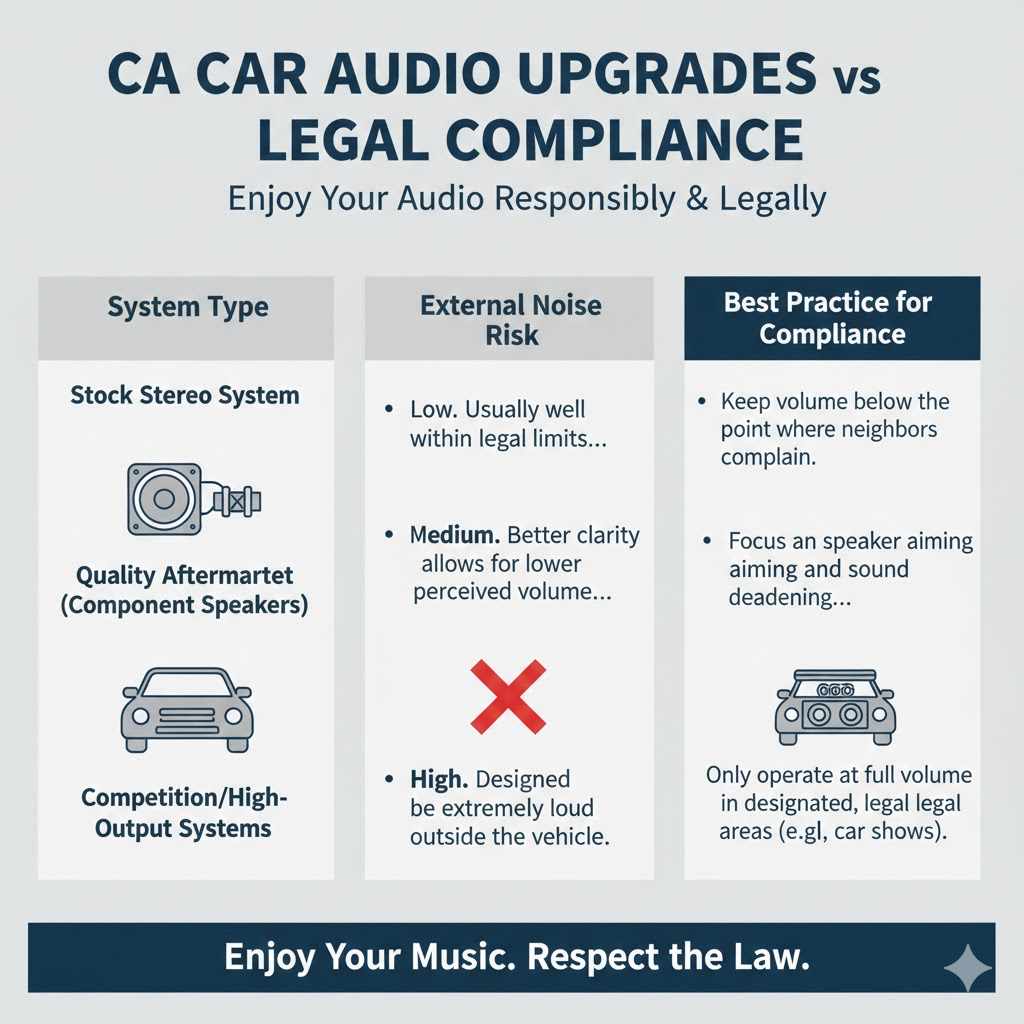
| System Type | External Noise Risk | Best Practice for Compliance |
|---|---|---|
| Stock Stereo System | Low. Usually well within legal limits unless the vehicle is damaged. | Keep volume below the point where neighbors complain. |
| Quality Aftermarket (Component Speakers) | Medium. Better clarity allows for lower perceived volume inside. | Focus on speaker aiming and sound deadening for better bass definition without excess volume. |
| Competition/High-Output Systems | High. Designed to be extremely loud outside the vehicle. | Only operate at full volume in designated, legal areas (e.g., closed car shows, not public streets). |
If you are considering a massive subwoofer setup, look into local regulations concerning “car audio sound-offs.” Many areas have specific venues where extreme volume is permitted and encouraged, keeping you off the public roadways when pushing the limits.
Frequently Asked Questions (FAQ) About Loud Car Music
Q1: If a police officer measures my music, what tool do they use?
Generally, officers use a handheld Sound Level Meter (SLM) calibrated to measure sound in A-weighted decibels (dBA), which mimics how the human ear perceives sound. The tool must be properly maintained and used according to local measurement protocols.
Q2: Can I get a ticket for just having very powerful speakers, even if they are turned off?
Usually, no. In most places, you must be actively operating the noise-producing device (the stereo) at an illegal volume to receive a citation for noise pollution. However, some jurisdictions may have vague equipment laws that could apply if the installation itself is deemed unsafe.
Q3: Does playing loud music while parked count as illegal noise?
Yes, absolutely. Noise ordinances apply whether your car is moving or parked. If you are parked on a public street or in a parking lot disturbing nearby residents or businesses, you can receive a citation. The same rules about time of day often apply.
Q4: What if the driver has headphones on and is playing loud music through the speakers?
This situation is confusing for law enforcement. The driver is responsible for all sound emanating from the vehicle. If the external speakers are audible and violate a noise ordinance, the driver is liable, regardless of their personal listening habits.
Q5: Are there specific “quiet zones” where car stereos must always be low?
Yes. Most ordinances designate certain zones as sensitive areas, such as around schools during operating hours, hospitals, nursing homes, and often all residential zones late at night (e.g., 10 PM to 7 AM). You must be extra cautious in these areas.
Q6: Is there a difference between loud music and loud exhaust noise?
Yes, they are usually covered under different statutes. Loud exhaust noise is governed by vehicle equipment regulations (often tied to emission and muffler standards), while loud stereos fall under general noise or public nuisance ordinances. Both can result in tickets, but the measuring standards might differ.
Conclusion: Driving Confidently Within the Sound Limits
Navigating the question, “Is it illegal to play loud music in car?” boils down to respecting your local environment and adhering to sensible safety standards. The short answer is: yes, it certainly can be illegal if the volume is excessive or disruptive.
The key takeaway for every driver is awareness. By taking a few minutes to check your city’s specific decibel limits or ‘disturbing the peace’ definitions, you empower yourself to enjoy your music safely and legally. Remember that good audio setup involves keeping the sound in your car through upgrades like sound deadening, rather than just turning the volume dial higher and higher.
Keep your windows up in quiet neighborhoods, keep the volume reasonable when you are stopped, and always be ready to hear approaching emergency vehicles. Drive smart, enjoy your ride, and stay confidently within the rules of the road!