If Your Car Is Sinking in Water, You Should: 4 Correct Steps
If your car is sinking in water, you should follow the SWOC order: Seatbelt off, Window open, Out immediately, Children first — never waste time on the door, since water pressure can seal it shut. Most cars float only 30 to 90 seconds before going under, and power windows can fail once water reaches them. This guide covers the exact escape sequence, what to do if the window won’t open, and which tools keep you safe.
Insert your Affiliate Disclosure reusable block here
Quick Answer
If your car is sinking in water, you should: unbuckle your seatbelt, roll down or break a window (never the windshield), and climb out immediately, sending children out first. Do not open the doors, since water pressure can trap them shut. Most cars float only 30 to 90 seconds before fully submerging.
The SWOC Method: The Correct Order to Escape a Sinking Car
SWOC is the escape sequence safety organizations teach for a car going underwater: Seatbelt off, Window open, Out immediately, Children first. It works because it skips the one thing that wastes precious seconds — trying the door — and goes straight to the exit that still works: the window.
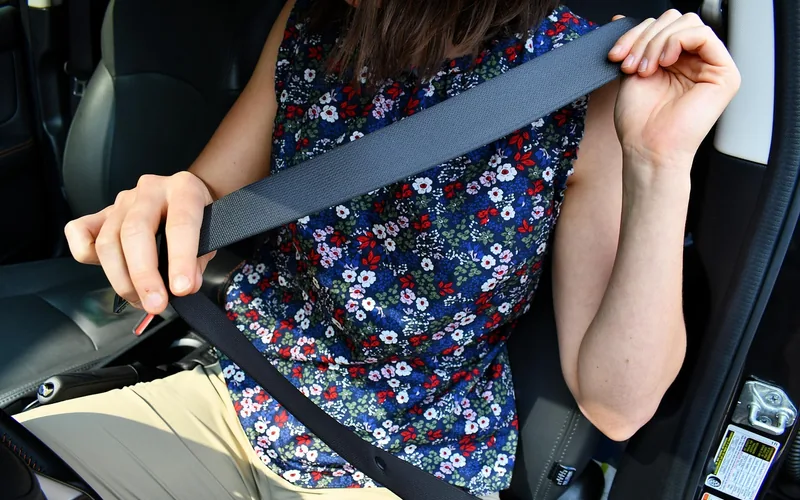
- Seatbelt Off: Unbuckle your own seatbelt immediately, then release any passengers’ belts. If a buckle is jammed, cut it with a seatbelt cutter tool rather than fighting with it.
- Window Open: Roll down a side window, or unlock and push it open, within the first few seconds — before rising water can reach it and cut power to electric windows.
- Break the Glass If Needed: If the window won’t move, strike a side or rear window at a corner with a spring-loaded window-breaker tool. Never target the windshield.
- Out and Up: Climb through the window, sending children out first, then swim toward the surface, following air bubbles if you’re disoriented underwater.
Why You Should Never Try the Door First
The moment a car enters water, hydrostatic pressure starts building against the outside of the doors. Even in water that only reaches halfway up the car, the difference between the water level outside and the air pocket inside can press the door shut with hundreds of pounds of force — far more than anyone can push through. Trying anyway does two things: it wastes seconds you don’t have, and if the door does creak open, it lets water rush in faster, which speeds up the sinking instead of slowing it down.
| Escape Route | What Happens | Best For |
|---|---|---|
| Side or rear window | Powered windows keep working for about a minute after water contact; tempered glass breaks easily with a tool | Your primary, first-choice exit |
| Front windshield | Laminated glass is built to stay in one piece and resists spring-loaded breaker tools | Never use this as an escape route |
| Car door | Outside water pressure can hold it shut with hundreds of pounds of force until the cabin is nearly full | Absolute last resort only, if every window option has failed |
What If the Window Won’t Roll Down?
If the window is stuck or the power has already cut out, break it. Aim for a side or rear window — never the windshield, which is laminated glass built to stay in one piece even when cracked. Side and rear windows are tempered glass, which shatters into small, mostly harmless pieces when struck at a corner. A spring-loaded center-punch tool does this reliably even underwater and with wet, panicked hands, which is why safety groups recommend keeping one within reach rather than relying on an elbow or a phone case.
One detail most guides skip: rear side windows sit slightly higher on many vehicles and can stay above the rising waterline a little longer than the front windows, so if the front windows are already underwater, check the back seat windows before assuming you’re out of options. If your power windows are already unreliable day to day, that’s a repair worth making before it becomes an emergency, not after.
Best Car Escape Tool Pick
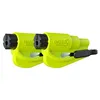
resqme Original Emergency Keychain Car Escape Tool (2-Pack)
A keychain-sized 2-in-1 window breaker and seatbelt cutter — small enough to actually keep on your keys or ignition, which is where safety experts say it needs to be.
- Best for: Keeping within arm’s reach on your keychain at all times
- Why we picked it: Named by child-safety group Kids and Car Safety as a recommended submersion escape tool
- Main drawback: Single-use spring mechanism — replace after it fires once
Compare more car escape tool options
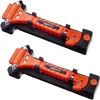 Option 1 Amazon Basics Emergency Escape Tool (2-Pack)
|
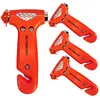 Option 2 MOTORBUDDY 4-Pack Car Safety Hammer
|
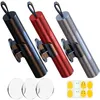 Option 3 smosun Safehammer Glass Breaker (3-Pack)
|
As an Amazon Associate we earn from qualifying purchases.
The “Wait for the Car to Fill Up First” Myth
You may see advice online telling you to wait for the cabin to fill with water so the pressure equalizes, then open the door and swim out. This is technically true as physics — once the inside and outside pressure match, a door does open more easily — but treating it as your plan is dangerous. It requires staying inside a sinking car, holding your breath through a complete submersion, in the dark, upside down or sideways, while cold water shocks your system. Most people, and almost all children, cannot reliably pull that off. Windows remain the faster, safer route in the vast majority of real submersions, and equalization should only ever be a last-resort fallback if every window has genuinely failed.
“Every second counts from the moment your vehicle enters the water.”
📊 A vehicle typically floats for only 30 to 120 seconds after entering deep water before it fully submerges, and nearly 2 out of 3 U.S. flash flood deaths between 1995 and 2010 happened inside a vehicle. — Source: Kids and Car Safety, Vehicle Submersion Safety Tips

Getting Kids and Passengers Out Safely
Unbuckle children the moment you unbuckle yourself — starting with the oldest, since an older child can sometimes help steady a younger one toward the window. Once a window is open or broken, send children through first while you hold the opening clear, then follow immediately behind them. If a passenger panics or freezes, a firm, simple instruction (“window, now”) works better than a long explanation — there isn’t time for one.
What to Do After You Escape
Once you’re through the window, swim toward the surface right away, pushing off the car if you can. If you’re disoriented underwater and can’t tell which way is up, look for air bubbles — they always rise toward the surface, even in murky water. Once you surface, swim clear of the car and call for help. Seek medical attention even if you feel fine; cold-water submersion and inhaled water can cause complications hours later.
Don’t go back for the car. Once everyone is out and safe, contact your insurer to start the claims process — flood and submersion damage is typically a comprehensive-coverage claim, not collision. Floodwater can ruin electronics, wiring, and lubricants even in a car that looks fine after drying out, so get standing water out and have it inspected before assuming it’s safe to drive again.
Keep These Emergency Tools Within Reach
A window-breaker-and-seatbelt-cutter combo tool is the single most useful thing you can add to your car for this scenario, but only if it’s actually reachable — clipped to a keychain, the sun visor, or the center console, not buried in the glovebox or trunk. Practicing the motion once, dry and out of the car, means you won’t be fumbling with it for the first time in an emergency. Read one driver’s full account of escaping a submerged car for a first-hand look at how fast this actually plays out.
Frequently Asked Questions
How long do you have before a car sinks completely?
Most vehicles float for about 30 to 90 seconds after entering deep water before going fully underwater, though this varies with the vehicle’s size, weight, and how the water is entered. That short window is why safety experts say to skip the door entirely and go straight for the seatbelt and window the instant the car hits the water.
Should you open the door or the window to escape a sinking car?
Always the window. Once a car is in water, outside pressure against the doors can be hundreds of pounds of force, making them nearly impossible to open, and forcing one open lets water rush in faster, speeding up the sinking. Windows have no such seal to fight, so they’re the reliable exit as long as you act before the car fully submerges.
Can power windows still work after a car goes underwater?
Yes, briefly. Most electric windows keep working for up to about a minute after the car hits the water, before short circuits or rising water pressure stop them. That’s the whole reason to roll windows down the instant you’re in the water, not after — waiting even a few seconds can cost you your only easy exit.
Is it true you should wait for the car to fill with water before opening the door?
No — this is one of the most repeated pieces of bad advice about sinking cars. Waiting for pressure to equalize means holding your breath through a complete submersion, which most people, especially children or anyone with a health condition, cannot safely do. Exit through a window immediately instead; only treat door-opening after equalization as an absolute last resort if every window option has failed.
Should you break the windshield to escape a sinking car?
No. Break a side window instead. Windshields are made of laminated glass, which is designed to stay in one piece and resist tools that shatter tempered glass. Side and rear windows are tempered glass and break into small pieces with a spring-loaded center-punch tool, which is why escape tools are built to strike a side window, never the front glass.
Should kids get out of a sinking car first?
Unbuckle children as soon as you unbuckle yourself, starting with the oldest child first, since an older child can sometimes help a younger sibling toward the window. Once a window is open, send children out before adults so they have the most air and time before the cabin fills.
What should you do if you’re disoriented after getting out of a sinking car underwater?
Stop moving for a second and look for air bubbles rising around you, then swim in that direction — bubbles always float toward the surface, even when murky water or panic makes it hard to tell up from down. Once you’re above water, swim away from the car and call for help immediately.
If your car is sinking in water, you should move through SWOC without stopping to think: seatbelt off, window open (or broken), out immediately, children first. Skip the door, skip waiting, and keep a window-breaker tool where you can actually reach it. Those four steps, done in the first 30 to 90 seconds, are what separate a survivable scare from a tragedy.
Products related to this article
Sponsored / affiliate links. As an Amazon Associate I earn from qualifying purchases. I may earn additional commission from eligible campaigns.