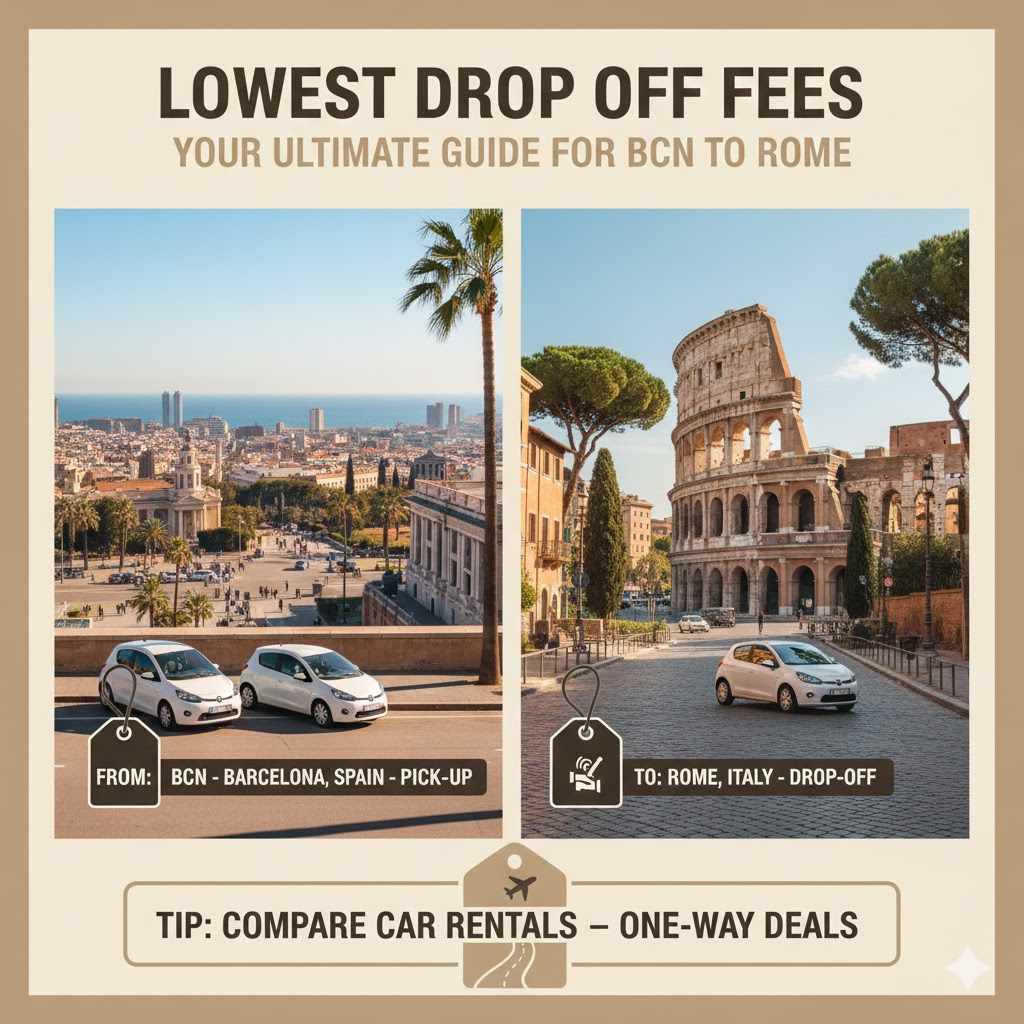
Lowest Drop Off Fees: Your Ultimate Guide for BCN to Rome
Finding the lowest one-way drop-off fee from Barcelona to Rome involves comparing major rental companies and aggregators. Generally, companies like Europcar or Sixt may offer more competitive rates for international drop-offs than some US-based brands. Always use a comparison tool, book well in advance, and be flexible with your dates to secure the best deal.
Planning a road trip from the vibrant streets of Barcelona to the ancient heart of Rome is an incredible adventure. But seeing that huge “one-way fee” on your car rental bill can feel like a major roadblock. It’s a common frustration, and it can turn an exciting plan into a stressful one. You might wonder if you’re getting ripped off or if there’s a secret to avoiding these high costs.
I’m here to tell you that you’re not alone, and there are absolutely ways to lower that fee. In this guide, I’ll walk you through everything, step-by-step, to help you find the best deal for your European journey.
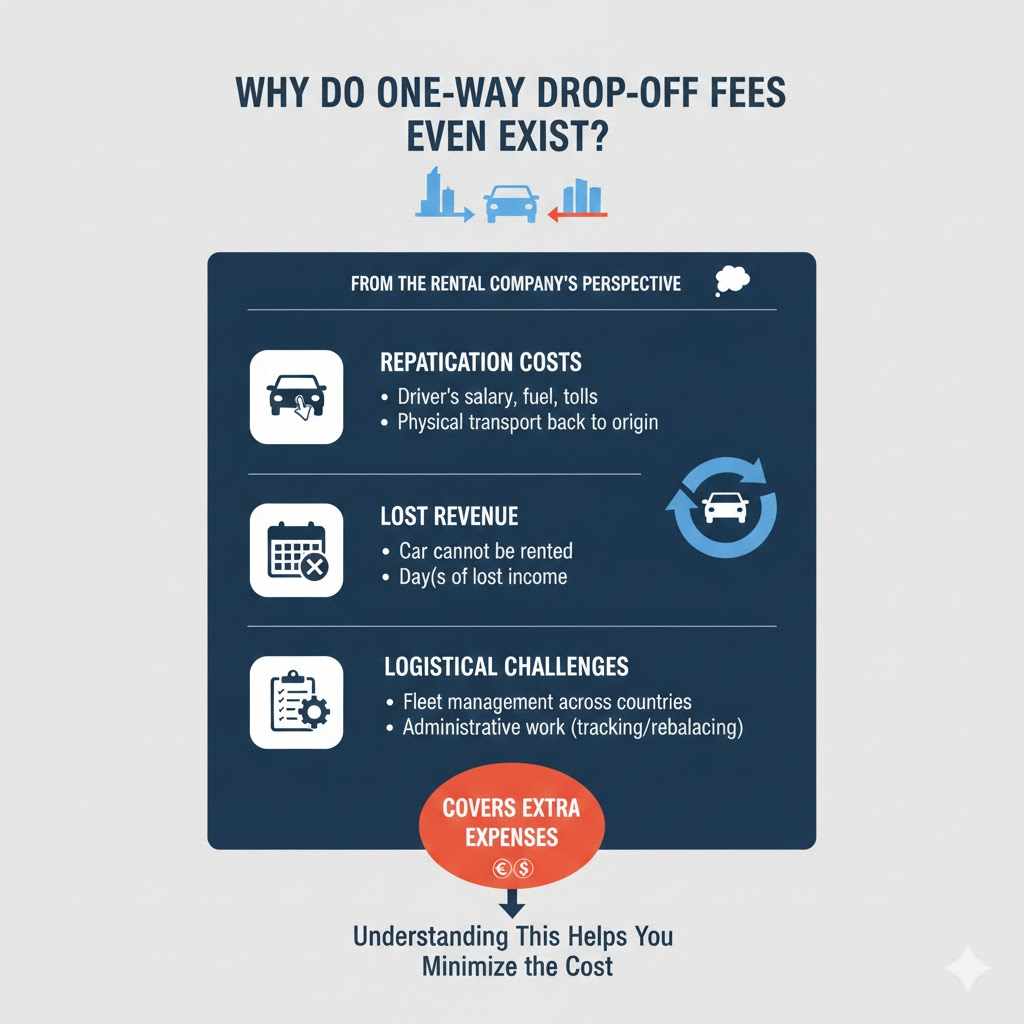
Why Do One-Way Drop-Off Fees Even Exist?
Before we dive into finding the lowest fees, it helps to understand why they exist in the first place. It’s not just a random charge companies add on. Think of it from the rental company’s perspective. When you pick up a car in Barcelona (Spain) and drop it off in Rome (Italy), that car is now far from its home base. The company has to get it back.
This creates several costs for them:
- Repatriation Costs: They might have to pay a driver to physically drive the car all the way back to Barcelona. This includes fuel, tolls, and the driver’s salary.
- Lost Revenue: While the car is being transported back, it can’t be rented out. That’s a day or two of lost income for the company.
- Logistical Challenges: Managing a fleet of cars across different countries is complicated. The fee helps cover the administrative work of tracking and rebalancing their inventory.
So, the one-way fee, also known as an “inter-country” or “cross-border” drop-off fee, is their way of covering these extra expenses. Knowing this helps you understand that while you can’t always eliminate the fee, you can definitely find ways to minimize it.
Key Factors That Influence Your Drop-Off Fee
Not all one-way fees are created equal. The price you see can swing wildly based on a few important factors. Being aware of these can help you strategize your search for the best price.
1. The Rental Company
This is the biggest factor. Some companies have a stronger presence across Europe and have better systems for moving cars between countries. Major European brands like Europcar and Sixt often have more competitive one-way fees compared to primarily US-based companies like Hertz or Avis for this specific route. However, this isn’t a fixed rule, so you always have to compare.
2. Travel Season
Demand plays a huge role. If you’re traveling during the peak summer months (June to August), expect all costs, including the drop-off fee, to be higher. Cars are in high demand, and companies have less incentive to offer deals. Traveling in the shoulder seasons (spring or fall) can often lead to significant savings.
3. Car Class
The type of car you rent matters. Dropping off a small, common economy car like a Fiat 500 in Rome is easier for the company to manage than a large, luxury SUV. Economy cars are more likely to be rented out again quickly in Italy. As a result, the one-way fee for smaller cars is often lower.
4. The Specific Drop-Off Location
Dropping a car at a major airport location (like Rome Fiumicino, FCO) might sometimes have a different fee structure than a downtown city location. Airport locations have higher traffic and might have better logistics for relocating vehicles, though they can also have higher base rental rates. It’s always worth checking both options.
Your Step-by-Step Guide to Finding the Lowest Fees from BCN to Rome
Alright, let’s get into the practical steps. Follow this process, and you’ll give yourself the best possible chance of finding a great deal and keeping that drop-off fee as low as possible.
Start Your Search Early
This is the golden rule of car rentals. The earlier you book, the better the price you’ll get. For an international one-way trip, I recommend booking at least 3 to 6 months in advance. This gives you access to the best selection of vehicles at lower prices before demand starts to rise.
Use a Rental Car Comparison Website (Aggregator)
Don’t go to individual rental sites one by one—at least not at first. Start with an aggregator. These websites search dozens of rental companies at once and show you all the options side-by-side. This is the fastest way to get a clear picture of the market.
Good aggregators to use for European travel include:
- Auto Europe: A popular choice for North Americans booking in Europe. They often have good package deals that include insurance.
- Rentalcars.com: A global leader with a massive inventory. Their search results clearly display the total cost, including estimated one-way fees.
- Kayak or Skyscanner: These are great for getting a quick overview, as they search other search engines as well.
When you use these sites, make sure the one-way fee is included in the final price shown. Most good aggregators will do this, but it’s always wise to double-check.
Check Directly with Rental Companies
After using an aggregator to identify the top 2-3 companies with the best all-in prices, go directly to their websites. Sometimes, companies offer exclusive web-only deals or promotions that don’t show up on comparison sites. It only takes a few extra minutes and could save you a nice chunk of change.
Be Flexible with Your Dates and Times
If your travel plans have some wiggle room, use it! Try searching for your rental with pickup and drop-off dates that are a day or two earlier or later. Sometimes shifting your rental period by a single day can change the price dramatically, especially if it moves you away from a weekend or holiday.
Choose the Smallest Practical Car
Think carefully about what size car you really need. A smaller, economy-class car will not only be cheaper to rent and more fuel-efficient but will also likely come with a lower one-way fee. European roads and parking spots are often smaller anyway, so a compact car is usually a smart choice.
Read the Fine Print Before You Click “Book”
This is so important! Before you enter your credit card details, read the terms and conditions. Look specifically for sections on “cross-border travel,” “one-way fees,” or “international drop-offs.” Make sure the fee is clearly stated and that there are no hidden surprises. You can learn more about your rights as a consumer when renting a car in the EU on the official Your Europe portal.
Comparing the Big Players: Who Might Charge Less?
While prices are always changing, some general patterns can help guide your search. Here’s a look at how some of the major companies often approach one-way international rentals. Please note, the fees listed below are estimates for comparison purposes—your actual quote will vary.
| Rental Company | Typical One-Way Fee Approach (BCN to Rome) | Estimated Fee Range | Best For |
|---|---|---|---|
| Europcar | Often one of the most competitive for intra-Europe one-way rentals due to its large, well-connected network. Fees are usually transparent. | €300 – €700 | Travelers looking for a good balance of price and network size. |
| Sixt | Another strong European player. Sixt can be very competitive, especially if you book early. They often have a modern fleet. | €350 – €800 | Those who book well in advance and appreciate newer vehicles. |
| Hertz | A global giant, but their international drop-off fees can sometimes be on the higher side. However, they occasionally run promotions that make them a good option. | €500 – €1000+ | Loyalty program members or when a special promotion is active. |
| Avis | Similar to Hertz, Avis is a reliable global brand, but their standard one-way fees for this route can be high. Always worth checking, just in case. | €500 – €1000+ | Travelers who prioritize brand familiarity and have corporate discounts. |
| Budget / Enterprise | These companies can sometimes offer a lower base rate, but you must carefully check the one-way fee, as it can sometimes negate the savings. | €400 – €900 | Cost-conscious travelers who are diligent about checking the final price. |
Disclaimer: The fee ranges are estimates based on typical market rates and can vary significantly based on season, car type, and booking time. Always get a direct quote for your specific travel dates.
Smart Alternatives to a One-Way Rental
If the one-way fees you’re finding are just too high, don’t worry! There are other smart ways to make this trip happen without breaking the bank.
1. The Train and Rental Combo
This is often the most cost-effective solution. Take a high-speed train for the long-haul journey and rent cars locally. For example:
- Explore the area around Barcelona with a local Spanish car rental. Return it in Barcelona to avoid any one-way fee.
- Take a scenic and comfortable train from Barcelona to a major city in Italy (you might connect through France).
- Rent another car in Italy to explore the Italian countryside before ending in Rome. Return it within Italy for a much smaller (or zero) domestic one-way fee.
This approach avoids the massive international drop-off charge and can be a more relaxing way to travel long distances.
2. Short-Term Leasing (Peugeot, Citroën, Renault)
If your trip is longer than 21 days, look into short-term leasing programs offered by French car manufacturers like Peugeot, Citroën, and Renault. This is a fantastic option for non-EU residents.
Here’s how it works: You get a brand-new car directly from the factory. The price includes full, zero-deductible insurance and allows you to pick up and drop off in different countries, often with no extra fee. While the daily rate might look higher than a standard rental, once you factor in the savings from the one-way fee and comprehensive insurance, it can be an amazing deal for longer trips.
Decoding the Rental Agreement: What to Double-Check
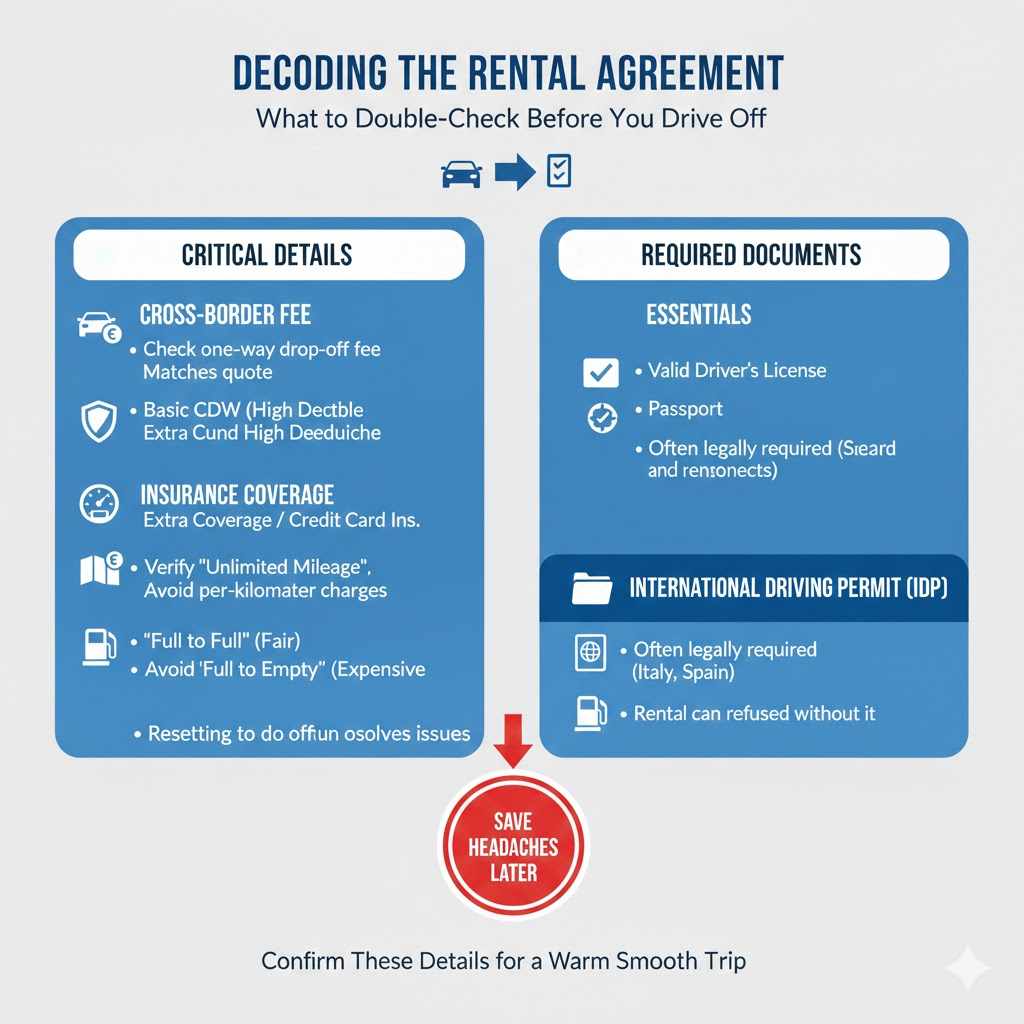
You’ve found a great price. You’re ready to book. Pause for one moment and check these critical details in the rental contract. This will save you from headaches later.
- Cross-Border Fee: Confirm the one-way drop-off fee is explicitly listed and matches what you were quoted.
- Insurance Coverage: What is included? Basic Collision Damage Waiver (CDW) in Europe often comes with a high deductible (€1000 or more). Consider getting extra coverage or using a credit card that offers primary rental insurance.
- Mileage Limits: Most rentals within Europe offer unlimited mileage, but always verify this. The drive from Barcelona to Rome is long (around 1,400 km or 870 miles), so you don’t want to be hit with per-kilometer charges.
- Fuel Policy: The most common and fair policy is “Full to Full.” You get the car with a full tank and are expected to return it full. Avoid “Full to Empty” policies where you pre-pay for a tank of fuel at an inflated price.
- Required Documents: Ensure you have a valid driver’s license, passport, and an International Driving Permit (IDP) if required. An IDP is often legally required in Italy and Spain, and rental companies can refuse you the car without one.
Frequently Asked Questions (FAQ)
1. Is it cheaper to rent a car in Spain or Italy?
Rental prices are generally very competitive in both countries. For a one-way trip between them, the biggest cost difference will almost always be the international drop-off fee, not the base daily rental rate.
2. Can I avoid the one-way drop-off fee completely?
For an international trip from Spain to Italy, it is nearly impossible to avoid the fee entirely with a standard rental. The company will always have costs to repatriate the vehicle. The goal is not to eliminate it, but to minimize it by comparing companies and booking smart.
3. Do I need an International Driving Permit (IDP)?
Yes, it is highly recommended and often legally required. Both Spain and Italy require an IDP along with your home country’s driver’s license for many non-EU drivers. It’s an inexpensive document you can get from your local automotive association (like AAA in the US) before you travel.
4. Is it better to book through a comparison site or directly with the rental company?
Start with a comparison site (like Auto Europe or Rentalcars.com) to easily see prices from many companies at once. Once you’ve found the best 2-3 options, check their official websites directly to see if they offer a better deal. Doing both is the best strategy.
5. Should I buy the extra insurance offered at the rental counter?
The insurance offered at the counter can be very expensive. Before you leave for your trip, check what coverage your credit card offers for international car rentals. Many premium travel cards provide excellent coverage that allows you to confidently decline the rental company’s extra insurance, saving you a lot of money.
6. What is the cheapest car rental company for a one-way trip in Europe?
There is no single “cheapest” company. Prices change constantly based on demand, season, and location. However, for one-way routes within Europe, companies with a strong European presence like Europcar and Sixt often have more competitive drop-off fees than others.
7. Are there any hidden fees I should watch out for?
Yes. Beyond the one-way fee, watch for airport surcharges, young driver fees (if under 25), fees for additional drivers, and expensive GPS or car seat rentals. Always read the terms carefully to see the full cost.
Conclusion: Your Road Trip Awaits!
Finding a low drop-off fee for a car rental from Barcelona to Rome is absolutely achievable. It just requires a little bit of planning and a smart strategy. By starting your search early, using comparison websites, being flexible, and knowing what to look for in the fine print, you can take control of the cost and avoid any unpleasant surprises.
Remember, the goal is to minimize the fee, not necessarily eliminate it. Think of it as a predictable part of your travel budget. By following the steps in this guide, you can make sure you’re paying the lowest possible price, freeing up more of your money to be spent on amazing food, incredible sights, and unforgettable experiences on your journey from Spain to Italy. Happy and safe travels!