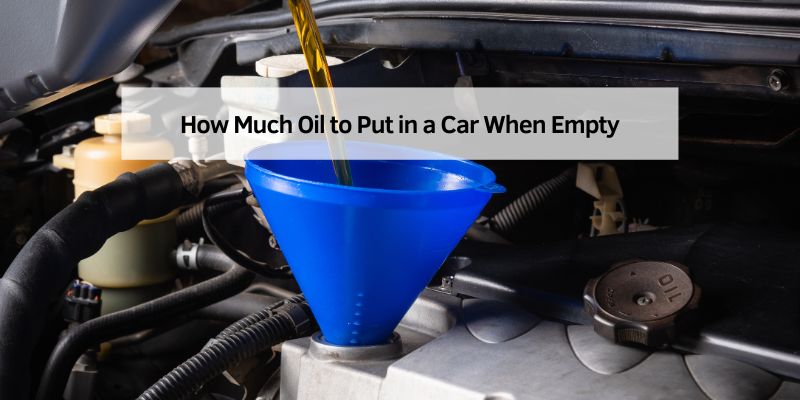
How Much Oil to Put in a Car When Empty (4–8 Quarts)
A completely empty engine typically needs 4 to 8 quarts of oil — 4-cylinder engines take 4 to 5 quarts, V6s take 5 to 6, and V8s take 6 to 8, though your manual has the exact figure. Running dry for even a few minutes can seize an engine, while overfilling by a quart or more can blow seals. This guide covers exact capacities by engine size, the fill process, and filter-change adjustments.
Why Knowing the Right Oil Amount Matters
Oil is the lifeblood of your car’s engine. It lubricates moving parts, reduces friction, and keeps everything cool. Too little oil and your engine can overheat or seize. Too much and you risk leaks, damaged seals, or reduced performance. Getting the amount right keeps your engine happy and your car on the road.
When your car’s oil is “empty,” it usually means the level is below the dipstick’s minimum mark, or the engine has been drained completely, like during an oil change. Either way, you need to know how much to add to get it back to the right level.
Checking Your Car’s Oil Capacity
The first thing you need to figure out is how much oil your car’s engine holds. Every car is different — capacity depends on engine size and type. A compact sedan might need 4 to 5 quarts, while a big truck could take 7 or more. Here’s how to figure it out:
- Check the Owner’s Manual: This is your best source. It lists the exact oil capacity for your engine, usually in quarts or liters — often written as something like “4.5 quarts with filter change.”
- Look Online: If you don’t have the manual, check your manufacturer’s website or trusted automotive sites. Search your car’s make, model, year, and engine size.
- Ask a Mechanic: A quick call to your mechanic or dealership can confirm the specs for your exact vehicle.
No Owner’s Manual? How to Find Your Exact Oil Capacity
Lost the manual or bought the car used? You don’t have to guess. Try these before you touch the funnel:
- Use a manufacturer product finder: Tools like the Castrol Product Finder let you search by make, model, year, or license plate to pull the factory-specified capacity and viscosity.
- Check under the hood: Many engines have a sticker or plate near the oil filler cap listing the exact quart capacity and oil grade — check there before you search anywhere else.
- Call the dealer parts department: Give them your VIN or year/make/model/engine size. This is usually the fastest way to get a manufacturer-verified number.
Guessing instead of checking a real source rarely ends well — always confirm the number before you start pouring.
Here’s a quick table to give you a general idea of oil capacities for different types of vehicles. These are rough estimates, so always double-check your car’s specific needs:
| Vehicle Type | Typical Oil Capacity (Quarts) |
|---|---|
| Compact Car (e.g., Honda Civic) | 3.5–5.0 |
| Midsize Sedan (e.g., Toyota Camry) | 4.0–6.0 |
| SUV (e.g., Ford Explorer) | 5.0–7.0 |
| Pickup Truck (e.g., Ford F-150) | 6.0–8.0 |
| High-Performance Car (e.g., BMW M3) | 5.5–7.0 |
How Many Quarts by Cylinder Count (4-Cyl, V6, V8)
If you know your engine’s cylinder count but not your car’s “class,” this table gives a second way to estimate capacity:
| Engine Type | Cylinders | Typical Oil Capacity (Quarts) |
|---|---|---|
| Small 4-cylinder | 4 | 4.0–5.0 |
| Larger or turbocharged 4-cylinder | 4 | 4.5–5.5 |
| V6 | 6 | 5.0–6.0 |
| V8 | 8 | 6.0–8.0 |
| V8 diesel or heavy-duty truck | 8 | 7.0–10.0 |

What Does “Empty” Really Mean?
When we say a car’s oil is “empty,” it’s not always literally empty. During an oil change, you drain the old oil completely, so the engine is pretty much dry. But if your car is low on oil because of a leak or burning, there’s usually still some oil left — just not enough to keep things running smoothly.
If the engine is completely drained, add the full oil capacity listed in your manual. If it’s just low, top it off to reach the “full” mark on the dipstick. Always check the dipstick first: pull it out, wipe it clean, dip it back in, and check the level. If it’s below the minimum mark, you’ve got some adding to do.
How Much Space Is Between the “Low” and “Full” Marks?
On most dipsticks, the gap between the “low” (or “add”) mark and the “full” mark represents roughly one quart of oil — though this varies by vehicle and can range from about half a quart to a quart and a half. That’s why topping off a low engine usually only takes a small amount, while a fully drained engine needs the entire listed capacity. If your manual states the exact low-to-full difference for your model, use that number instead of the general estimate.
Step-by-Step Guide to Adding Oil
Here’s the process for adding oil to your car when it’s empty, whether it’s from an oil change or because it’s running low:
- Park on Level Ground: Make sure your car is on a flat surface so the oil settles evenly — checking oil on a slope gives an inaccurate reading.
- Turn Off the Engine and Let It Cool: Hot oil can burn you, and the engine needs to be off for an accurate reading. Give it 10–15 minutes to cool down.
- Pop the Hood and Find the Oil Filler Cap: It’s usually on top of the engine, marked with an oil can symbol. Check your manual if you’re not sure.
- Check the Dipstick (If Not Completely Drained): If you’re topping off, use the dipstick to see how low the oil is. This helps you estimate how much to add.
- Choose the Right Oil: Your manual will tell you the oil type (like 5W-30 or 0W-20) and whether to use synthetic, conventional, or a blend. Stick to what the manufacturer recommends to avoid problems.
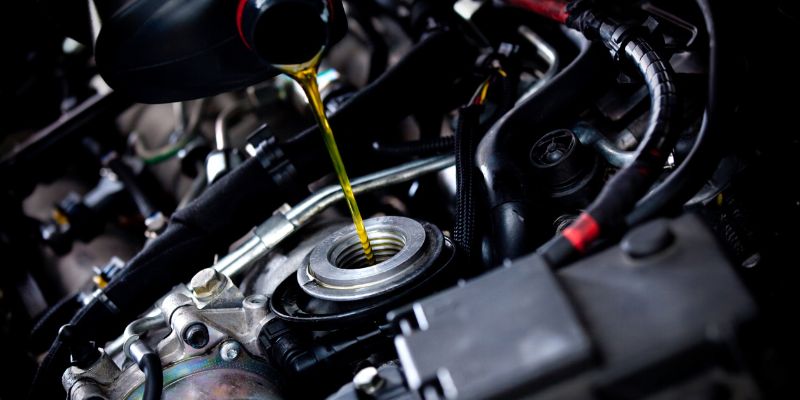
- Add Oil Gradually: Use a funnel to avoid spills. Pour in about half the recommended capacity, then wait a minute for it to settle. Check the dipstick and add more as needed — in half-quart increments once you’re close to full. For a full oil change, pour in the amount listed in your manual, minus a little if you’re replacing the oil filter (more on that below).
- Check the Level Again: After adding oil, wait a few minutes, then check the dipstick. The oil should be between the “low” and “full” marks. If it’s too high, drain some out.
- Secure the Cap and Clean Up: Make sure the filler cap is tight, clean any spills, and close the hood.
Keeping a couple of extra quarts of oil in the garage is a lifesaver when you realize you’re a little short during an oil change.
Best Oil Refill Pick
Valvoline Advanced Full Synthetic 5W-30 Motor Oil, 5 Quarts
A full 5-quart jug covers most 4-cylinder and V6 refills in one container, with 5W-30 being one of the most common OEM-recommended weights.
- Best for: A complete dry-engine refill without buying multiple quarts separately
- Why we picked it: Full synthetic formula matches what most modern engines specify, and 5W-30 fits a wide range of 4-cyl and V6 vehicles
- Main drawback: Always confirm your exact viscosity (5W-30 vs 0W-20, etc.) against your owner’s manual before buying — this weight isn’t universal
Compare more oil-fill tools
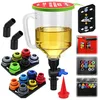 Option 1 18-Piece Engine Oil Funnel Kit
|
 Option 2 Scepter 7.3 Qt Oil Drain Pan with Lid
|
 Option 3 WORKPRO Adjustable Oil Filter Wrench
|
As an Amazon Associate we earn from qualifying purchases.
Oil Filter Changes and Oil Capacity
If you’re doing an oil change, you might need to replace the oil filter too. The filter holds a small amount of oil — usually about 0.2 to 0.5 quarts. When you replace the filter, add a bit more oil to account for it. Your owner’s manual will say something like “4.5 quarts with filter change” or “4.0 quarts without filter change.” Replacing the filter during an oil change keeps things clean and efficient, but if you’re just topping off, you don’t need to touch it.
Forgetting to add extra oil after a filter change is an easy mistake — the dipstick will read low even though you added the “without filter” amount. Always check the manual for the “with filter” capacity if you’re swapping it out.
What Happens If You Get It Wrong?
Getting the oil level wrong causes real problems. Here’s what can happen:
- Too Little Oil: Without enough oil, engine parts grind against each other, causing wear and heat buildup. This can lead to engine damage or a total breakdown — ignoring a low-oil warning is one of the fastest ways to end up needing a full engine replacement.
- Too Much Oil: Overfilling can create excess pressure, leading to leaks, damaged seals, or foamy oil that doesn’t lubricate properly. This can also cause smoke from the exhaust, which is never a good sign.
The key is to add oil slowly and check the dipstick often. It’s better to underfill slightly and add more than to overdo it and have to drain the excess.
📊 Running an engine completely dry — even for just a few minutes — can cause severe internal damage, and a full engine replacement can cost more than the car is worth. — Source: J.D. Power
“The first time I changed the oil in my old Honda Civic, I didn’t check the manual — I just guessed. I overfilled it, and the engine started acting weird within a day. Lesson learned: always check the specs before you start pouring.”
Choosing the Right Oil Type
Not all oils are the same, and picking the right one is just as important as adding the right amount. Your manual will specify the viscosity (like 5W-30) and whether you need synthetic, conventional, or a blend. Here’s a quick rundown:
- Synthetic Oil: Lasts longer, performs better in extreme temperatures, and is common in newer cars.
- Conventional Oil: Cheaper but needs changing more often. Common in older cars or on a tighter budget.
- Synthetic Blend: A middle ground — some synthetic benefits at a lower price.
Always stick to the viscosity recommended by the manufacturer — for example, many newer SUVs take 0W-20 synthetic, while some older trucks run fine on 5W-30 conventional. Using the wrong type can hurt your engine’s performance, so check the manual or the oil cap, which often lists the type.
How Often Should You Check Your Oil?
Even if you’re not doing an oil change, check your oil level regularly — about once a month or before a long road trip is a good rhythm. It’s a quick habit that can catch leaks or burning issues early, especially since most cars don’t flag low oil on the dashboard until the level is already a concern. Here’s how:
- Park on level ground and let the engine cool.
- Pull the dipstick, wipe it clean, and reinsert it.
- Pull it out again and check where the oil level is. It should be between the “low” and “full” marks.
- If it’s low, add a little oil (start with half a quart) and check again.
Keeping an eye on your oil can save you from big problems down the road — catching a slow leak early is a lot cheaper than the repair after it’s ignored.
Tips for First-Timers
If you’re new to this, it’s easier than it looks. A few tips worth knowing before you start:
- Use a Funnel: Spills are messy and make your engine bay look gross. A cheap funnel is a game-changer.
- Keep Rags Handy: Oil can get everywhere — keep old towels nearby for quick cleanups.
- Don’t Rush: Adding oil slowly and checking the dipstick often prevents overfilling.
- Recycle Old Oil: If you’re doing an oil change, take the old oil to an auto parts store or recycling center. Don’t dump it — it’s bad for the environment.
- Double-Check Everything: Make sure the filler cap and drain plug (if you’re changing oil) are tight to avoid leaks.
When to Get Professional Help
If all this sounds overwhelming, it’s okay to take your car to a mechanic or oil change shop. They’ll know exactly how much oil your car needs and can check for other issues like leaks or worn parts. Just make sure you go to a reputable place — check reviews or ask friends for recommendations.
If you notice your car is burning oil (smoke from the exhaust or a burning smell), losing oil quickly, or making unusual noises, don’t wait — get it checked out before a small issue turns into a costly repair.
Conclusion
Figuring out how much oil to put in your car when it’s empty doesn’t have to be a headache. Check your owner’s manual (or one of the lookup tools above), use the right oil type, and add it gradually while checking the dipstick. Whether you’re topping off a low level or doing a full refill, take your time and double-check the number before you start pouring.
Frequently Asked Questions
How do I know how much oil my car needs?
Check your owner’s manual or the manufacturer’s website for your car’s oil capacity. It’s usually listed in quarts or liters, depending on your engine size. You can also ask a mechanic or check the oil cap for clues.
How much oil should I add if it’s just low, not completely empty?
If your oil is low but not fully drained, add it in small amounts — start with half a quart, then recheck the dipstick before adding more. Most cars only need about a quart to go from the “low” mark to “full,” compared to 4 to 8 quarts for a fully drained engine.
Can I use any oil for my car?
No, use the oil type and viscosity recommended in your owner’s manual, like 5W-30 or 0W-20. Using the wrong oil can harm your engine’s performance.
What happens if I put too much oil in my car?
Overfilling can cause leaks, damage seals, or create foamy oil that doesn’t lubricate well. If you overfill, drain some oil until the dipstick shows the right level.
How often should I change my car’s oil?
It depends on your car and driving habits, but most cars need an oil change every 5,000 to 7,500 miles for synthetic oil or 3,000 to 5,000 miles for conventional. Check your manual for specifics.
Can I add oil without changing the filter?
Yes, if you’re just topping off, you don’t need to change the filter. But during a full oil change, replacing the filter keeps things clean.
What if my car is burning oil?
If you notice smoke, a burning smell, or frequent low oil levels, your car might be burning oil. Take it to a mechanic to check for leaks or engine issues.
Products related to this article
Sponsored / affiliate links. As an Amazon Associate I earn from qualifying purchases. I may earn additional commission from eligible campaigns.