Vintage Car Colors: The History, Psychology, and Practical Guide to Getting Them Right
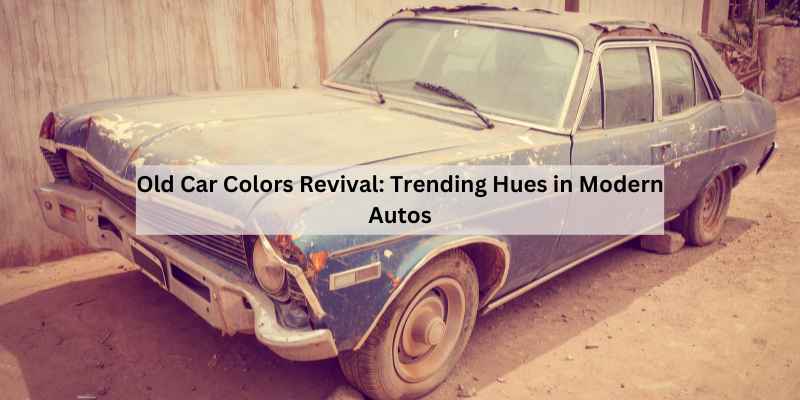
You’ve just pulled a 1967 Mustang out of a barn. The body is straight, the chrome is intact, but the paint is a chalky, sunburned mess. Your first question isn’t about the engine or the transmission. It’s about the color. Should you repaint it the original Lime Gold, or go with a glossy custom red that’ll turn heads at every cruise night? That single decision can swing the car’s value by thousands of dollars, and it’s a decision that separates casual restorers from serious collectors.
This guide covers the real story behind vintage car colors. You’ll learn why buyers chose certain hues, how paint technology changed what was possible, and how to decode your car’s original color using VIN tags and paint codes. You’ll also get a practical look at how regional trends and resale values should factor into your choice. By the end, you’ll know exactly what to look for and what questions to ask before you pick up a spray gun.

Nicpro
Nicpro 12 Colors Model Car Paint Set…
- 【Enamel-Like Gloss Acrylic for Models】 Water-based gloss acrylic model paints that deliver an enamel-style shine with easy soap-an…
- 【12 Colors + Thinner, 20ml Dropper Bottles】 Includes 10 essential gloss shades (White, Lemon Yellow, Orange, Red, True Blue, Navy…
- 【Smooth Coverage, Clean Gloss Results】 High-pigment formula brushes on evenly for broad coats and fine details. Apply multiple thi…
If you’re tackling a restoration yourself, a reliable set of paints makes a difference. The Nicpro 12 Colors Model Paint Set offers a water-based gloss acrylic option with 10 essential shades plus metallic gold and silver. It’s a handy tool for testing color combos on small panels or for detailing engine bays and trim without the heavy fumes of traditional automotive lacquers.
The Untold Story of Vintage Car Colors
Most people think vintage car colors were random choices from a factory catalog. They weren’t. The palettes automakers offered were a direct reflection of the era’s mood, economics, and available chemistry. The colors weren’t just decoration; they were a sales tool, a status symbol, and sometimes a technical compromise.
In the 1920s, you could get any color you wanted as long as it was black. That wasn’t a lack of imagination—it was a manufacturing reality. Black paint dried faster than other colors, which was critical when Henry Ford’s assembly lines were producing cars faster than paint could cure. The dark, glossy finish also hid the imperfections of mass-produced body panels that were hand-finished at best.
As production methods improved, color became a weapon in the marketing wars. General Motors introduced DuPont’s Duco nitrocellulose lacquer in the mid-1920s, which offered a rainbow of colors that dried quickly and could be applied to steel. Suddenly, you could buy a car in bright blue or deep maroon, and the era of monochrome motoring ended. This shift wasn’t just about aesthetics; it was about brand identity and market segmentation that still influences how cars are sold today.
The Psychology and Symbolism of Classic Hues
Why did buyers pick red over blue? The answer is rooted in psychology, not just taste. Red has always signaled speed, energy, and danger. It’s the color of a racing stripe, a fire engine, and a daredevil’s choice. In the 1960s, a red Corvette wasn’t just a car; it was a statement of intent. Buyers chose it because they wanted to be seen, and they wanted to be associated with performance.
Black, on the other hand, has always been the color of authority and luxury. A black Lincoln Continental or a black Cadillac wasn’t about speed; it was about presence. It whispered power and wealth without shouting. The problem with black is that it shows every dust particle and swirl mark, so it wasn’t a practical choice for everyone. It was a choice made by people who had someone else wash the car.
White and pastels told a different story. A white car in the 1950s suggested cleanliness, modernity, and suburban optimism. It was the color of the new ranch house, the new refrigerator, and the new car in the driveway. Lighter colors also reflected heat, which mattered in an era before air conditioning was standard. Buyers in the South and Southwest often chose white or light blue for practical comfort as much as style.
The deeper point is that color choices were rarely random. They were a reflection of the buyer’s self-image, the climate they lived in, and the social signals they wanted to send. Understanding this helps you appreciate why a particular shade matters, and it helps you make a more informed choice when restoring a car to its factory original color or selecting a period-correct custom paint job.
A Decade-by-Decade Color Timeline (1920s-1970s)
Let’s walk through the major eras of automotive color history. Each period had a distinct palette driven by technology, culture, and world events.
The Pre-War Era: Black, Maroon, and the Birth of Color
Before the 1920s, black dominated. Once DuPont’s Duco lacquer hit the market, colors like deep maroon, dark green, and navy blue became available. These weren’t bright or flashy; they were rich, dark tones that mimicked the look of expensive custom coachwork. The Great Depression of the 1930s actually pushed colors darker and more conservative. Automakers offered fewer bright options because they were cutting costs, and buyers wanted to project seriousness and frugality. Two-tone paint jobs existed but were rare and usually reserved for luxury models like Packards and Duesenbergs.
The Fabulous Fifties: Pastels and Two-Tones
The post-war economic boom changed everything. America was optimistic, and cars reflected that mood. Pastel colors—pink, turquoise, mint green, and baby blue—became wildly popular. These colors were inspired by household appliances, kitchen tiles, and the new suburban lifestyle. The 1955 Chevrolet Bel Air is a perfect example, often seen in a two-tone combination of India Ivory over a pastel body color. Two-tone paint jobs became a defining feature of the decade, with the roof, the trunk, or the side panels painted in a contrasting shade. This was a bold move for manufacturing, requiring careful masking and precise application, but it gave cars a custom, upscale look that buyers loved.
The Muscle Car Era: Bold, Bright, and Aggressive
The 1960s and early 1970s threw subtlety out the window. The muscle car era was about horsepower and attitude, and the paint colors matched. Bright reds, screaming yellows, vibrant oranges, and deep blues dominated the streets. Plymouth offered Hemi Orange, Ford had Grabber Blue, and Chevrolet had Hugger Orange. These were high-visibility colors designed to make a car look fast even when it was parked. The late 1960s also saw the rise of metallic and pearl finishes, which added depth and shimmer to the paint. By the mid-1970s, the oil crisis and new emissions regulations killed off the high-compression engines, and the bright colors faded with them. Earth tones—browns, tans, and muted greens—took over, reflecting a more somber national mood.
How Paint Technology Changed the Game
The chemistry of paint is just as important as the color itself. You can’t talk about vintage car colors without understanding the materials. In the 1920s, nitrocellulose lacquer was the standard. It dried fast, which was great for production, but it wasn’t very durable. It faded quickly under UV light and was prone to chipping. That’s why so many 50-year-old cars look like they were painted with chalk.
In the 1950s, acrylic lacquer and acrylic enamel became popular. Acrylic lacquer offered a deeper shine and better color retention than nitrocellulose, but it was still brittle. Acrylic enamel was tougher and more resistant to chemicals and weathering, but it was harder to apply and required a skilled painter to get a smooth finish without runs. The 1970s brought the biggest shift: the move to waterborne and basecoat/clearcoat systems. The clearcoat added a layer of protection against UV rays and scratches, but it changed the look of the car. The finish was glassy and deep, but it didn’t have the same soft, warm glow of a single-stage lacquer from the 1960s.
Metallic paints also changed the game. Aluminum flakes were added to the paint to create a sparkle effect. The size and distribution of these flakes determined the look—fine flakes gave a subtle shimmer, while coarse flakes gave a bold, glittery appearance. The problem with early metallics was that the flakes would settle in the paint can, leading to uneven application and a patchy look. Modern metallics are much more stable, but a true restoration of a 1960s car often requires a specialist who knows how to mix and spray the older formulations to match the original look.
For hobbyists working on scale models or small detail parts, modern water-based acrylics replicate the look of these vintage finishes without the hazardous solvents. A set like the Nicpro model paint set is a practical way to test color combinations and practice your technique before committing to a full-size paint job.
Decoding Your Car’s Original Color: VINs, Trim Tags, and Paint Codes
Before you buy a gallon of paint, you need to know what the factory sprayed on the car. Guessing is expensive. The original color is usually recorded on the vehicle’s trim tag or cowl tag, a metal plate typically located under the hood on the firewall or on the driver’s door jamb. This tag contains a series of codes that tell you the body style, interior trim, and exterior paint color.
Here’s what you need to do to decode it:
- Find the trim tag. Look for a metal plate with stamped numbers and letters. It’s often attached with small screws or rivets. Clean it gently with a wire brush or solvent to read the numbers.
- Identify the paint code. The paint code is usually a single letter or a two-digit number. For example, on a 1967 Chevrolet Camaro, the paint code is a single letter: ‘R’ for Bolero Red, ‘G’ for Marina Blue. On a 1970 Ford Mustang, it’s a two-digit code like ’07’ for Grabber Blue.
- Use a database. Once you have the code, search for a paint code database specific to your make and model. Websites like PaintRef.com and the various marque-specific clubs have extensive libraries of original colors. You can also buy a restoration guide book for your specific car model; these often list every available color with its code and a sample chip.
- Check the VIN. The VIN itself usually doesn’t contain the paint code, but it confirms the model year and plant, which helps you narrow down the correct tag style and code format.
- Verify against the car. Look for the original paint in hidden areas like under the dash, inside the trunk lid, or behind the interior panels. This gives you a physical sample of the exact shade, which is more reliable than a printed chip.
Color matching is a science. Even if you have the correct code, the paint you buy today may not match the original 1967 formulation exactly. Pigments have changed, and regulations have banned some of the heavy metals that gave old paints their unique depth. A skilled paint shop can use a spectrophotometer to scan your original sample and formulate a custom mix that gets as close as possible. It’s not perfect, but it’s the best way to achieve a concours restoration that looks factory-correct.
Regional Trends: Why Location Matters in Color and Value
You might think a 1968 Mustang is a 1968 Mustang, no matter where it was sold. But regional differences in color popularity are real, and they affect the value of survivor cars today. Cars sold in California often featured lighter, brighter colors because the sunny climate made them pop. A bright yellow or a light blue looked fantastic under the California sun. The lack of harsh winters also meant these cars were less likely to be exposed to road salt, so their original paint survived longer.
In the Northeast, darker colors like black, dark green, and maroon were more common. They hid the grime and salt spray that came with winter driving. The trade-off was that these cars rusted faster, and fewer survivors exist in original paint. That scarcity can actually increase the value of a rust-free Northeast car, even if the color is less flashy than a California car.
When you’re evaluating a vintage car, the original color and its condition tell a story about where the car lived. A car with its factory original paint in a rare regional color is a treasure trove for collectors. It’s not just a car; it’s a time capsule. The market for these cars is strong because they offer authenticity that a repaint can’t replicate, no matter how good the work is. If you’re looking at a car for sale, ask about the provenance and where it spent its life. That information can be as valuable as the VIN.
The Resale Value Debate: Does Color Really Matter?
Yes, color matters, but not in the way most people think. A bright, desirable color can increase a car’s value by 10% to 20% over the same car in a bland color. For a $50,000 classic, that’s a $5,000 to $10,000 swing. The most desirable colors are usually the ones that are period-correct and iconic. For a 1965 Ford Mustang, Rangoon Red or Wimbledon White are top choices. For a 1970 Plymouth Barracuda, Plum Crazy purple is worth a premium over a plain white or black.
Conversely, a bad color choice can kill a sale. A 1969 Chevrolet Camaro painted in a modern pearl white or a metallic burgundy looks wrong. It doesn’t match the car’s character, and it signals to buyers that the restorer didn’t care about authenticity. The same car in its original Le Mans Blue will attract more serious buyers and command a higher price.
That said, there’s a nuance. A perfectly executed custom paint job in a modern color can appeal to a different segment of buyers—those who want a resto-mod or a pro-touring car. These cars are driven and enjoyed, not trailered to concours events. The value is in the build quality and the performance, not the factory correctness. If you’re building a car for yourself, choose what you love. If you’re building it to sell, do your research on what the market wants for that specific model.
Restoration vs. Customization: Choosing Your Path
This is the fork in the road. You have two main paths: restore to factory original or customize. Both are valid, but they require different mindsets and budgets.
Restoration is about returning the car to its original state. You’ll need the correct paint code, the right type of paint (lacquer vs. enamel), and the proper application technique. Concours restoration is brutal—judges measure paint thickness, check for overspray in the engine bay, and look at the texture of the finish under a light. It’s expensive and time-consuming, but it preserves history and maximizes value for rare, high-end cars.
Customization is about personal expression. You might choose a modern basecoat/clearcoat system because it’s more durable and easier to maintain. You might pick a color that wasn’t offered in 1967 because you like it. You might add a two-tone paint job that the factory never offered. This path is more forgiving, but it lowers the car’s value to hardcore collectors. It’s a trade-off you need to accept.
Here’s a comparison of the two approaches:
| Aspect | Factory Restoration | Custom Repaint |
|---|---|---|
| Paint Type | Single-stage lacquer or enamel | Modern basecoat/clearcoat |
| Color Choice | Original code, period-correct | Any color, including modern hues |
| Durability | Low to moderate; fades and chips | High; resists UV and scratches |
| Authenticity | High; passes concours judging | Low; not factory-correct |
| Resale Value | Maximized for rare/classic models | Narrower market; depends on build |
| Cost | High due to prep and materials | Variable; can be lower |
| Maintenance | Requires careful hand-washing | Easier to care for |
There’s no right answer. I’ve seen beautiful restorations that look like they rolled off the line yesterday, and I’ve seen stunning customs that turn heads everywhere they go. The key is to be deliberate. Don’t just pick a color because it’s popular on Instagram. Understand the history of the car, the era it came from, and what you want to achieve with the build.
If you’re working on a model kit or a small diorama to test your color ideas, using a versatile paint set helps you experiment without the cost of a full automotive paint job. The Nicpro model paint set is a practical tool for this kind of exploration, letting you see how different shades look next to each other before you commit.
Frequently Asked Questions
What is the most popular vintage car color?
Red is consistently the most popular color for classic muscle cars and sports cars. It’s associated with speed and passion. For luxury cars of the 1930s and 1940s, black was the top choice. For 1950s cruisers, pastel shades like turquoise and pink were the most common. The answer depends entirely on the era and the type of car.
How do I find the original paint code for my classic car?
Look for the trim tag or cowl tag under the hood or on the door jamb. The paint code is a letter or number stamped into that tag. Cross-reference it with a paint code database for your specific make and model. If the tag is missing, check hidden areas like under the dash or behind the trunk liner for remnants of the original paint.
Is it better to use lacquer or enamel for a classic car restoration?
For a true concours restoration, use the type of paint the factory used. Most cars from the 1950s and 1960s used acrylic lacquer. It has a specific look and depth that modern paints can’t replicate. However, lacquer is fragile and requires a skilled painter. For a driver-quality car, a modern urethane or basecoat/clearcoat system is more durable and easier to maintain, even if it isn’t perfectly authentic.
Does the original color affect the value of a classic car?
Yes. A car in its factory original color, especially a desirable or rare shade, is worth more than a car that has been repainted in a non-original color. The market values authenticity. A repaint in a modern color can reduce the value by 10% to 20% or more, depending on the car and the buyer.
Can I match the original paint if the color has faded?
Faded paint is tricky. The original pigment has been degraded by UV light, so the color has shifted. You can use a faded sample to create a custom mix, but it won’t match the factory shade exactly. For a restoration, it’s better to use a paint chip from a database or a known original sample that hasn’t been exposed to the sun, like the paint under a gasket or trim piece.
The Color of Legacy
Vintage car colors are more than just a layer of pigment. They are a snapshot of a moment in time—a reflection of the economy, the culture, and the technology that created them. The pastel pinks of the 1950s speak of suburban optimism. The bright oranges and blues of the 1960s scream horsepower and rebellion. The earth tones of the 1970s whisper about an oil crisis and a changing world.
- Always verify the original paint code before buying paint for a restoration.
- Choose a period-correct color to maximize resale value and authenticity.
- Understand the paint chemistry—lacquer vs. enamel—before you commit to a finish.
- Consider the regional history of the car; it can add to its story and value.
- Test your color choices on a small scale before painting the whole car.
- Decide early whether you’re building for a concours field or for your own enjoyment.
- Use quality materials and don’t rush the prep work; the paint is only as good as the surface under it.
Whether you’re a seasoned restorer or a new owner, the color you choose is a conversation with the past. Make it count.
Products related to this article
Sponsored / affiliate links. As an Amazon Associate I earn from qualifying purchases. I may earn additional commission from eligible campaigns.