Chevy Traverse P0496 Fix: Diagnose and Repair the EVAP Purge Valve
You’re driving your 2026 Traverse and the check engine light pops on. The code reads P0496. Your first thought might be a gas cap issue, but this one is different. P0496 means the engine is pulling fuel vapor into the intake when it shouldn’t be, which messes with the air-fuel mixture and can cause rough idling or a strong fuel smell.
This guide walks you through the exact diagnostic process and repair for the Chevy Traverse P0496 fix. You’ll learn how to test the purge valve, when to replace it, which part numbers are correct, and how to verify the repair with a drive cycle. No guessing, no throwing parts at it.
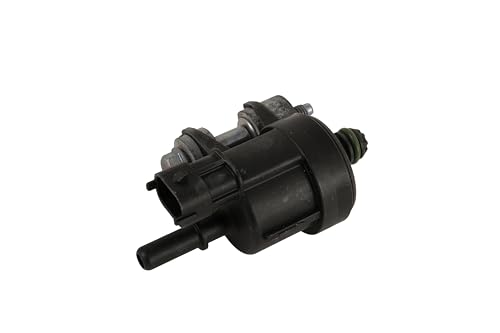
GM GENUINE PARTS
GM Genuine Parts 12737252 Evaporative Emission Canister…
- Some GM Genuine Parts may have formerly appeared as ACDelco GM Original Equipment (OE)
- GM Engineers design and validate OE parts specifically for your Chevrolet, Buick, GMC, or Cadillac vehicle
- GM regularly updates production and service part designs to integrate new materials and technologies
If your diagnosis points to a faulty purge valve, the GM Genuine Parts 12737252 Evaporative Emission Canister Purge Solenoid Valve is the exact OEM replacement. It’s the same part GM engineers designed for your Traverse, so you avoid the fitment and durability issues common with cheap aftermarket solenoids. Check the current price on Amazon before ordering.
What Does P0496 Mean on a Chevy Traverse?
The evaporative emission (EVAP) system traps fuel vapors from the tank in a charcoal canister. When the engine is running, a purge valve opens to let those vapors into the intake manifold to be burned. P0496 specifically means the engine detected excessive purge flow when the system wasn’t commanded to purge.
In plain terms: the purge valve is letting fuel vapor into the engine when it should be closed. This creates a vacuum leak that leans out the air-fuel mixture. On the 3.6L V6 in the Traverse, this often triggers a rough idle and a fuel smell near the front of the vehicle.
The code sets when the fuel tank pressure (FTP) sensor reads a rapid drop in pressure while the purge valve is closed. The engine control module (ECM) watches this pressure constantly. If it sees a vacuum pulling on the tank without the purge valve open, it logs P0496.
Symptoms You’ll Notice (Beyond the Check Engine Light)
P0496 doesn’t always make the car undrivable, but it does cause noticeable issues. Here’s what you’ll likely experience:
- Rough or fluctuating idle, especially at a stoplight
- Strong fuel odor coming from the engine bay
- Poor fuel economy (a few miles per gallon drop)
- Hesitation or stumbling during acceleration
- Check engine light with P0496 stored in the ECM
Some drivers also report a faint hissing sound from under the hood right after shutdown. That’s the purge valve stuck open, equalizing pressure. If you catch it early, you might avoid the rough idle altogether.
The severity depends on how far the valve is stuck open. A fully open valve causes a massive vacuum leak that makes the engine run poorly. A partially stuck valve might only trigger the light with no noticeable drivability issue.
The Root Causes: Why Your Traverse Triggers P0496
Most people assume the purge valve is the only suspect. It’s the most common cause, but not the only one. Here’s what you need to check before buying anything.
Stuck-Open Purge Valve (The #1 Culprit)
The purge solenoid is a normally closed valve. It opens only when the ECM sends a signal. Over time, the internal spring weakens or debris gets stuck on the sealing surface. Once it fails, it stays partially or fully open.
On the 2026-2026 Traverse, the purge valve sits on the intake manifold near the throttle body. It’s a small black plastic cylinder with an electrical connector and two hoses. You can’t miss it once you remove the engine cover.
The OEM part number is 12737252. This supersedes the earlier 12671646 and 12671346 numbers. If you buy aftermarket, expect variations in quality. Some cheap valves use weaker springs that fail again within 10,000 miles. The GM genuine part is worth the extra cost.
Charcoal Canister Saturation or Damage
The charcoal canister sits under the vehicle, near the rear axle on the passenger side. It absorbs fuel vapors until the purge valve can release them. If the canister becomes saturated with liquid fuel, it can’t hold any more vapor. This causes pressure spikes that confuse the FTP sensor.
Canister saturation usually happens after repeated overfilling at the gas station. Fuel floods the vent line and soaks the charcoal. You might notice a strong fuel smell near the rear wheels if this is your issue.
Replacing the canister is a bigger job. It requires dropping the rear of the vehicle and disconnecting several hoses. Do this only if you’ve confirmed the purge valve is good and the FTP sensor reads correctly.
Faulty Fuel Tank Pressure (FTP) Sensor
The FTP sensor monitors pressure in the fuel tank. If it sends incorrect data to the ECM, the computer might think there’s excessive purge flow when there isn’t. This is a common misdiagnosis because the symptoms are identical.
The FTP sensor is located on top of the fuel tank, which means dropping the tank to replace it. That’s a multi-hour job. Before you go there, test the sensor with a scan tool. Watch the pressure reading when the purge valve is closed. It should stay stable. If it drifts wildly, the sensor is bad.
Wiring and Connector Issues
Corroded pins or broken wires at the purge valve connector can cause erratic operation. The valve might open and close on its own, triggering P0496 intermittently. Check the connector for green corrosion or bent pins.
The wiring harness runs along the top of the engine. Rodents sometimes chew on it. Look for any visible damage. A simple repair of a broken wire can save you from replacing a perfectly good valve.
How to Diagnose P0496 Without Throwing Parts at It
Here’s the process that separates a solid repair from a guess. You need a scan tool that reads live data. A basic code reader won’t cut it for this test.
The Vacuum Draw Test (Step-by-Step)
- Start the engine and let it reach operating temperature.
- Connect your scan tool and look at the FTP sensor reading. It should show near zero inches of water (inH2O) with the engine off.
- With the engine running at idle, watch the FTP reading. If it drops below -2 inH2O, the purge valve is leaking vacuum into the intake.
- Pinch the hose between the purge valve and the intake manifold. If the FTP reading stabilizes, the purge valve is your problem.
- If the FTP reading still drops, the leak is elsewhere in the EVAP system.
This test takes five minutes and tells you exactly where the issue is. No smoke machine needed for most cases.
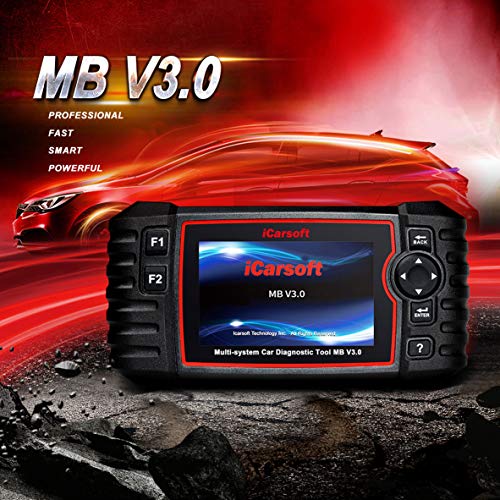
Using a Bi-Directional Scan Tool to Command the Purge Valve
A bi-directional scan tool lets you command the purge valve open and closed manually. With the engine running, command the valve to 0% duty cycle. The FTP reading should hold steady. Then command it to 100%. You should see a rapid pressure drop in the tank.
If the FTP reading doesn’t respond to the command, the valve is stuck. If it responds but the engine runs rough at 0% duty cycle, the valve is leaking internally.
This test also verifies the wiring. If the scan tool can’t command the valve at all, check the connector and wiring before condemning the valve.
The Exact Fix: Replacing the Purge Valve (With Part Numbers)
Once you’ve confirmed the purge valve is stuck open, replacement is straightforward. You’ll need a 10mm socket, a flathead screwdriver, and about 20 minutes.
Here’s the process for the 2026-2026 Traverse with the 3.6L V6:
- Remove the engine cover by pulling straight up on the four corners.
- Locate the purge valve on the intake manifold, driver’s side near the throttle body.
- Disconnect the electrical connector by pressing the tab and pulling.
- Release the quick-connect fittings on both hoses. Push the fitting in and pull the hose off.
- Remove the two 10mm bolts holding the valve bracket.
- Install the new valve in reverse order. Torque the bolts to 89 lb-in (10 Nm).
- Reconnect the hoses until they click. Reconnect the electrical connector.
The GM Genuine Parts 12737252 valve fits all 2026-2026 Traverse models. It’s the same part used on the Buick Enclave and GMC Acadia with the 3.6L engine.
One thing to watch: the quick-connect fittings can be brittle after years of heat cycling. If a fitting cracks during removal, you’ll need to replace the hose too. The part number for the vent hose is 84163915 if that happens.
Cost Analysis: DIY vs. Mechanic vs. Dealership
Prices vary widely depending on where you get the repair done. Here’s a realistic breakdown based on a 2026 Traverse.
| Repair Option | Parts Cost | Labor Cost | Total Estimate |
|---|---|---|---|
| DIY (OEM part) | $60-$90 | $0 | $60-$90 |
| Independent mechanic | $70-$100 | $80-$120 | $150-$220 |
| Dealership | $90-$120 | $150-$200 | $240-$320 |
| DIY (aftermarket part) | $25-$40 | $0 | $25-$40 |
The DIY route with an OEM part is the sweet spot. You get factory reliability for less than half the dealership cost. The aftermarket part saves money upfront but carries a higher failure risk. I’ve seen cheap valves fail within 6 months.
If you’re paying a mechanic, ask for the GM genuine part specifically. Many shops default to aftermarket parts to keep quotes low. You’ll pay a little more, but you won’t be back in the shop next year.
GM Special Coverage: You Might Get This Fixed for Free
GM issued special coverage number N192210240 for certain Traverse models with EVAP purge valve issues. This is not a recall, but it’s a warranty extension that covers the repair at no cost under specific conditions.
This coverage applies to 2026-2026 Traverse vehicles with the 3.6L engine, up to 15 years or 150,000 miles. It covers the purge valve replacement if the vehicle fails an emissions test or triggers P0496 with specific freeze frame data.
Call your local dealer with your VIN to check eligibility. The coverage is tied to the vehicle identification number, not the owner. Even if you bought the car used, you’re covered.
One catch: the coverage only applies if the code sets under specific conditions. If your freeze frame shows the code triggered during a cold start, it likely qualifies. If it set during a long highway drive, it might not. Worth the phone call either way.
How to Verify the Repair and Pass the Drive Cycle
After replacing the valve, you need to clear the code and complete a drive cycle. This confirms the repair and ensures the ECM’s readiness monitors are set for emissions testing.
First, clear the code with your scan tool. Then drive the vehicle under these conditions:
- Start the engine cold and let it idle for 2-3 minutes.
- Drive at a steady 45-55 mph for 10 minutes.
- Stop and let the engine idle for 2 minutes.
- Accelerate to 60 mph and hold for 5 minutes.
- Stop and turn the engine off. Wait 30 minutes.
- Restart and drive for 5 minutes at varying speeds.
During this drive, the ECM runs the EVAP system self-test. It closes the vent valve, opens the purge valve, and watches the FTP sensor. If the pressure holds within spec, the monitor passes.
You can check readiness with your scan tool. Look for the EVAP monitor status. It should read ‘Complete’ or ‘Ready’ after the drive cycle. If it reads ‘Incomplete’, you need to drive more, usually with the fuel tank between 15% and 85% full.
Don’t skip this step. If you clear the code and immediately take the car for an emissions test, it will fail for incomplete monitors.
Preventing P0496 From Coming Back
Once you’ve fixed the purge valve, a few habits will keep the code from returning. The biggest one: stop topping off the gas tank. When the pump clicks off, stop. Overfilling forces liquid fuel into the canister and kills the purge valve over time.
Use quality fuel from busy stations. Ethanol-blended fuel that sits for months can leave deposits on the valve seat. If the Traverse sits for long periods, add a fuel stabilizer to keep the system clean.
Check the purge valve connector annually for corrosion. A dab of dielectric grease on the pins prevents moisture intrusion. It takes two minutes and costs a few dollars.
If you do a lot of short trips, the EVAP system never gets a chance to run a full purge cycle. Take the Traverse on a 20-minute highway drive once a week. This clears moisture and keeps the valve exercising properly.
Finally, if you’re handy with a scan tool, monitor the FTP sensor reading during routine maintenance. A slow drift in pressure when the system is sealed is an early warning sign. Catch it before the code sets.
Frequently Asked Questions
Can I drive my Traverse with a P0496 code?
Yes, but you shouldn’t ignore it. The vehicle is drivable, but the rough idle and rich fuel mixture can foul spark plugs and damage the catalytic converter over time. If the code is active, address it within a few hundred miles.
Is P0496 the same as a gas cap code?
No. A loose gas cap typically triggers P0455 (large leak) or P0457 (loose cap). P0496 is about excessive purge flow, which means the system is pulling vapor when it shouldn’t. A gas cap issue won’t cause P0496.
How long does it take to replace the purge valve on a Traverse?
For a DIYer with basic tools, plan on 30-45 minutes. The valve is accessible on top of the engine. The hardest part is releasing the quick-connect hoses if they’re stiff.
Will a P0496 code clear itself after replacing the purge valve?
Not automatically. You need to clear the code with a scan tool and drive the vehicle to complete the EVAP monitor test. The code won’t reset on its own until the system runs a full self-test, which can take several drive cycles.
Does the GM special coverage N192210240 cover the FTP sensor too?
No. The coverage is limited to the purge valve and related hoses. If the diagnosis points to the FTP sensor or canister, you’re responsible for those costs. That’s why the diagnosis step matters.
What to Do Next
- Read the freeze frame data before clearing anything. It tells you the engine conditions when the code set.
- Test the purge valve with a scan tool before buying parts. The vacuum draw test takes five minutes.
- Buy the GM Genuine Parts 12737252 valve. The aftermarket savings aren’t worth the failure risk.
- Call your dealer about special coverage N192210240. You might get the repair covered for free.
- Replace the valve yourself if you’re comfortable. It’s a 30-minute job with basic hand tools.
- Complete the full drive cycle after the repair. Don’t rush to an emissions test with incomplete monitors.
- Stop topping off the gas tank. It’s the single best habit to prevent P0496 from returning.
This repair is one of the more straightforward ones on the Traverse. With the right diagnosis and a quality part, you’ll be back on the road with a clean check engine light. If you run into other issues with your Traverse, check our guide on P0008 Chevy Traverse or learn how to reset the service side detection system.
Products related to this article
Sponsored / affiliate links. As an Amazon Associate I earn from qualifying purchases. I may earn additional commission from eligible campaigns.