P0722 Ford Error Fix: The Complete Diagnostic Flow
Quick Answer: The 30-Second Fix Summary
If you just pulled a P0722 code on your Ford and you’re staring at the check engine light, here’s the short version. The transmission output speed sensor (OSS) is either not sending a signal, or the signal it sends is garbage. In about 70% of cases, the fix is a new sensor or a repaired wiring harness. The other 30% involves a damaged tone ring or a transmission control module (TCM) that needs a relearn. This article walks you through the diagnostic flow so you don’t replace parts blindly.
You’ll leave this page knowing exactly how to test the sensor, check the wiring, inspect the tone ring, and perform the TCM relearn procedure that most DIY guides skip. No fluff, just the steps.

ANCEL
ANCEL AD310 Classic Enhanced Universal OBD II…
- CEL Doctor: The ANCEL AD310 is one of the best-selling OBD II scanners on the market and is recommended by Scotty Kilmer, a YouTub…
- Sturdy and Compact: Equipped with a 2.5 foot cable made of very thick, flexible insulation. It is important to have a sturdy scann…
- Accurate Fast and Easy to Use: The AD310 scanner can help you or your mechanic understand if your car is in good condition, provid…
Before you dive into the engine bay, grab an OBD-II scanner if you don’t own one. The ANCEL AD310 scanner is a solid pick for reading and clearing this code after you finish the repair. It plugs into the port under the dash and gives you live data, which you’ll need later to verify the fix actually worked.
What Does P0722 Mean on a Ford? (Simplified)
P0722 is a generic powertrain code that reads “Output Speed Sensor Circuit No Signal.” On a Ford, the output speed sensor sits on the transmission case and monitors the speed of the output shaft. The powertrain control module (PCM or ECM) uses this signal to manage shift timing, torque converter clutch lockup, and line pressure.
When the PCM sees zero signal from the OSS while the vehicle is moving, it sets P0722. The key word here is “no signal.” That’s different from P0721, which means the signal is out of range. No signal usually points to an open circuit, a dead sensor, or a broken tone ring — not a calibration issue.
Ford trucks and cars behave differently when this code appears. An F-150 might go into limp mode and stick in third gear. A Focus might shift harshly but still drive. The severity depends on the transmission type and how the PCM is programmed to react.
P0722 Symptoms: What You’ll Notice First
The most obvious symptom is the check engine light. But you’ll likely feel something wrong before you even scan the code.
- Speedometer stops working or bounces erratically. The OSS feeds the speedometer on many Ford models.
- Harsh or delayed shifts. The PCM can’t figure out when to shift without the output speed data.
- Transmission goes into limp mode. You’ll be stuck in a fixed gear, usually third, until you restart the vehicle.
- Torque converter clutch won’t lock up. This causes higher RPM on the highway and worse fuel economy.
- Cruise control stops working. It needs the output speed signal to maintain speed.
Here’s the tricky part. The code might only appear when the transmission is hot or during a specific gear change. If the sensor has an intermittent internal fault, it can work fine for 20 minutes and then drop out. You’ll need to reproduce the condition to catch it live.
Pro tip: Drive the vehicle until it reaches operating temperature, then monitor the OSS live data on your scanner while shifting through the gears. If the speed reading drops to zero while the wheels are turning, you’ve found your problem.
The Root Causes: Why This Happens (Ranked by Likelihood)
Let’s rank the causes from most to least common. This saves you from tearing apart the transmission when a $40 sensor would fix it.
- Output speed sensor failure — the internal electronics die from heat or age. Most common on high-mileage Fords.
- Wiring harness damage — chafed wires, broken insulation, or corroded terminals at the sensor connector or the PCM connector.
- Connector corrosion — moisture gets into the connector and eats the pins. Very common in northern states with road salt.
- Tone ring damage — the metal wheel that the sensor reads is cracked, missing teeth, or loose on the output shaft.
- TCM failure — rare, but happens. Usually accompanied by other transmission codes.
Sensor Failure vs. Wiring Issues
You can’t tell the difference by looking at the sensor. A sensor can look brand new and still be dead inside. The same goes for wiring — a wire can break inside the insulation and look perfect from the outside.
The fastest way to narrow it down is to test the sensor’s resistance with a multimeter. A good OSS on a Ford typically reads between 200 and 600 ohms across its two pins. If you get an open circuit (infinite resistance) or a short (near zero), the sensor is bad. But here’s the catch: some sensors fail only when hot. So test it cold, then test it again after the engine reaches operating temperature.
Wiring issues are sneakier. The harness that runs from the sensor to the PCM often rubs against the transmission case or frame. Over time, that rubbing wears through the insulation and shorts the signal to ground. Inspect the entire harness length, not just the connector ends.
The Overlooked Tone Ring Problem
Most DIYers replace the sensor and call it a day. When the code comes back, they’re confused. The tone ring — also called the reluctor wheel — is the part that actually triggers the sensor. It’s a toothed wheel pressed onto the output shaft inside the transmission.
If the tone ring is cracked, warped, or missing teeth, the sensor won’t generate a clean signal. The scary part is that a damaged tone ring can sometimes produce a signal that looks fine on a scope but drops out at certain speeds or under load.
Testing the tone ring requires dropping the transmission pan or removing the tail housing, depending on your Ford model. Look for visible cracks, missing teeth, or any play between the ring and the shaft. If the ring is loose, that’s your problem. Replacing it means pulling the transmission apart, which is a job for a shop unless you’re comfortable with major disassembly.
Step-by-Step Diagnosis (No Scanner? Start Here)
You don’t need a lab-grade diagnostic setup to figure this out. A multimeter, a pair of eyes, and some patience will get you 90% of the way.
Visual Inspection & Connector Test
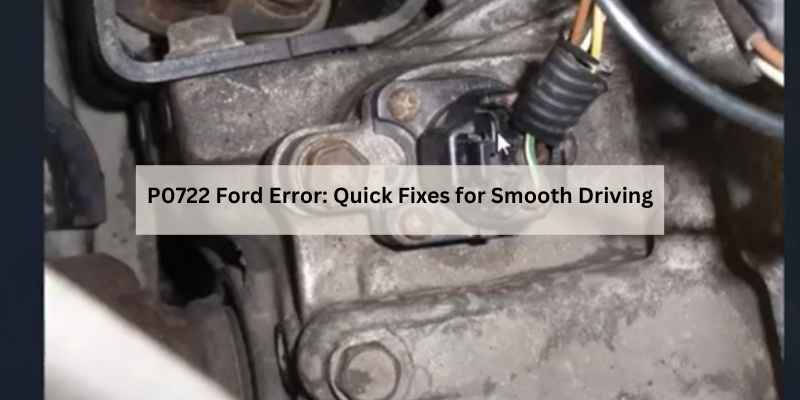
Start with the easy stuff. Find the output speed sensor on the transmission. On most Fords, it’s near the rear of the transmission case, close to where the driveshaft or axle connects.
- Unplug the sensor connector and inspect both halves for corrosion, green crust, or bent pins.
- Check the rubber gasket on the connector. If it’s cracked or missing, moisture got in.
- Follow the wiring harness from the sensor to the PCM. Look for chafed spots, melted insulation, or areas where the harness touches a hot exhaust or rotating part.
- Gently wiggle the harness while watching the live data on your scanner. If the signal drops when you wiggle, you’ve found a wiring break.
If you don’t have a scanner, use a multimeter on the AC voltage setting. Crank the engine or push the vehicle slowly. A good sensor should produce a small AC voltage that increases with speed. No voltage means the sensor or tone ring is dead.
Testing the Sensor with a Multimeter
This is a two-part test: resistance and output voltage.
- Set your multimeter to ohms (Ω).
- Probe the two pins on the sensor itself, not the harness side. Record the reading.
- Compare it to the spec for your Ford model. Most OSS sensors read 200–600 ohms. If you see infinite resistance, the coil inside is broken.
- Now set the multimeter to AC volts (V~).
- Reconnect the sensor, then spin the wheel or output shaft by hand (or with the engine running in park if the wheel is off the ground).
- You should see a fluctuating voltage. If you get a flat zero, the sensor isn’t generating a signal.
Pro tip: Some Ford sensors are magnetic and produce a DC voltage instead of AC. Check your service manual if your readings look odd. A 0.5V reading on AC might be perfectly normal for one model and completely dead for another.
Checking the Wiring Harness for Continuity
If the sensor tests good, the problem is in the wiring between the sensor and the PCM.
- Disconnect both ends of the harness — the sensor connector and the PCM connector.
- Set your multimeter to ohms.
- Probe one wire at the sensor end and the matching pin at the PCM end. You want near-zero resistance (less than 1 ohm).
- Now test each wire to ground. You want infinite resistance. Any continuity to ground means the wire is shorted.
- Check for shorts between the two signal wires themselves. They should be completely isolated from each other.
If you find a break, repair it with solder and heat shrink tubing. Don’t use butt connectors — they corrode over time and will put you right back here in six months.
How to Fix P0722: The Repair Process
Once you’ve confirmed the faulty component, the repair is straightforward for the sensor and wiring. The tone ring and TCM jobs are bigger deals.
Replacing the Output Speed Sensor
The sensor is usually held in by one bolt, sometimes two. It’s accessible from underneath the vehicle or from the top on some transverse-mounted engines.
- Disconnect the battery negative terminal. This prevents any accidental shorts and resets the PCM memory.
- Unplug the electrical connector from the sensor.
- Remove the mounting bolt(s). Note the orientation of the sensor before you pull it out.
- Twist and pull the sensor straight out. It might be stuck from years of heat — a gentle pry with a flathead screwdriver helps.
- Compare the old sensor to the new one. The O-ring and the tip length must match exactly.
- Apply a thin coat of transmission fluid to the new O-ring. This prevents it from tearing during installation.
- Push the new sensor in until it seats against the case. Torque the bolt to spec (usually 8–10 ft-lbs, don’t overtighten).
- Reconnect the connector and battery terminal.
That’s it. The whole job takes 30 minutes on most Fords.
Repairing Damaged Wiring
If the wiring is chafed or broken, you need to splice in a new section of wire. Use the same gauge (usually 18 or 20 AWG) and match the color coding if possible.
- Cut out the damaged section. Leave yourself clean wire on both ends.
- Strip back about a quarter inch of insulation.
- Slide a piece of heat shrink tubing over one end before soldering.
- Splice the wires together with a proper solder joint. Twist the strands, heat them, and flow solder through the joint.
- Slide the heat shrink over the joint and shrink it with a heat gun.
- Wrap the entire repaired section with electrical tape or split loom to protect it from future chafing.
- Zip-tie the harness away from any moving parts or hot surfaces.
If the connector itself is corroded, replace it. You can buy a pigtail connector with wires already attached and splice it in. This is often easier than trying to depin and clean the old connector.
The Critical TCM Relearn Procedure (Don’t Skip This)
Here’s the step that separates a permanent fix from a recurring code. After you replace the sensor or repair the wiring, the TCM still has the old fault stored in its memory. If you just clear the code and drive, it might come back immediately because the TCM hasn’t recalibrated to the new sensor.
Ford uses a “relearn” or “idle learn” procedure that resets the adaptive learning tables in the TCM. Here’s how to do it:
- Clear the diagnostic trouble codes with your OBD-II scanner.
- Start the engine and let it idle in Park for 5 minutes. Don’t touch the accelerator.
- Turn the engine off and wait 30 seconds.
- Restart the engine and let it idle for another 5 minutes.
- Now drive the vehicle. Accelerate gently from a stop to 40 mph, then coast to a stop without braking hard.
- Repeat this drive cycle 5 times. Each time, let the transmission shift through all gears naturally.
- After the fifth cycle, the TCM should have relearned the shift points. Check that the code doesn’t return.
If the code comes back after this procedure, you have a deeper issue — likely a damaged tone ring or a failing TCM. Don’t keep throwing parts at it.
P0722 Repair Cost: What to Expect
Costs vary wildly depending on whether you DIY or hire a shop. Here’s a realistic breakdown:
| Component | Part Cost (DIY) | Labor Cost (Shop) | Total at Shop |
|---|---|---|---|
| Output speed sensor | $30–$80 | $100–$150 | $130–$230 |
| Wiring harness repair | $10–$30 (wire, solder, loom) | $150–$300 | $160–$330 |
| Connector pigtail replacement | $15–$40 | $100–$200 | $115–$240 |
| Tone ring replacement | $50–$150 (part only) | $800–$1,500 (transmission removal) | $850–$1,650 |
| TCM replacement + programming | $200–$600 (rebuilt unit) | $200–$400 | $400–$1,000 |
The tone ring and TCM jobs are the expensive ones. If your diagnosis points there, get a second opinion before committing. A reputable transmission shop can confirm with a lab scope in about an hour.
Ford-Specific Notes (F-150, Focus, Fusion)
Not all Fords are created equal when it comes to P0722. Here’s what you need to know for the most common models.
F-150 (2026–2026, 6R80 transmission): The 6R80 is generally reliable, but the OSS can fail due to heat. The sensor is on the driver’s side of the transmission, rearward. Access is tight but doable with the truck on jack stands. If you have the 3.5L EcoBoost, watch for wiring chafing near the downpipe.
F-150 (2026–present, 10R80 transmission): The 10R80 is a different beast. P0722 on this transmission is more likely to be a wiring issue than a sensor failure. The harness runs close to the exhaust and can melt. Also, the 10R80 requires a more complex relearn procedure — some models need the dealership to run a neutral idle relearn with a scan tool. If your DIY relearn doesn’t clear it, that’s why.
Focus (2026–2026, DPS6 automatic): The DPS6 is a dual-clutch transmission with a history of issues. P0722 here often points to the TCM rather than the sensor. Ford extended the warranty on the TCM for these models to 10 years or 150,000 miles. Check with your dealer before paying for a new TCM.
Fusion (2026–2026, 6F35 transmission): The 6F35 is known for harsh shifting and TCM programming quirks. A P0722 on this model is frequently a connector corrosion issue. The transmission connector is exposed to road spray and can corrode internally. Inspect it thoroughly before replacing any parts.
Frequently Asked Questions
Can I drive my Ford with a P0722 code?
Short term, yes. The transmission will likely go into limp mode and limit you to a low gear. That’s safe for getting to a repair shop, but not for highway driving. The bigger risk is that a bad sensor signal can confuse the TCM and cause harsh shifts that stress the clutches. If you must drive it, keep it under 40 mph and avoid heavy throttle.
Will a bad output speed sensor cause transmission damage?
Not directly. But the knock-on effects can. When the TCM loses the output speed signal, it defaults to maximum line pressure to protect the clutches. That increased pressure can cause hard shifts that wear out the clutch packs over time. Fix it sooner rather than later.
Is P0722 the same as P0720?
No. P0720 is the output speed sensor circuit malfunction — meaning the signal is present but out of range. P0722 is specifically “no signal.” P0720 often points to a sensor that’s failing intermittently, while P0722 points to a complete loss of signal. The diagnostic flow is similar, but P0722 is more likely to involve an open circuit.
Do I need to program the new sensor after replacement?
No. The output speed sensor is a passive magnetic device — it doesn’t have any memory or communication protocol. You just bolt it in and plug it in. The TCM relearn procedure is about the transmission’s adaptive shift strategy, not the sensor itself.
Why does my P0722 code keep coming back after I cleared it?
Three possibilities. One, you didn’t complete the TCM relearn procedure and the old fault is still in the adaptive memory. Two, you replaced the sensor but the tone ring is damaged, so the new sensor also reads no signal. Three, there’s an intermittent wiring break that only happens when the harness heats up or vibrates. Re-check the wiring and tone ring before spending more money.
Final Verdict: Is It Safe to Drive?
P0722 is a code you shouldn’t ignore, but it’s not an immediate safety hazard. You won’t lose your brakes or steering. The transmission will protect itself with limp mode. But the longer you drive with it, the more stress you put on the transmission internals.
Here’s what to remember from this guide:
- Test the sensor with a multimeter before buying a replacement — it’s a 10-minute check that saves you $80.
- Inspect the wiring harness along its entire length, not just the connector ends.
- If the sensor and wiring check out, suspect the tone ring — it’s the most common miss.
- Complete the TCM relearn procedure after any repair. Skipping it is the #1 reason the code returns.
- Year-specific issues matter. The 10R80 has wiring problems; the DPS6 has TCM problems.
- Use an OBD-II scanner to clear the code and verify the fix with live data.
- If you’re not confident after the sensor and wiring checks, pay a shop for a lab scope diagnosis. It’s cheaper than a transmission rebuild.
If you’re dealing with a powertrain fault on a Fusion or a power steering issue on an F-150, the diagnostic mindset is the same — test, don’t guess. And for related engine codes like P0316 on a Ford, the same OBD-II scanner will get you the data you need. Take your time, follow the flow, and you’ll have this sorted without a trip to the dealer.
Products related to this article
Sponsored / affiliate links. As an Amazon Associate I earn from qualifying purchases. I may earn additional commission from eligible campaigns.