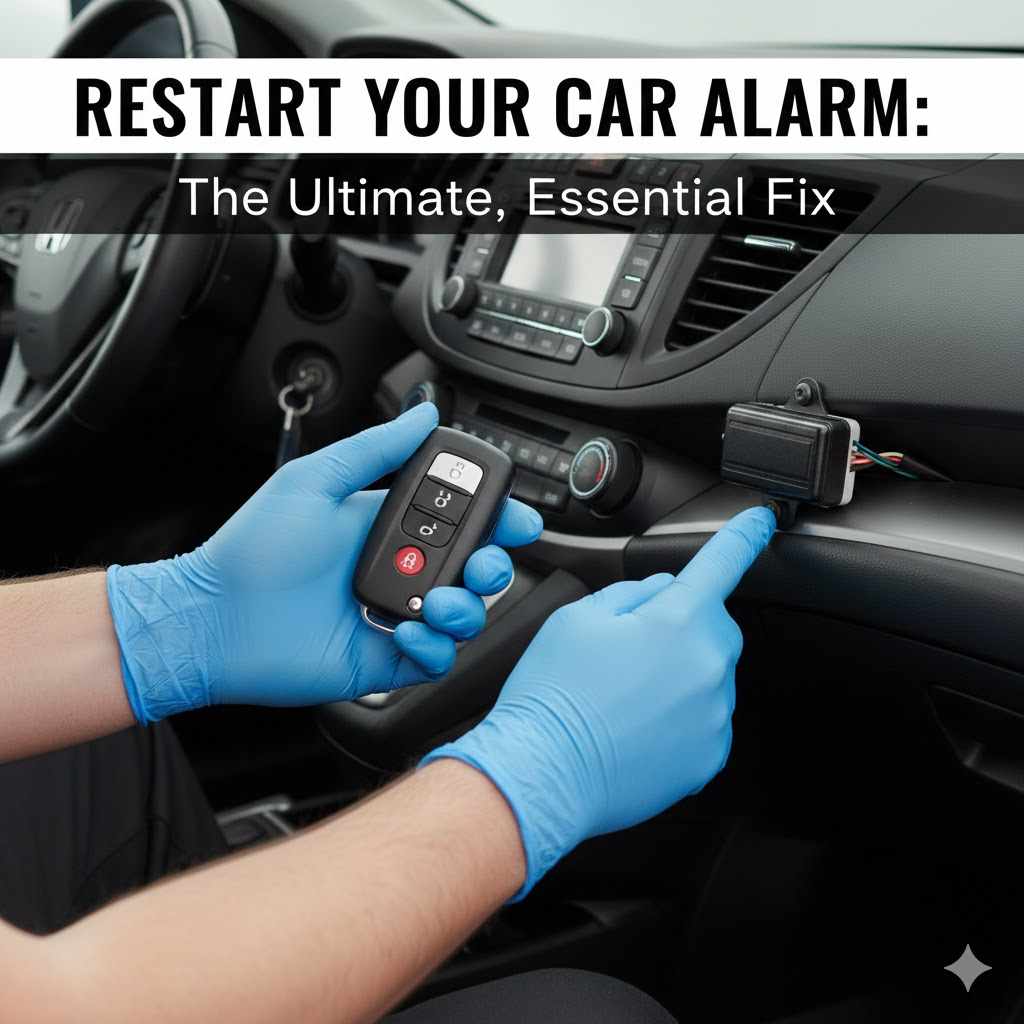
Restart Your Car Alarm: The Ultimate, Essential Fix
To restart your car alarm, first try using your key fob to lock and unlock the doors. If that fails, insert the key into the driver’s side door lock and turn it to unlock the car manually. You can also try cycling the ignition by turning the key to the “On” position without starting the engine. For a full reset, disconnect the car’s negative battery terminal for 10-15 minutes.
Picture this: It’s late at night, and suddenly your car alarm starts blaring for no reason. Or worse, you suspect someone may have tried to tamper with your car, and now the alarm won’t shut off. It’s a frustrating, stressful, and noisy problem that can happen to anyone. Don’t worry, you are not alone, and the solution is usually much simpler than you think. You don’t need to be a mechanic or spend a lot of money to fix it.
I’m Md Meraj, and I’m here to guide you through the simple steps to get your car alarm back to normal. We’ll walk through the easy fixes that work for most cars, helping you silence the noise and secure your vehicle. Let’s get this sorted out together, step-by-step.
Why Is My Car Alarm Acting Up? Understanding the Common Causes
Before we jump into the fixes, it helps to know what might be causing the issue. A car alarm is like a sensitive guard dog; sometimes it barks at real threats, and other times it gets startled by a falling leaf. Understanding why it’s misbehaving can help you prevent it from happening again.
Here are the most common reasons your car alarm might be giving you trouble:
- Low Key Fob Battery: Your key fob sends a signal to your car. If its battery is weak, the signal can get scrambled or fail, causing the alarm system to get confused and trigger itself.
- Faulty Car Battery: A dying or weak car battery can cause all sorts of electrical gremlins, including false alarms. When the battery voltage drops, the car’s computer might interpret it as a security threat, like someone trying to disconnect the power.
- Sensitive Sensors: Many alarms have shock or motion sensors. If they are too sensitive, a loud truck driving by, a heavy gust of wind, or even a cat jumping on the hood can set them off.
- Dirty or Faulty Hood and Door Sensors: Every door, the trunk, and the hood have a small sensor that tells the car if it’s open or closed. If a sensor is dirty, damaged, or stuck, the car might think a door is being forced open, triggering the alarm.
- After a Tampering Attempt: This is a serious concern. If a burglar tried to override your alarm, they may have damaged the wiring or sensors. In this case, the alarm system is doing its job by staying active, but it needs a proper reset to return to normal operation.
Before You Start: Safety First!
Your safety is the most important thing. These steps are simple, but it’s always smart to be careful when working on your car. Here are a few quick safety tips to keep in mind:
- Work in a Safe, Well-Lit Area: If you can, move your car to a place with good lighting, like your garage or a well-lit parking spot. This helps you see what you’re doing.
- Have Your Owner’s Manual: Your car’s manual is your best friend. It has specific information about your car’s alarm system and fuse box layout. Keep it handy.
- Engage the Parking Brake: Make sure your car is in park (for automatics) or in gear with the parking brake on (for manuals) so it won’t roll.
- Be Careful Around the Battery: If you need to disconnect the battery, wear gloves if you have them. Never touch both terminals at the same time. We will cover this in more detail later.
The 5 Easiest Ways to Restart Your Car Alarm (Step-by-Step)
Let’s get that alarm silenced! Start with the first method and work your way down the list. The simplest solution is often the one that works.
Method 1: The Simple Key Fob Fix
This is the quickest and easiest thing to try. Your key fob is the primary controller for your alarm system, and often, it just needs a clear signal to reset.
- Press the Unlock Button: Press the unlock button on your key fob once. This should disarm the alarm. If it doesn’t work, try it a few more times.
- Press the Lock Button, Then Unlock: Sometimes the system needs to be re-armed before it can be disarmed. Press the lock button, let the car arm itself, and then press the unlock button.
- Use the Panic Button: If your fob has a “panic” button, press and hold it for a few seconds to trigger the alarm, then press it again to turn it off. This can sometimes reset the system.
Method 2: Use Your Car Key in the Door
If the key fob isn’t working (perhaps the battery is dead), your physical car key is the next best tool. Car manufacturers build in a manual override for just this situation.
- Insert the Key into the Driver’s Side Door: Do not use the passenger door. The driver’s door lock cylinder is usually the only one connected to the alarm’s disarm module.
- Turn the Key to Unlock: Turn the key to the unlock position. This should tell the car that the correct key is being used and silence the alarm.
- Lock and Unlock the Door: If simply unlocking it doesn’t work, try turning the key to the lock position, and then immediately to the unlock position. Hold it in the unlock position for a second or two. This manual cycle often resets the alarm.
Method 3: The Ignition Cycle Reset
This method tells your car’s computer that you are the legitimate owner by using the key in the ignition. The alarm system is programmed to recognize this action.
- Get in Your Car: Close all the doors.
- Insert the Key into the Ignition: Put your key in and turn it to the “On” position. This is the position right before you would crank the engine to start it. All your dashboard lights should turn on.
- Do NOT Start the Engine: Just leave the key in the “On” position.
- Wait for 3-5 Seconds: Let the car’s computer recognize the key. You might hear a chime or see an anti-theft light on the dashboard turn off.
- Turn the Key Off and Remove It: Turn the key back to the “Off” position and take it out. This should complete the reset cycle.
Method 4: Check and Reset the Alarm Fuse
If the alarm is still acting up, it could be a minor electrical issue with its dedicated circuit. Resetting it by pulling the fuse can help. A fuse is a small safety device that protects electrical components.
- Locate Your Fuse Box: Most cars have two fuse boxes. One is usually inside the car, under the dashboard on the driver’s side. The other is in the engine bay. Your owner’s manual will show you exactly where they are.
- Find the Alarm Fuse: On the back of the fuse box cover, there is a diagram that shows what each fuse is for. Look for a fuse labeled “Alarm,” “Security,” or “Horn.”
- Remove the Fuse: Your car should come with a small plastic tool called a “fuse puller.” Use it to gently pull the alarm fuse out. If you don’t have one, you can use a pair of small pliers carefully.
- Inspect the Fuse: Hold the fuse up to the light. You should see a small metal wire inside the plastic. If the wire is broken or looks burnt, the fuse is blown and needs to be replaced. Make sure you replace it with a new fuse of the exact same amperage (the number printed on top).
- Wait and Reinsert: Wait for about a minute, then put the fuse back in its slot. This brief power interruption can be enough to reset the alarm module.
| Location | Where to Look | Commonly Found In |
|---|---|---|
| Interior Fuse Box | Under the steering wheel, behind a small plastic panel. Sometimes on the side of the dashboard, visible only when the door is open. | Most sedans, SUVs, and trucks. |
| Engine Bay Fuse Box | Near the car battery, usually a black plastic box with a lid that snaps off. | Almost all modern vehicles. |
Method 5: The Battery Disconnect “Hard Reset”
This is the ultimate reset. Disconnecting the car’s battery cuts power to everything, including the alarm system’s brain. When you reconnect it, the system will restart from scratch, often clearing any glitches.
- Turn Off the Car and Open the Hood: Make sure the ignition is off and the keys are out.
- Find the Negative Battery Terminal: The battery has two posts, or terminals. One is positive (+), usually covered with a red cap. The other is negative (-), often with a black cap. You ONLY need to disconnect the negative terminal.
- Loosen the Nut on the Negative Terminal: Use a wrench (usually 10mm or 12mm) to loosen the nut on the clamp that is attached to the negative (-) post. You don’t need to remove the nut completely, just loosen it enough so you can wiggle the clamp off.
- Remove the Negative Cable Clamp: Carefully lift the cable clamp off the battery post. Tuck it to the side so it cannot accidentally touch the battery post again.
- Wait for 15 Minutes: This is the important part. You need to wait long enough for all the car’s computers and modules to lose their temporary memory. 15 minutes is usually plenty of time.
- Reconnect the Cable: Place the negative cable clamp back onto the negative post and tighten the nut with your wrench. Make sure it’s snug but don’t overtighten it.
Note: This method will likely reset your car’s radio presets, clock, and sometimes the trip meter. This is normal. For more details on vehicle battery safety, you can refer to guidance from trusted sources like the National Highway Traffic Safety Administration (NHTSA), which emphasizes proper vehicle maintenance for overall safety.
What If My Alarm Was Tampered With?
If you have reason to believe someone tried to break into your car, the situation is a bit different. A burglar might try to silence an alarm by cutting wires or damaging a sensor. If you suspect this, a simple reset might not be enough.
After trying the reset methods, do a quick visual inspection:
- Look Around the Battery: Check for any loose or cut wires near the battery terminals.
- Check Under the Dashboard: Use a flashlight to look under the driver’s side dashboard near the steering column. This is a common area for aftermarket alarm systems to be installed. See if anything looks out of place, unplugged, or damaged.
- Inspect the Horn: Some thieves try to disable the horn, which is what makes the noise. Look for cut wires leading to the horn itself, which is usually located at the front of the car behind the grille.
If you find any cut wires or obvious damage, it is best to stop and call a professional mechanic or an auto electrician. Fixing tampered wiring requires expertise to avoid causing further electrical damage to your vehicle.
Preventing Future False Alarms
Once you’ve reset your alarm, you can take a few simple steps to prevent it from acting up again. This little bit of maintenance can save you a lot of future headaches.
| Prevention Tip | Why It Helps | How Often |
|---|---|---|
| Replace Key Fob Battery | Ensures a strong, clear signal is sent to your car, preventing confusion. | Every 1-2 years, or when you notice reduced range. |
| Test Your Car Battery | A healthy battery provides stable voltage, which is crucial for all car electronics. | Once a year, especially before winter. |
| Clean Door and Hood Sensors | Dirt and grime can prevent sensors from making proper contact, tricking the alarm. | During your regular car wash. |
| Adjust Sensor Sensitivity | If your alarm is aftermarket, it may have a sensitivity dial you can turn down slightly. | Only if you frequently get false alarms from wind or vibrations. |
When to Call a Professional
While most alarm issues can be fixed with these DIY steps, sometimes a problem needs an expert. Don’t hesitate to call a trusted mechanic if you run into any of these situations:
- The Resets Don’t Work: If you have tried all five methods and the alarm is still going off, there is likely a deeper issue with a faulty sensor or control module.
- You See Damaged Wires: As mentioned before, if you see any signs of tampering, it’s a job for a professional.
- The Problem Keeps Coming Back: If you have to reset your alarm every few days, a mechanic can diagnose the root cause and fix it permanently.
- A Security Warning Light Stays On: If a specific “theft” or “security” light on your dashboard stays illuminated, the car’s computer has detected a fault that needs to be properly diagnosed.
Frequently Asked Questions (FAQ)
Why does my car alarm go off for no reason?
The most common reasons are a weak key fob battery, a dying car battery, overly sensitive shock sensors, or a faulty hood or door sensor. Start by replacing your key fob battery, as it’s the easiest and cheapest fix.
Will disconnecting the battery damage my car?
No, disconnecting the battery for a short period will not damage your car’s engine or major components. It is a standard procedure for many repairs. However, it will reset your radio stations, clock, and trip computer, which you can easily set again.
How do I know if my key fob battery is low?
You’ll notice the range of your key fob is much shorter than it used to be. You might have to be standing right next to the car for it to work. Some cars will also display a “Key Fob Battery Low” message on the dashboard.
Can I permanently disable my car alarm?
Disabling a factory-installed alarm is often difficult and not recommended, as it can interfere with other vehicle systems like the ignition. For aftermarket alarms, a professional can usually remove it. However, this may impact your car insurance premium.
How much does it cost to fix a car alarm?
The cost can vary widely. If it’s just a new key fob battery, it might only be a few dollars. If a sensor needs to be replaced, you might pay between $100 and $300. A complex electrical issue or a faulty alarm module could be more expensive.
What if I lost my key fob?
If you lose your key fob, you can still use the physical key in the door and the ignition cycle method to disarm the alarm. You will need to contact a dealership or an automotive locksmith to get a new fob programmed for your vehicle.
My alarm is still going off after trying everything, what now?
If you’ve gone through all the reset steps and the alarm persists, it’s time to call a professional. There’s likely a faulty component, like an alarm control module or a specific sensor, that needs to be diagnosed and replaced by a mechanic.
You’ve Got This!
Dealing with a car alarm that won’t quit can be incredibly stressful, but as you can see, the solution is often within your reach. By calmly working through these simple, step-by-step methods, you can diagnose and fix the most common causes of alarm issues yourself. You’ve taken the time to understand your vehicle a little better, and in doing so, you’ve saved yourself a trip to the mechanic and the cost that comes with it.
Remember to start with the easiest fix first and always prioritize your safety. Taking charge of small repairs like this builds confidence and puts you in the driver’s seat of your car’s maintenance. Now, you have the knowledge to handle this problem whenever it arises, keeping your car secure and your nights quiet.