How to Test AC Compressor in Car: A Step-by-Step Guide
Hey there! If your car’s air conditioning isn’t blowing cold air, you might be wondering how to test AC compressor in car. I’ve been there, sweating in the driver’s seat, trying to figure out why the AC isn’t working. The AC compressor is the heart of your car’s cooling system, and testing it can save you a trip to the mechanic—or at least help you know what’s wrong. In this guide, I’ll walk you through everything I’ve learned from testing compressors myself, using simple steps anyone can follow. Let’s dive in and get your car cool again!
Why the AC Compressor Matters
The AC compressor is like the engine of your car’s air conditioning system. It’s a pump that compresses refrigerant and sends it through the system to cool the air. If it’s not working, your AC won’t blow cold air, no matter how much you crank the dial. I remember the first time my AC failed on a hot summer day—it was miserable! Knowing how the AC compressor works helped me figure out if it was the problem or something else.
This component is driven by a belt connected to your engine. It pulls in low-pressure refrigerant gas, compresses it, and pushes it out as high-pressure gas to start the cooling process. If the compressor fails, it could be due to electrical issues, mechanical problems, or low refrigerant levels. Testing it properly can pinpoint the issue, so you’re not guessing or spending money on unnecessary repairs.
Common Signs Your AC Compressor Might Be Failing
Before you start testing, let’s talk about the signs that scream, “Check your AC compressor!” I’ve seen these in my own car and learned to spot them early. Here’s what to look for:
- Warm Air from Vents: If your AC is blowing warm or lukewarm air, the compressor might not be engaging.
- Strange Noises: Grinding, squealing, or rattling when you turn on the AC could mean a failing compressor or clutch.
- AC Clutch Not Engaging: The clutch is the part that connects the compressor to the engine. If it’s not spinning, the compressor isn’t working.
- Leaking Refrigerant: Puddles under your car or oily residue near the compressor could indicate a leak.
- High Cabin Temperatures: If your car feels like an oven even with the AC on, the compressor might be the culprit.
I once ignored a weird rattling noise, thinking it was no big deal. Big mistake—it cost me more to fix later. So, if you notice these signs, it’s time to test AC compressor and get ahead of the problem.
Tools You’ll Need to Test Your AC Compressor
Testing your AC compressor doesn’t require a fancy garage, but you’ll need some basic tools. I keep these in my toolbox for jobs like this. Here’s what you’ll need:
| Tool | Purpose |
|---|---|
| Multimeter | Checks electrical connections and voltage |
| Screwdriver Set | Removes panels or covers if needed |
| Wrench Set | Loosens bolts or fittings |
| Safety Gloves and Glasses | Protects you from refrigerant or debris |
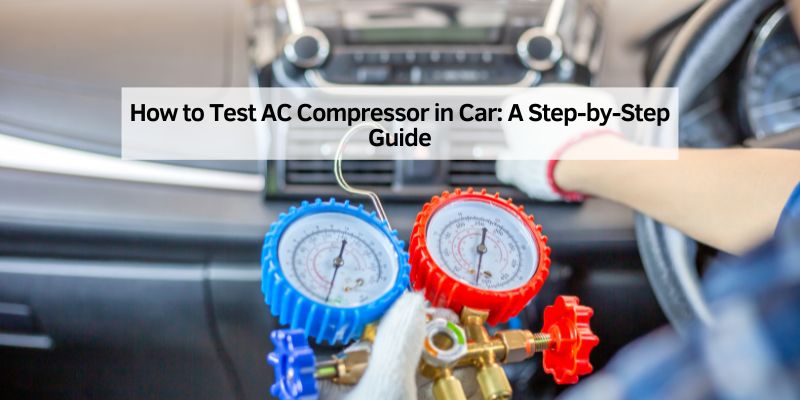
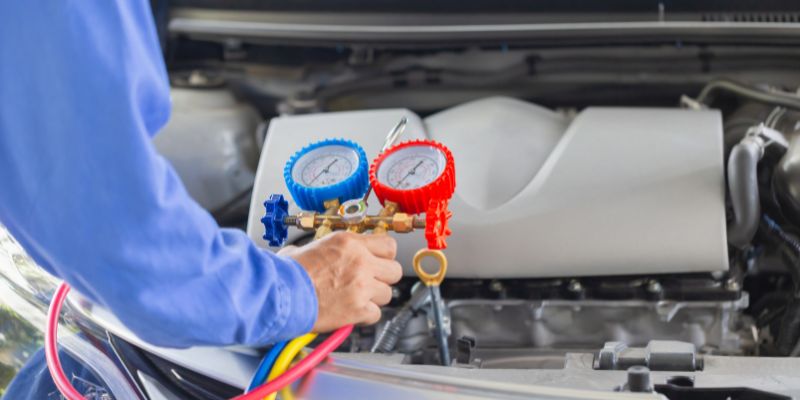
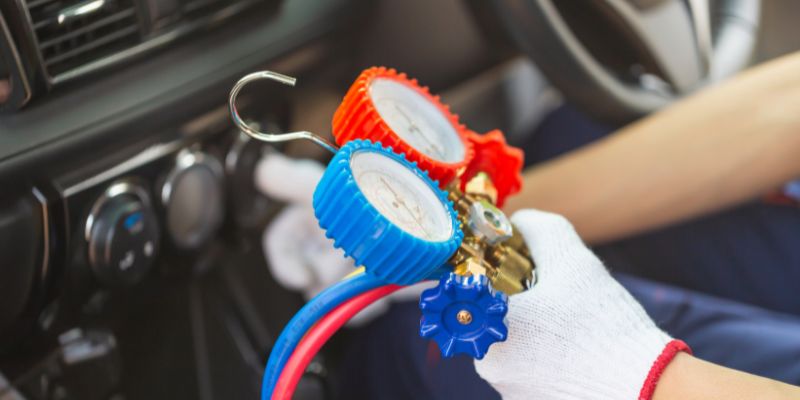
| AC Manifold Gauge Set | Measures refrigerant pressure |
| Flashlight | Helps you see in tight engine spaces |
I always wear gloves and glasses because refrigerant can be dangerous, and I don’t want to take any chances. If you don’t have these tools, you can find them at any auto parts store. They’re worth having for other car projects too.
Step-by-Step Guide to Testing Your AC Compressor
Now, let’s get to the good stuff—how to test AC compressor in car. I’ve done this a few times, and I’ll break it down into simple steps. Follow along, and you’ll feel like a pro.
Step 1: Safety First
Before you touch anything, park your car on a flat surface, turn off the engine, and let it cool down. I learned this the hard way when I burned my hand on a hot engine part. Pop the hood and put on your safety gloves and glasses. Make sure the AC is off to avoid any surprises.
Step 2: Locate the AC Compressor
Find the AC compressor in your engine bay. It’s usually a cylindrical metal part with a belt and pulley attached. In my car, it’s near the front of the engine, but your owner’s manual can help if you’re not sure. Use a flashlight to spot it clearly. The compressor has a clutch on the front, which is the part that engages when the AC turns on.
Step 3: Inspect the Compressor Visually
Take a good look at the compressor. Check for oil stains, leaks, or damaged wires. I once found a loose wire that was causing my AC issues—fixed it in minutes! Make sure the belt is tight and not cracked. If you see anything suspicious, like a puddle of refrigerant, it’s a clue something’s wrong.
Step 4: Check the AC Clutch
Turn on your car and set the AC to max cool. Look at the AC compressor clutch—it’s the circular part on the front of the compressor. It should spin when the AC is on. If it’s not moving, the clutch might not be engaging. I had this issue once, and it turned out to be a simple electrical fix. If it’s spinning but you hear grinding, the clutch or compressor might be failing.
Step 5: Test Electrical Connections with a Multimeter
Grab your multimeter to check the compressor’s electrical system. Set it to voltage mode and touch the probes to the compressor’s wiring harness. You should see around 12-14 volts when the AC is on. I remember feeling so proud when I figured this out the first time—it’s like being a detective! If there’s no voltage, the issue could be a blown fuse, bad relay, or wiring problem.
Step 6: Measure Refrigerant Pressure
Low refrigerant can stop the compressor from working. Connect your AC manifold gauge set to the low and high-pressure ports (check your manual for locations). Start the car and turn on the AC. The gauges will show if the pressure is within the normal range (usually 25-45 psi on the low side and 200-350 psi on the high side). My first time using gauges was tricky, but once you get the hang of it, it’s straightforward. Low pressure means you might have a leak or need a recharge.
Step 7: Listen for Noises
With the AC on, listen closely to the compressor. A healthy compressor makes a soft hum. If you hear grinding, squealing, or clicking, it’s a red flag. I ignored a squeal once, and it ended up being a worn-out bearing that cost me a new compressor. Don’t make my mistake—address noises early.
Step 8: Test Compressor Performance
If everything checks out so far, but the AC still isn’t cooling, the compressor itself might be weak. This is harder to test without professional tools, but you can feel the air from the vents. If it’s not cold (around 40-50°F), the compressor might not be pumping refrigerant effectively. At this point, I usually take my car to a mechanic for a deeper check, but these steps will give you a solid start.
What to Do If Your Compressor Fails the Test
If your AC compressor isn’t working, don’t panic. Here’s what I do when I hit this roadblock:
- Check Fuses and Relays: A blown fuse or bad relay is an easy fix. Check your car’s fuse box (usually under the hood or dashboard) and replace any blown fuses.
- Recharge Refrigerant: If the pressure is low, you might need to add refrigerant. Be careful—overfilling can damage the system. I always follow the car’s manual for the right type and amount.
- Tighten or Replace the Belt: A loose or worn belt can stop the compressor from working. Tighten it or replace it if it’s cracked.
- Call a Professional: If the compressor is seized or making bad noises, it might need replacement. I’ve learned that sometimes it’s worth paying a pro to avoid bigger headaches.
Tips to Keep Your AC Compressor Running Smoothly
Once you’ve tested your compressor, you’ll want to keep it in good shape. Here’s what I do to avoid AC problems:
- Run your AC regularly, even in winter, to keep the compressor lubricated.
- Check the refrigerant level every year or two.
- Keep the engine bay clean to prevent debris from damaging the compressor.
- Listen for odd noises and address them quickly.
I make it a habit to run my AC for a few minutes every month, even in cold weather. It’s saved me from costly repairs more than once.
Conclusion: Stay Cool and Confident
Testing your AC compressor might sound intimidating, but it’s totally doable with the right steps. I’ve been through the process, and trust me, there’s nothing like the satisfaction of fixing your car’s AC yourself. From checking the clutch to measuring refrigerant pressure, you now have the tools to diagnose the problem like a pro. If you find the compressor is faulty, you can decide whether to fix it yourself or call a mechanic. Either way, you’re in control. So grab your tools, stay safe, and get that cool air flowing again. Here’s to comfortable drives, no matter how hot it gets outside!
FAQs
How do I know if my AC compressor is bad?
You’ll notice signs like warm air from the vents, strange noises like grinding or squealing, or the AC clutch not spinning. I check these first before diving into testing with tools.
Can I test my AC compressor without tools?
You can do a visual inspection and listen for noises, but tools like a multimeter and manifold gauges give you a clearer picture. I always use them for accurate results.
How much does it cost to replace an AC compressor?
Costs vary, but replacing a compressor can run between $500 and $1,500, depending on the car and labor. I always get a quote from a mechanic if the compressor fails my tests.
Is it safe to test the AC compressor myself?
Yes, as long as you follow safety steps like wearing gloves and glasses and turning off the engine. I’ve done it safely by being careful around refrigerant and moving parts.
How often should I test my AC compressor?
I check mine every year or when I notice AC problems. Regular checks catch issues early and save you money in the long run.
Products related to this article
Sponsored / affiliate links. As an Amazon Associate I earn from qualifying purchases. I may earn additional commission from eligible campaigns.