How to Carry Car Keys Safely and Conveniently
Carry car keys on a separate ring or slim holder. Keep fobs in a pocket or bag compartment that shields buttons, and use a backup key or tracker if losing the main key would leave you stranded. Poor carry habits can trigger pocket-dialed functions, worn key blades, cracked fob cases, and expensive lockouts. This guide explains the best carry setups for fobs, transponder keys, and mechanical keys by situation.
Which key type are you carrying?
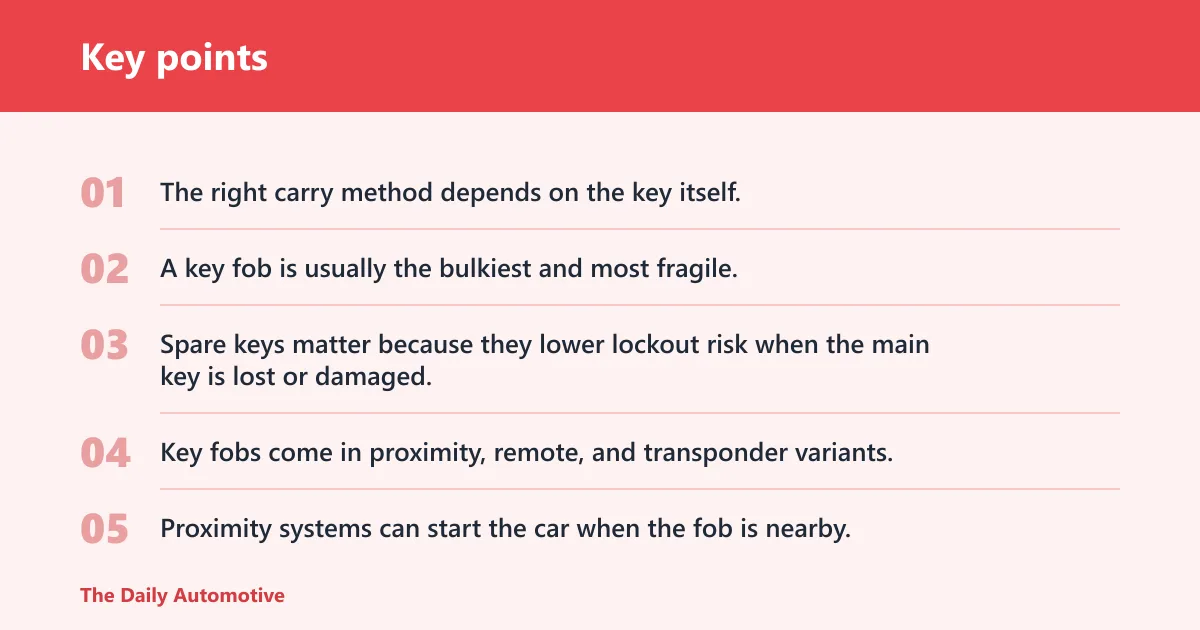


The right carry method depends on the key itself. A key fob is usually the bulkiest and most fragile, a transponder key adds a chip to a blade, and a mechanical key is simplest to carry but offers no electronic features. Spare keys matter because they lower lockout risk when the main key is lost or damaged.
Key fob
Key fobs come in proximity, remote, and transponder variants, and that changes how you carry them. Proximity systems can start the car when the fob is nearby, which is convenient but also means the fob needs battery power and can be exposed to relay-theft risk if it is left too close to doors or windows. Button protection matters, because pocket pressure can sometimes open the trunk or start the car. Larger fobs also print through thin clothing and can crack if they rub against coins, keys, or gym hardware.
If your fob has exposed buttons, keep it in a pocket with a liner, a separate pouch, or a compartment that does not press the buttons. A hard shell or silicone cover helps against scratches and accidental presses, but it does not stop signal issues if the fob stays near the vehicle. Picture a fob in running shorts with loose coins: every stride adds impact, and the button ring can wear faster than the battery.
Transponder key
A transponder key combines a blade with a chip that communicates with the vehicle immobilizer. It is not the same as a plain metal key, because the blade alone will usually not start the car unless the chip is correctly programmed. That means the key is more secure than a cut-only mechanical key, but replacement and carry choices still need to protect the blade from bending and the chip from impact.
Because the blade can snag in a pocket or bag, a transponder key often does best on a small ring or holder that keeps the teeth from scraping other items. If the blade is exposed, it can wear at the cut edges and tear fabric. A folded pocket sheath or small pouch reduces noise and scratching.
Mechanical key
A mechanical key has no electronics, so it avoids battery problems and RF-signal concerns. It is also the easiest to duplicate from a code or lock in many cases, though the exact method depends on the vehicle and lock cylinder. The tradeoff is clear: less tech exposure, but less anti-theft protection than a chip or proximity system.
Mechanical keys work well as backups or for older vehicles with a separate ignition cylinder. They are small enough for a wallet-style holder, but they should still be kept away from moisture and grit. Even a plain key can jam in a pocket seam or scratch a phone screen.
How should you carry keys day to day?
The safest everyday carry method keeps bulk down, blocks accidental button presses, and lowers the odds of loss. For most drivers, that means a dedicated pocket, a zippered compartment, or a slim holder rather than a loose toss into a bag. Keep the key in one place every day so you do not forget it or double-load your pockets.
Front pocket, back pocket, purse, or bag
Front pockets often beat back pockets because they can reduce sitting pressure on a fob or blade. Back-pocket carry can crack cases and bend keys over time. In a purse or messenger bag, use a small internal pocket so the key is not rubbing against coins, chargers, or metal hardware. A zippered compartment also cuts the chance that the key falls out when you set the bag down.
For gloves, work pants, or heavy outerwear, use the pocket closest to the hand that usually reaches for the key. That lowers fumbling. A common first-timer mistake is dropping a fob into the deepest coat pocket, where it disappears under gloves, receipts, and a phone.
How to stop accidental button presses
Accidental presses happen when the fob is compressed by your body, other objects, or the inside of a bag. A button guard, hard shell, or a simple fabric sleeve reduces those presses. If the vehicle has a panic button, protect it first, because it is the most annoying accidental activation in a pocket or bag.
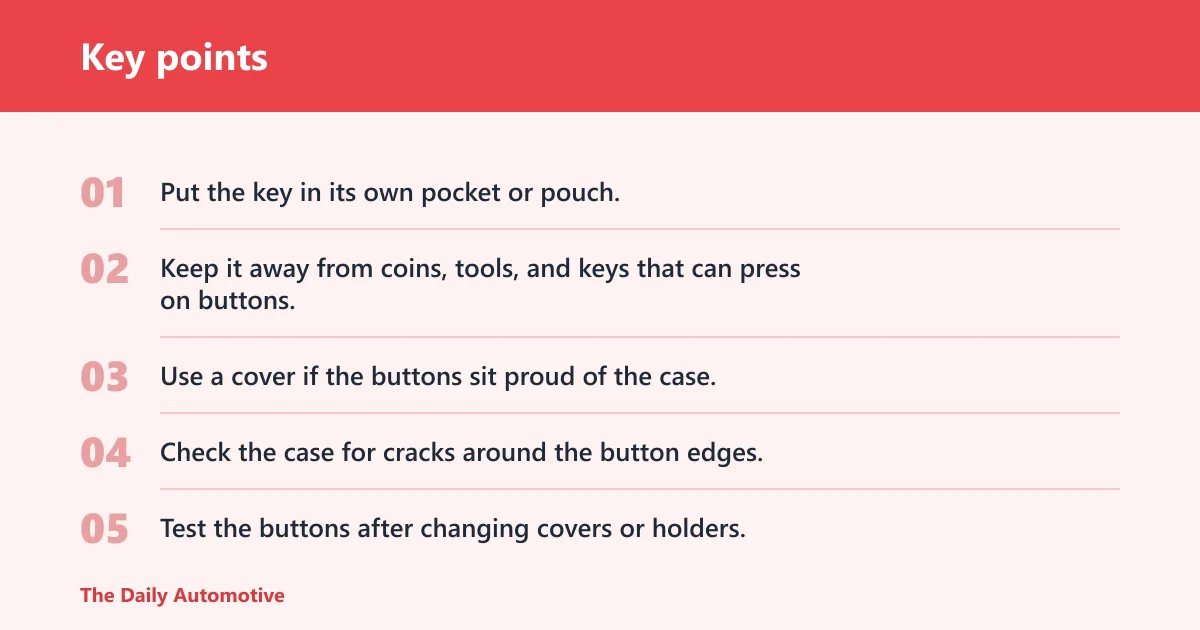
- Put the key in its own pocket or pouch.
- Keep it away from coins, tools, and keys that can press on buttons.
- Use a cover if the buttons sit proud of the case.
- Check the case for cracks around the button edges.
- Test the buttons after changing covers or holders.
How to cut noise, scratches, and snagging
Metal-on-metal noise is more than an annoyance. It also means abrasion. Separate the car key from house keys, work keys, and loose hardware if you want the blade and case to last longer. A short lanyard can help find the key inside a bag, but keep it short enough that it does not snag on seat belts, door handles, or stroller straps.
Best way to carry car keys by situation
Carry should change with the day. The best setup for commuting is not the best setup for swimming, running, or handing the car to a valet. A setup matched to the day keeps the key secure without making every errand feel like a compromise.
| Scenario | Recommended carry method | Risk level | Convenience level | Notes |
|---|---|---|---|---|
| Daily commute | Front pocket or dedicated bag pocket | Low | High | Best for fobs and transponder keys; add button protection if the fob rides loose. |
| Gym or run | Zippered pocket, armband pouch, or locked locker when available | Medium | Medium | Use a sweat-resistant holder; avoid loose carry in shorts where the key can bounce out. |
| Beach or water | Dry bag, sealed pouch, or leave with a trusted person | High | Medium | Moisture and sand are hard on buttons, blades, and seals. |
| Worksite | Hard case in a secure pocket | Medium | High | Protect from dust, concrete grit, and impact from tools or kneeling. |
| Night out | Small zip pocket or inside jacket pocket | Medium | High | Reduces loss in crowded places and limits accidental button presses. |
| Travel | Consistent pocket or wallet-style holder | Medium | Medium | Keep one spare method in mind before leaving home; app access depends on setup. |
| Valet handoff | Separate ring or valet key, if the vehicle supports it | Medium | High | Remove house keys and personal tags before handing over the car key. |
| Home storage | Fixed bowl, hook, or locked drawer away from exterior doors | Low | High | Keep the key away from windows to reduce relay-theft exposure with proximity systems. |
Say your commute key is a large SUV fob with a panic button and a trunk release. A front-pocket sleeve and a fixed entry tray at home cut the two most common problems: accidental presses on the way out and frantic searching at the door. The same fob in a loose jacket pocket is more likely to scratch and fire buttons by accident.
How do you keep keyless car keys safe?
Keyless entry systems use proximity detection, so the vehicle looks for the fob nearby and may allow push-button start when it is in range. That convenience creates two concerns: battery dependence and relay-theft exposure. If the fob battery dies, the car may still have a manual backup start method, but availability depends on the vehicle. If the signal is easy to capture near a doorway, the key needs more careful home storage.
Keep a keyless fob away from front doors, mail slots, and windows when it is at home. If you want extra protection, a faraday pouch makes sense when the car sits close to the house, the key lives in an entry bowl, or you are traveling and want to reduce signal exposure. It is a storage tool, not a fix for a worn battery or a missing spare.
One quick check can keep a manual access page ready. Manuals+ says access is gated by verification before entry. In practice, that means the vehicle manual or owner portal should be set up before you need it, not after the battery dies or the fob disappears.
What should you do with a spare key?
A spare key should live with someone you trust or in a controlled place that does not depend on memory. It is the fastest way out of a lockout if it is available, and it should be tested periodically so you know it still works. Some spares need programming, especially with transponder or proximity systems.
Who should hold it and where to store it?
Give the spare to a trusted person who can actually reach you when needed. If that is not practical, store it in a locked home drawer or safe location away from exterior doors. Avoid leaving it in the car, even in a hidden compartment, because a spare that rides with the vehicle is not a spare in a true lockout.
Why periodic testing matters
Battery corrosion, a dead coin cell, or a forgotten programming issue can make a spare useless when it matters. Check it on a schedule, especially after battery changes or long storage. If the spare is a transponder or proximity key, confirm that it still starts the vehicle, not just that it opens the doors.
When a spare must be programmed
Many modern keys must be programmed to the immobilizer or keyless system. A plain mechanical backup can be cut and used right away, but a chip key or fob may require a locksmith, dealer, or on-site programming depending on the vehicle. That is why a spare should be planned before a loss, not after one.
What should you do if the keys are locked in the vehicle?
Start with the obvious checks: every door, the trunk, and the liftgate. A spare key is usually the fastest fix if it is available. If you have a remote access app set up in advance, try that next. If none of those work, roadside assistance or a locksmith is safer than forcing entry.
Do not pry doors open with improvised tools. Do not smash a window unless there is an emergency involving a child or pet. If the vehicle is locked and the key is visible inside, the goal is to recover access with the least damage possible, not to improvise a break-in.
APEX Driver estimates locksmith cost at $50-$150, and Car Unlock Kit says a locksmith may cost $50 to $150. Ted’s Locksmith says car key replacement costs vary by make, model, year, and location, and says industry car locksmith services range from $42 to $295. Those figures can help set expectations before you call.
APEX Driver warns a car interior can reach 130°F on an 80°F day. That matters if the key is inside a hot cabin, because heat can worsen battery performance and make a delay more uncomfortable for anyone waiting inside. Speed still matters, but so does choosing the least damaging route.
Should you use a magnetic key box?
A magnetic key box can be useful as an emergency backup, but it should not be treated like a casual hiding place. Underbody mounting is only sensible when the box has strong retention, weather resistance, and a placement that is not obvious during a quick walk-around. Even then, road debris and corrosion can weaken the setup.
A box under the car must stay attached at highway speed, through rain, slush, and vibration. If it can shift, rattle, or fall, the spare is better stored elsewhere. A hidden key is still a tradeoff: it improves recovery speed after a lockout, but it also adds discovery risk if the placement is predictable.
Car key decision table
| Scenario | Recommended carry method | Risk level | Convenience level | Notes |
|---|---|---|---|---|
| Daily commute | Front pocket or fixed bag compartment | Low | High | Best balance of access and protection for most fobs and transponder keys. |
| Gym or run | Secure zip pocket or small pouch | Medium | Medium | Reduce bounce, sweat exposure, and the chance of losing the key on the move. |
| Beach or water | Dry pouch or leave with a trusted person | High | Medium | Sand, salt, and moisture are hard on buttons, seals, and blades. |
| Worksite | Hard case in a protected pocket | Medium | High | Protect from abrasion, dust, and impact from tools or rough surfaces. |
| Night out | Inside jacket pocket or zip pocket | Medium | High | Better than a loose bag toss in crowded spaces. |
| Travel | Wallet-style holder or secure pocket | Medium | Medium | Keep the key separate from coins, chargers, and metal tags. |
| Valet handoff | Separate key ring or valet key, if available | Medium | High | Remove extra keys and ID tags first. |
| Home storage | Hook, bowl, or locked drawer away from doors | Low | High | Keep proximity fobs away from exterior walls and windows. |
Frequently asked questions
How do I keep keyless car keys safe in my pocket or bag?
Use a dedicated pocket or compartment, not a loose toss with coins and chargers. A cover or slim pouch helps prevent accidental presses and scratches. For proximity fobs, keep the key away from exterior doors and windows when you are at home so the signal is not sitting close to the car.
What is the best way to carry keys without losing them?
The best method is the one you repeat every day. Use one fixed pocket, a clipped pouch, or a zipper compartment, and put the key back there every time. A tracker can help after a loss, but the stronger habit is a single storage location that does not change by outfit or mood.
How can I protect my car keys at home?
Keep them in a bowl, hook, or drawer away from the front door and windows. That lowers accidental exposure for keyless systems and makes the key easier to grab on the way out. If the key is a fob, a pouch or case adds extra protection against button presses and surface wear.
What should I do if I need a spare key for my car?
Get a spare before you need one. A trusted person can hold it, or it can stay in a secure home location. Check whether the spare must be programmed, because many transponder and proximity keys will not work until they are matched to the vehicle.
Do car keys work for other cars?
Usually no. A mechanical blade might fit another lock in a rare case, but transponder and proximity keys are tied to vehicle-specific programming. Even with the same brand, compatibility is limited by the immobilizer, the fob type, and the model year.
How do I carry a key fob without pressing buttons by accident?
Put the fob in a pocket or pouch that does not compress the buttons. A hard shell, silicone cover, or fabric sleeve helps. Keep it separate from other keys and metal items, because pressure and rubbing are what usually trigger accidental unlocks, trunk pops, or panic alarms.
Where should I keep a car key when I’m at the beach, gym, or on a run?
Use a secure, closed holder for the gym or a run, and a dry pouch or trusted person for the beach. Sand and moisture are harder on keys than normal daily carry. If you are in motion, keep the key from bouncing loose or sitting where sweat can pool around the buttons.
Should I use a magnetic key box or a lockbox for my car key?
Use one only if the placement is weather-resistant, secure at speed, and not easy to spot. A magnetic box under the body can work as a backup, but it is exposed to road debris, corrosion, and retention failure if mounted badly. A locked indoor spare is usually less exposed.
Products related to this article
Sponsored / affiliate links. As an Amazon Associate I earn from qualifying purchases. I may earn additional commission from eligible campaigns.