Temporary Side Mirror for a Car: Legal Fixes That Actually Work
A broken or missing side mirror is more than an annoyance — in most states, it is also something a police officer can legally pull you over for. The good news is that a real temporary side mirror, such as a universal clip-on tow mirror, can restore your rearview visibility in minutes without a shop appointment.
This guide covers when driving without a working side mirror actually crosses into illegal territory, which temporary fixes hold up at real driving speeds, and which “fixes” are little more than a placeholder you should not trust for more than a short trip.
Quick Answer
Most states require at least one working exterior side mirror (usually the driver-side mirror) plus an interior mirror. If yours is broken or missing entirely, a universal clip-on mirror or a 3M-adhesive replacement mirror can legally restore that view until you get a permanent repair. Duct tape and foil are not a real substitute — they buy you a few miles at best.
Is It Legal to Drive With a Broken or Missing Side Mirror?
It depends on your state, but the short version is: probably not for long. Vehicle equipment laws are set at the state level, not federally, so the exact wording varies. Most states require at least two mirrors that give you a clear view behind the car — typically an interior rearview mirror plus a functioning driver-side exterior mirror. A handful of states, including Kansas, Kentucky, Louisiana, and Maryland, specifically require a left-side mirror paired with either a center mirror or a right-side mirror.
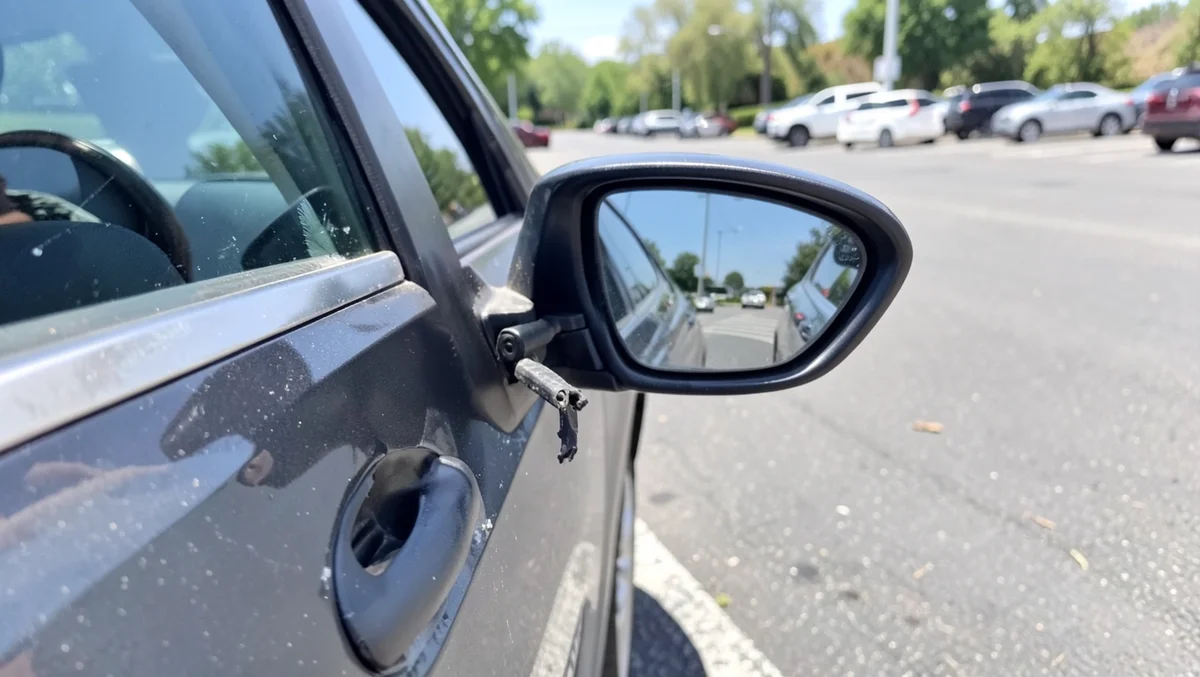
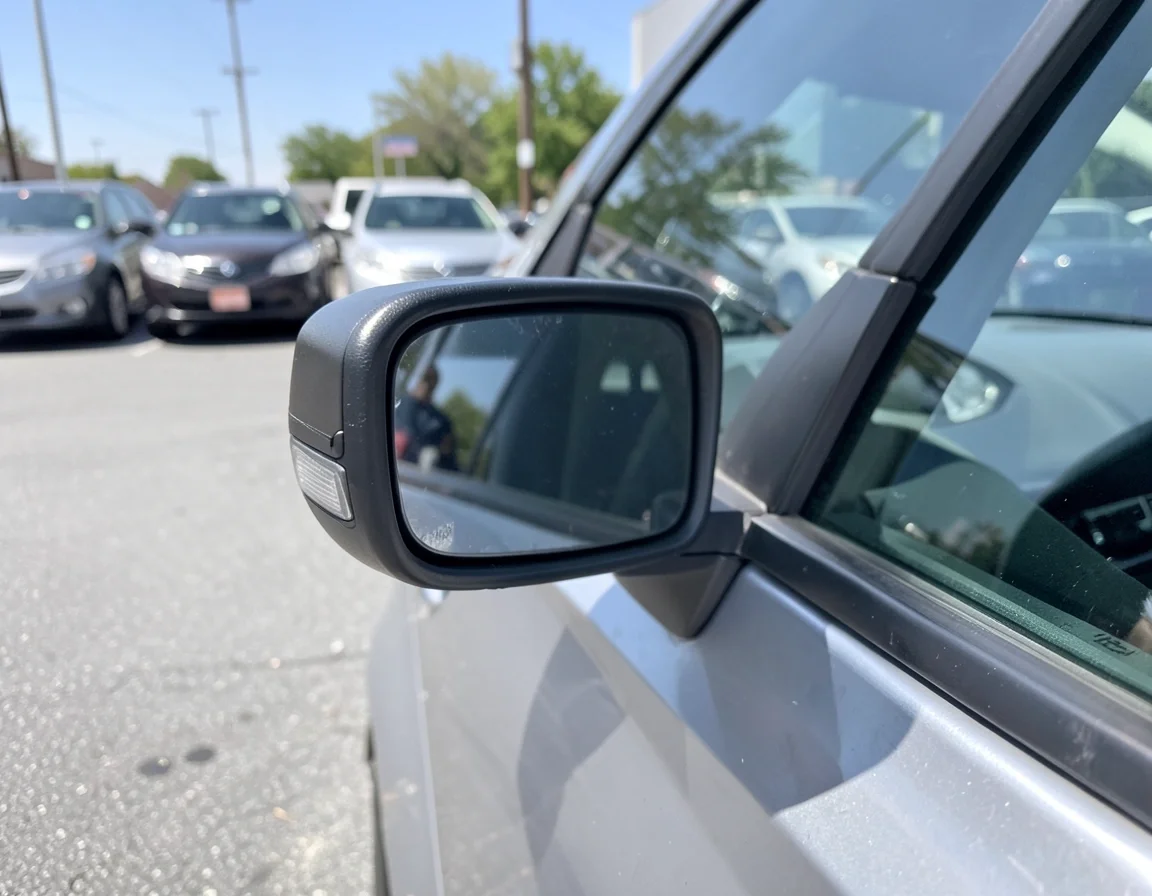
There is also a real difference between “cracked” and “gone.” A side mirror that is scuffed or has a hairline crack but still shows a usable, undistorted view is in a very different legal position than one that has snapped off the door entirely and is dangling by its wiring. The second scenario is much more likely to get you a correctable “fix-it” citation — and if you do not resolve it by the deadline on the ticket, the fine and court costs can add up fast. For a closer look at how individual states handle this, FindLaw’s breakdown of side-mirror requirements is a good starting point before you check your own state’s vehicle code. State laws like these build on a federal manufacturing baseline — see our guide to how many mirrors are required on a car under FMVSS 111 for the equipment-standard side of the picture.
Best For A Missing Mirror
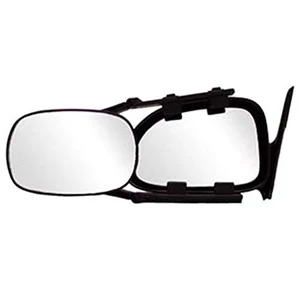 |
CIPA 11950 Clip-On Towing Mirror – $23.80 Clips onto the edge of your door or window on its own, so it works even when the factory mirror is completely gone.
|
Real Temporary Side Mirror Options (What Actually Works)
Not every “temporary mirror” sold online solves the same problem. Blind spot mirrors, for example, are small convex add-ons that clip onto an existing mirror to widen your field of view — they are not designed to replace a mirror that is missing altogether. Here are the options that actually stand in for a broken or missing side mirror, roughly in order of how complete the damage is.
| Option | Best For | Typical Cost | How It Attaches |
|---|---|---|---|
| Universal clip-on mirror | Mirror is missing or snapped off entirely | $15–$40 | Clamps onto the window or door edge, no mounting point needed |
| 3M adhesive replacement mirror | Glass is cracked but the housing is still attached | $15–$20 | Sticks directly onto the existing mirror housing |
| Tape, zip ties, or foil | A short emergency trip to a shop only | Under $5 | Holds loose parts together; does not provide a real reflective surface |
| Dealer or body shop loaner mirror | You are waiting days on a factory part | Varies by shop | Full OEM mirror, availability depends on the shop |
A clip-on mirror is the most reliable option when the mirror is fully gone, because it does not depend on any part of the old housing being intact. An adhesive replacement mirror is a better fit when the housing and mount are fine and only the reflective glass shattered. Duct tape, zip ties, or a piece of foil taped over the housing are not a mirror substitute — they are a stopgap to get you to a parking lot or a shop safely, and nothing more.
How to Install a Clip-On Temporary Mirror
- Clean the door edge, window frame, or remaining mirror housing where the clip will sit so it grips firmly.
- Open the clip fully and slide it over the mounting edge — most universal clip-on mirrors fit either a window edge or what is left of the factory mirror base.
- Tighten the clamp screw or lever until the mirror does not wobble when you press on it.
- Adjust the mirror head so you can see the rear corner of your own car in the bottom edge of the reflection, with the rest of the lane visible above it.
- Recheck the clamp after your first short drive — vibration can loosen a fresh installation, especially on rougher roads.
Once you are safely back on the road, plan the permanent fix. Our full guide on how to fix a side mirror on your car walks through reattaching loose glass, replacing cracked glass, and when the repair is beyond a DIY job.
Frequently Asked Questions
Is It Illegal To Drive Without A Side Mirror?
In most states, yes, if the missing mirror is your only exterior mirror or your driver-side mirror. Requirements vary by state, so it is worth checking your local vehicle code, but a completely missing side mirror is one of the more common reasons drivers get a correctable equipment citation.
Can I Use A Blind Spot Mirror As A Replacement For A Missing Side Mirror?
No. A blind spot mirror is a small add-on that clips onto an existing mirror to reduce your blind spot — it needs a working mirror underneath it to attach to. If your mirror is missing entirely, you need a standalone replacement like a clip-on mirror or an adhesive mirror, not a blind spot mirror.
How Long Can I Drive With A Temporary Side Mirror?
A properly installed clip-on or adhesive mirror can hold up for weeks of normal driving if it is checked periodically for looseness. That said, treat it as a bridge to a permanent repair, not a replacement for one — a properly fitted OEM or aftermarket mirror will always give you a more reliable field of view.
Do Clip-On Mirrors Damage Paint Or The Window?
Most universal clip-on mirrors use a padded or rubber-lined clamp specifically so they do not scratch paint or glass. Even so, it is worth wiping the clamp area clean before installing one and checking the padding periodically for grit that could scuff the surface underneath.
What Is The Cheapest Temporary Fix For A Broken Side Mirror?
If the housing is still attached and only the glass cracked, a strip of tape or foil over the sharp edges can get you to a shop safely for under $5. It is not a real mirror substitute, though — for anything more than a short emergency trip, a $15–$40 clip-on or adhesive mirror is the cheapest option that actually restores your rearview visibility.
Conclusion
A broken or missing side mirror is a safety issue and, in most states, a legal one too. A universal clip-on mirror or a 3M-adhesive replacement mirror can legally and safely restore your rearview visibility within minutes, while duct tape or foil should only ever be a get-you-to-a-shop measure. Once you are back on the road safely, line up the permanent repair so you are not relying on a temporary fix any longer than you have to.
Products related to this article
Sponsored / affiliate links. As an Amazon Associate I earn from qualifying purchases. I may earn additional commission from eligible campaigns.