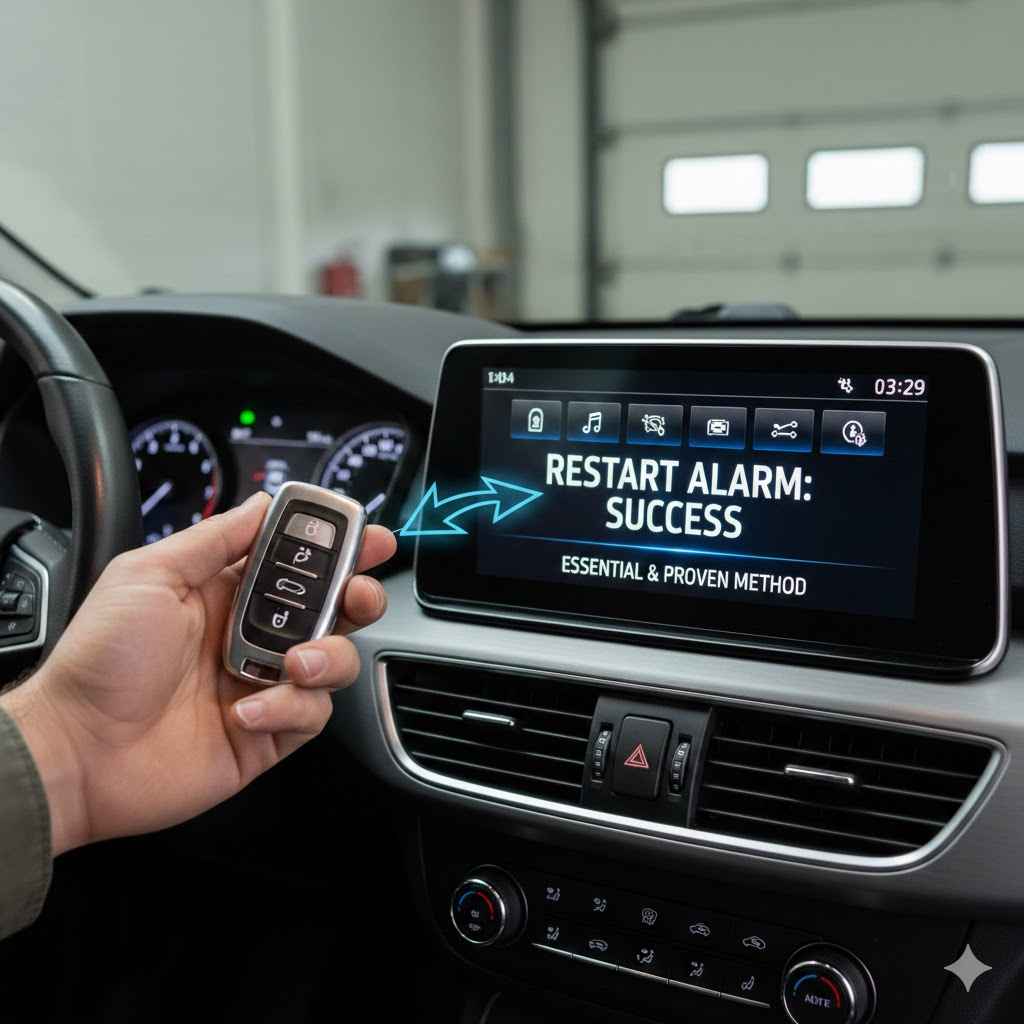
Restart Car Alarm: The Essential & Proven Method
To restart your car alarm, first try locking and unlocking the doors with your key fob or the physical key. If that fails, the most proven method is to disconnect the negative battery terminal for 5-10 minutes. This cuts power to the alarm system, forcing it to reset when you reconnect the battery.
Has your car alarm ever started blaring for no reason? Maybe it happened in the middle of the night. Or perhaps you suspect someone tampered with your car, and now the alarm is acting strange. It’s a frustrating problem that can make you feel helpless. But don’t worry, you are in the right place!
Dealing with a faulty car alarm is a common headache for many drivers. The good news is that you often don’t need an expensive trip to the mechanic to fix it. You have the power to solve this yourself. In this guide, I will walk you through the simple, proven steps to restart your car alarm safely. Let’s get you back in control and restore your peace of mind.
Why Does a Car Alarm Need a Restart?
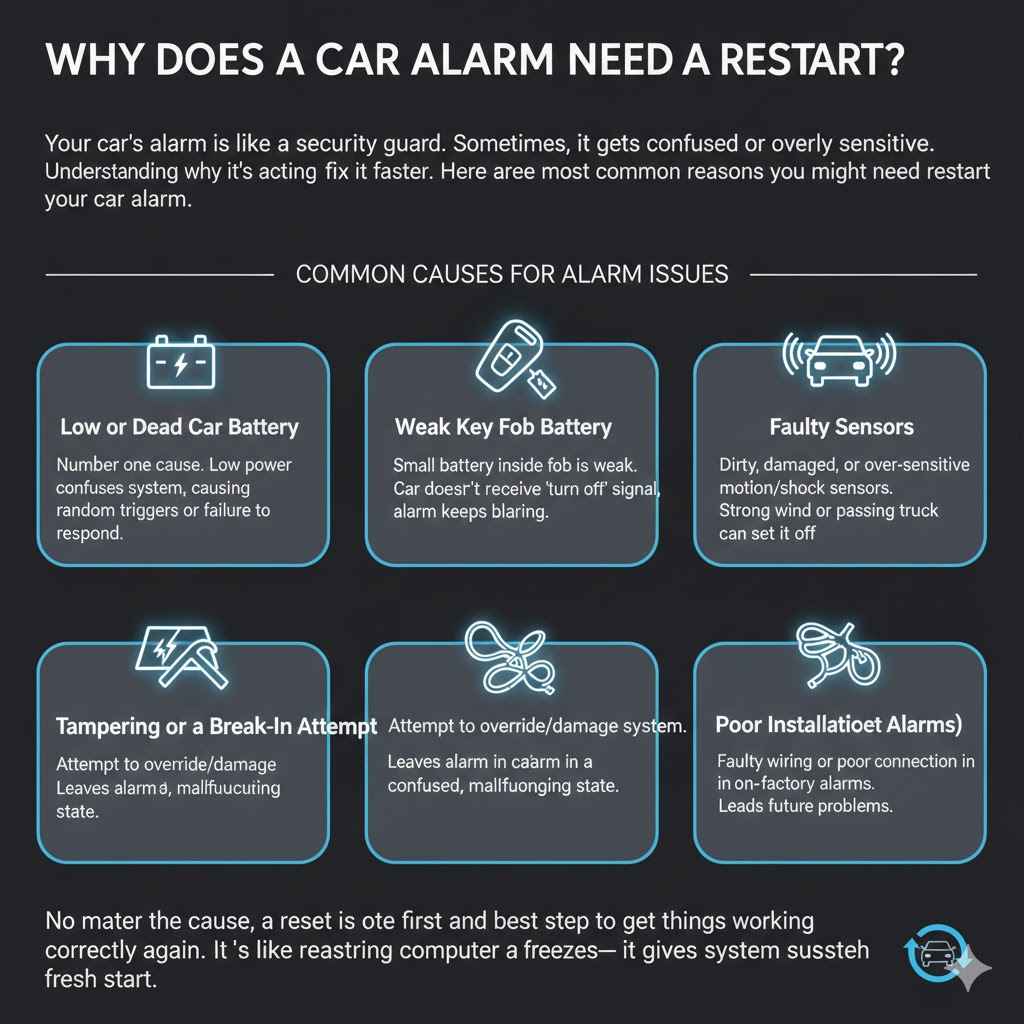
Your car’s alarm is like a security guard. Sometimes, it gets confused or overly sensitive. Understanding why it’s acting up can help you fix it faster. Here are the most common reasons you might need to restart your car alarm.
Common Causes for Alarm Issues
- Low or Dead Car Battery: This is the number one cause. When your car’s main battery is low on power, it can’t send a steady signal to the alarm system. This confusion often causes the alarm to go off randomly or fail to respond.
- Weak Key Fob Battery: The small battery inside your key fob sends the signal to arm or disarm your alarm. If that battery is weak, your car might not receive the “turn off” signal, leaving the alarm blaring.
- Faulty Sensors: Your alarm has sensors that detect motion, shock, or a door opening. If a sensor is dirty, damaged, or too sensitive, a strong wind or even a passing truck can set it off.
- Tampering or a Break-In Attempt: If a burglar has tried to get into your car, they may have tried to override or damage the alarm system. This can leave the system in a confused state, causing it to malfunction even after they are gone.
- Poor Installation (Aftermarket Alarms): If you have an alarm that wasn’t installed at the factory, faulty wiring or a poor connection can lead to all sorts of problems down the road.
No matter the cause, a reset is often the first and best step to get things working correctly again. It’s like restarting a computer when it freezes—it gives the system a fresh start.
Safety First: Important Precautions Before You Start
Before we touch anything, let’s talk about safety. Your well-being is the top priority. Working on a car, even for a simple task, requires a little bit of care. Following these simple safety rules will ensure everything goes smoothly.
- Work in a Safe Space: Park your car on a flat, level surface. A garage or driveway is ideal. Avoid working on the side of a busy street. Make sure you have plenty of light to see what you are doing.
- Wear Protective Gear: It’s always a good idea to wear safety glasses and gloves. This protects your eyes from any potential debris and keeps your hands clean and safe when working with the battery.
- Remove Jewelry: Take off any rings, watches, or bracelets. Metal jewelry can conduct electricity if it touches both battery terminals at once, which is very dangerous.
- Consult Your Owner’s Manual: Your car’s manual is your best friend. It has specific information about your vehicle, including the location of the battery and fuse box. Keep it handy for reference. You can often find a digital copy on the manufacturer’s website if you’ve lost yours.
Taking just a few minutes to prepare will make the entire process safer and less stressful. You’ve got this!
The Step-by-Step Guide to Restarting Your Car Alarm
Ready to silence that alarm for good? We’ll start with the easiest fixes first and then move to the most reliable reset method. Follow these steps in order.
Step 1: Try the Simple Fixes First
Often, the simplest solution is the right one. Before you open the hood, try these quick tricks. They work more often than you’d think!
- Use Your Key Fob: Press the unlock button on your key fob several times. This resends the “disarm” signal to the alarm. If that doesn’t work, try pressing the panic button to turn the alarm on, then press it again to turn it off. This can sometimes reset the cycle.
- Use the Physical Key: Sometimes the key fob’s signal can be blocked. Insert your physical key into the driver’s side door lock. Turn it to unlock the car, then turn it to lock it, and finally unlock it again. This manual action can often override and reset the alarm system.
- Start the Car: Put your key in the ignition and try to start the car. Most factory alarm systems are designed to shut off as soon as the correct key is recognized and the engine starts.
- Check the Key Fob Battery: Is the little light on your key fob dim or not flashing at all when you press a button? The battery might be dead. Replacing this small, watch-style battery is cheap and easy. You can find replacements at most grocery or hardware stores.
If you’ve tried all of these and the alarm is still going, don’t get discouraged. It’s time to move on to the most effective method: the battery reset.
Step 2: The Universal Method: Resetting with the Car Battery
This is the go-to method for mechanics and car experts. Disconnecting the car’s battery cuts all power to the alarm module, forcing it to reboot and return to its default settings. It’s like a hard reset for your car’s security brain.
Tools You Will Need:
| Tool | Purpose |
|---|---|
| Wrench or Socket Set | To loosen the nut on the battery terminal. A 10mm wrench is the most common size. |
| Safety Gloves | To protect your hands. |
| Safety Glasses | To protect your eyes. |
| A Clean Rag | To clean any corrosion off the battery terminals if needed. |
The Reset Process:
- Turn Off the Car and Open the Hood: Make sure your car is completely off and remove the key from the ignition. Secure the hood with its prop rod.
- Locate the Battery: The battery is usually a black rectangular box in the engine bay. It will have two metal posts, or terminals, on top. One is marked with a plus sign (+) for positive, and the other is marked with a minus sign (-) for negative.
- Identify the Negative Terminal: The negative terminal is almost always black and marked with a “NEG” or “-” symbol. The positive terminal is usually red and marked with a “POS” or “+” symbol. We will only be working with the negative terminal.
- Disconnect the Negative Terminal: Use your wrench to loosen the nut on the clamp that holds the cable to the negative terminal. You don’t need to remove the nut completely, just loosen it enough so you can wiggle the cable off the terminal post. Once it’s loose, pull the cable off and move it to the side, ensuring it cannot accidentally touch the battery post again.
- Wait Patiently: Now, you just need to wait. Leave the battery disconnected for at least 5 to 10 minutes. For some advanced systems, you may need to wait up to 30 minutes. This gives all the electronic modules in your car, including the alarm system, enough time to fully discharge and forget their confused state.
- Reconnect the Negative Terminal: After waiting, place the negative cable back onto the negative battery post. Use your wrench to tighten the nut until it’s snug. You shouldn’t be able to wiggle the cable.
- Test Everything: Close the hood, get in your car, and try to start it. The alarm should now be reset. Test your key fob by locking and unlocking the doors. The alarm should arm and disarm normally.
Note: Disconnecting the battery may reset your radio presets and clock. This is a small price to pay for a quiet, working alarm system!
Step 3: Advanced Options for Stubborn Alarms
If the battery reset didn’t solve the problem, there are a couple more things you can try. These are a bit more involved but still very manageable for a beginner.
Using the Valet Switch
Many aftermarket (non-factory) alarm systems have a hidden valet switch. This is a small button or toggle switch that allows you to temporarily disable the alarm. Its location can vary, but common hiding spots include:
- Under the driver’s side dashboard, near your knees.
- On the side of the center console.
- Inside the glove compartment.
- Attached to the main fuse box panel.
To use it, you typically follow a sequence like this (it can vary, so check your alarm’s manual if you have it):
- Get in the car and close the door.
- Turn the key in the ignition to the “On” or “ACC” position (don’t start the engine).
- Within 5-10 seconds, press and release the valet button.
- The alarm’s siren might chirp, and the parking lights might flash, confirming the system is in valet mode or has been reset.
Checking the Alarm Fuse
Just like any electronic device, your alarm has a fuse. If this fuse is blown, the system won’t work correctly. You can find the fuse box location in your owner’s manual. There are usually two: one in the engine bay and one inside the car, often near the driver’s left foot.
The fuse box cover should have a diagram showing what each fuse is for. Look for one labeled “Alarm,” “Security,” or “Horn.” Carefully pull the fuse out (a fuse puller tool is often included in the box) and inspect it. If the thin metal wire inside the plastic is broken, the fuse is blown and needs to be replaced with a new one of the exact same amperage rating.
What to Do After a Burglary Attempt
If you suspect your alarm issues started after someone tried to break into your car, the situation is a bit different. A forced entry or an attempt to disable the alarm can cause physical damage to the system. While a reset might work temporarily, it’s crucial to be more thorough.
After performing a reset, carefully inspect your car for signs of tampering:
- Check Door Lock and Ignition Wiring: Look under the dashboard for any cut, stripped, or loosely hanging wires, especially around the steering column. Thieves often try to hot-wire a car or disable the security system here.
- Inspect Alarm Components: If you know where your alarm’s main control unit (the “brain”) or siren is located, check for any physical damage or disconnected wires.
- Test All Functions: Does the alarm still arm correctly? Do the door sensors, hood sensor, and trunk sensor all work? Lock yourself in the car, arm the alarm, wait a minute, and then open the door to see if it triggers properly.
If you find any signs of damage or if the alarm continues to malfunction after a reset, it is highly recommended to have it inspected by a professional. A compromised security system leaves your vehicle vulnerable. Resources like the National Insurance Crime Bureau (NICB) offer great tips on vehicle theft prevention and recovery.
| Problem | Possible Cause | Quick Fix |
|---|---|---|
| Alarm goes off randomly. | Overly sensitive shock sensor or low car battery. | Try the battery reset. If it continues, the sensor sensitivity may need professional adjustment. |
| Key fob doesn’t work. | Dead fob battery or fob needs reprogramming. | Replace the fob battery first. If that fails, a dealer or locksmith can reprogram it. |
| Alarm won’t turn off. | System is in a “panic” or error state. | Use the physical key in the door, then try starting the car. If that fails, perform the battery reset. |
| Car won’t start (alarm-related). | The alarm’s starter-kill feature is engaged. | A proper reset (using the key or battery method) should disengage the starter-kill. |
When Is It Time to Call a Professional?
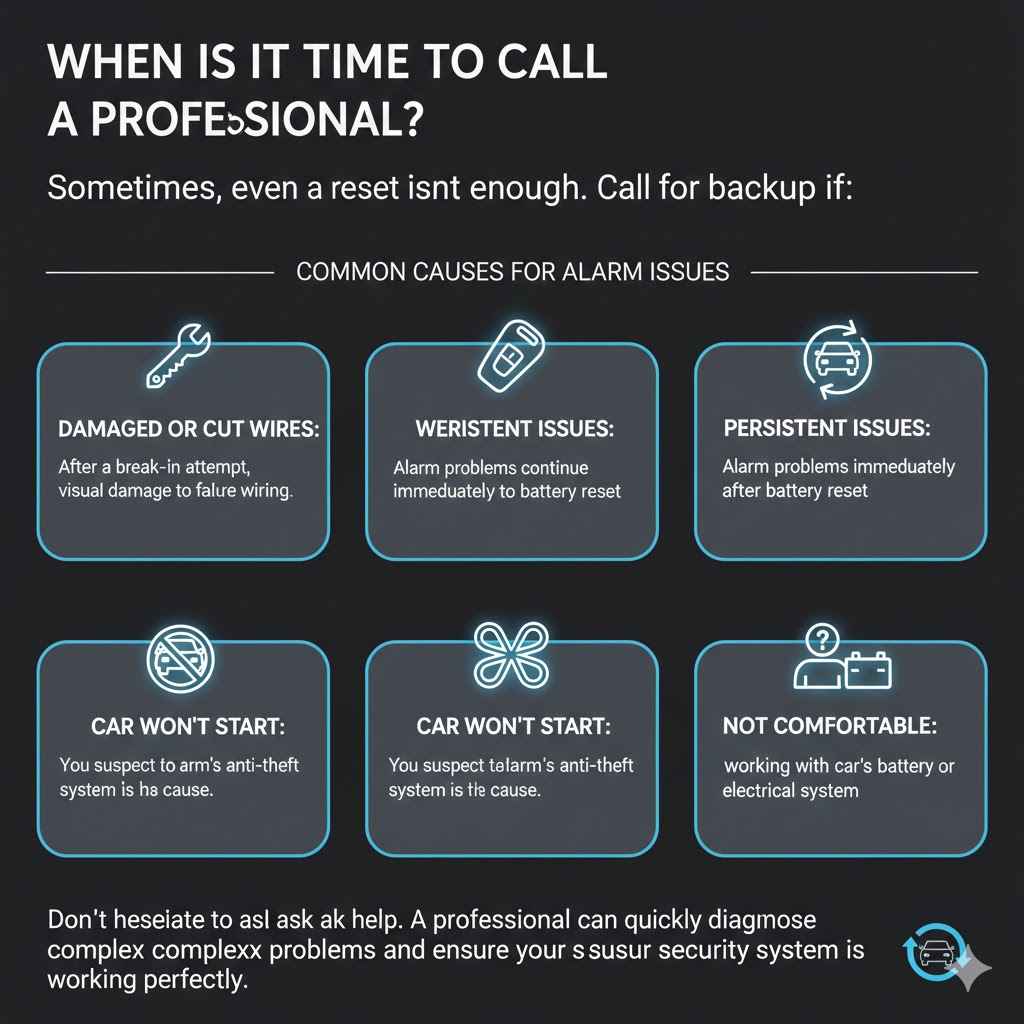
You can solve most alarm issues yourself with the steps above. However, there are times when calling for backup is the smartest move. If you’ve tried everything and are still having trouble, or if you encounter any of the following, it’s best to contact a qualified mechanic or an auto electronics specialist:
- You find damaged or cut wires after a break-in attempt.
- The alarm issues persist immediately after the battery reset.
- Your car won’t start, and you believe the alarm’s anti-theft system is the cause.
- You are not comfortable working with your car’s battery or electrical system.
There is no shame in asking for help. A professional can diagnose complex electrical problems quickly and ensure your car’s security system is working perfectly to protect your vehicle.
Frequently Asked Questions (FAQ)
1. How do I turn off my car alarm without a key or fob?
If you don’t have your keys, the most reliable method is the battery reset. Open the hood and disconnect the negative battery terminal for about 10 minutes. This will cut power to the alarm and force it to turn off and reset.
2. Will disconnecting the battery reset my car’s computer?
Yes, it will reset some things. You will likely lose your radio station presets, trip meter, and clock settings. However, it does not harm the car’s main computer (ECU), which stores important engine and performance data. The car will “relearn” its ideal settings after a few minutes of driving.
3. Why does my car alarm go off for no reason?
The most common causes are a weak or dying car battery, an overly sensitive shock sensor, or a faulty sensor on a door, hood, or trunk that makes the system think something has been opened. A key fob with a dying battery can also send faulty signals.
4. How long does a car alarm last?
A factory-installed car alarm system is designed to last the lifetime of the vehicle. However, its components, like sensors or the control module, can fail over time. Aftermarket alarms can have a more variable lifespan depending on the quality of the product and the installation.
5. Can a bad car battery cause alarm problems?
Absolutely. A bad or weak battery is one of the leading causes of car alarm malfunctions. The inconsistent voltage can confuse the alarm’s electronic brain, causing it to trigger randomly or fail to respond to your key fob.
6. What should I do if my alarm was tampered with during a break-in?
First, file a police report. For your car, perform a battery reset to see if it resolves the immediate issue. Then, thoroughly inspect the wiring under the dashboard and around the alarm components for any visible damage. It is highly recommended to have a professional mechanic inspect the system to ensure it’s still secure.
7. Is it expensive to fix a car alarm?
It depends on the problem. If it’s a simple fix like a new key fob battery or a blown fuse, the cost is very low. If the main alarm control module has failed or wiring has been damaged, the repair could cost a few hundred dollars. But always start with the free DIY resets first!
Conclusion: You’re in the Driver’s Seat
A malfunctioning car alarm can be a real nuisance, but as you’ve seen, the solution is often well within your reach. By starting with the simple fixes and moving on to the proven battery reset method, you can tackle this common problem with confidence. You don’t need to be a master mechanic to take control of your car’s basic functions.
Remember to always prioritize safety, and don’t hesitate to call a professional if the problem seems too complex or if you suspect your vehicle’s security has been compromised. Taking a few proactive steps can save you time, money, and a lot of frustration. Now you have the knowledge and the steps to handle a rogue car alarm like a pro. Drive safe, and enjoy the peace and quiet!