Toy Steering Wheel for Car: Types, Safety and Buying Guide
A toy steering wheel for a car is a dashboard, backseat, or infant-seat toy that lets a child mimic driving with sound effects, lights, and a working horn button, and most models run between $13 and $30.
Not every toy steering wheel is built the same way, and that matters for safety. A suction-cup toy stuck loosely to the actual dashboard can turn into a projectile during hard braking or a crash, while a toy designed to clip onto a rear seat, car seat, or stroller bar is built to stay put. The features also vary a lot – some are silent plastic wheels for toddlers who just want to spin something, others add turn signals, engine sounds, and a working horn for kids who are old enough to enjoy the pretend-driving illusion.
This guide covers the real differences between toy steering wheel types, what to check before you buy one, how to attach one to a car seat or backseat safely, and what a good one should actually cost.
What Is a Toy Steering Wheel for a Car?
A toy steering wheel for a car is a pretend-driving toy shaped like a real steering wheel, made for a child to hold or that attaches near their car seat. Most versions add a horn button, a few dashboard-style buttons, and speaker sounds – an engine revving, a horn honk, or a turn-signal click – that fire when the child presses or turns the wheel. Some also include small lights around the rim or dashboard display.
They exist for one practical reason: kids copy what they see adults doing, and pretending to drive keeps a child occupied and engaged during a car ride instead of bored or fussing in the backseat. The better designs also give toddlers something to do with their hands and attention that does not involve a screen.
BUILT FOR THE BACKSEAT
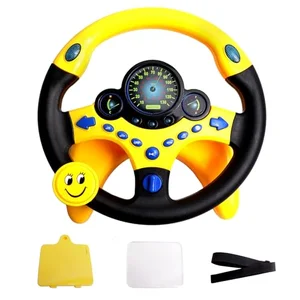 |
YIYZAOF Kids Steering Wheel Toy for Car Backseat – $25.99 A dedicated backseat toy like this one is exactly the safer, purpose-built option this guide recommends over a loose suction-cup wheel on the actual dashboard.
|
Types of Toy Steering Wheels for Cars
Toy steering wheels fall into a few distinct categories, and picking the wrong one for how your child actually rides is the most common mistake parents make.
| Type | Best Age | How It Mounts | Typical Price |
|---|---|---|---|
| Backseat/car-seat toy | 1–4 years | Straps or clips to a car seat, headrest, or armrest tray | $14–$26 |
| Handheld/portable toy | 2–6 years | Not mounted – carried loose or held in the lap | $10–$20 |
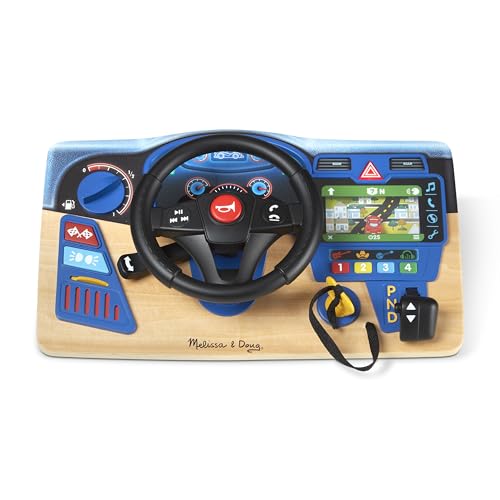
| Wooden dashboard play set | 2–5 years | Freestanding on a table or floor, not meant for the car itself | $25–$35 |
| Infant-seat clip-on toy | 0–18 months | Clips to the car seat handle or a soft toy bar, no suction | $10–$18 |
The wooden dashboard play sets – the kind with a full mock dashboard, dials, and a built-in steering wheel – are designed to be used at home, in a stroller, or on a table, not stuck onto a real car’s dashboard. Real backseat car toys are a separate, smaller category built to attach where a child actually rides.
Is It Safe to Put a Toy Steering Wheel on the Dashboard?
No – a loose suction-cup toy sitting on top of the actual dashboard is not a good idea, even if the toy itself is well made. During hard braking or a crash, anything unsecured on the dash can become a projectile, and a dashboard toy also sits close to the passenger-side airbag deployment zone. That is exactly why the products built for actual car use are designed to clip or strap onto the backseat, a car seat, or a headrest instead of sitting loose on the dash.
Two other safety points matter when you are choosing one:
- Small parts and choking risk. In the US, toys are required to carry an age warning label if they contain small parts that fail the choking-hazard test for children under 3. Always check the label matches your child’s age before buying, especially for wheels with detachable buttons or removable batteries.
- Strap and cord length. If a toy attaches with a strap, cord, or elastic loop, make sure it is short and cannot wrap around a child’s neck. Look for products that use a wide, flat strap or a rigid clip instead of a long cord.
Key Features to Look For
Not every steering wheel toy needs every feature, but a few things separate a toy that lasts from one that breaks or gets ignored after a week.
- Age rating. Check the manufacturer’s printed age range, not just the marketing copy on the listing. A toy rated for the wrong age can be either a choking risk or too simple to hold a child’s attention.
- ASTM F963 compliance. This is the standard US toy safety certification covering things like flammability, sharp edges, and small-parts testing. Reputable brands list it on the packaging or product listing.
- Sound and volume. Most models play engine, horn, and turn-signal sounds through a small built-in speaker. Very few let you turn the volume down, so if you will be using it on longer drives, read reviews for complaints about noise level before buying.
- Mounting method. Straps, clips, or a rigid bracket hold up far better over time than adhesive pads or suction cups, which lose their grip after repeated use.
- Battery type and access. Most sound-and-light models run on 3 AA or AAA batteries behind a screwed-down panel – that screwed panel matters, since it keeps curious toddlers from getting to the batteries.
How to Attach a Backseat Toy Steering Wheel
Most backseat toy steering wheels attach the same basic way, regardless of brand:
- Choose a mounting point that does not block the driver’s rear view or interfere with the front seat sliding back – the back of the front headrest or a car-seat tray are the two most common spots.
- Thread the included strap through the headrest posts or around the car seat frame, then buckle or snap it closed so the toy sits flat and cannot swing loose.
- Pull on the mounted toy firmly before your child gets in – it should not slide, rotate freely, or come off with a moderate tug.
- Insert batteries if the toy has sound or lights, and test the buttons once before handing it to your child so you know what noise level to expect.
- Re-check the strap every few weeks – repeated tugging from a toddler loosens straps and clips faster than normal use would suggest.
How Much Do Toy Steering Wheels for Cars Cost?
Based on current Amazon listings, basic plastic wheels with no sound run around $10 to $14, mid-range models with lights and music land between $20 and $29, and the larger wooden dashboard play sets – which are meant for home or stroller use rather than the actual car – run $25 to $35. Paying more usually buys louder, more varied sound effects and sturdier plastic, not necessarily a safer product, so the price tag is not a reliable safety indicator by itself.
Frequently Asked Questions
What Is a Toy Steering Wheel for a Car?
It is a pretend-driving toy shaped like a real steering wheel that a child holds or that attaches to a backseat, car seat, or headrest. Most versions add a horn button and sound effects so a child can mimic driving during a real car ride.
Are Toy Steering Wheels Safe for Children?
A toy that is built to attach to the backseat, car seat, or headrest with a strap or clip is generally safe when used at the age listed on the packaging. A loose suction-cup version stuck onto the actual dashboard is not recommended, since it can become a projectile in hard braking or a crash. Always check that the toy meets ASTM F963 (US toy safety standard) and matches your child’s age for small-parts safety.
Can Toy Steering Wheels Help With Child Development?
Yes. Turning the wheel and pressing the buttons builds fine motor skills and hand-eye coordination, and the pretend-driving element encourages imaginative play. Sound-based models also give toddlers early practice connecting an action – turning the wheel – with a cause-and-effect result, like a horn honking.
What Age Is Appropriate for a Toy Steering Wheel?
Most backseat models are rated for ages 1 to 4, while simpler infant clip-on toys start around 6 months and larger wooden dashboard sets skew toward 2 to 5 years. Always check the specific manufacturer age rating printed on the box rather than assuming based on the general category, since small detachable parts can push the real minimum age higher.
Can I Attach a Toy Steering Wheel to My Real Car’s Dashboard?
It is not recommended. Loose suction-cup toys placed on the actual dashboard can shift or fly loose during braking and sit near the passenger airbag zone. Products built for real car use are designed to strap or clip to the backseat, a car seat, or a headrest instead – look specifically for “car backseat” or “car seat toy” in the product description rather than a generic dashboard toy.
Where Can I Buy a Toy Steering Wheel for a Car?
They are widely available online through Amazon and major toy retailers, as well as in-store at big-box retailers and dedicated toy stores. Buying online generally gives you the widest selection of mounting styles and age ranges to compare before you choose one.
Conclusion
A toy steering wheel for a car is a simple, inexpensive way to keep a toddler or preschooler occupied and engaged during drives, but the type you pick matters more than the price. Skip loose suction-cup toys on the actual dashboard and choose a version built to strap or clip onto the backseat, a car seat, or a headrest instead – it is safer and holds up better to daily use.
Match the age rating to your child, check for ASTM F963 compliance, and confirm the mounting strap is short and secure. Beyond that, it comes down to how much sound and light your family can tolerate on a long drive – and most parents find that trade-off is well worth a few quiet, screen-free minutes in the backseat.
Products related to this article
Sponsored / affiliate links. As an Amazon Associate I earn from qualifying purchases. I may earn additional commission from eligible campaigns.