Portable Air Compressor vs Tire Inflator
Choose a tankless Tire Inflator for roadside tire maintenance, and buy a tanked Portable Air Compressor only if you need tools or repeated workshop air. Pick the wrong one, and you waste trunk space, wait longer at a flat tire, or end up with the wrong airflow for the task. This comparison separates pressure, airflow, power source, portability, and the use cases that justify each tool.
| Decision factor | Portable Air Compressor | Tire Inflator | Winner |
|---|---|---|---|
| Roadside portability | Larger, heavier, and less convenient to keep in a trunk | Compact and lightweight, often built for vehicle storage | Tire Inflator |
| Airflow for tools | Can power pneumatic tools and repeated air tasks | Built mainly for tires and inflatables | Portable Air Compressor |
| Power source flexibility | Often AC, DC, battery, or gas; consumer units are commonly wall-powered | Usually 12V car outlet, USB, or rechargeable battery | Portable Air Compressor |
| Ease of tire top-offs | Works, but usually more than you need for simple tire maintenance | Built for tire maintenance, with digital gauge and auto shut-off on many models | Tire Inflator |
| Storage and carry | Tank compressor designs add size and weight | Easy to keep with an emergency kit | Tire Inflator |
| Best fit for repeated shop use | Better when you need stored air and repeated airflow | Not built for ongoing shop tasks | Portable Air Compressor |
Portable air compressor vs tire inflator
The core trade-off is simple: Tire Inflator is the better tire-care tool, while Portable Air Compressor is the better airflow tool. If your main job is keeping passenger tires topped off or handling a roadside flat, choose the smaller tool. If you need air for tools, repeated fills, or shop work, choose the compressor.
What each tool is built to do
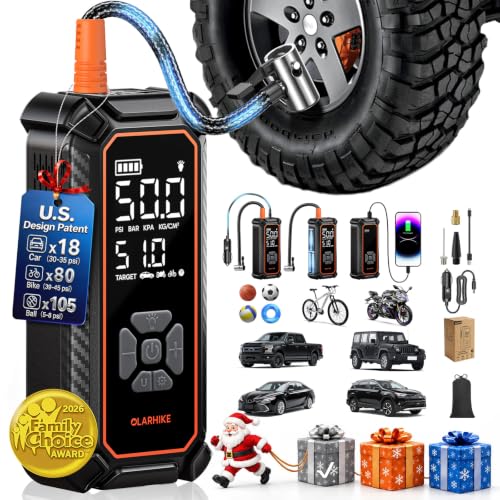
A tire inflator is a compact, lightweight tool made mainly for tires and inflatables. Many use a 12V car outlet, USB, or a rechargeable battery, and many include a digital gauge, auto shut-off, and preset pressure settings.
A portable air compressor is more versatile for mixed jobs. It can handle inflatables, but it also has the airflow needed for air tools and repeated workshop tasks. Consumer tank compressor designs often store 1 to 6 gallons of air, which is why they fit garage use better than trunk use.
Core differences in size, power source, and portability
For a driver, portability matters as much as raw output. Consumer inflators are often about 1 to 3 pounds, while pancake compressors run 20 to 35 pounds, so one fits easily in a cargo area and the other usually stays in a garage.
Power source also changes how you use the tool. A 12V car outlet supports roadside use, but it also ties the inflator to vehicle access. Wall power is common on consumer compressors, which makes them less useful when the car is the only place you have power.
PSI and airflow are not the same job
PSI is the pressure number most tire shoppers see. Consumer devices often list roughly 100 to 150 PSI, while many car tires use only about 32 to 36 PSI, so a tool’s PSI rating can sound stronger than the tire job actually requires.
CFM is the airflow figure that matters for air tools and sustained compressor work. A unit can post high PSI and still be a poor choice for anything that needs steady air volume. That is why PSI helps with tire filling, while CFM matters more for a shop setup.
Why tanked compressors still matter
A tank compressor stores pressurized air and gives you reserve output for repeated use. That stored air helps when you need to run tools or keep up with repeated bursts of air work without waiting on the pump each time.
That same design makes it larger, heavier, and louder. It is the right tool for a garage, not the easiest one to toss beside a spare tire.
Failure modes shoppers should not ignore
Duty cycle matters because many consumer inflators need cool-down breaks. If you expect to top off several low tires back to back, the pump may overheat or slow down before the job is done.
Hose reach can matter more than PSI in bad weather. Cold pavement, short cords, and awkward valve-stem access can make a technically capable unit frustrating to use. A long cord or hose is often worth more than a higher pressure number.
Tire inflator decision table
| Use case | Required power source | Portability | Expected inflation speed | Noise tolerance | Must-have features | Best pick |
|---|---|---|---|---|---|---|
| Commuter | 12V car outlet or rechargeable battery | High; keep it in the trunk | Fast enough for top-offs and one low tire | Moderate noise is usually fine roadside | Auto shut-off, digital gauge, compact hose storage | Tire Inflator |
| SUV owner | 12V car outlet or battery | High, but hose reach matters more with larger wheels | Moderate; larger tires take longer | Moderate | Long hose, readable gauge, preset pressure | Tire Inflator |
| Motorcycle rider | Battery or 12V source | Very high; small and easy to pack | Quick top-offs are the main goal | Lower noise is a plus in tight spaces | Low-pressure control, digital gauge, auto shut-off | Tire Inflator |
| Light DIYer | AC or DC power | Medium; garage storage is acceptable | Enough for occasional fills, not continuous tool work | Some noise acceptable | Higher CFM than a tire-only unit, tank if tools are involved | Portable Air Compressor |
| Garage user | Wall power or larger electrical supply | Low priority | Fast, repeated airflow is the point | Noise is usually tolerated indoors | Tank, CFM rating, duty cycle details | Portable Air Compressor |
| Roadside emergency kit | 12V car outlet or battery | Very high | Good enough to restore tire pressure on the shoulder | Moderate | Long cord, auto shut-off, preset PSI, compact body | Tire Inflator |
Which one fits roadside use?
For roadside use, the Tire Inflator wins because it is easier to store, easier to power from the vehicle, and better matched to tire pressure work. A compressor can help in a garage, but it is usually the wrong shape, weight, and power setup for a trunk emergency kit.
Why a 12V car outlet matters
A 12V car outlet is the common roadside power source for many inflators. That matters because it lets you use the car as the power supply, which is exactly what you want when the goal is to fix a low tire away from a wall outlet.
The trade-off is obvious: vehicle access becomes part of the plan. If the battery is weak, the outlet is unavailable, or the cord does not reach, the tool loses part of its advantage.
Why battery and USB models help
A rechargeable inflator is easier to carry and less dependent on the vehicle’s cabin layout. USB support can help with charging, but check the manufacturer’s listing for your model because charging and runtime vary widely.
Suppose a sedan is parked curbside on a cold morning and the front tire is about 28 PSI. A compact inflator with auto shut-off and a preset of 35 PSI is a practical fix; a heavier tank compressor in the garage is not.
When hose reach matters more than PSI
Short hoses create real problems on larger vehicles. SUVs, light trucks, and some motorcycles can place the valve stem in awkward spots, and a short cord can force you to move the tool around instead of inflating the tire.
A common first-timer mistake is buying a high-PSI unit and ignoring hose length. The pump may have enough pressure, but it still becomes annoying if it cannot comfortably reach the valve on all four wheels.
What matters more: PSI or CFM?
For tire inflation, PSI matters more. The target is the tire’s pressure number, and many passenger-car tires need about 32 to 36 PSI, so a tool that reaches those levels cleanly and shuts off at the right point is the better fit.
For compressors and air tools, CFM matters more. CFM tells you how much air the machine can move, which is why a compressor can look strong on PSI and still be the wrong choice for shop work if the airflow is too limited.
Why high PSI does not make a compressor the right choice
Consumer units can list around 100 to 150 PSI and still be poorly suited to tools. That is because pressure alone does not tell you how much air is available over time.
If you only need to top off tires, that extra capability is mostly wasted. If you need to run tools or keep up with repeated air use, the airflow side becomes the point of the purchase.
Duty cycle and cool-down breaks
Duty cycle is the runtime limit that tells you how long a consumer inflator or compressor can run before it needs a rest. That matters most when you are filling multiple low tires or working in heat.
Check the manufacturer’s listing for your model if you plan to use it repeatedly. The right duty cycle can save time; a poor one can turn a quick job into a stop-and-wait routine.
Choose portable air compressor if…
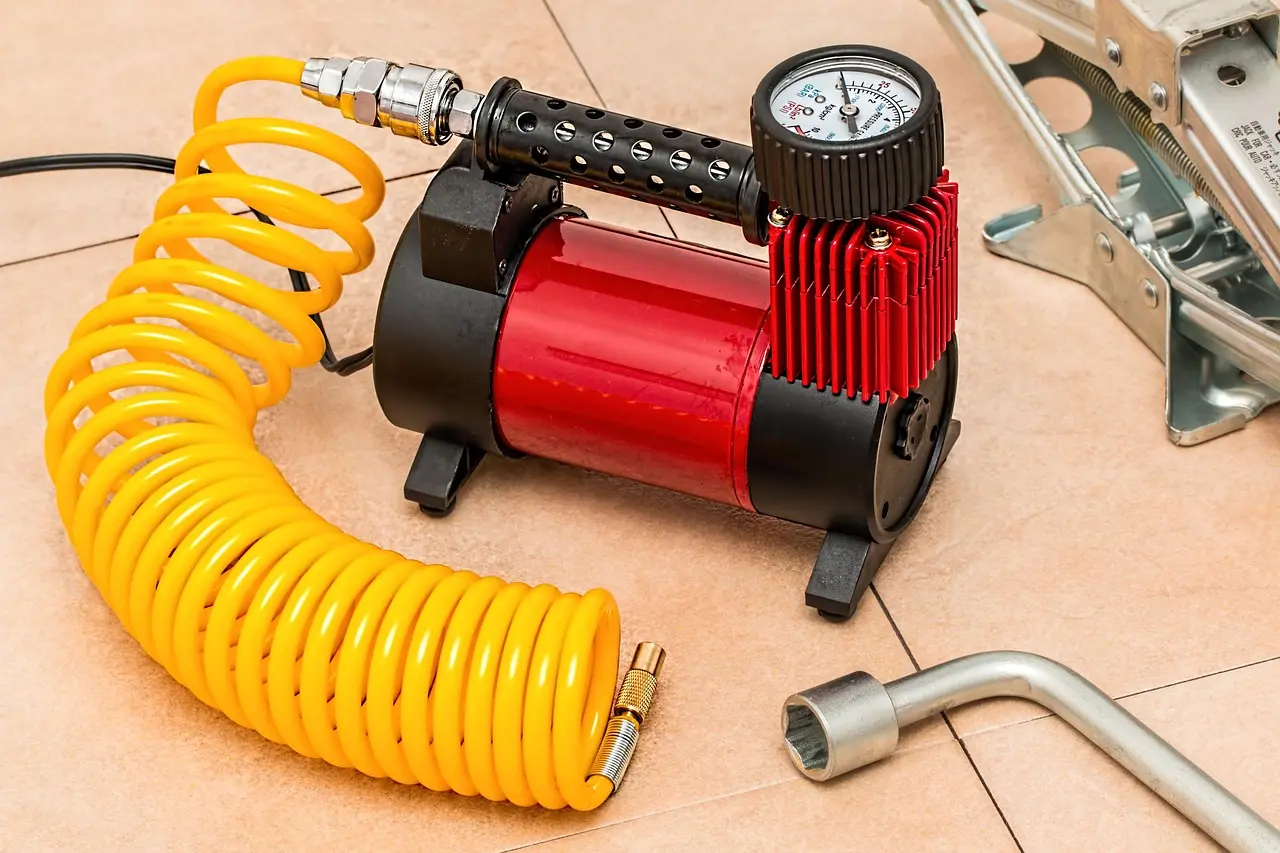
Choose Portable Air Compressor if you need airflow for tools, repeated shop tasks, or a garage setup where size and weight are secondary. Choose Tire Inflator if your job is tire maintenance, roadside top-offs, or a compact emergency kit.
Portable Air Compressor
Pick Portable Air Compressor if you need a tank compressor for repeated bursts of air, a tool that can support pneumatic tasks, or a unit that will stay near a workbench. It fits users who care more about airflow than trunk storage.
A compressor also makes sense if you expect repeated use across multiple tasks and you are willing to accept more noise, more weight, and a less portable setup.
Tire Inflator
Pick Tire Inflator if you want fast tire maintenance, easy storage, and simple roadside use. It is the better answer for commuters, SUV owners who need compact storage, motorcycle riders, and anyone building an emergency kit.
Its best features are the ones that cut mistakes: digital gauge, auto shut-off, preset PSI, and a hose or cord long enough to reach all the valves you care about.

What should you check before you buy?
Check the specs that match your use case, not just the largest pressure number on the box. A smart tire buyer looks at power source, hose length, auto shut-off, and how the tool handles real tire pressures, not just headline PSI.
- Look for auto shut-off. It helps prevent over-inflation and makes tire work simpler.
- Check the power source. A 12V car outlet helps roadside use, while wall power points you toward garage work.
- Read the gauge style. A digital gauge is easier to read than an unclear analog dial.
- Check duty cycle. If you need repeated inflation, runtime limits matter.
- Check hose and cord length. Reach can matter more than raw PSI on larger vehicles.
- For compressor buyers, check tank size and CFM. Those numbers matter for tools and repeated airflow.
How to compare specs without mixing them up
Use manufacturer specs for power source, pressure, tank size, and airflow. Then compare those details against published buyer feedback for hose reach, cold-weather starting, and whether the tool stays useful after a few minutes of runtime.
Do not treat a high PSI label as proof of better tire performance or better tool performance. The right match depends on the job.
Frequently asked questions
Portable air compressor vs tire inflator: choose a Tire Inflator
Choose a Tire Inflator for tire maintenance and roadside fills. Choose a Portable Air Compressor when you need airflow for tools or repeated workshop tasks. The first is smaller and easier to store in a car; the second is larger, heavier, and better for garage work.
Difference between air compressor and tire inflator
The difference is in purpose and airflow. A Tire Inflator is built mainly for tires and inflatables, with features like auto shut-off and a digital gauge. A Portable Air Compressor is more versatile and can support air tools, repeated fills, and garage tasks.
What is the best portable air compressor for car tires?
For car tires alone, the best answer is often not a compressor at all but a Tire Inflator. If you still need a compressor for other tasks, check the listing for pressure, CFM, tank size, duty cycle, and power source before you buy.
What’s the best portable tire inflator
The best portable tire inflator is the one with a readable gauge, auto shut-off, enough hose reach, and a power source that fits your routine. For most drivers, that means a compact unit that can live in the trunk and run from the vehicle or battery.
Can a portable tire inflator replace an air compressor?
It can replace a compressor for tire care, but not for tool work or repeated shop airflow. If all you need is to maintain tire pressure and handle roadside flats, a Tire Inflator is enough. If you need CFM for air tools, it is not.
Do I need a cordless tire inflator or a compressor for roadside use?
For roadside use, a cordless Tire Inflator is usually the better pick. It is easier to carry, faster to deploy, and better suited to a trunk emergency kit. A compressor is the better choice only if your needs extend beyond tire inflation into workshop tasks.
Which is better for car tires: an inflator or a compressor?
For car tires, the Tire Inflator is better. Consumer tires usually need about 32 to 36 PSI, and an inflator is built to reach that target with less bulk, less setup, and fewer unnecessary features than a compressor.
Products related to this article
Sponsored / affiliate links. As an Amazon Associate I earn from qualifying purchases. I may earn additional commission from eligible campaigns.